Global Distributors Wanted
1.Free Cloud Service Deployment
2.Free Technical Training
3.Exclusive Territory Protection

1.Free Cloud Service Deployment
2.Free Technical Training
3.Exclusive Territory Protection


Views: 214 Author: Aaron Publish Time: 2026-10-05 Origin: Site


Content Menu
● Why the UK Drone Logistics Market Matters
● How We Evaluated These Companies
● Top Drone Logistics Companies in UK
>> 1. Shenzhen Intelligent Drone Technology Co. Ltd.
>>> Core Strengths
>>> Suitable OEM and ODM Customisation Areas
>>> Core Strengths
>> 3. Apian
>>> Core Strengths
>>> Core Strengths
>> 5. Dronamics
>>> Core Strengths
● Drone Logistics Technical Requirements
>> Battery and Power-System Quality
>> Flight-Control and Communication Systems
● Certification and Operational Requirements
>> Buying Based on Maximum Payload Claims
>> Confusing Prototype Data With Production Data
>> Ignoring Spare-Parts Availability
>> Selecting an Aircraft Without Reviewing Cargo Restrictions
>> Ignoring Configuration Changes
>> Define the Mission Before Requesting Quotations
>> Verify Factory and Supplier Capability
>> Use a Sample Validation Process
>> Build Evidence Into the Contract
● Summary
● FAQ
>> 1. How can I check whether a supplier's ISO certificate is still valid?
>> 2. Is product certification enough for commercial drone logistics operations in the UK?
>> 3. What should I inspect during a drone logistics sample test?
>> 4. How should I compare payload claims from different suppliers?
>> 5. Can an overseas OEM support a UK drone logistics project?
The UK is developing into a significant market for drone logistics, particularly in medical transport, island connectivity, industrial cargo movement, emergency response and remote-area supply chains. Unlike consumer-focused delivery concepts, many of the most practical UK drone logistics projects focus on missions where time, geography and accessibility create measurable operational challenges.
A drone can reduce transport time between hospitals, connect island communities, carry urgent industrial spare parts, support emergency teams and improve access to areas where road, ferry or conventional air transport is slow or costly. However, a successful drone logistics project requires more than an aircraft with a stated payload capacity. It depends on a complete operating model that includes aircraft quality, flight safety, cargo protection, communication systems, maintenance planning, regulatory approval, trained personnel and reliable supply-chain support.
For procurement managers, the right partner is not necessarily the largest company or the one with the highest advertised flight range. The best fit depends on the planned mission. A hospital group may need clinical workflow integration and temperature-controlled sample transport. A regional logistics operator may need a long-range cargo aircraft. A distributor or emerging drone brand may need an OEM or ODM manufacturer that can customise payload systems, software interfaces and hardware configurations.
This article compares five companies that are relevant to the UK drone logistics market and provides a practical buying guide for procurement teams, system integrators, public-sector buyers, medical networks and commercial logistics providers.
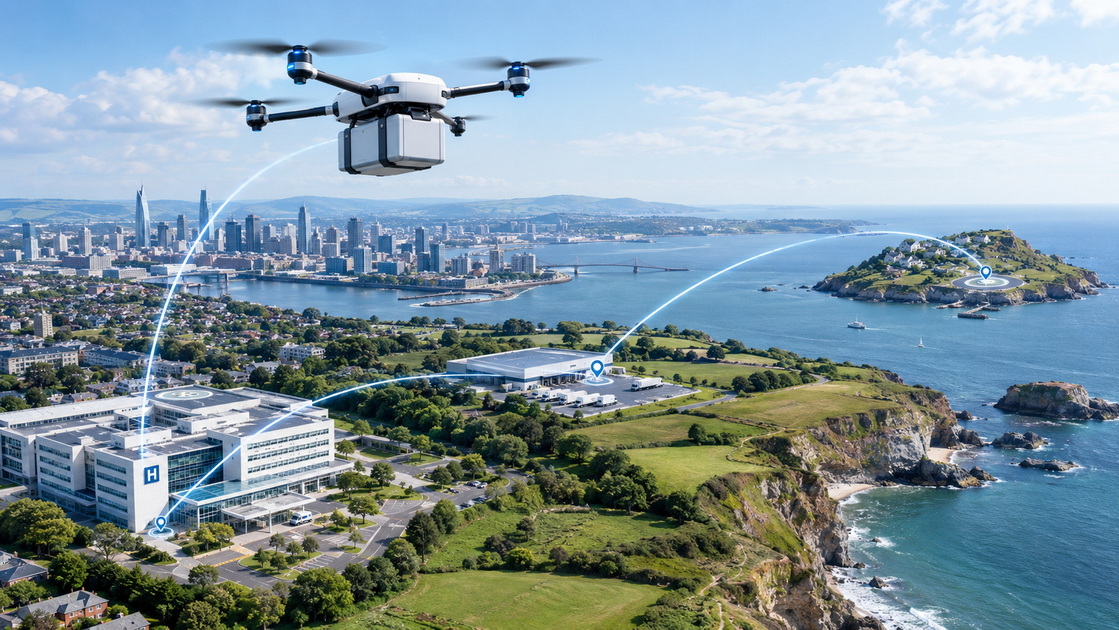
The UK has several advantages that make it suitable for drone logistics development. It combines an established aviation sector, advanced engineering capability, strong healthcare networks, growing artificial intelligence expertise and a large number of remote or hard-to-reach locations.
Island communities, coastal areas, rural regions and congested urban corridors create practical cases for aerial logistics. In many locations, road transport may be delayed by traffic, weather, ferry schedules or limited infrastructure. For urgent medical deliveries, even a relatively short distance can create a serious delay if a courier must travel through congested roads or across water.
The UK also has a growing ecosystem of companies working in drone operations, advanced air mobility, medical logistics, autonomous systems, remote sensing and infrastructure management. This creates opportunities for buyers looking for both operational partners and equipment suppliers.
The market is especially relevant for the following use cases:
- Medical samples, blood products, medicines and pharmacy supplies
- Inter-hospital logistics
- Island mail and parcel distribution
- Emergency-response equipment
- High-value industrial components
- Remote community resupply
- Offshore and maritime logistics
- Middle-mile cargo between distribution centres
- Warehouse-to-site delivery
- Utility and infrastructure support
However, commercial drone logistics remains a specialised field. Buyers should select providers based on real operating evidence, technical documentation and project suitability rather than broad marketing claims.
The companies in this guide were assessed using practical procurement-focused factors. The purpose is not to suggest that one provider is suitable for every project, but to help buyers identify which business model best matches their requirements.
Key evaluation factors include:
- Demonstrated drone logistics experience
- Aircraft or platform capability
- Payload and cargo-system design
- Regulatory and operational readiness
- Manufacturing and engineering capacity
- Ability to support customised projects
- Quality-control procedures
- After-sales support and spare-parts planning
- Suitability for healthcare, cargo, public-sector or commercial logistics projects
- Ability to support long-term deployment rather than one-off demonstrations
Buyers should also note that these companies do not all operate in the same way. Some are drone operators, some are healthcare logistics platforms, some develop heavy cargo aircraft, and some can support equipment customisation and system integration.

Best for: Custom drone logistics platforms, integrated low-altitude solutions, OEM and ODM projects, emergency-response systems and multi-node fleet coordination.
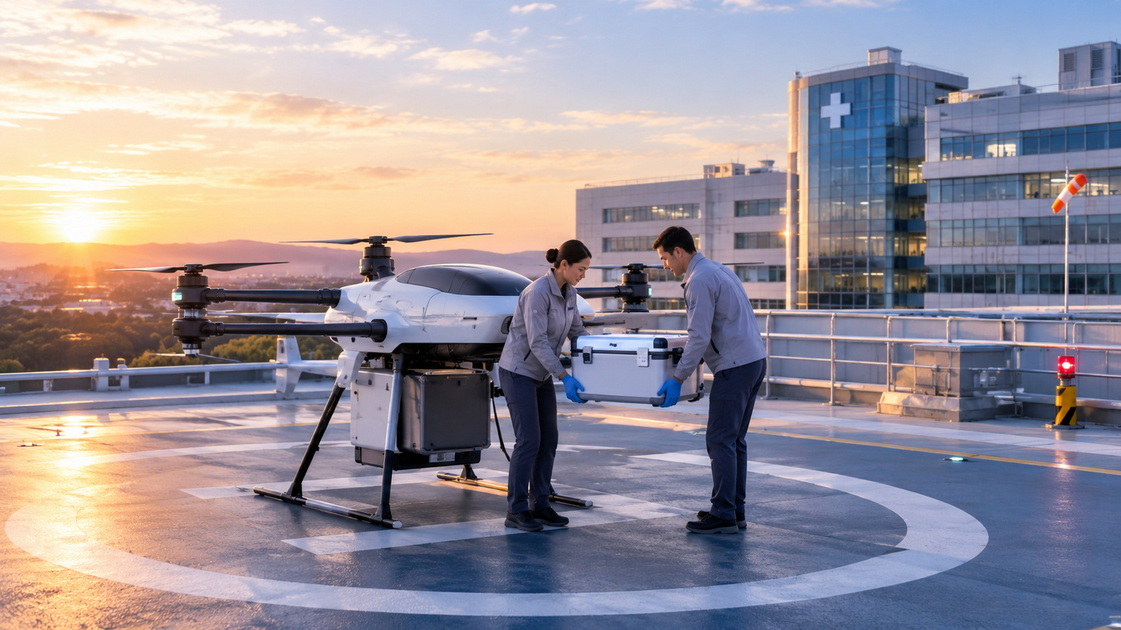
Shenzhen Intelligent Drone Technology Co. Ltd. is a suitable choice for buyers that need a flexible drone platform or an integrated aerial logistics solution rather than only a standard delivery aircraft.
The company focuses on the deep integration of drone technology across low-altitude, ground and underground environments. Its solutions combine intelligent flight control, dynamic perception, precise data collection and intelligent analysis. This approach is relevant to logistics projects that require coordination between aerial drones, ground equipment, operational teams and cloud-based control systems.
One of the company's key features is its "one-network coverage" concept. Instead of treating each drone mission as an isolated activity, the platform is designed to support unified command, dispatch and equipment management across different locations and operational nodes. This can be useful for city logistics, emergency response, industrial inspections, urban airspace management and ground-air coordination.
For procurement teams, Shenzhen Intelligent Drone Technology Co. Ltd. is particularly relevant when the project requires a customised solution. Many small and medium-sized drone brands, logistics operators and system integrators do not need a fixed, mass-market drone model. They may require changes to cargo bays, payload releases, communication systems, flight-control interfaces, camera modules, battery configurations or branded software platforms.
The company can be positioned as a practical manufacturing and engineering partner for organisations that need close communication, faster technical feedback and more flexibility during product development.
- Integrated drone solutions for low-altitude, ground and underground environments
- Intelligent cloud-based command and dispatch capability
- Flexible support for customised payload systems
- Suitable for logistics, inspection, emergency response and urban operations
- Strong potential for OEM and ODM collaboration
- Responsive communication for small and medium-sized brands
- Ability to support multi-node operational management
- Suitable for projects requiring software, hardware and workflow integration
Procurement teams can discuss the following customisation options during the project-planning stage:
- Cargo-box design and volume adjustment
- Quick-release and secure payload-locking systems
- Temperature-monitoring modules for medical products
- Thermal insulation for pharmaceuticals or biological samples
- Custom camera, LiDAR or sensor integration
- Branded ground-control-station software
- Fleet-management dashboard integration
- Data-collection interfaces and API connectivity
- Battery configuration and charging solutions
- Landing gear, transport case and field-maintenance kit design
- Emergency-return and geofencing settings
- Private-label branding, packaging and user documentation
Before placing a purchase order, buyers should request detailed evidence related to:
- Airframe materials and structural design
- Carbon-fibre or aluminium-alloy specifications
- Battery-cell source and battery-management-system information
- Flight-control architecture and redundancy design
- Communication-link reliability
- Payload-release testing
- Rain, dust, vibration and temperature test records
- Quality-control procedures
- Factory acceptance testing
- Pre-shipment inspection reports
- Serial-number traceability
- Spare-parts availability
- Technical manuals and maintenance documentation
For UK projects, buyers should also confirm whether the aircraft documentation can support local operational planning, insurance requirements, maintenance procedures and safety-case preparation.
Best for: Managed drone operations, island logistics, healthcare transport, public-sector projects and advanced air mobility infrastructure.
Skyports Drone Services is one of the most recognised names in the UK drone logistics sector. The company has developed experience in drone operations, medical delivery, island connectivity, infrastructure support and vertiport development.
Skyports is particularly relevant for buyers that want a managed operational service rather than simply purchasing aircraft. Its work includes drone-based delivery routes, remote operations, airspace coordination and logistics planning.
A major example is the Orkney I-Port programme, which has supported mail delivery between islands in Orkney. The project was developed with Royal Mail and used drones to connect Stromness on Mainland Orkney with the islands of Graemsay and Hoy. The service demonstrated how drone logistics can reduce delays created by road and ferry transport in remote areas.
The company is also active in medical logistics, offshore operations, infrastructure inspection and advanced-air-mobility infrastructure. This makes it a useful partner for government authorities, regional transport organisations, public-health networks, utility companies and logistics operators.
- Experience in commercial drone operations
- Strong focus on remote and difficult-access locations
- Experience with island logistics and mail delivery
- Capabilities in medical drone transport
- Remote operations and fleet-management expertise
- Advanced air mobility and vertiport knowledge
- Suitable for public-sector and enterprise projects
- Experience in multi-stakeholder logistics programmes
- Island mail and parcel delivery
- Medical supply transport
- Healthcare logistics
- Offshore and maritime support
- Utility and infrastructure services
- Regional drone delivery networks
- Remote-area connectivity
- Advanced air mobility infrastructure
Skyports is more suitable for buyers looking for an operating partner, logistics-service provider or network-development specialist. It is not a traditional OEM factory for private-label drone hardware.
Buyers should discuss:
- Route-development feasibility
- Operational scope
- Cargo type and weight
- Launch-and-landing infrastructure
- Remote operations model
- Weather limitations
- Insurance requirements
- Service-level agreements
- Data ownership
- Long-term operating costs
- Integration with existing transport networks
Best for: Healthcare logistics, hospital networks, pathology transport, pharmacy supply chains and clinical workflow integration.
Apian is a healthcare logistics platform that focuses on connecting healthcare systems with drone operators and autonomous transport providers.
Its core value is not simply the aircraft. Instead, Apian focuses on the systems that make medical logistics work in real clinical environments. This includes coordination between hospitals, laboratories, pharmacies, courier teams, clinical staff, logistics managers and drone operators.
For healthcare buyers, this is an important difference. A drone may be capable of flying from one hospital to another, but a medical delivery system can still fail if the sample is not correctly labelled, tracked, packaged, received or integrated into laboratory workflow.
Apian supports the digital coordination of healthcare logistics. Its platform can help connect transportation activity with hospital systems, laboratory information systems, inventory systems and operational workflows.
The company has worked on medical drone delivery projects involving NHS organisations, including transport of pathology samples, blood packs, chemotherapy medicines, prescriptions and medical equipment.
- Healthcare-specific logistics focus
- Strong relevance for hospitals and NHS networks
- Clinical workflow integration
- Sample traceability and chain-of-custody support
- Pharmacy and pathology transport applications
- Suitable for time-sensitive medical deliveries
- Ability to coordinate drone operations with healthcare systems
- Focus on operational visibility and workflow design
- Blood and blood-product transport
- Pathology sample movement
- Prescription delivery
- Chemotherapy medicine transport
- Medical-equipment delivery
- Pharmacy supply-chain support
- Inter-hospital transport
- Diagnostic sample logistics
Apian is not a conventional drone manufacturer. Buyers should evaluate the company as a healthcare logistics and integration specialist.
When reviewing a potential project, healthcare organisations should confirm:
- Hospital-system integration requirements
- Laboratory workflow compatibility
- Chain-of-custody procedures
- Sample packaging standards
- Temperature-monitoring needs
- Delivery-time requirements
- Data-protection requirements
- Clinical-risk assessment
- Incident-response procedures
- Staff-training requirements
Best for: Heavy cargo, remote communities, humanitarian logistics, middle-mile transport and large payload missions.
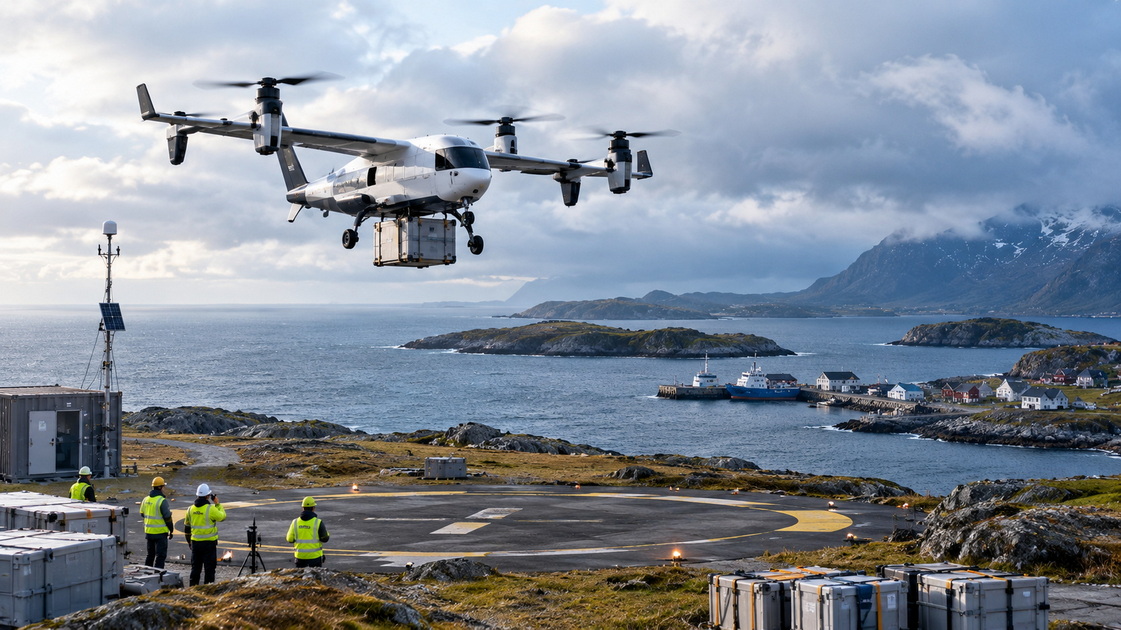
Windracers is a British aviation company focused on autonomous cargo aircraft. It is particularly relevant for buyers that need more than small-package delivery.
Many drone delivery platforms are designed for payloads of only a few kilograms. Windracers takes a different approach by focusing on larger cargo volumes, longer-distance missions and remote-area operations.
Its ULTRA aircraft is designed for heavy-lift logistics missions. The aircraft is suitable for use cases such as inter-island cargo, humanitarian aid, medical supply transport, industrial components, remote-area distribution and middle-mile logistics.
The company has supported projects involving Royal Mail, Scottish Water and medical-sample transport. Its model is especially relevant to buyers operating in difficult terrain, remote communities or regions where conventional logistics infrastructure is limited.
Windracers is a strong candidate for operators that need to move substantial cargo volumes without relying on roads, ferries or large airports.
- Heavy-lift cargo focus
- Long-range logistics capability
- Suitable for remote and island operations
- Relevance for humanitarian and emergency missions
- British aviation and engineering background
- Cargo aircraft rather than small consumer-delivery drones
- Suitable for middle-mile and regional freight applications
- Potential for medical, industrial and infrastructure logistics
- Inter-island freight
- Humanitarian aid delivery
- Emergency-response cargo
- Remote community supply
- Medical sample and medicine transport
- Industrial spare-parts logistics
- Offshore and coastal supply
- Long-distance cargo movement
- Utility and infrastructure support
Buyers should request a mission-specific performance document rather than relying on general payload or range claims.
The document should include:
- Maximum payload under the planned flight profile
- Cargo-bay volume
- Take-off and landing requirements
- Weather operating limits
- Fuel or battery reserve requirements
- Cargo restraint requirements
- Route length
- Ground-support equipment
- Maintenance schedule
- Training requirements
- Spare-parts planning
- Local operating support
Heavy-lift drone systems may provide significant logistics advantages, but they also require more structured planning around airfields, maintenance, operations and safety procedures.
Best for: Long-range cargo transport, middle-mile freight, time-sensitive industrial shipments and regional logistics networks.
Dronamics is a cargo-drone company with a focus on long-range, middle-mile freight transport. Its business model is closer to regional air cargo than to small urban parcel delivery.
The company develops large cargo drones intended to carry freight between regional locations. This makes it relevant to freight forwarders, airport operators, industrial suppliers, e-commerce networks, pharmaceutical companies and logistics providers that need faster transport between hubs.
Dronamics is particularly relevant for cargo movements where road transport is too slow and conventional air freight is too expensive, unavailable or inefficient. Potential uses include industrial spare parts, medical supplies, automotive components, e-commerce parcels, perishable products and other time-sensitive freight.
The company's Black Swan cargo drone is designed for high-capacity regional logistics. Compared with small multicopter delivery drones, this type of platform is intended to support greater payloads and longer operating distances.
- Focus on middle-mile freight
- Long-range cargo-drone development
- Suitable for regional logistics networks
- Relevant for industrial and time-sensitive shipments
- Potential for e-commerce and spare-parts transport
- Strong fit for freight-forwarding and airport-related projects
- More suitable for large-scale cargo than short-distance parcel delivery
- Distribution-centre connections
- Regional freight transport
- Automotive-parts logistics
- Medical and pharmaceutical cargo
- E-commerce cargo
- Perishable-goods transport
- Industrial supply-chain support
- Airport-to-airport cargo movement
- Remote-area freight operations
Dronamics is best assessed as a cargo-network and long-range freight solution rather than a flexible private-label drone manufacturer.
Buyers should evaluate:
- Route suitability
- Airfield or landing-strip requirements
- Cargo-weight requirements
- Network volume
- Delivery urgency
- Regional operating permissions
- Maintenance requirements
- Cargo-handling equipment
- Warehouse integration
- Customs and cross-border requirements
- Commercial capacity availability
| Company | Main Focus | Suitable Buyer Type | Hardware Customisation | Typical Project Model | Key Strength |
|---|---|---|---|---|---|
| Shenzhen Intelligent Drone Technology Co. Ltd. | Custom drone platforms, integrated logistics solutions, emergency response | System integrators, distributors, drone brands, public-sector projects | High | OEM, ODM, customised solution development | Flexible engineering support and multi-node control capability |
| Skyports Drone Services | Managed drone operations and delivery networks | Government agencies, healthcare groups, logistics operators | Low to medium | Managed service and network deployment | Operational experience and remote logistics expertise |
| Apian | Healthcare logistics integration | Hospitals, laboratories, pharmacies and NHS networks | Low | Software platform and operational integration | Clinical workflow coordination and traceability |
| Windracers | Heavy cargo and remote-area logistics | Cargo operators, remote communities, humanitarian organisations | Medium | Aircraft programme and operational service | Heavy-lift autonomous cargo capability |
| Dronamics | Long-range middle-mile freight | Freight forwarders, airport operators and regional logistics networks | Low | Cargo-network and freight-service model | Long-distance cargo transport positioning |
A professional procurement request should include more than payload, price and flight time. Drone logistics requires a detailed technical review because the aircraft will operate in environments where cargo safety, reliability and flight consistency matter.
Buyers should review the quality and traceability of structural materials. Common materials include carbon fibre, aluminium alloys, engineering plastics and composite structures.
Important questions include:
- What grade of carbon fibre is used?
- What resin system is used in composite parts?
- Are aluminium components anodised or corrosion protected?
- Are structural parts tested for vibration and fatigue?
- Is the airframe suitable for rain, wind, dust or coastal environments?
- Are spare arms, landing gear and cargo components available?
- Can damaged parts be replaced in the field?
- What is the expected service life of key structural components?
For coastal, island and offshore projects, corrosion protection should receive particular attention. Salt air can affect metallic components, electrical connections, motors, connectors and fasteners over time.
Battery quality is one of the most important factors in drone logistics. A drone may have a strong airframe and reliable flight-control system, but poor battery consistency can create delays, reduce payload capability and increase operational risk.
Buyers should request:
- Battery-cell manufacturer and model
- Battery chemistry
- Nominal voltage and usable capacity
- Battery-management-system specifications
- Maximum charge and discharge current
- Cycle-life test data
- Low-temperature performance data
- Storage and transport procedures
- Thermal protection features
- Battery serial-number traceability
- Replacement-battery lead times
- End-of-life battery-recycling arrangements
Do not accept a battery claim based only on nominal capacity. Ask how much usable energy remains after safety reserves and how flight performance changes after repeated charge cycles.
A drone logistics system should include reliable communication, navigation and contingency procedures.
Buyers should confirm:
- Primary communication link
- Backup communication link
- Navigation redundancy
- Geofencing capability
- Remote identification capability
- Emergency return procedures
- Contingency landing settings
- Flight-log storage
- Data encryption
- Ground-control-station compatibility
- Cloud-platform access permissions
- Firmware-update procedures
- Software rollback options
It is also important to identify where operational data is stored and who owns the collected flight data, payload data and maintenance records.
The cargo system must be designed for the actual goods being transported. A parcel box suitable for lightweight consumer goods may not be suitable for medical samples, high-value electronics or industrial components.
Buyers should check:
- Maximum payload under real operating conditions
- Cargo-bay dimensions
- Payload centre-of-gravity range
- Cargo-locking mechanism
- Release-system safety interlocks
- Shock and vibration levels
- Temperature-monitoring capability
- Water and dust protection
- Tamper-evident features
- Chain-of-custody support
- Packaging requirements
- Dangerous-goods restrictions
For medical cargo, the full process must be reviewed, including packaging, labels, sample tracking, handover procedures, temperature control and delivery confirmation.
Many buyers make the mistake of treating a product certificate as proof that a drone can be used for commercial logistics operations. This is not sufficient.
Product compliance and flight-operation approval are separate issues.
| Requirement Area | What It Covers | Buyer Verification Method |
|---|---|---|
| Product conformity | Electrical safety, radio equipment, materials and electronic components | Request declarations, test reports and product documentation |
| Quality management | Factory procedures, inspection processes and document control | Verify current quality certificates and audit reports |
| Aviation safety | Aircraft maintenance, configuration control, flight limitations and safety procedures | Review manuals, maintenance programmes and flight-test evidence |
| Operating approval | Permission to conduct the planned logistics operation | Confirm operator authorisation, route approval and operating procedures |
| Cargo compliance | Packaging, temperature, traceability and restricted cargo | Review cargo SOPs, packaging standards and chain-of-custody procedures |
A drone may have suitable hardware documentation but still require extensive operational preparation before it can be used for commercial delivery in the UK.
A supplier may advertise a maximum payload figure without explaining the actual flight conditions. The drone may only carry that payload for a short distance, in low wind, with a new battery and without meaningful reserve capacity.
To avoid this problem, request a mission-performance matrix that includes:
- Payload weight
- Cargo dimensions
- Route distance
- Flight speed
- Wind condition
- Temperature
- Battery reserve
- Take-off weight
- Flight altitude
- Battery cycle count
- Return-flight assumptions
Prototype aircraft may use carefully selected components, new batteries and ideal test conditions. Production aircraft may have different component suppliers, revised firmware or alternative battery cells.
Buyers should request production-standard testing rather than prototype-only data.
Drone logistics cannot operate reliably if a damaged motor, propeller, arm, battery or control module takes weeks to replace.
The procurement agreement should cover:
- Recommended initial spare-parts package
- Spare-parts price list
- Lead times
- Warranty terms
- Field-repair limits
- Remote diagnostic support
- Maintenance training
- Firmware support
- Battery replacement planning
Not all cargo can be transported by drone. Lithium batteries, flammable liquids, pressurised containers, hazardous chemicals, biohazard materials and controlled products may require special procedures or may be restricted entirely.
Create a cargo acceptance matrix before beginning commercial operations.
One of the least discussed risks in drone procurement is configuration drift. A supplier may change a motor, flight controller, battery cell, radio module, cargo latch or firmware version during production.
Even if the replacement component appears similar, it may affect flight performance, endurance, vibration, reliability or maintenance procedures.
Buyers should require:
- A baseline bill of materials
- Serial-number records
- Component traceability
- Formal engineering-change notification
- Written approval before changes to flight-critical parts
- Firmware-version control
- Factory acceptance testing
- Aircraft-specific flight-test reports
- Configuration certificates for every delivered unit
A detailed project brief will improve supplier comparisons and reduce the risk of unsuitable proposals.
The brief should include:
- Payload type
- Maximum payload weight
- Cargo dimensions
- Temperature requirements
- Route length
- Delivery frequency
- Required delivery time
- Operating environment
- Take-off and landing space
- Weather conditions
- Need for autonomous operation
- Communication requirements
- Data-security requirements
- Integration with existing logistics systems
- Requirement for equipment purchase or managed service
A hospital sample-delivery project, an island-mail programme and a 200 kg middle-mile cargo mission require very different aircraft, operating procedures and supplier capabilities.
Before working with a manufacturer, buyers should verify:
- Legal company registration
- Factory location
- Engineering-team capability
- Quality-control process
- Production capacity
- Export experience
- Product documentation
- Customer references
- Warranty process
- Spare-parts stock
- Technical-support process
- Ability to provide onsite or remote training
Where possible, conduct a factory audit or arrange a live video inspection of the production line, testing area, warehouse and quality-control process.
Avoid moving directly from quotation to large-volume purchasing. A staged sample process is safer.
1. Confirm project requirements.
2. Review preliminary configuration.
3. Produce an engineering sample.
4. Inspect airframe quality and documentation.
5. Test payload integration.
6. Test communication and telemetry.
7. Conduct controlled flight trials.
8. Review maintenance procedures.
9. Confirm spare-parts requirements.
10. Approve a pilot batch before mass production.
A sample programme can also help buyers prepare operating manuals, maintenance schedules, training materials and local compliance documentation.
The purchase agreement should define:
- Exact product configuration
- Bill of materials
- Technical specifications
- Acceptance-test procedure
- Delivery schedule
- Payment milestones
- Warranty period
- Spare-parts support
- Firmware policy
- Software licence terms
- Data ownership
- Confidentiality terms
- Change-control process
- Packaging requirements
- Training scope
- After-sales response time
- Non-conformance procedure
A drone logistics project should be managed more like an aviation or industrial-equipment programme than a simple consumer-electronics purchase.
The UK drone logistics market is developing through practical applications such as medical transport, island mail, emergency supply, remote-area connectivity and middle-mile cargo movement.
Skyports Drone Services is suitable for managed operations and regional delivery networks. Apian is highly relevant for healthcare logistics and hospital workflow integration. Windracers is a strong option for heavy cargo and remote-area missions. Dronamics is positioned for long-range middle-mile freight.
For buyers seeking customised hardware, flexible engineering support and integrated multi-node drone solutions, Shenzhen Intelligent Drone Technology Co. Ltd. is a practical option. The company is especially relevant for system integrators, logistics brands and public-sector projects that require OEM or ODM support, payload customisation, cloud-control capability and responsive technical communication.
A successful procurement decision should be based on mission requirements, verified performance data, configuration control, spare-parts planning, documentation quality and long-term support capability.
For long-term drone logistics projects, select a partner that can provide not only an aircraft, but also the engineering evidence, quality controls, operational documentation and technical cooperation needed to support reliable deployment.
Ask for the full certificate, including the certificate number, issuing body, scope, factory address, issue date and expiry date. Confirm that the certificate applies to the actual factory that will manufacture or assemble the drone. You should also check whether the scope covers relevant activities such as design, manufacturing, integration, maintenance or software development.
No. Product certificates may help demonstrate conformity for components, electronics or radio equipment, but commercial logistics flights require separate operational planning. Buyers must also consider flight procedures, route risks, insurance, maintenance, pilot or remote-supervisor training, cargo handling and local aviation requirements.
Inspect the airframe, motors, propellers, battery system, payload bay, cargo lock, flight-control system, communication link, telemetry stability, emergency-return function, geofencing, maintenance access, spare-parts interchangeability and documentation. For medical or temperature-sensitive cargo, test the complete packaging and monitoring process.
Ask each supplier to provide payload data under the same conditions. The comparison should include payload weight, route distance, wind conditions, ambient temperature, flight speed, battery reserve, battery age, altitude and return-flight requirements. A maximum payload figure without operating conditions is not enough for procurement decisions.
Yes. An overseas OEM can provide aircraft, customisation, technical documentation, spare parts and engineering support. However, the UK operator or project owner must still establish the local operational framework, including safety procedures, maintenance planning, insurance, route planning and required aviation permissions.
- UK Civil Aviation Authority.
- UK Civil Aviation Authority.
- UK Civil Aviation Authority.
- MarketsandMarkets.
- Skyports Drone Services.
- Apian.
- Windracers.
- Dronamics.


