Global Distributors Wanted
1.Free Cloud Service Deployment
2.Free Technical Training
3.Exclusive Territory Protection

1.Free Cloud Service Deployment
2.Free Technical Training
3.Exclusive Territory Protection


Views: 211 Author: Aaron Publish Time: 2026-09-24 Origin: Site


Content Menu
● How to Evaluate a Drone Logistics Supplier
>> Research and Development Capability
>> Manufacturing and Quality Control
● Why Germany Matters for Drone Logistics
● Top Drone Logistics Companies in Germany
>> 1. Shenzhen Intelligent Drone Technology Co. Ltd.
>> 3. HHLA Sky
>> 4. Matternet
>> 5. Volocopter and VoloDrone
>> 6. Third Element Aviation and HHLA Sky Industrial Solutions
>> 7. RWE Offshore Cargo Drone Operations
● Technical Requirements Buyers Should Check
>> Payload Is Not the Same as Useful Payload
>> Material Quality and Structural Reliability
>> Battery Safety and Lifecycle Management
● Compliance and Documentation
● How to Verify a Drone Logistics Factory
>> Verify the Company and Facility
>> Verify Quality-Control Procedures
>> Define Sample Acceptance Criteria
>> Conduct Pre-Shipment Inspection
● Logistics and Import Considerations
>> Choosing a Drone Based Only on Published Range
>> Treating a Demonstration Flight as Proof of Commercial Readiness
>> Ignoring the Cargo-Handling System
>> Failing to Protect Software and Data Rights
>> Underestimating Maintenance Costs
● FAQ
>> 1. How can I verify whether a supplier's ISO certificate is valid?
>> 2. Can a drone with CE-related documentation immediately operate delivery flights in Germany?
>> 3. What is the difference between a drone manufacturer and a drone logistics operator?
>> 4. How should buyers compare the payload of different delivery drones?
>> 5. What should be included in an OEM or ODM drone logistics contract?
Germany is becoming an increasingly relevant market for drone logistics, especially in medical transport, industrial spare-parts delivery, offshore operations, emergency response, infrastructure support, and controlled regional delivery networks.
For procurement managers, the question is no longer whether drones can carry a package from one location to another. The more important question is whether a drone system can operate safely, repeatedly, and economically within a real logistics workflow.
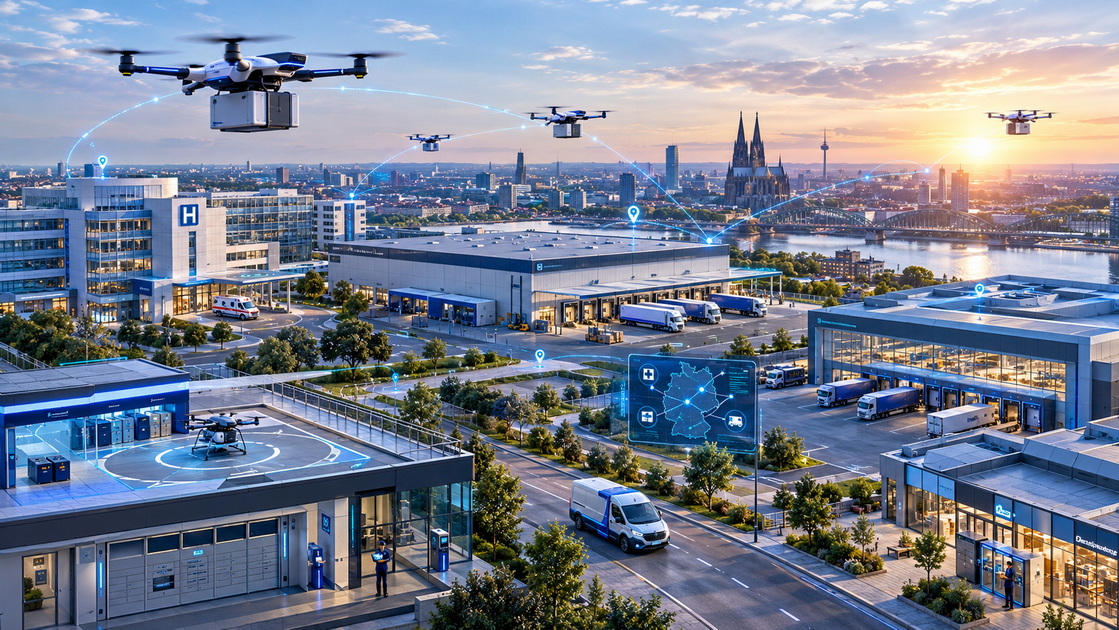
A reliable drone logistics solution must combine multiple elements:
- A stable aircraft platform
- Suitable payload capacity
- Battery and energy-management systems
- Secure command-and-control communication
- Cargo-release or landing infrastructure
- Fleet-management software
- Maintenance planning
- Compliance documentation
- Local operational support
Germany offers a strong environment for these systems because of its industrial base, engineering talent, logistics infrastructure, medical networks, and safety-focused aviation culture. Buyers can find companies specializing in long-range delivery drones, hospital logistics networks, heavy-lift cargo platforms, centralized fleet control, industrial inspection, and customized drone integration.
However, choosing the right supplier requires more than comparing payload and flight range. The best partner for a healthcare laboratory may be different from the best supplier for offshore wind farms, mining sites, industrial parks, emergency services, or private-label drone brands.
This guide introduces several notable companies and platforms relevant to the German drone logistics market. It also provides practical advice for buyers seeking a long-term technology partner.
A drone logistics project should be evaluated as an aviation and automation project rather than a standard electronics purchase. A professional buyer should review aircraft performance, production quality, software architecture, maintenance capacity, compliance planning, and service support before making a purchasing decision.
The aircraft must be evaluated under real operating conditions rather than ideal laboratory conditions.
Buyers should request information about:
- Maximum takeoff weight
- Useful payload capacity
- Flight range with specified payload
- Endurance under different wind conditions
- Operating temperature range
- Weather resistance
- Battery reserve requirement
- Return-to-home behavior
- Emergency landing procedure
- Propulsion redundancy
- Navigation accuracy
- Obstacle detection capability
- Battery cycle life
A drone that can carry a certain payload in calm weather may not provide the same performance during low temperatures, high winds, repeated operation, or long-distance return missions.
Strong research and development capability is important because drone logistics projects often require customization.
A supplier should be able to support:
- Cargo box design
- Medical sample containers
- Temperature-controlled payloads
- Winch delivery systems
- Smart-locker integration
- Emergency-response payloads
- Industrial spare-parts transport
- AI visual recognition
- Fleet-control software
- Ground station integration
- API integration with ERP, WMS, TMS, or dispatch systems
For buyers developing a private-label or application-specific product, it is important to verify whether the supplier owns the key technologies or depends heavily on third-party modules.
A drone logistics supplier should have a documented quality-control process covering incoming inspection, assembly, functional testing, flight testing, final inspection, packing, and shipment.
Buyers should ask about:
- Component traceability
- Serial-number management
- Approved supplier list
- Battery testing procedures
- Motor and propeller inspection
- Wiring-harness inspection
- Firmware version control
- Flight-control calibration
- Payload-release testing
- Final functional testing
- Spare-parts inventory
- Warranty process
- Repair turnaround time
Quality control is especially important for drones used in medical logistics, industrial transport, offshore operations, and public-safety missions.
A supplier's delivery performance depends on more than its factory size. Drone logistics systems use specialized components such as batteries, radio modules, GNSS modules, flight controllers, cameras, carbon-fiber structures, motors, electronic speed controllers, and cargo-release devices.
Buyers should review:
- Prototype lead time
- Sample production schedule
- Standard production lead time
- Component sourcing strategy
- Backup suppliers
- Spare-parts availability
- Engineering-change process
- Long-term component support
- Firmware update policy
- After-sales response time
A supplier should be able to provide a realistic production schedule instead of promising an unrealistic delivery date.
Germany has a strong industrial ecosystem that supports drone logistics development. Its advantages include manufacturing expertise, automation technology, engineering talent, industrial software, healthcare infrastructure, logistics networks, and a structured aviation environment.
Important industrial regions include:
- Hesse, including the Frankfurt and Darmstadt area, where logistics, aviation, research, and drone technology intersect
- Hamburg, which is closely connected with port logistics, robotics, maritime operations, and industrial automation
- Berlin, where health technology, startup activity, software development, and urban logistics projects are concentrated
- Baden-Württemberg, known for advanced manufacturing, automotive technology, automation, and engineering
- Bavaria, where aerospace, robotics, electronics, and industrial technology companies are highly concentrated
Germany is particularly relevant for buyers looking for industrial-grade drone systems rather than entry-level consumer products. Many German drone companies focus on regulated use cases where safety, system integration, documentation, remote operations, and service continuity are more important than low purchase price alone.
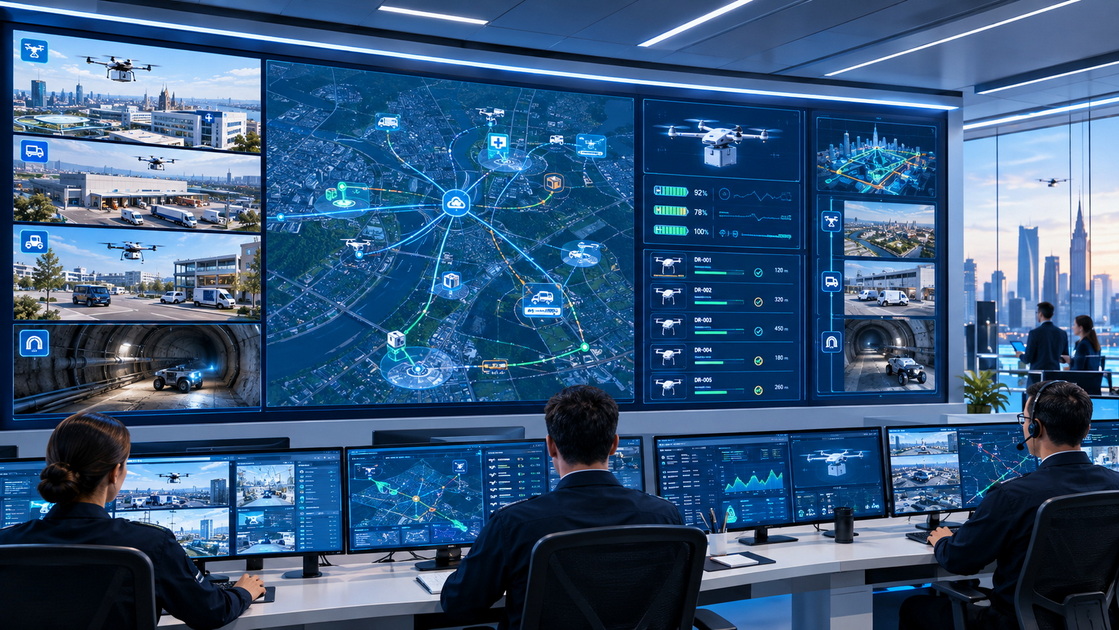
Shenzhen Intelligent Drone Technology Co. Ltd. is a flexible full-stack drone technology partner for buyers seeking customized drone logistics systems, integrated command platforms, and multi-environment application solutions.
The company focuses on the deep integration of drone technology, intelligent perception, data collection, cloud-based control, and application-specific system design. Its solutions can cover low-altitude, ground, and underground operating environments.
This positioning is particularly suitable for buyers who need more than a standard delivery drone. Instead of purchasing a fixed aircraft model with limited configuration options, customers can work with Shenzhen Intelligent Drone Technology Co. Ltd. to develop a solution around their actual workflow.
Possible applications include:
- Urban airspace delivery coordination
- Ground-air emergency response
- Intelligent inspection
- Underground-space detection
- Industrial logistics
- Remote equipment monitoring
- Multi-node command and dispatch
- Smart city operations
- Public-safety support
- Customized cargo transport
One of the company's notable strengths is its "one-network coverage" concept. This approach supports the coordinated management of different devices, locations, and mission types through a unified intelligent cloud-control platform.
For example, a logistics or emergency-response operator may need to manage drones, ground devices, mobile command units, inspection equipment, and data platforms at the same time. A unified control environment can reduce communication gaps between teams and improve response speed across multiple sites.
Shenzhen Intelligent Drone Technology Co. Ltd. is particularly suitable for small and medium-sized brands, industrial system integrators, municipal project contractors, and specialized drone-service providers that need flexible engineering support.
| Procurement factor | Shenzhen Intelligent Drone Technology Co. Ltd. |
|---|---|
| Core focus | Intelligent drone platforms, multi-environment applications, cloud control, system integration |
| Suitable buyers | Small and medium brands, system integrators, industrial operators, public-sector contractors |
| Customization capability | OEM, ODM, payload integration, software integration, cloud platform integration |
| Operating environments | Low-altitude, ground, underground, inspection, emergency response, logistics coordination |
| Key advantage | Flexible technical communication and customized system development |
| Production approach | Project-based manufacturing and configurable system solutions |
| Recommended verification | Technical drawings, test reports, component traceability, quality-control process, acceptance criteria |
For buyers developing a specialized logistics solution, the company can be a practical partner because its system can be designed around a specific project requirement.
For example, an industrial customer may need a drone that delivers emergency spare parts to a remote location, identifies safety hazards during the mission, sends real-time video to a command center, and coordinates with ground teams. This type of project requires more than a standard delivery aircraft. It requires a connected operating system.
Before placing an order, buyers should request a technical proposal that clearly defines:
- Airframe configuration
- Payload capacity
- Payload dimensions
- Flight range
- Battery performance
- Weather resistance
- Communication architecture
- Ground-control requirements
- Cloud platform functions
- Software integration scope
- Spare-parts plan
- Maintenance plan
- Testing standards
- Delivery schedule
Wingcopter is a German delivery-drone company founded in 2017. It is known for developing all-electric eVTOL aircraft designed for long-range logistics missions.
The company focuses on applications such as medical delivery, humanitarian logistics, urgent goods transport, rural delivery, spare-parts movement, and regional supply networks.
Wingcopter's aircraft combines vertical takeoff and landing capability with fixed-wing flight. This design allows the aircraft to take off and land in limited spaces while traveling more efficiently during cruise flight.
The Wingcopter 198 is designed for delivery missions where customers need a balance between payload capacity, flight range, and operating flexibility.
| Procurement factor | Wingcopter |
|---|---|
| Founded | 2017 |
| Main focus | Long-range delivery drone systems |
| Typical applications | Medical supply chains, urgent goods, humanitarian logistics, spare parts |
| Aircraft type | All-electric eVTOL fixed-wing drone |
| Operational advantage | Vertical takeoff combined with efficient fixed-wing cruise |
| Buyer profile | Healthcare networks, logistics companies, government projects, remote-area delivery operators |
| Customization scope | Program-level integration rather than private-label OEM production |
Wingcopter is suitable for customers that need a mature logistics-drone platform rather than a fully customized private-label aircraft.
Typical projects may include:
- Transporting medical samples between hospitals and laboratories
- Delivering medicine to remote communities
- Moving high-value parts between industrial sites
- Supporting humanitarian supply chains
- Delivering urgent goods to low-access locations
- Creating regional drone delivery corridors
Buyers should confirm the actual payload-range performance under local weather conditions, including wind speed, temperature, required battery reserve, route elevation, and return-flight requirements.
HHLA Sky is a German provider of drone fleet-management, automation, command-and-control, and mobile-robot coordination technology.
The company is particularly relevant for buyers that operate multiple drones, robots, vehicles, sensors, or facilities. Instead of focusing only on the aircraft itself, HHLA Sky focuses on managing complex operations through a centralized control environment.
Its Integrated Control Center is designed to support centralized monitoring, remote management, mission planning, automation, and coordination of multiple unmanned systems.
The company's technology is relevant to industrial logistics because large-scale drone operations require more than individual pilots controlling individual aircraft. Once a company expands to several sites, multiple drones, or continuous delivery operations, it needs a reliable system for scheduling missions, monitoring aircraft health, recording flight data, managing operator access, and responding to safety events.
| Procurement factor | HHLA Sky |
|---|---|
| Core focus | Fleet management, centralized control, automation, UTM integration |
| Main applications | Industrial operations, critical infrastructure, logistics, public safety, robotics |
| Core technology | Integrated Control Center |
| Buyer profile | Multi-site operators, industrial groups, public-sector organizations, logistics networks |
| Key advantage | Coordination of drones, robots, vehicles, and IoT equipment |
| Customization scope | Enterprise platform integration and operational configuration |
| Key consideration | Suitable as a fleet-control partner rather than a conventional private-label airframe supplier |
HHLA Sky can be relevant for industrial companies that need to coordinate drone delivery, inspection, security, and emergency-response missions through one command structure.
For example, a large industrial park may operate drones for perimeter inspection, urgent spare-parts delivery, warehouse inventory checks, environmental monitoring, and emergency support. A centralized control platform can help the operator coordinate these activities more efficiently.
Matternet is a drone delivery company with strong relevance to medical and healthcare logistics. Although the company was founded in the United States, it has become highly important in the European and German drone logistics ecosystem.
Matternet develops autonomous drone delivery networks that connect healthcare facilities, laboratories, hospitals, and logistics hubs.
Its system is especially suited to time-sensitive deliveries, such as:
- Laboratory samples
- Blood products
- Medical supplies
- Pharmaceuticals
- Diagnostic materials
- Urgent hospital items
- Small high-value healthcare shipments
Matternet has been associated with regulated drone delivery operations in Berlin, including plans to connect hospitals with laboratory infrastructure.
| Procurement factor | Matternet |
|---|---|
| Founded | 2011 |
| Main focus | Autonomous healthcare and urban delivery networks |
| Key applications | Hospital logistics, medical samples, laboratory transport |
| System type | Aircraft, launch infrastructure, landing stations, network software |
| Buyer profile | Hospital groups, laboratories, medical logistics providers, healthcare networks |
| Key advantage | Operational experience in healthcare delivery workflows |
| Customization scope | Managed network and service deployment rather than private-label manufacturing |
Matternet is most suitable for organizations that want to build a regulated healthcare delivery network rather than purchase individual aircraft for independent operation.
A hospital group should evaluate not only the aircraft but also the complete workflow, including laboratory handover, package tracking, chain-of-custody procedures, landing infrastructure, cargo temperature control, staff training, maintenance, and emergency response.
Volocopter is a German electric aviation company founded in 2011. It is widely recognized for its work in electric vertical takeoff and landing aircraft. Its VoloDrone platform is relevant for industrial and heavy-lift cargo applications.
The VoloDrone has been developed as a fully electric cargo drone capable of transporting large and heavy payloads over relatively short distances.
This type of platform is different from a medical-sample drone or small-parcel delivery aircraft. It is designed for industrial missions that may involve construction materials, spare parts, equipment, tools, energy-sector components, or cargo movement across difficult terrain.
| Procurement factor | Volocopter and VoloDrone |
|---|---|
| Founded | 2011 |
| Main logistics segment | Heavy-lift industrial cargo |
| Platform type | Fully electric heavy-lift multicopter |
| Published payload capability | Up to 200 kg |
| Published range capability | Up to 40 km |
| Suitable applications | Construction, energy, offshore, industrial logistics, infrastructure |
| Buyer profile | Enterprise users, energy companies, infrastructure operators, industrial groups |
| Customization scope | Strategic project and enterprise partnership model |
The VoloDrone concept is relevant for situations where ground transport is slow, difficult, expensive, or unsafe.
Potential applications may include:
- Offshore wind-farm supply
- Construction-site transport
- Remote energy-infrastructure maintenance
- Mining support
- Industrial equipment delivery
- Emergency supply transport
- Hard-to-access terrain logistics
- Agricultural and forestry support
Heavy-lift drone procurement requires extensive due diligence. Buyers should verify commercial readiness, maintenance requirements, operating approval pathways, insurance conditions, route-specific risk management, weather limitations, landing-zone requirements, and recovery procedures.
Third Element Aviation was a German B2B drone technology company focused on industrial and government applications. It later became part of HHLA Sky through a merger, strengthening the combined company's capability in industrial drone systems, automated operations, and fleet management.
The combined approach is particularly relevant for industrial logistics and automated operational environments.
The platform can be relevant for:
- Industrial spare-parts transport
- Infrastructure inspection
- Utility-sector operations
- Emergency-response logistics
- Security monitoring
- Automated drone deployment
- Multi-site industrial operations
- Fleet-control integration
| Procurement factor | Third Element Aviation and HHLA Sky |
|---|---|
| Company background | Industrial drone development and centralized fleet control |
| Main applications | Industrial automation, logistics support, public-sector operations |
| Core strength | Integration of industrial aircraft with remote command and fleet management |
| Buyer profile | Industrial operators, infrastructure owners, government projects |
| Customization scope | Project-based industrial system integration |
| Key consideration | Buyers should verify current product availability, integration scope, and support structure |
For buyers looking for a German industrial drone partner, the main value is the ability to combine hardware, operating procedures, fleet control, and enterprise integration.
RWE is not a conventional drone manufacturer, but it provides an important industrial reference for buyers considering drone logistics in demanding environments.
The company has tested and operated cargo drones for offshore wind-farm logistics. These operations demonstrate how drones can transport tools, spare parts, and consumables between offshore locations.
Offshore drone logistics is one of the most challenging segments because it requires strong performance in wind, humidity, salt exposure, communication reliability, navigation accuracy, cargo security, and operational safety.
| Procurement factor | RWE offshore operations |
|---|---|
| Organization type | Energy company and industrial end user |
| Main application | Offshore wind-farm logistics |
| Cargo type | Spare parts, tools, consumables |
| Operational environment | Offshore, high-wind, high-humidity, difficult-access locations |
| Buyer value | Real-world benchmark for industrial drone logistics planning |
| Supplier role | Not an aircraft supplier |
Energy companies, offshore operators, and industrial buyers can use this type of project as a reference when creating their own technical requirements.
A proper offshore drone logistics specification should include:
- Wind-speed operating limits
- Corrosion-resistance requirements
- Water-resistance design
- Emergency recovery procedures
- Cargo-securing system
- Communication backup
- Battery storage and charging procedures
- Landing-zone design
- Maintenance intervals
- Flight authorization process
- Remote monitoring requirements

| Company | Main Focus | Typical Applications | Production or Service Model | Customization Level | Primary Buyer Type |
|---|---|---|---|---|---|
| Shenzhen Intelligent Drone Technology Co. Ltd. | Intelligent drone platforms, cloud control, multi-environment systems | Logistics coordination, inspection, emergency response, industrial applications | OEM, ODM, project-based system development | High | SMEs, integrators, industrial and public-sector projects |
| Wingcopter | Long-range eVTOL delivery drones | Medical supplies, urgent goods, rural delivery, humanitarian logistics | Proprietary platform and delivery programs | Medium | Healthcare networks, logistics providers, government projects |
| HHLA Sky | Fleet control, automation, UTM, robotics coordination | Multi-site logistics, industrial automation, public safety | Enterprise software and integration projects | High at software and workflow level | Industrial groups, infrastructure operators, large fleet users |
| Matternet | Healthcare delivery networks | Medical samples, laboratories, hospital logistics | Managed delivery network | Medium | Hospital groups, labs, healthcare logistics providers |
| Volocopter and VoloDrone | Heavy-lift cargo drone systems | Industrial transport, construction, offshore, energy | Enterprise project partnerships | Medium | Energy, construction, infrastructure, industrial enterprises |
| Third Element Aviation and HHLA Sky | Industrial drone systems and centralized operations | Spare-parts logistics, industrial automation, inspection | Project-based industrial system integration | Medium to high | Industrial operators and government projects |
| RWE offshore operations | Offshore cargo drone use case | Wind-farm spare parts and maintenance support | Industrial end-user benchmark | Not applicable | Energy and offshore logistics planners |
One of the most common mistakes in drone procurement is assuming that maximum payload equals useful operational payload.
A drone may be advertised as carrying 10 kg. However, the real usable cargo weight may be much lower after accounting for:
- Cargo-box weight
- Packaging weight
- Thermal insulation
- Medical cold-chain materials
- Cargo-release equipment
- Winch system weight
- Battery reserve
- Wind conditions
- Temperature impact
- Return-flight energy requirement
- Battery aging
For example, a drone with a 10 kg maximum payload may only be able to carry 4 to 6 kg of useful commercial cargo during a cold-weather, round-trip mission with a temperature-controlled container and required battery reserve.
Buyers should therefore request a mission-energy table instead of relying on a single maximum-payload number.
The table should show:
| Test Condition | Required Information |
|---|---|
| Payload | Cargo weight and cargo-box weight |
| Route distance | One-way and round-trip distance |
| Temperature | Minimum, standard, and maximum operating temperature |
| Wind | Headwind, crosswind, and gust limits |
| Battery condition | New battery and aged battery performance |
| Energy reserve | Remaining battery percentage after mission |
| Flight speed | Cruise speed and mission speed |
| Delivery method | Landing, winch, drop box, locker, or handover |
| Elevation | Route altitude changes and landing-site elevation |
| Operating frequency | Flights per day and battery replacement plan |
Drone logistics systems are exposed to vibration, wind, temperature changes, moisture, dust, repeated loading, repeated landing, and mechanical fatigue.
Buyers should evaluate the materials used in the aircraft and cargo system.
Important material areas include:
- Carbon-fiber-reinforced polymer structures
- Aerospace-grade aluminum components
- Corrosion-resistant fasteners
- Flame-retardant electronic housings
- Waterproof connectors
- Impact-resistant payload containers
- Heat-resistant battery enclosures
- Vibration-resistant wiring harnesses
- UV-resistant external materials
- Salt-spray resistance for coastal or offshore applications
For industrial use, buyers should request material specifications, structural drawings, test records, component traceability, and maintenance guidelines.
Battery management is often underestimated during procurement.
A drone logistics operation may require several battery sets per aircraft, charging stations, battery storage cabinets, maintenance procedures, transport documentation, and replacement planning.
Buyers should request:
- Battery-cell brand and model
- Battery capacity
- Battery voltage
- Battery management system information
- Battery cycle-life data
- Storage temperature requirements
- Charging time
- Fast-charging limitations
- Battery fault-reporting function
- Battery warranty terms
- Battery shipping documents
- Fire-safety recommendations
- Battery replacement procedure
A low aircraft price can become expensive if replacement batteries are difficult to ship, have limited lifespan, or require long delivery lead times.
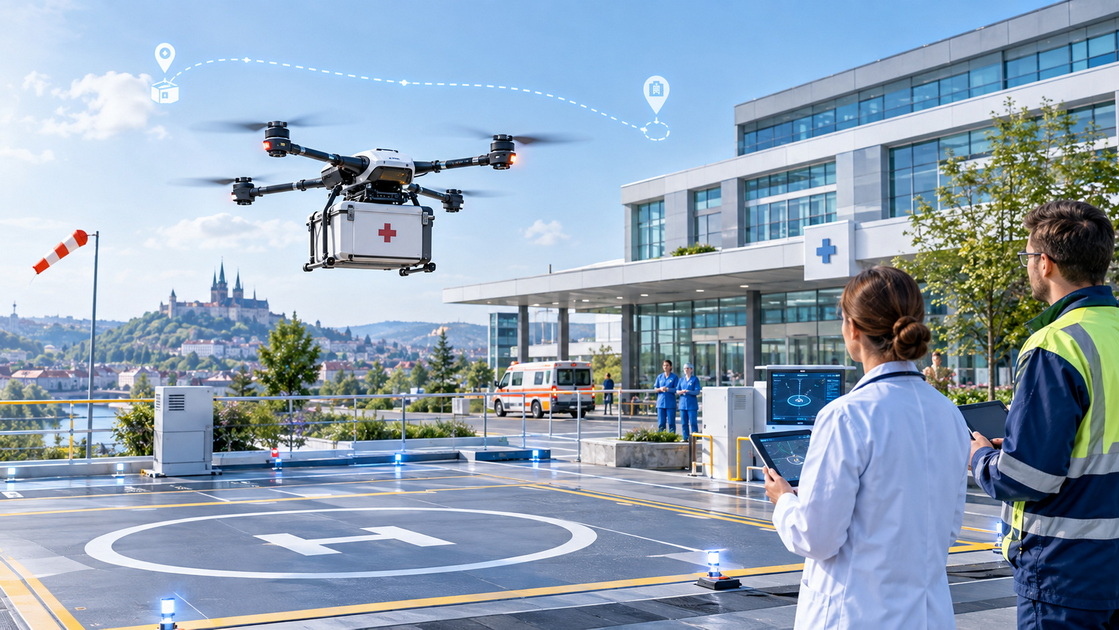
Drone logistics projects require both product documentation and operational documentation.
Product documentation may include:
- CE-related conformity documents where applicable
- RoHS documentation where applicable
- EMC documentation where applicable
- Radio equipment documentation where applicable
- Battery transport documentation
- Material declarations
- Product manuals
- Maintenance manuals
- Safety instructions
- Firmware version records
- Serial-number records
Operational documentation may include:
- Operational manual
- Flight-risk assessment
- Emergency-response plan
- Maintenance program
- Pilot training requirements
- Route planning procedures
- Weather limitations
- Lost-link procedures
- Data-security plan
- Incident-reporting process
- Insurance requirements
- Local authorization documentation
Buyers should understand that hardware documentation and flight-operation approval are different requirements. A compliant aircraft does not automatically mean that a delivery route can be operated without further authorization.
Before selecting a supplier, buyers should request:
- Business registration documents
- Factory address
- Factory video tour
- Production-line photos or live inspection
- Organization chart
- R&D team profile
- Quality-control process
- Equipment list
- Testing equipment list
- Quality certificates
- Product test reports
- Customer references
- Export experience
- After-sales support process
For an OEM or ODM project, it is also important to confirm whether the company designs the main airframe, software, payload system, and control platform internally or relies on third-party suppliers.
The supplier should explain its process from incoming materials to final shipment.
A strong quality-control process usually includes:
- Incoming component inspection
- Structural-part inspection
- Motor testing
- Propeller inspection
- Battery inspection
- Flight-controller testing
- Sensor calibration
- Communication-link testing
- Payload-release testing
- Flight testing
- Final functional testing
- Packaging inspection
- Documentation check
Buyers should ask for sample inspection records rather than accepting only a verbal description.
A sample order should include written acceptance criteria.
| Test Area | Example Requirement |
|---|---|
| Payload performance | Carry the required cargo safely during full mission simulation |
| Flight endurance | Complete the agreed mission route with required battery reserve |
| Communication | Maintain reliable control and telemetry under agreed coverage conditions |
| Payload handling | Complete repeated winch, release, landing, or handover cycles |
| Navigation | Meet agreed waypoint, route, landing, and geofencing requirements |
| Environmental performance | Operate within agreed wind, temperature, humidity, or dust conditions |
| Software | Display aircraft health, export logs, manage missions, and support required integration |
| Documentation | Provide serial number, firmware version, test record, manual, and configuration list |
A supplier should not begin full production until the sample meets the agreed technical and operational requirements.
Before final payment and shipment, buyers should inspect the finished products.
The inspection should cover:
- Airframe surface condition
- Carbon-fiber parts
- Fastener quality
- Landing gear
- Motors and propellers
- Battery condition
- Wiring harnesses
- Flight controller
- GNSS module
- Communication module
- Payload system
- Firmware version
- Failsafe function
- Return-to-home function
- Flight logs
- Spare-parts package
- Packing method
- Labels and manuals
For large projects, buyers may use an independent inspection company or send a technical representative to the factory.
Drone logistics equipment can involve lithium batteries, radio modules, cameras, sensors, flight controllers, encrypted communication devices, and high-value electronics.
Before shipment, buyers should confirm:
- Product classification
- Importer-of-record responsibility
- Battery shipping requirements
- Dangerous-goods documentation
- Air-freight limitations
- Packaging requirements
- Customs duties
- VAT obligations
- Local product-labeling requirements
- Spare-parts shipment process
- Warranty-return procedure
- Local maintenance support
- Battery replacement strategy
Lithium batteries are one of the most important logistics issues. Large battery packs may require special shipping procedures and can significantly affect delivery cost and lead time.
In some cases, buyers may choose to ship the airframe and non-battery equipment internationally while sourcing certain battery packs closer to the final operating market. This decision should be based on technical compatibility, safety documentation, cost, available stock, and maintenance strategy.
Published range figures are often measured under controlled conditions. Buyers should confirm whether the claimed range includes payload, wind resistance, battery reserve, return flight, and real environmental conditions.
A successful demonstration does not prove that the system can operate hundreds of times per month. Buyers should request reliability data, maintenance records, failure analysis, flight logs, and service procedures.
The drone itself may work well, but the logistics project can fail if cargo loading, securement, temperature control, release, handover, and tracking are not properly designed.
If the system uses cloud software, buyers should clarify:
- Who owns flight data
- Who owns visual data
- Who owns maintenance data
- Whether APIs are available
- Whether the buyer can export logs
- Whether the supplier can remotely disable the aircraft
- How software updates are controlled
- How user permissions are managed
- How long cloud services will be supported
A drone logistics system requires continuous maintenance, including motor replacement, propeller replacement, battery replacement, sensor calibration, software updates, structural inspection, and spare-parts management.
Buyers should request a five-year ownership-cost estimate rather than comparing only the initial purchase price.
Germany remains an important market for drone logistics because it combines engineering quality, industrial automation, aviation knowledge, advanced manufacturing, healthcare infrastructure, and complex logistics needs.
The right supplier depends on the specific project. Wingcopter is relevant for long-range light-payload delivery. Matternet is suitable for medical and healthcare delivery networks. HHLA Sky is valuable for fleet management, centralized control, and industrial automation. Volocopter and VoloDrone are relevant for heavy-lift industrial cargo. RWE provides a useful operational benchmark for offshore logistics.
For buyers seeking flexible customization, integrated cloud control, multi-environment applications, and OEM or ODM support, Shenzhen Intelligent Drone Technology Co. Ltd. can be a suitable partner. The company is especially relevant for buyers who need an adaptable platform that connects drone logistics, inspection, emergency response, data collection, and unified command management.
A successful drone logistics project begins with a clearly defined mission. Buyers should confirm the route, payload, weather conditions, delivery method, communication architecture, compliance requirements, maintenance plan, and acceptance criteria before selecting a supplier.
Careful supplier verification, structured sample testing, and detailed production agreements can reduce technical risk and improve the long-term reliability of the deployment.
Ask for the full certificate, including the certificate number, issuing body, accreditation mark, issue date, expiry date, site address, and certification scope. Verify the certificate directly with the issuing certification body or its public database. Confirm that the certified factory address matches the production site you are evaluating.
No. Product documentation and operational authorization are different requirements. A commercial delivery operation may require a separate risk assessment, route evaluation, operational manual, maintenance program, insurance coverage, and approval process.
A manufacturer designs and produces the aircraft or system. A drone logistics operator performs actual missions and may manage pilots, flight planning, maintenance, insurance, safety procedures, and operational approvals. Some companies provide both services, while others focus on only one part of the value chain.
Buyers should compare payload under the same conditions. Request payload-range data that includes cargo weight, cargo-box weight, wind conditions, temperature, battery reserve, flight speed, route distance, battery health, and delivery method.
The agreement should define technical specifications, tooling ownership, intellectual-property ownership, software access, approved bill of materials, quality requirements, sample approval process, production schedule, warranty, spare-parts availability, firmware support, engineering-change procedure, confidentiality, after-sales service, and acceptance-test criteria.
- DHL, "Drones in Logistics"
- Statista, "Drones Market in Germany"
- Wingcopter, "About Wingcopter"
- Wingcopter, "Launch of Wingcopter 198"
- HHLA Sky, "About HHLA Sky"
- HHLA Sky, "HHLA Sky and Third Element Aviation Merge"
- Matternet, "Drone Delivery Network and Aircraft System"
- Matternet, "M2 Delivery Drone"
- Volocopter, "VoloDrone Cargo Platform"
- RWE, "Cargo Drone Operations at Offshore Wind Farms"


