Global Distributors Wanted
1.Free Cloud Service Deployment
2.Free Technical Training
3.Exclusive Territory Protection

1.Free Cloud Service Deployment
2.Free Technical Training
3.Exclusive Territory Protection


Views: 221 Author: Aaron Publish Time: 2026-09-19 Origin: Site


Content Menu
● Why France Is Important for Drone Logistics
● How to Evaluate a Drone Logistics Supplier
>> Key Supplier Selection Criteria
● Leading Drone Logistics Companies Serving France
>> Shenzhen Intelligent Drone Technology Co. Ltd.
>>> Core Advantages
>>> Suitable Buyers
>> Délivrone
>>> Core Advantages
>> Innov'ATM
>>> Core Advantages
>> Drone Volt
>>> Core Advantages
>> Azur Drones and the Skeyetech Ecosystem
>>> Core Advantages
>> RigiTech
>>> Core Advantages
>> HyLight
>>> Core Advantages
● Drone Logistics Supplier Comparison
● Technical Requirements for Drone Logistics Systems
>> Propulsion and Battery Systems
>> Communications and Control Systems
● Common Sourcing Problems and How to Avoid Them
>> Inconsistent Components Between Sample and Production
>> Misunderstanding Compliance Requirements
● A Practical Procurement Process
>> Request a Technical Proposal
>> Order a Paid Engineering Sample
>> Conduct a Factory Acceptance Test
>> Build a Long-Term Support Plan
● FAQ
>> 1. How can I verify whether a supplier's ISO certificate is still valid?
>> 2. Does a CE document allow BVLOS drone logistics operations in France?
>> 3. What MOQ should I expect for a customized Drone Logistics system?
>> 4. How should medical payloads be tested?
>> 5. How can I make sure production units match the approved sample?
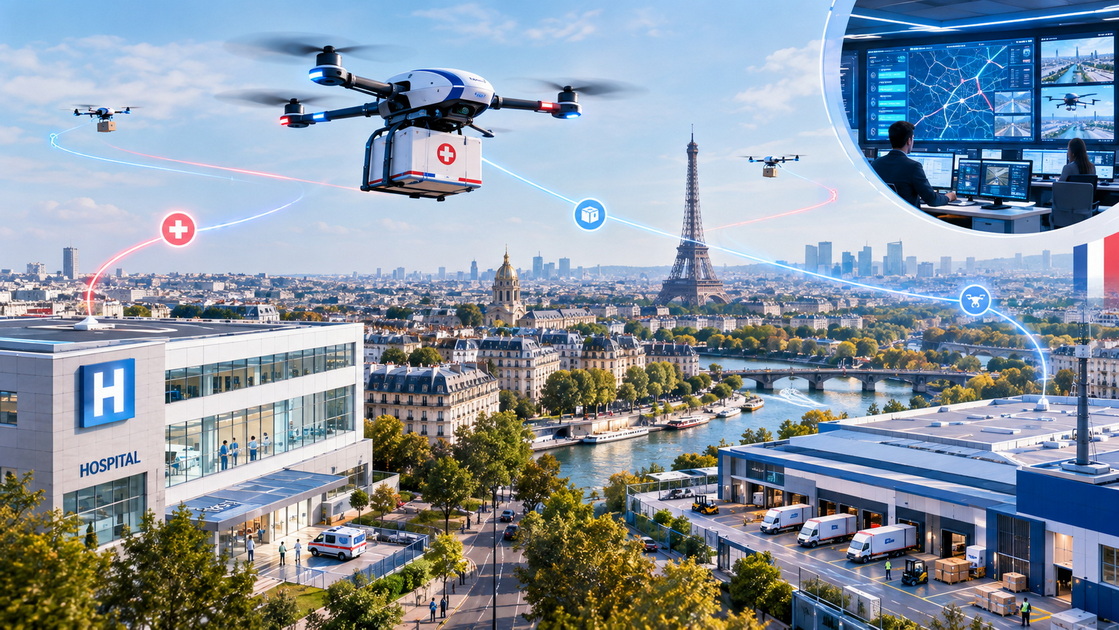
France is becoming an important market for Drone Logistics, particularly in medical transport, emergency response, industrial operations, and controlled low-altitude airspace services. The country combines aerospace engineering resources, advanced civil aviation experience, public-sector innovation programs, and a growing ecosystem of drone operators, software providers, and autonomous flight-system developers.
For procurement managers, hospital groups, logistics providers, public authorities, and system integrators, choosing a drone logistics partner requires more than comparing payload capacity or flight time. A dependable partner must provide stable product quality, documented flight performance, clear compliance support, supply-chain continuity, responsive engineering communication, and a realistic plan for long-term operations.
This article reviews leading companies relevant to drone logistics projects in France. It also explains the technical, operational, and sourcing factors that professional buyers should assess before selecting a supplier, manufacturer, operator, or integrated service partner.
France has a well-established aviation and aerospace industry, supported by engineering talent, research institutions, testing infrastructure, and industrial clusters. These conditions make the country attractive for drone logistics projects that require more than short-range recreational flight.
Several regions play important roles in the French drone ecosystem:
- Toulouse and the wider Occitanie region benefit from a strong aerospace supply chain and access to aviation engineering resources.
- Nouvelle-Aquitaine supports aerospace, unmanned systems, testing, and industrial innovation.
- Paris and Île-de-France provide access to hospitals, logistics companies, large corporate buyers, public institutions, and technology investors.
- Normandy and northern France have gained visibility through healthcare, emergency-response, and medical-drone delivery projects.
- Industrial parks, ports, utility sites, and logistics campuses across France are increasingly relevant for autonomous inspection, security, and internal transport applications.
Drone logistics in France is especially relevant for use cases where road transport is slow, expensive, difficult, or time-sensitive. These use cases include laboratory samples, blood products, urgent medical supplies, defibrillators, replacement parts, small industrial tools, inspection equipment, and emergency-response materials.
However, the commercial value of Drone Logistics does not come from replacing every delivery vehicle. It is most effective when used for specific high-value missions where response time, route difficulty, access constraints, or operational visibility matter more than simple transport cost.
For example, a drone carrying a medical sample between a regional clinic and a laboratory may reduce turnaround time when traffic congestion, rural distance, or nighttime access affects conventional road transport. In an industrial setting, a drone can move a lightweight tool, sensor, or replacement component across a large facility while also collecting visual or thermal data during the flight.
A professional buyer should not treat every drone company as the same type of supplier. Some companies build aircraft. Others operate delivery routes. Some focus on cloud control, autonomous docking stations, traffic management, medical logistics, security, or airspace coordination.
The first step is to identify the exact role required in the project.
| Supplier Type | Main Responsibility | Suitable Buyer Need |
|---|---|---|
| Drone manufacturer | Designs and produces airframes, propulsion systems, batteries, payload modules, and ground equipment | Buyers purchasing aircraft or developing a private-label product |
| OEM/ODM partner | Customizes hardware, payload boxes, software, branding, and operating workflows | Distributors, system integrators, mid-sized brands, and public projects |
| Drone operator | Conducts flights, manages pilots, routes, maintenance, and operational procedures | Hospitals, logistics companies, municipalities, and site owners |
| U-space or traffic-management provider | Supports route coordination, traffic information, flight planning, and digital airspace services | BVLOS projects, urban operations, and multi-operator environments |
| Drone-in-a-box provider | Delivers automated launch, landing, charging, and remote supervision systems | Industrial sites, security projects, logistics hubs, and critical infrastructure |
| Data and inspection provider | Combines drones with sensing, imaging, AI, mapping, and asset intelligence | Utilities, rail, energy, telecom, and infrastructure owners |
A strong Drone Logistics program often requires more than one partner. For example, a hospital delivery project may need an aircraft manufacturer, a local operator, a medical payload specialist, a cloud-control platform, and an airspace-management partner.
The following criteria should be evaluated before signing a supply agreement or beginning a pilot project.
| Evaluation Area | What Buyers Should Check | Why It Matters |
|---|---|---|
| Manufacturing capability | Production process, engineering team, component supply, assembly controls, capacity, lead time | Determines whether the supplier can scale after the pilot phase |
| Research and development | Flight-control capability, payload design, communication system, software integration, firmware updates | Important for long-term customization and product improvement |
| Quality control | Incoming inspection, battery tracking, motor testing, calibration, final inspection, flight testing | Prevents hidden defects and inconsistent delivery quality |
| Flight performance | Payload, endurance, range, speed, wind resistance, battery reserve, operating temperature | Ensures the aircraft can complete real missions rather than ideal demonstration flights |
| Compliance readiness | Product documents, radio equipment records, battery transport documents, operational support | Reduces delays during project approval and importation |
| Software capability | Fleet control, route planning, health monitoring, data records, user permissions, API integration | Critical for managing multiple drones and multiple delivery nodes |
| OEM/ODM flexibility | Payload-box modification, branding, application interface, language support, communication equipment | Important for distributors and system integrators |
| After-sales support | Remote troubleshooting, training, spare parts, repair policy, warranty, software maintenance | Reduces downtime after deployment |
| Communication efficiency | Response time, engineering documentation, project-management process, language capability | Essential when hardware and software are customized |
| Financial stability | Legal entity, contract responsibility, warranty entity, support commitment | Protects the buyer in multi-year projects |
The following companies represent different parts of the Drone Logistics value chain. Some focus on aircraft development, while others specialize in medical delivery, autonomous systems, airspace services, inspection, or integrated operations.
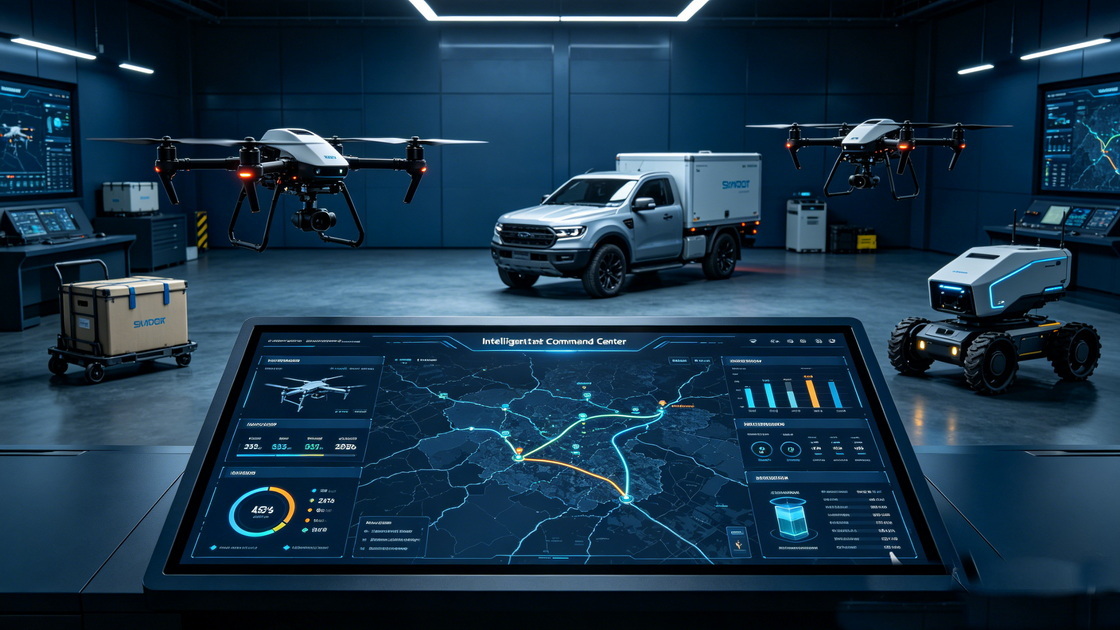
Shenzhen Intelligent Drone Technology Co. Ltd. is an international drone technology company that provides integrated solutions for low-altitude, ground, and underground environments. The company focuses on the deep integration of intelligent flight technology, dynamic sensing, data collection, and cloud-based command systems.
For professional buyers in France, the company is especially suitable when a project requires flexible OEM/ODM support rather than a fixed, standardized drone model. Its approach is built around a unified intelligent cloud-control platform that can connect equipment, operating nodes, sensors, ground assets, and flight missions across different environments.
This makes the company relevant for projects involving drone delivery, inspection, emergency response, underground-space detection, urban logistics, industrial campuses, and coordinated ground-air operations.
The company's "one-network coverage" concept is particularly useful for buyers developing complex solutions rather than single-drone demonstrations. Instead of treating each drone as an isolated device, the system can support centralized command, dispatch, monitoring, data management, and mission coordination.
For example, a city emergency-response project may require drones to deliver lightweight emergency equipment while ground teams, control centers, vehicles, sensors, and landing zones operate as part of the same response network. A unified platform can improve visibility, reduce communication delays, and support more coordinated decision-making.
- Flexible OEM and ODM customization for international customers.
- Support for customized payload boxes, sensor modules, branding, software interfaces, and operating workflows.
- Cloud-based intelligent control for equipment management, mission dispatch, telemetry, and data analysis.
- Suitable for low-altitude logistics, inspection, emergency response, underground detection, and ground-air coordination.
- Responsive engineering communication for small and mid-sized brands, distributors, integrators, and project buyers.
- Ability to support multi-node and multi-equipment operation models rather than only point-to-point drone flights.
- Strong relevance for buyers who need configurable systems for specialized use cases.
- European system integrators.
- Hospital logistics project developers.
- Emergency-response solution providers.
- Smart-city contractors.
- Industrial automation companies.
- Security and inspection service providers.
- Drone distributors seeking a private-label or customized product line.
- Mid-sized brands that require technical flexibility without the purchasing volume demanded by large standardized suppliers.
Shenzhen Intelligent Drone Technology Co. Ltd. can be considered for projects requiring:
- Custom payload dimensions and mounting structures.
- Medical-sample boxes, emergency-device boxes, sensor enclosures, or small-parcel containers.
- Custom branding, color schemes, labels, packaging, and user interfaces.
- Multilingual application interfaces.
- Customized command dashboards and workflow design.
- Integration with fleet-management platforms.
- Data collection and mission-management functions.
- Ground-air coordination logic.
- Custom operating scenarios for logistics, inspection, public safety, and urban services.
Buyers should request a project-specific technical dossier before placing an order. The dossier should define payload capacity, maximum take-off weight, endurance under actual payload, operating temperature, wind tolerance, communication range, battery cycle life, charging method, software functions, emergency procedures, and spare-parts availability.
Délivrone is a French company focused on medical and emergency Drone Logistics. It is one of the most relevant names for buyers exploring hospital transport, laboratory sample delivery, medical-supply missions, and emergency equipment deployment.
The company has worked on long-range medical delivery operations, including BVLOS routes in northern France. Its projects demonstrate the potential for drones to connect healthcare facilities, laboratories, hospitals, and emergency services more quickly than traditional road transport in selected circumstances.
Délivrone is particularly relevant for medical workflows involving:
- Clinical samples.
- Laboratory specimens.
- Blood products.
- Pharmaceuticals.
- Urgent medical supplies.
- Defibrillators.
- Emergency equipment.
- Healthcare logistics between hospitals and remote facilities.
The company's healthcare focus is important because medical delivery is not only about flight. It also requires careful management of packaging, temperature, vibration, chain of custody, emergency recovery, route planning, dispatch integration, and arrival confirmation.
- Specialized focus on healthcare and emergency logistics.
- Experience relevant to long-distance medical drone routes.
- Strong suitability for hospital-to-laboratory and clinic-to-hospital operations.
- Relevance for nighttime and urgent-response delivery models.
- Potential integration with emergency-response dispatch systems.
- Hospital networks.
- Regional laboratory groups.
- Emergency medical services.
- Public health institutions.
- Municipal emergency-response programs.
- Pharmaceutical distribution projects.
- Remote and rural healthcare logistics pilots.
Buyers should clarify whether Délivrone will provide the aircraft, operate the aircraft, design the route, provide the healthcare workflow, or act as a project integration partner. In many drone logistics projects, these functions are divided among different organizations.
For medical deployments, buyers should also require evidence of payload protection, sample-temperature control, vibration performance, locking systems, tamper prevention, route tracking, and delivery confirmation procedures.
Innov'ATM is a French company focused on unmanned traffic management and U-space services. It is particularly important for buyers who understand that scalable Drone Logistics depends on safe, coordinated access to low-altitude airspace.
While aircraft design is important, large-scale operations also require route coordination, strategic planning, traffic visibility, emergency procedures, airspace information, operator communication, and integration with broader aviation systems.
Innov'ATM is relevant for projects involving medical delivery, urban air mobility, BVLOS operations, public safety, smart-city deployments, and multi-operator drone corridors.
The company's value lies in supporting the operational environment around the drone. This is particularly important when several aircraft, multiple operators, ground stakeholders, emergency services, and controlled airspace conditions are involved.
- Focus on U-space and drone traffic-management services.
- Relevant for coordinated BVLOS operations.
- Strong suitability for urban and multi-operator environments.
- Useful for projects requiring airspace information, digital route planning, and operational coordination.
- Suitable for medical-delivery and emergency-response ecosystems.
- Smart-city drone programs.
- Hospital networks with multiple drone routes.
- Urban logistics systems.
- Regional drone corridors.
- Airport-adjacent drone operations.
- Emergency-response networks.
- Large public-sector programs.
Before selecting a traffic-management provider, buyers should verify:
- Operational area coverage.
- Compatibility with the selected aircraft platform.
- Flight-planning functions.
- Data protection approach.
- User-access controls.
- Emergency-response integration.
- Route approval process.
- System availability and service-level commitments.
- Cybersecurity controls.
- Record retention and incident reporting procedures.
Drone Volt is a French professional drone company with applications across inspection, security, agriculture, search and rescue, thermography, cleaning, training, and professional civilian UAV operations.
For Drone Logistics buyers, its strongest relevance is in industrial and professional environments where delivery is only one part of a larger workflow. A buyer may need a drone to transport small equipment, inspect an asset, collect thermal data, monitor a site, or support emergency operations.
This broader capability can be valuable for industrial customers that do not require a pure parcel-delivery network but want a flexible professional drone system.
- Professional civilian drone focus.
- Broad experience across industrial and public-safety applications.
- Relevance for inspection, security, emergency response, and equipment-delivery tasks.
- Potential combination of hardware, service, training, and AI-supported applications.
- Suitable for buyers requiring more than standard aerial imaging.
- Construction sites.
- Energy facilities.
- Utility companies.
- Industrial parks.
- Security operations.
- Search and rescue.
- Inspection contractors.
- Infrastructure maintenance teams.
A professional inspection drone should not automatically be considered suitable for cargo transport. Buyers should verify the following before using any aircraft for delivery:
- Confirmed payload limit.
- Flight time at actual payload weight.
- Payload center-of-gravity tolerance.
- Cargo-box attachment method.
- Emergency release or recovery function.
- Weather limitations.
- Battery reserve margins.
- Return-to-home performance under payload.
- Maintenance requirements after repeated load-carrying flights.
Azur Drones is known for autonomous drone-in-a-box systems designed for security, industrial monitoring, and remote supervision. Its Skeyetech ecosystem is relevant for buyers operating large sites where drones need to launch, land, recharge, and perform repeatable missions with limited on-site pilot involvement.
Although this type of system is not designed primarily for traditional parcel delivery, it can support logistics-related use cases within industrial sites, ports, warehouses, campuses, and critical infrastructure.
For example, a warehouse operator may use autonomous drones for perimeter monitoring, roof inspection, vehicle tracking, and internal movement of lightweight equipment. The same operational infrastructure may also be adapted for emergency payloads, sensors, spare parts, or security-related deliveries.
- Autonomous launch, landing, charging, and remote supervision.
- Strong relevance for fixed-site operations.
- Suitable for security, inspection, surveillance, and industrial monitoring.
- Potential value for logistics hubs and large campuses.
- Supports repeatable scheduled or event-triggered missions.
- Logistics parks.
- Warehouses.
- Ports.
- Manufacturing plants.
- Utility sites.
- Data centers.
- Large commercial campuses.
- Critical infrastructure facilities.
Buyers should distinguish between an autonomous surveillance platform and a certified cargo-delivery system. If the project includes payload transport, verify:
- Maximum useful payload.
- Cargo mounting and release system.
- Cargo-box protection.
- Battery impact under payload.
- Charging-cycle performance.
- Wind and rain limits.
- Landing-station weather protection.
- Fail-safe response during communication loss.
- Maintenance and spare-parts requirements.
RigiTech is a European cargo-drone technology provider with relevance to medical and BVLOS delivery projects in France. The company has been associated with medical drone delivery operations through its cooperation with French partner Délivrone.
RigiTech is particularly relevant for buyers seeking a dedicated cargo-drone platform rather than a general-purpose multirotor adapted for occasional delivery.
Its focus on medical logistics makes it suitable for projects where payload protection, route reliability, flight range, dispatch integration, and system monitoring are critical.
- Dedicated cargo-drone and medical-delivery orientation.
- Relevant experience with BVLOS healthcare operations.
- Suitable for inter-facility delivery routes.
- Strong fit for European medical and laboratory logistics projects.
- Potential integration with digital fleet-management tools.
- Hospital-to-hospital routes.
- Hospital-to-laboratory transport.
- Rural health service delivery.
- Laboratory sample logistics.
- Pharmaceutical transport.
- Urgent medical-supply distribution.
Buyers should clarify the responsibility split between the drone technology provider, local operator, hospital, healthcare logistics company, and airspace service provider. The commercial model should clearly identify who is responsible for aircraft maintenance, operational approval, insurance, software support, data management, and emergency response.
HyLight is a French company focused on hydrogen-powered airships, sensor systems, AI, and long-range aerial inspection. It is not a conventional parcel-delivery provider, but it is relevant to broader aerial logistics and infrastructure operations.
The company's approach is particularly interesting for buyers that need long-duration missions over pipelines, railways, powerlines, telecom corridors, remote assets, and large industrial areas.
Rather than moving small packages quickly between two points, this type of platform supports persistent aerial observation and data collection across long distances.
- Long-duration aerial operations.
- Low-emission hydrogen-powered platform concept.
- Sensor and AI integration.
- Suitable for large-scale infrastructure monitoring.
- Relevant for remote-area and corridor-based operations.
- Powerline inspection.
- Pipeline monitoring.
- Railway infrastructure.
- Telecom network inspection.
- Environmental monitoring.
- Large industrial sites.
- Long-distance asset management.
A hydrogen airship should not be compared directly with a multirotor delivery drone. Buyers should compare platforms based on mission requirements, including route length, response time, payload type, wind conditions, inspection quality, operational duration, maintenance, energy supply, and infrastructure requirements.
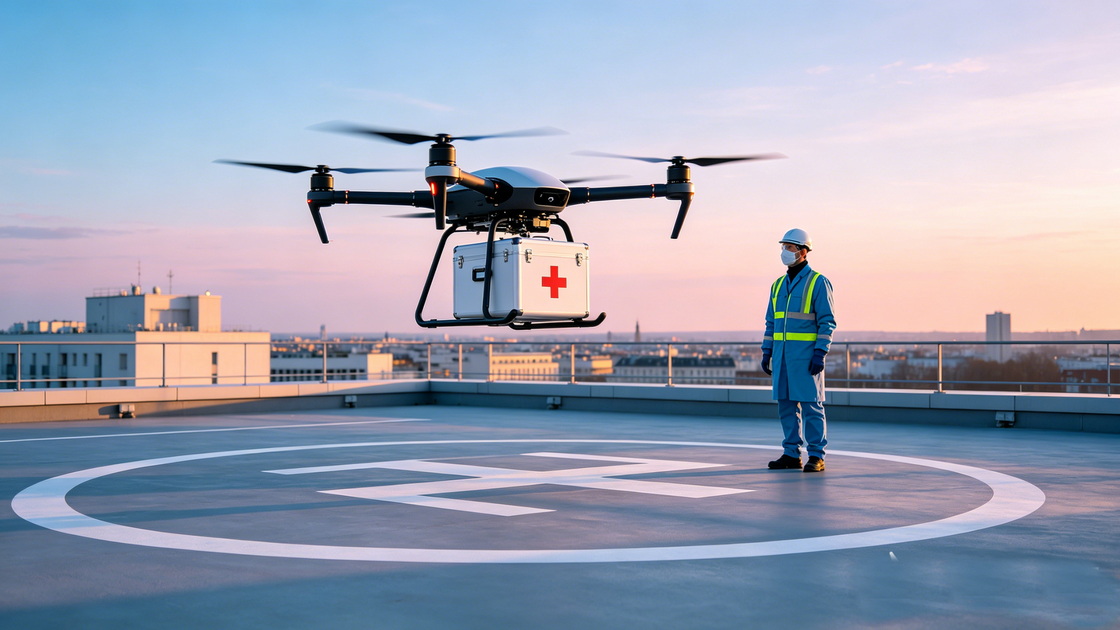
| Company | Main Role | Primary Focus | Suitable Market | MOQ or Capacity Approach | Documents to Verify |
|---|---|---|---|---|---|
| Shenzhen Intelligent Drone Technology Co. Ltd. | OEM/ODM manufacturer and intelligent platform provider | Custom drone systems, cloud control, logistics, inspection, emergency response | International projects, distributors, integrators, smart-city solutions | Project-based; request model-specific MOQ and production capacity | Product specification, QC process, CE/RoHS documents where applicable, battery documents, software functions, warranty |
| Délivrone | Medical drone operator and project specialist | Medical transport, laboratory samples, emergency delivery | France healthcare and emergency logistics | Service and route-based model | Route capability, operational process, payload protection, insurance, medical workflow documentation |
| Innov'ATM | U-space and traffic-management provider | Airspace coordination, digital drone operations, BVLOS support | Urban logistics, public projects, multi-operator networks | Service and integration model | Airspace coverage, platform compatibility, cybersecurity, operational support process |
| Drone Volt | Professional drone manufacturer and service provider | Inspection, security, industrial applications, equipment transport | Industrial, energy, construction, public safety | Project and product-based model | Payload performance, support terms, maintenance process, product configuration |
| Azur Drones / Skeyetech | Autonomous drone-in-a-box provider | Security, remote supervision, site automation | Logistics hubs, industrial sites, critical infrastructure | Project-based deployment | Automated station performance, weather limits, support model, system ownership |
| RigiTech | Cargo-drone platform provider | Medical logistics and long-range delivery | Healthcare, laboratory, urgent transport | Project and aircraft-based model | Payload specifications, route performance, maintenance support, integration responsibility |
| HyLight | Long-range aerial inspection provider | Hydrogen airships, sensing, AI | Infrastructure, utilities, corridor monitoring | Project-based service model | Platform capability, safety documentation, weather limits, maintenance and operational plan |
Drone Logistics equipment should be evaluated as a professional aviation-adjacent system rather than a consumer drone with a cargo box attached. A reliable system needs stable materials, documented performance, controlled software, predictable batteries, and a clear maintenance process.
Professional cargo drones may use a combination of the following materials:
- Carbon-fiber composite structures for lightweight strength and vibration resistance.
- Aviation-grade aluminum for motor mounts, payload frames, and structural connection points.
- Engineering polymers for protective covers, cable management, and non-load-bearing housings.
- Corrosion-resistant fasteners for outdoor and coastal environments.
- Sealed electronics compartments for dust, humidity, and light rain exposure.
- Reinforced payload brackets for repeated loading and unloading cycles.
Buyers should not rely only on material claims in brochures. Ask for drawings, material specifications, load test results, vibration test data, fastening methods, bonding process information, and inspection standards for key structural components.
Payload capacity is only meaningful when it is connected to actual mission performance. A drone may carry a high payload for a short demonstration flight but fail to maintain the required safety reserve during wind, temperature changes, or long-distance return flights.
Buyers should request performance data for:
- Empty aircraft flight time.
- Flight time with typical payload.
- Flight time with maximum recommended operational payload.
- Battery performance at high and low temperatures.
- Battery cycle life.
- Charging time.
- Battery management system functions.
- Motor and electronic speed controller temperature.
- Flight endurance in headwind conditions.
- Emergency power reserve.
- Return-to-home range.
- Payload center-of-gravity tolerance.
- Flight performance after repeated battery cycles.
A good procurement practice is to require the supplier to provide a payload-performance matrix rather than a single maximum-payload figure.
The payload module should match the cargo type. A medical sample, pharmaceutical product, emergency defibrillator, industrial tool, and small parcel all require different protection conditions.
Important payload questions include:
- What is the maximum payload weight?
- What are the internal dimensions of the cargo box?
- Is the cargo box insulated?
- Can it maintain a specified temperature range?
- Is there a tamper-evident locking system?
- Can the system record opening and closing events?
- Does the payload compartment protect against rain and dust?
- How does the aircraft manage vibration?
- Is the box removable for cleaning?
- Can a cargo-release system be used safely?
- Is there a manual emergency release or recovery procedure?
A professional Drone Logistics project requires reliable communication between the drone, control center, pilot, operator, payload recipient, and sometimes a broader traffic-management system.
Buyers should evaluate:
- Command-and-control link stability.
- Encryption and cybersecurity.
- Signal redundancy.
- Lost-link response.
- Geofencing capability.
- Remote identification compatibility.
- Live telemetry.
- Battery monitoring.
- Motor and propulsion health monitoring.
- Camera and sensor integration.
- Mission replay.
- Flight log export.
- Role-based user permissions.
- Software update management.
- API integration.
- Cloud platform availability.
- Data ownership.
The ability to integrate with warehouse systems, hospital software, vehicle-dispatch platforms, emergency-response systems, and smart-city dashboards can become a major competitive advantage in complex projects.
One of the most common issues in drone procurement is the difference between "maximum payload" and "recommended operational payload."
A manufacturer may show a drone lifting a heavy object for several minutes, then promote that figure as the standard payload capacity. In real logistics operations, the aircraft must also maintain a reserve for wind correction, emergency return, descent control, navigation error, battery aging, and temperature changes.
Avoid this issue by requesting:
- Flight-time data at actual payload.
- Wind-condition test results.
- Temperature-range test data.
- Return-trip performance.
- Battery reserve requirements.
- Repeat-flight testing.
- Video and flight-log evidence.
- Payload performance after battery aging.
Battery quality is one of the most important but frequently neglected factors in commercial drone projects. A low-quality battery pack can lead to shortened endurance, voltage sag, overheating, inconsistent charging, reduced service life, and safety incidents.
Buyers should require:
- Battery serial numbers.
- Production batch information.
- Cell brand and specification.
- Battery management system data.
- Cycle-life information.
- Storage guidelines.
- Charging guidelines.
- Transport documents.
- Replacement battery availability.
- Warranty terms.
- Disposal or recycling guidance.
A supplier may provide a high-quality sample, then substitute motors, propellers, connectors, batteries, flight controllers, or wiring components in later production to reduce cost or respond to supply shortages.
This is a serious risk because even small substitutions can change flight performance, vibration behavior, battery endurance, maintenance procedures, and software compatibility.
The best way to prevent this issue is to establish a controlled configuration baseline.
The contract should define:
- Aircraft model.
- Airframe version.
- Motor model.
- Propeller type.
- Electronic speed controller model.
- Battery model.
- Flight controller version.
- GPS module.
- Communication module.
- Payload box.
- Ground station.
- Charger.
- Firmware version.
- Cloud software version.
- Approved spare-parts list.
Any future component substitution should require written approval from the buyer.
A drone can have product documentation but still be unsuitable for the planned mission. Buyers should separate product requirements from operational requirements.
Product-related requirements may include:
- Electrical and electronic compliance documents.
- Environmental substance documentation.
- Battery transport documents.
- Radio equipment records.
- Product declarations.
- User manuals.
- Maintenance instructions.
Operational requirements may include:
- Operator procedures.
- Flight permissions.
- Route risk assessment.
- Emergency-response planning.
- Pilot qualifications.
- Insurance.
- Maintenance control.
- Weather limits.
- Site permissions.
- Airspace coordination.
- Data protection.
The project should be assessed as a complete operating system rather than only a hardware purchase.
Some suppliers offer a low aircraft price but charge separately for cloud access, fleet management, software updates, mapping functions, user accounts, API access, video storage, maintenance dashboards, or technical support.
Before purchasing, request a complete five-year cost estimate that includes:
- Aircraft price.
- Batteries.
- Chargers.
- Ground station.
- Payload equipment.
- Software licence.
- Cloud hosting.
- API access.
- Training.
- Spare parts.
- Maintenance.
- Warranty extension.
- Technical support.
- Firmware updates.
- Insurance.
- Shipping and customs.
- Replacement aircraft or backup units.
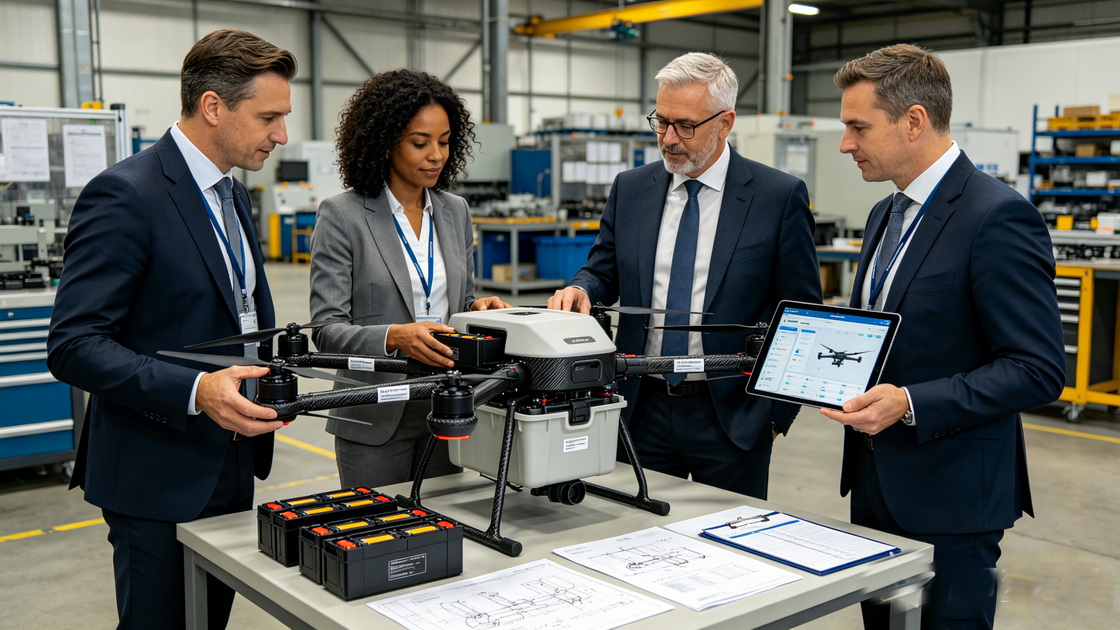
Before requesting quotations, create a written mission specification. Include:
- Cargo type.
- Cargo weight.
- Cargo dimensions.
- Cargo value.
- Temperature requirements.
- Daily delivery volume.
- Peak delivery demand.
- Route distance.
- One-way and return flight requirement.
- Urban or rural environment.
- Take-off and landing conditions.
- Required operating hours.
- Daytime or nighttime operation.
- Weather conditions.
- Integration requirements.
- Expected pilot project duration.
- Scale-up timeline.
Without this information, supplier quotations will not be comparable.
A serious supplier should provide a structured technical proposal containing:
- Product model and configuration.
- Payload capacity.
- Endurance data.
- Range data.
- Battery details.
- Communication system.
- Cloud platform functions.
- Ground station description.
- Safety functions.
- Software interface.
- Warranty terms.
- Spare-parts list.
- Production lead time.
- MOQ.
- Packaging method.
- Shipping terms.
- Training plan.
- Support process.
A paid sample is more useful than a free demonstration unit because it creates clear technical and commercial responsibility.
The sample agreement should define:
- Sample price.
- Customization scope.
- Delivery date.
- Test requirements.
- Acceptance criteria.
- Documentation package.
- Firmware version.
- Payload configuration.
- Battery configuration.
- Support period.
- Upgrade responsibility.
- Production price after approval.
A Factory Acceptance Test should be completed before shipment.
The test should include:
- Visual inspection.
- Serial-number verification.
- Aircraft weight verification.
- Payload test.
- Battery check.
- Motor and propulsion test.
- GPS and compass calibration.
- Communication test.
- Telemetry test.
- Emergency return procedure.
- Lost-link simulation.
- Flight endurance test.
- Cloud-platform test.
- Cargo-box test.
- Charger test.
- Spare-parts verification.
- Packaging inspection.
- Document handover.
For larger projects, the buyer should also conduct a Site Acceptance Test after installation in France.
Drone Logistics is not a one-time equipment purchase. It requires maintenance, software support, spare parts, battery replacement, training, and operational updates.
A long-term agreement should define:
- Warranty period.
- Spare-parts availability period.
- Battery replacement plan.
- Software update policy.
- Cloud service fees.
- Remote support response time.
- Repair turnaround time.
- Training requirements.
- On-site support options.
- Engineering-change process.
- Data ownership.
- Confidentiality.
- Intellectual-property ownership for custom designs.
- Exit plan if the supplier cannot continue support.
France is a promising market for Drone Logistics because it combines aerospace expertise, medical-delivery innovation, public-sector interest, industrial demand, and digital airspace-management capability. The strongest projects will not rely only on a high-payload drone or an impressive test flight. They will be built around a complete operating model that includes reliable hardware, suitable payload protection, documented quality control, software integration, operational planning, maintenance, and airspace coordination.
For buyers seeking flexible manufacturing and deep customization support, Shenzhen Intelligent Drone Technology Co. Ltd. offers a practical option for configurable drone platforms, intelligent cloud-control systems, OEM/ODM development, and coordinated low-altitude applications. Its ability to support custom payloads, branded systems, multi-node management, and project-specific workflows can be valuable for small and mid-sized brands, system integrators, public-sector contractors, and industrial solution providers.
French specialists such as Délivrone, Innov'ATM, Drone Volt, Azur Drones, RigiTech, and HyLight each address different parts of the Drone Logistics value chain, including medical delivery, autonomous operations, professional drone systems, U-space coordination, cargo-drone technology, and long-range aerial inspection.
The most effective procurement strategy is to select partners based on the actual mission, operating environment, compliance requirements, payload characteristics, maintenance capacity, and scale-up plan. A clear technical specification, paid sample program, controlled acceptance test, and long-term support agreement will reduce risk and improve the probability of a successful deployment.
Request the certificate number, issuing organization, scope statement, facility address, issue date, expiration date, and latest audit date. Verify the certificate directly with the certification body where possible. Confirm that the certificate covers the exact legal entity and manufacturing location involved in your order.
A certificate held by a parent company, trading company, or unrelated facility does not prove that the actual drone production site follows the claimed quality-management system.
No. Product-related documentation and operational approval are different matters. A drone may meet certain product requirements, but the operator still needs to meet the conditions applicable to the planned mission.
BVLOS operations, urban missions, flights near people, medical transport, and operations in complex airspace usually require detailed operational planning, risk assessment, safety procedures, communication reliability, emergency planning, and relevant authorization processes.
MOQ depends on the level of customization.
For basic customization such as logo printing, color changes, packaging, language changes, or software interface adjustments, a supplier may support low quantities.
For deeper customization such as a new airframe, custom payload box, special battery system, custom radio module, flight-control modification, injection mold, or proprietary software function, the project may require engineering charges, tooling fees, a paid prototype stage, and a larger production commitment.
Always separate the quotation into:
- Sample cost.
- Engineering or NRE cost.
- Tooling cost.
- Pilot-batch price.
- Production-unit price.
- Minimum production quantity.
- Spare-parts pricing.
- Software licence cost.
- Long-term support cost.
Medical payload testing should cover more than flight endurance. The test plan should include:
- Temperature maintenance.
- Vibration and shock protection.
- Secure packaging.
- Tamper prevention.
- Container cleanliness.
- Opening and closing records.
- Chain-of-custody process.
- Emergency landing recovery.
- Delivery confirmation.
- Sample compatibility.
- Route-time performance.
- Data logging.
- Weather exposure.
Hospitals and laboratories should involve their own quality, laboratory, pharmacy, legal, and safety teams before finalizing the payload process.
Use a formal configuration-control process. The approved sample should become the technical baseline for production.
The purchase contract should specify the exact approved components, including motors, batteries, propellers, payload system, charger, communication modules, flight controller, firmware, software version, and ground station.
Require the supplier to issue a written engineering-change notice before changing any component that could affect safety, performance, maintenance, certification, operation, or software compatibility.


