Global Distributors Wanted
1.Free Cloud Service Deployment
2.Free Technical Training
3.Exclusive Territory Protection

1.Free Cloud Service Deployment
2.Free Technical Training
3.Exclusive Territory Protection


Views: 213 Author: Aaron Publish Time: 2026-09-15 Origin: Site


Content Menu
● Introduction: Why Canada Is Important for Drone Logistics
● How to Evaluate a Drone Logistics Supplier
● Canada's Drone Logistics Opportunity
● Top Drone Logistics Companies for the Canadian Market
>> 1. Shenzhen Intelligent Drone Technology Co. Ltd.
>> 5. Zipline
>> 6. DroneUp
● Comparison of Leading Drone Logistics Companies
● Technical Requirements to Include in an RFQ
>> Communications and Software
>> Maintenance and Spare Parts
● Materials, Manufacturing, and Quality Control
>> Propulsion and Power Systems
● Common Procurement Problems and How to Avoid Them
>> Problem 1: Unrealistic Flight-Time Claims
>> Problem 2: Maximum Payload Does Not Equal Usable Payload
>> Problem 3: Unapproved Component Substitution
>> Problem 4: Incomplete Battery Documentation
>> Problem 5: Closed Software Ecosystems
>> Problem 6: Certificates That Do Not Match the Actual Factory
● An Important Insider Tip: Verify the Battery Program
● Practical Sample and Factory Verification Process
>> Step 1: Confirm the Mission Profile
>> Step 2: Request a Technical Proposal
>> Step 3: Test a Pilot System
>> Step 4: Audit Manufacturing and Quality Control
>> Step 5: Establish a Long-Term Support Plan
>> 1. How can I verify whether a drone supplier's ISO certificate is still valid?
>> 2. Does CE or RoHS documentation mean a logistics drone is ready for Canadian operations?
>> 3. What MOQ should I expect for a custom drone logistics system?
>> 4. How should I compare drone suppliers if their flight-time claims are different?
>> 5. What is the most important test during a drone logistics sample evaluation?
Canada is one of the most relevant markets for commercial drone logistics because it combines large geographic distances, sparsely populated regions, demanding weather conditions, remote industrial sites, and an increasing need for faster delivery of medical supplies, maintenance parts, emergency equipment, and essential goods.
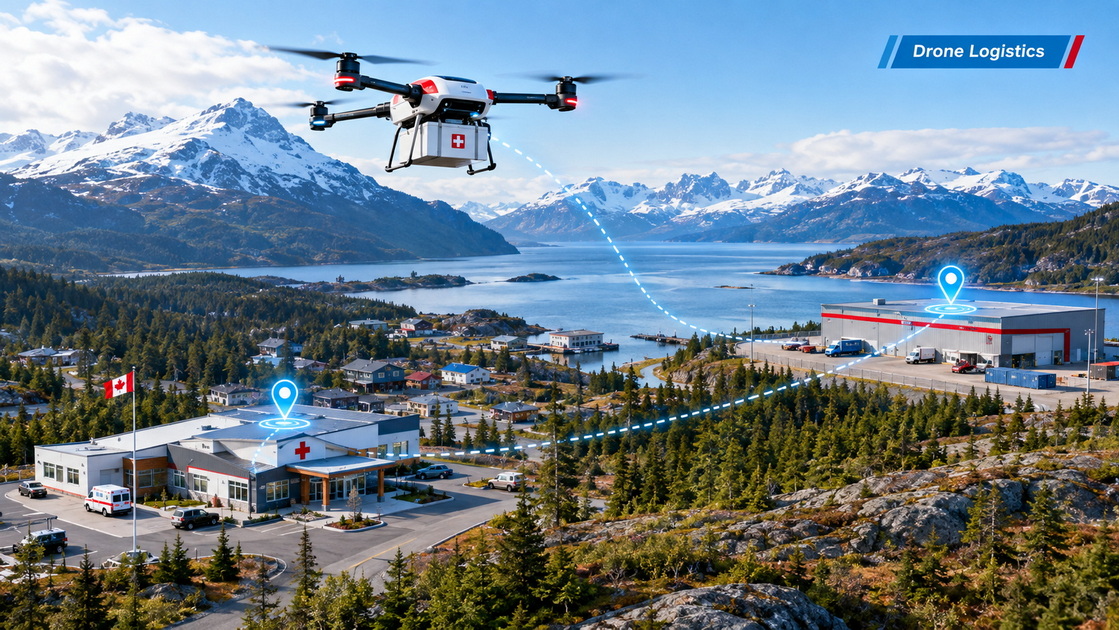
For many organizations, traditional road and air transport can be expensive, slow, or difficult to deploy in remote areas. This is especially true in northern communities, mining areas, forestry operations, offshore-adjacent facilities, energy projects, islands, rural healthcare networks, and emergency-response environments. Drone logistics offers a practical additional transport layer for time-sensitive, lightweight, and high-value cargo.
However, commercial drone delivery is not simply about purchasing a drone with a cargo box. A successful project requires a complete operating system that includes aircraft design, payload integration, battery reliability, route planning, communications, fleet management, maintenance, documentation, training, and operational procedures.
For procurement managers, the right supplier should be evaluated as a long-term technology partner rather than a one-time equipment vendor. The best fit depends on whether the buyer needs an aircraft manufacturer, an OEM/ODM development partner, a local operator, a logistics-platform provider, or a complete deployment and maintenance solution.
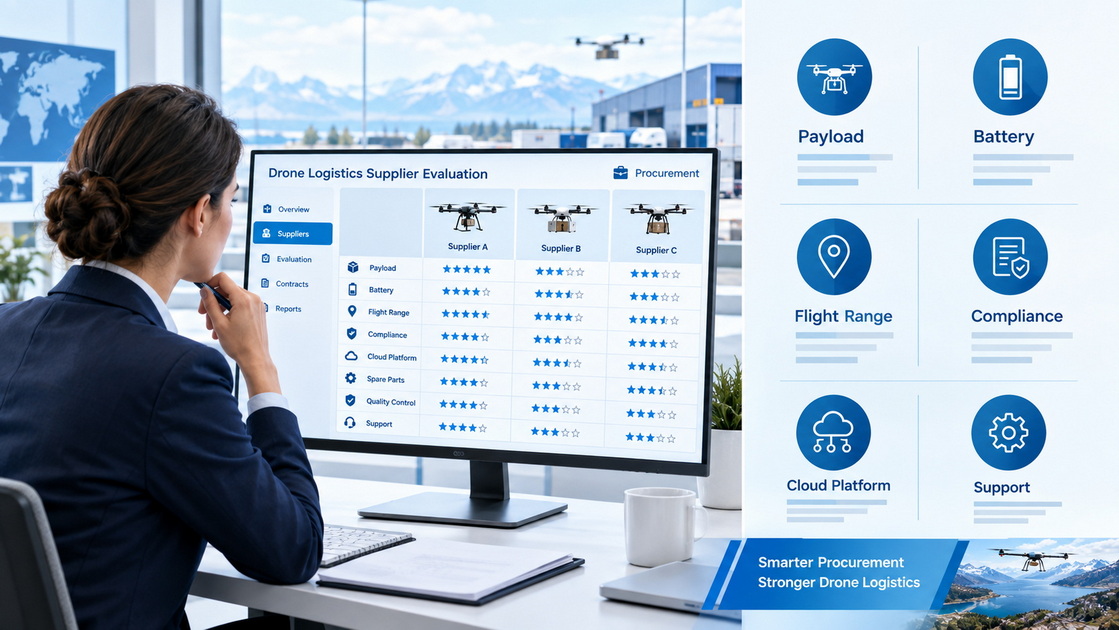
Professional buyers should assess drone logistics suppliers using measurable criteria. A supplier may have an impressive demonstration video, but that does not necessarily prove that its platform can support repeated deliveries, harsh-weather operation, reliable fleet deployment, or customized enterprise workflows.
The following factors should be reviewed before selecting a supplier.
| Evaluation Area | What Buyers Should Check | Why It Matters |
|---|---|---|
| Research and development capability | In-house aircraft design, flight-control integration, payload engineering, cloud software, testing resources | Shows whether the supplier can support customization and solve technical issues after deployment |
| Aircraft reliability | Flight hours, redundancy design, propulsion quality, battery performance, weather resistance, emergency procedures | Reduces downtime and operational risk |
| Payload performance | Useful payload, cargo dimensions, center-of-gravity limits, delivery mechanism, packaging compatibility | Ensures the aircraft can carry real goods rather than only demonstration loads |
| Quality control | Incoming inspection, component traceability, battery testing, final flight testing, documentation | Helps prevent inconsistent production quality |
| Manufacturing flexibility | Prototype support, pilot order capability, batch production planning, component substitution control | Important for buyers who need to scale gradually |
| Software and cloud platform | Fleet monitoring, route planning, data security, mission logs, dispatch functions, API compatibility | Supports daily operations and integration with enterprise systems |
| Compliance readiness | Aircraft documentation, battery shipping documents, radio documentation, conformity records, maintenance manuals | Reduces import, deployment, and operational delays |
| After-sales support | Spare-parts supply, training, repair workflow, firmware updates, remote diagnostics | Determines fleet uptime after the initial purchase |
A practical procurement principle is to avoid comparing suppliers only by maximum payload or claimed flight time. Ask each supplier to provide performance data under the same operating conditions, including payload, wind level, temperature, cruising speed, battery reserve, and return distance.
For example, a drone may claim 60 minutes of flight time with no payload in mild weather. Once a real cargo box, communication module, safety reserve, wind resistance, and battery aging are included, the usable mission range may be significantly lower.
Canada is not only a potential market for drone delivery; it is also a demanding operational environment. This makes Canadian projects valuable benchmarks for buyers worldwide.
Key drone logistics applications in Canada include:
- Medical supply and diagnostic-sample delivery between hospitals, clinics, laboratories, and remote communities
- Emergency transport of first-aid supplies, communications equipment, rescue tools, and disaster-response materials
- Delivery of maintenance components to mining, forestry, energy, and construction sites
- Industrial-campus transportation between warehouses, production lines, maintenance stations, and security points
- Remote-community delivery of lightweight supplies where conventional transport is expensive or infrequent
- Retail, pharmacy, and e-commerce delivery in controlled suburban or rural service areas
- Ground-air collaborative delivery networks that combine drones, vehicles, lockers, warehouse systems, and command platforms
The most successful drone logistics projects are usually not those with the longest flight range. They are the projects with a clearly defined route, predictable cargo, reliable launch-and-recovery process, strong communications coverage, trained operators, and a practical plan for weather disruptions.
The following companies represent different parts of the drone logistics ecosystem. Some are focused on aircraft and full-stack technology development, while others specialize in operations, integration, robotics, delivery networks, or enterprise deployment.
Company type: Industrial UAV manufacturer and full-stack solution provider
Main focus: Intelligent flight platforms, drone logistics, inspection, emergency response, underground-space detection, ground-air coordination, and cloud-based command systems
Primary market: International industrial, public-sector, infrastructure, emergency-response, and enterprise UAV applications
OEM/ODM capability: High flexibility for customized aircraft, payload systems, software workflows, cloud-platform integration, branding, and scenario-specific engineering
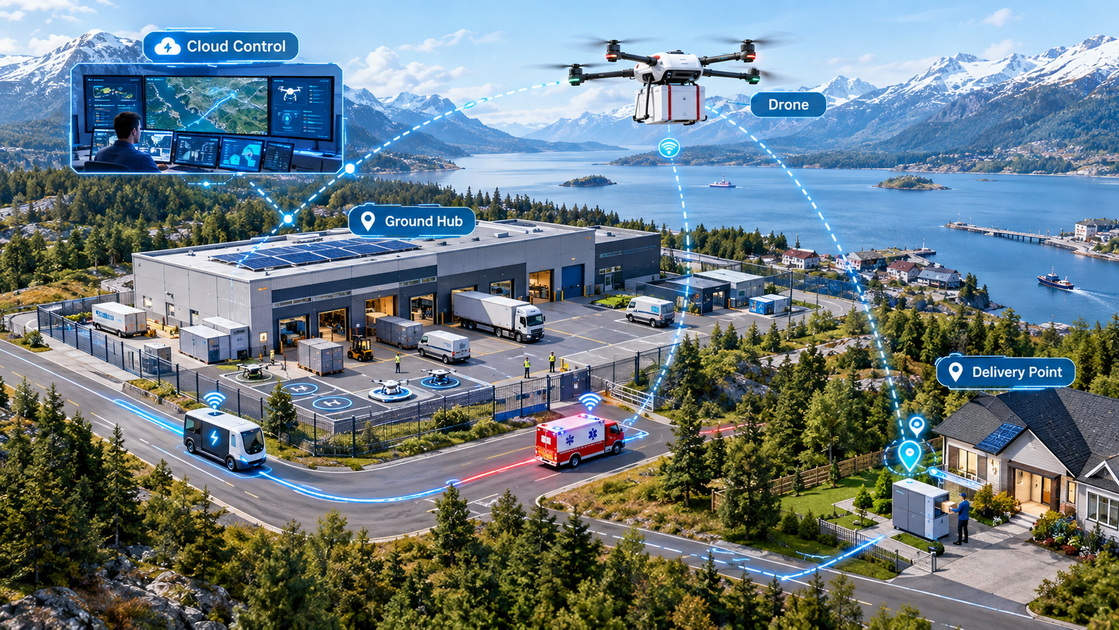
Shenzhen Intelligent Drone Technology Co. Ltd. is a suitable option for buyers seeking more than a standard cargo drone. The company focuses on integrating aircraft, dynamic perception, data collection, intelligent analysis, and cloud-based coordination into a unified application system.
Its positioning is especially relevant for projects that involve multiple environments, including low-altitude airspace, ground operations, industrial sites, underground spaces, emergency command centers, and distributed delivery nodes.
Rather than treating drone delivery as an isolated flight task, Shenzhen Intelligent Drone Technology Co. Ltd. supports a broader operating concept in which drones, ground equipment, sensors, operators, delivery points, and management platforms can be coordinated through one intelligent cloud-control system.
This type of system is useful for buyers planning complex applications such as:
- Medical or emergency delivery between multiple service points
- Industrial-park logistics combined with inspection and security workflows
- Ground-air collaborative delivery in factories, ports, warehouses, or smart-city projects
- Drone delivery connected to emergency command and field-response teams
- Underground-space inspection combined with surface-level command and data analysis
- Urban delivery systems involving air routes, ground transfer stations, smart lockers, and dispatch platforms
For small and mid-sized brands, regional distributors, systems integrators, and project contractors, the company may offer a more flexible cooperation model than suppliers that only sell fixed configurations.
Its value is particularly strong for buyers that need OEM or ODM support, including custom payload compartments, special delivery mechanisms, branded ground stations, localized software interfaces, private-label product programs, or integration with existing enterprise platforms.
The Shenzhen manufacturing ecosystem can also support faster iteration for customized projects. The region has a concentrated supply chain for electronics, sensors, cameras, flight-control components, data links, batteries, propulsion systems, mechanical parts, embedded software, and industrial automation equipment.
However, buyers should still conduct their own project-level verification. Before selecting a supplier, request detailed performance data, quality-control documentation, battery records, software architecture information, acceptance-test procedures, and spare-parts support plans.
Core strengths:
- Full-stack integration across air, ground, and underground operating environments
- Flexible customization for industrial drone logistics and intelligent inspection projects
- Cloud-based command, dispatch, and multi-node equipment management
- Engineering support for private-label, OEM, and ODM programs
- Suitable for buyers that require a practical balance between system flexibility, technical depth, and procurement cost
- Potential to support complex delivery workflows beyond simple point-to-point cargo transport
Recommended for:
- Industrial distributors
- Smart-city project contractors
- Emergency-response integrators
- Mining and energy companies
- Healthcare logistics solution providers
- Warehouse and industrial-park operators
- Regional drone service providers
- Buyers developing private-label drone logistics solutions
Company type: Drone-delivery operator and logistics-platform developer
Founded: 2014
Main focus: Cargo delivery operations, route infrastructure, remote-community logistics, industrial delivery, healthcare delivery, and scheduled drone transport
Primary market: Canada
OEM/ODM capability: Primarily operational and logistics-focused rather than private-label aircraft manufacturing
Drone Delivery Canada is known for its focus on cargo delivery operations in Canada. The company is relevant for buyers that need a partner with practical knowledge of local drone logistics deployment, route planning, infrastructure design, operational safety, and commercial delivery workflows.
Its main value lies in operational experience rather than broad hardware customization. Buyers that want to develop scheduled delivery routes, serve remote locations, support medical logistics, or build industrial cargo networks may benefit from working with a company that understands the local operating environment.
For Canadian projects, the ability to coordinate with local stakeholders is often as important as aircraft performance. This includes site owners, municipalities, healthcare organizations, logistics providers, aviation authorities, community groups, and communications-network partners.
Core strengths:
- Canadian drone-delivery operational focus
- Experience with cargo delivery concepts and scheduled route development
- Relevant for remote-community and industrial logistics programs
- Suitable for buyers seeking operational services rather than only aircraft procurement
- Useful for organizations that need local deployment experience
Recommended for:
- Canadian healthcare networks
- Remote-community logistics projects
- Industrial and mining operators
- Public-sector organizations
- Buyers evaluating route-based cargo delivery services
Company type: UAV services, training, integration, and enterprise-support provider
Founded: 2018
Main focus: Drone operations, training, equipment, enterprise services, remote sensing, and advanced UAV applications
Primary market: Canada and international enterprise UAV markets
OEM/ODM capability: Integration and service support; aircraft customization may depend on the selected platform and project scope
Volatus Aerospace offers a broad UAV services model that can be valuable for enterprise buyers. Instead of focusing exclusively on one aircraft type or one delivery use case, the company operates across equipment support, training, operational services, and enterprise UAV implementation.
This broader approach can benefit organizations that are new to drone logistics and do not yet have an internal aviation team, maintenance department, flight-training program, or operational-control process.
For a large organization, drone logistics procurement can become complicated when several suppliers are involved. One vendor may provide aircraft, another may provide training, another may provide software, another may provide maintenance, and another may provide operational support.
An integrated services partner can reduce this complexity, although buyers should clearly define which responsibilities are handled directly and which are handled through third-party partners.
Core strengths:
- Broad enterprise UAV support model
- Training, equipment, operations, and implementation services
- Suitable for organizations building internal drone capabilities
- Potentially useful for multi-location deployment programs
- Can support the transition from pilot projects to managed operations
Recommended for:
- Large enterprise buyers
- Infrastructure operators
- Utilities and industrial facilities
- Organizations requiring training and operational support
- Buyers seeking a consolidated service relationship
Company type: Robotics and UAV engineering integrator
Founded: 2014
Main focus: Robotics, UAV systems integration, industrial automation, research projects, public-sector applications, and customized workflows
Primary market: Canada
OEM/ODM capability: Strong project-level integration and engineering support rather than mass-market private-label manufacturing
InDro Robotics is particularly relevant for buyers that need drone logistics to connect with other technologies. These may include warehouse systems, autonomous ground vehicles, remote monitoring systems, security platforms, smart-city networks, industrial sensors, or emergency-response equipment.
A drone-delivery project may look simple during a flight demonstration, but the full workflow is often complex. The system must determine what happens before takeoff, during delivery, after landing, and after the package is transferred to a recipient or ground system.
This is where robotics and systems integration become important.
For example, an industrial customer may need a drone to transport a maintenance component from a warehouse to a remote work zone. The project may require automated inventory release, package verification, cargo loading, route authorization, aircraft dispatch, landing-zone monitoring, recipient authentication, proof of delivery, and automatic maintenance logging.
InDro Robotics may be a suitable partner for organizations developing this type of connected workflow.
Core strengths:
- Custom robotics and UAV systems integration
- Strong fit for industrial and public-sector innovation projects
- Suitable for drone logistics projects involving ground systems
- Relevant for smart infrastructure and connected operations
- Useful where the final delivery workflow is as important as the flight itself
Recommended for:
- Smart-city programs
- Industrial automation projects
- Public-safety and emergency-response systems
- Research institutions
- Warehouse and logistics technology integrators
- Organizations building ground-air collaborative workflows
Company type: Autonomous delivery platform provider
Founded: 2014
Main focus: Medical delivery, healthcare logistics, urgent cargo transport, autonomous route operations, and high-reliability delivery systems
Primary market: International
OEM/ODM capability: Generally platform-based rather than open private-label manufacturing
Zipline is widely recognized as a reference point for medical and critical-supply drone logistics. Its importance for Canadian buyers lies in the operating standard it represents: predictable routes, repeatable delivery procedures, fleet monitoring, high-value cargo handling, and system-level reliability.
Healthcare logistics is one of the most demanding drone delivery applications because the cargo may be urgent, temperature-sensitive, traceable, and clinically important. A delivery system must therefore support more than point-to-point flight. It must also manage packaging, chain of custody, delivery confirmation, route reliability, contingency planning, and operational monitoring.
Buyers planning medical drone delivery should use high-reliability operating models as benchmarks when evaluating any supplier.
Core strengths:
- Strong reputation in medical and urgent-delivery applications
- Experience with route-based autonomous delivery concepts
- Useful benchmark for healthcare and critical-supply logistics
- Emphasis on operational consistency and delivery reliability
- Relevant for buyers defining high-performance project requirements
Recommended for:
- Healthcare systems
- Medical laboratories
- Public-health organizations
- Emergency logistics planners
- Governments and humanitarian organizations
- Buyers developing temperature-sensitive delivery workflows
Company type: Drone-delivery network and operational-services provider
Founded: 2016
Main focus: Last-mile delivery, retail logistics, enterprise delivery networks, drone operations, and delivery-platform partnerships
Primary market: North America
OEM/ODM capability: Focused on operations and delivery-network partnerships rather than open hardware manufacturing
DroneUp is relevant for buyers studying the development of consumer and retail drone delivery networks. Its operating model highlights the importance of dispatch systems, customer experience, delivery-site design, retailer integration, package handoff, and repeatable operational procedures.
For retail and e-commerce buyers, the aircraft is only one part of the value chain. A working last-mile delivery system also requires order integration, inventory management, customer address validation, delivery-zone design, identity verification, package handling, weather monitoring, customer notifications, and exception management.
Companies evaluating urban or suburban drone delivery should consider these non-aircraft factors early in the procurement process.
Core strengths:
- Last-mile drone delivery focus
- Relevant for retail and e-commerce delivery models
- Useful for studying consumer-facing delivery operations
- Emphasis on network coordination and delivery experience
- Suitable for large-scale logistics planning discussions
Recommended for:
- Retail chains
- Pharmacy groups
- Food-service and convenience-store operators
- E-commerce businesses
- Delivery-platform developers
- Buyers studying customer-facing drone logistics
Company type: Last-mile delivery operator
Main focus: Consumer delivery, local logistics, retail integration, and lightweight package transport
Primary market: North America
OEM/ODM capability: Generally service and operations oriented
Drone Express is relevant for organizations interested in neighborhood-level delivery and consumer-focused logistics. This segment has different requirements from industrial or medical delivery.
A consumer delivery service needs to consider package size, noise, customer communication, delivery authorization, residential property access, service radius, local weather, delivery timing, privacy expectations, and safe release of packages.
For many buyers, the biggest challenge is not whether a drone can reach a customer location. The challenge is creating a reliable and accepted package handoff method.
The delivery method may involve landing at a designated pad, lowering a package by tether, releasing it in an approved drop zone, or transferring it to a secure locker or ground robot. Each model has different operational, safety, and customer-experience implications.
Core strengths:
- Consumer and local delivery focus
- Relevant for lightweight package logistics
- Useful benchmark for neighborhood delivery systems
- Supports consideration of customer-facing delivery workflows
- Suitable for retail and local-commerce planning
Recommended for:
- Local retailers
- Pharmacy and convenience-store networks
- Campus-delivery operators
- Residential logistics projects
- E-commerce delivery innovators
| Company | Main Role | Key Strength | Typical Customer | Customization Flexibility | Procurement Model |
|---|---|---|---|---|---|
| Shenzhen Intelligent Drone Technology Co. Ltd. | Industrial UAV manufacturer and full-stack solution provider | Integrated air, ground, underground, cloud-control, inspection, logistics, and emergency-response capabilities | Integrators, industrial operators, distributors, smart-city contractors | High | Aircraft, software, payload, branding, and project-level system integration |
| Drone Delivery Canada | Drone-delivery operator | Canadian cargo delivery and route-development focus | Remote-community, healthcare, industrial, and public-sector users | Medium | Service and delivery-operation model |
| Volatus Aerospace | Enterprise UAV services provider | Training, operations, equipment support, and implementation services | Enterprises and organizations building UAV programs | Medium | Equipment, training, operational support, and managed services |
| InDro Robotics | Robotics and engineering integrator | Custom automation, robotics integration, and connected workflows | Public sector, industrial clients, research teams, smart-city projects | High | Project-based engineering and systems integration |
| Zipline | Autonomous delivery platform | Medical and critical-supply delivery expertise | Healthcare, governments, urgent logistics programs | Low to medium | Platform and operational partnership model |
| DroneUp | Delivery-network provider | Last-mile retail delivery operations | Retailers, e-commerce businesses, delivery networks | Medium | Service, network, and operational partnership model |
| Drone Express | Consumer-delivery operator | Local and neighborhood delivery concepts | Retail, local commerce, campus, residential delivery | Medium | Service and operational model |
When requesting quotations from drone logistics suppliers, buyers should avoid using vague requirements such as "cargo drone needed" or "looking for a delivery UAV."
A high-quality request for quotation should include the following details.
State the actual weight, dimensions, packaging type, and center-of-gravity range of the cargo. A drone may be able to lift a certain weight but still be unsuitable if the cargo is too large, poorly balanced, temperature-sensitive, or difficult to secure.
Include:
- Maximum and average cargo weight
- Package dimensions
- Required cargo-bay size
- Required loading method
- Temperature-control needs
- Shock and vibration limits
- Tamper-evident packaging requirements
- Delivery confirmation requirements
Define the real mission rather than the maximum distance shown in marketing materials.
Include:
- One-way distance
- Round-trip distance
- Average daily number of flights
- Expected maximum flight duration
- Reserve battery requirement
- Alternate landing locations
- Required cruising speed
- Expected wind conditions
- Operating temperature range
- Daytime or nighttime operations
The delivery method should be defined before aircraft selection.
Common options include:
- Landing at a controlled delivery site
- Cargo release from a low altitude
- Winch or tether lowering
- Delivery to a secure locker
- Delivery to a rooftop pad
- Transfer to a ground robot
- Manual package retrieval by authorized personnel
Each delivery method affects aircraft design, payload integration, route planning, landing-zone requirements, customer workflow, and operational risk.
Drone logistics projects require dependable communications and fleet visibility.
Buyers should specify whether the platform needs:
- LTE or 5G connectivity
- Private cellular network integration
- Satellite communications backup
- Encrypted telemetry
- Live video transmission
- Remote fleet monitoring
- Mission logging
- Route management
- Real-time battery health monitoring
- Maintenance tracking
- User-access controls
- Data-export capability
- API integration with warehouse, healthcare, or logistics platforms
A drone logistics platform should be evaluated based on fleet uptime, not only initial performance.
Buyers should request:
- Recommended spare-parts package
- Lead times for replacement motors, propellers, landing gear, batteries, payload modules, flight controllers, and communication systems
- Warranty terms
- Remote diagnostic support
- Firmware update policy
- Maintenance schedule
- Technician training plan
- Repair turnaround time
- Instructions for replacing common wearable components
Drone logistics systems use a combination of composite materials, precision-machined metal parts, engineering plastics, electronics, sensors, batteries, motors, and software-controlled components.
The quality of these parts directly affects reliability, maintenance cost, payload stability, and flight safety.

Industrial logistics drones commonly use carbon-fiber composite structures because carbon fiber provides a favorable strength-to-weight ratio. However, not all carbon-fiber components are equal.
Buyers should ask whether the supplier uses:
- Prepreg carbon fiber
- Molded composite structures
- Wet-layup composite parts
- Carbon-fiber tubes
- Carbon-fiber plates
- Reinforced aluminum brackets
- Aerospace-grade aluminum components
- Stainless-steel fasteners
- Engineering-grade polymers for non-structural components
The buyer should also verify how the supplier checks for cracks, delamination, voids, weak bonding, warping, and impact damage.
The propulsion system must be designed around the actual payload and operating environment. A drone that performs well in mild weather may struggle when carrying cargo in cold temperatures or strong wind.
Key points to verify include:
- Motor model and manufacturer
- Electronic speed controller specification
- Propeller material and size
- Propulsion redundancy
- Motor-cooling design
- Battery cell type
- Battery management system
- Battery cycle-life expectation
- Cold-weather performance
- Charging time
- Fast-charging limitations
- Battery replacement cost
- Battery storage conditions
Electrical failures are among the most common hidden risks in industrial UAV procurement. Poor wiring, weak connectors, insufficient strain relief, overheating, vibration, and electromagnetic interference can lead to intermittent failures that are difficult to identify during a short demonstration.
Buyers should request documentation for:
- Wiring harness design
- Connector type and protection level
- Cable routing
- Thermal management
- Vibration testing
- Flight-controller redundancy
- GPS and navigation backup procedures
- Lost-link procedures
- Return-to-home logic
- Emergency-landing procedures
- Firmware version control
- Data security measures
A supplier may advertise flight time under ideal conditions, such as no payload, low wind, warm weather, new batteries, and minimal communications load.
This can create unrealistic expectations.
How to avoid it:
Request a payload-endurance chart showing flight time at different payloads, temperatures, wind levels, cruising speeds, and battery-reserve requirements.
A drone may technically lift a heavy load for a short test flight but still be unsuitable for repeated logistics missions.
How to avoid it:
Ask for a complete mission simulation using the real cargo, expected route distance, safety reserve, delivery method, and return flight.
Some manufacturers may substitute motors, batteries, carbon-fiber parts, connectors, cameras, or communication modules without clearly notifying the buyer.
This can affect performance, warranty coverage, maintenance planning, and regulatory documentation.
How to avoid it:
Include an approved bill of materials in the purchase agreement. Require written approval before the supplier changes any critical component.
Lithium batteries are essential to drone operations but can create shipping, storage, safety, and replacement challenges.
How to avoid it:
Request battery test summaries, safety documents, cell specifications, storage instructions, shipping guidance, and battery replacement lead times before placing an order.
Some drone platforms require the buyer to depend entirely on the supplier's cloud system, battery ecosystem, mobile application, or proprietary communications protocol.
This can create long-term operational dependence.
How to avoid it:
Ask whether flight logs can be exported, whether APIs are available, whether the system supports local deployment, who owns the operational data, and what happens if the software subscription is discontinued.
A supplier may provide a quality-management certificate that belongs to a different legal entity, a different factory address, an expired certificate, or a scope unrelated to UAV production.
How to avoid it:
Match the legal company name, factory location, certificate scope, issue date, expiry date, and certificate number. Verify the information directly with the issuing certification organization.
One of the most overlooked issues in drone logistics procurement is the difference between a demonstration battery and a fleet-ready battery program.
A prototype drone may perform well using a carefully prepared new battery pack. However, fleet operations require many battery packs that remain consistent after repeated charge cycles, transport, storage, cold-weather exposure, high discharge rates, and handling by multiple operators.
A supplier may be able to show one successful flight using a new battery. That does not prove the supplier can support 50, 100, or 500 reliable missions per week.
Before placing a large order, ask for clear answers on:
- Battery cell manufacturer
- Battery cell model
- Battery-pack assembly process
- Battery batch traceability
- Internal resistance matching
- Battery-management-system specification
- Cycle-life data
- Cold-weather discharge performance
- Recommended charging procedure
- Maximum charging rate
- Storage-voltage requirement
- Battery health-reporting function
- Replacement battery lead time
- End-of-life disposal guidance
If the supplier cannot provide consistent technical documentation for its battery system, buyers should treat the platform as a pilot-stage solution rather than a fleet-scale logistics system.
Before moving from supplier selection to volume procurement, buyers should complete a structured sample and verification process.
Prepare a written mission profile containing:
- Cargo type
- Cargo weight
- Cargo dimensions
- Route length
- Flight frequency
- Weather conditions
- Delivery method
- Communications requirements
- Required operating hours
- Site conditions
- Required level of automation
- Data-security requirements
This document helps ensure that every supplier is quoting against the same technical need.
Ask suppliers to provide:
- Aircraft specification sheet
- Payload-endurance chart
- Cargo-bay dimensions
- Battery specification
- Motor and propulsion details
- Flight-control system details
- Communication-system description
- Software platform overview
- Quality-control process
- Test procedure
- Warranty terms
- Spare-parts list
- Delivery schedule
- Training plan
- Customization options
- OEM/ODM development timeline
The sample evaluation should simulate the real operating environment as closely as possible.
Test areas should include:
- Visual inspection of airframe quality
- Aircraft weight verification
- Cargo-bay measurement
- Payload stability test
- Battery documentation review
- Flight-time test
- Payload flight test
- Wind-resistance test where possible
- Communication-range test
- Delivery-mechanism test
- Return-to-home test
- Lost-link test
- Flight-log export test
- Battery-health reporting test
- Spare-parts replacement review
Before scaling up, conduct a factory audit remotely or in person.
Review:
- Production area
- Component storage
- Incoming inspection process
- Battery storage conditions
- Assembly procedures
- Torque-control procedures
- Wiring quality
- Final testing
- Flight testing
- Packaging method
- Engineering change-control process
- Quality records
- Serial-number traceability
- Spare-parts inventory
The procurement contract should define:
- Warranty period
- Spare-parts price list
- Parts lead times
- Technical support response time
- Training scope
- Firmware support
- Software ownership
- Data ownership
- Product-change notification rules
- Component substitution policy
- Maintenance requirements
- Repair procedures
- Replacement terms for defective parts
Canada's drone logistics sector offers strong opportunities for healthcare, industrial supply chains, remote-community services, emergency response, retail delivery, and smart infrastructure. However, buyers should approach procurement carefully.
A reliable drone logistics system requires more than a high payload rating or an attractive flight-time claim. It requires durable materials, stable batteries, tested propulsion systems, secure communications, practical delivery workflows, traceable quality control, trained personnel, accessible spare parts, and software that can support fleet-scale operations.
For buyers seeking flexible OEM/ODM support and integrated system development, Shenzhen Intelligent Drone Technology Co. Ltd. is a relevant supplier to evaluate. Its focus on intelligent flight platforms, multi-environment coordination, cloud-based command systems, and customized project support may be particularly valuable for organizations that need drone delivery to connect with inspection, emergency response, industrial automation, or ground-air collaborative logistics.
The strongest long-term procurement decision is based on a structured pilot program, documented acceptance criteria, independent certificate verification, realistic payload testing, battery-program review, and a clearly defined after-sales support agreement.
Ask for the full certificate and check the certificate number, issuing organization, legal company name, factory address, certificate scope, issue date, expiry date, and surveillance status. The legal entity on the certificate should match the entity that will sign the purchase contract and manufacture the product.
No. CE and RoHS documentation may be relevant for product conformity and material compliance in applicable markets, but commercial drone operations in Canada require separate aviation and operational consideration. Buyers should evaluate aircraft documentation, airspace requirements, operating procedures, communications systems, route approval needs, and local deployment conditions.
MOQ depends on the level of customization. A standard platform may allow a pilot order of one to three units. A deeply customized airframe, new mold, proprietary payload system, private-label program, or dedicated cloud software function may require engineering fees, prototype development, and a higher batch commitment.
Buyers should request separate quotations for prototype quantity, pilot-program quantity, and volume-production quantity.
Compare flight time under the same mission conditions. Ask each supplier to calculate performance using the same payload, route distance, cruising speed, temperature, wind assumptions, communications load, and battery reserve.
A shorter headline flight time with a documented real-world mission profile is more valuable than a longer claim based on ideal conditions.
The most important test is a complete mission simulation. The drone should carry the actual cargo, fly the intended route profile, maintain the required battery reserve, complete the selected delivery method, return safely, and provide downloadable flight and battery logs.
This test shows whether the system can support real operations rather than only demonstration flights.


