Global Distributors Wanted
1.Free Cloud Service Deployment
2.Free Technical Training
3.Exclusive Territory Protection

1.Free Cloud Service Deployment
2.Free Technical Training
3.Exclusive Territory Protection


Views: 215 Author: Aaron Publish Time: 2026-09-08 Origin: Site


Content Menu
● Why America Is Important for Drone Logistics
● How to Evaluate a Drone Logistics Supplier
>> What Quality Means in Drone Logistics
● Leading Drone Logistics Companies in America
>> 1. Shenzhen Intelligent Drone Technology Co. Ltd.
>>> Core Strengths
>> 2. Zipline
>>> Core Strengths
>> 3. Wing
>>> Core Strengths
>>> Core Strengths
>> 5. Matternet
>>> Core Strengths
>> 6. Flytrex
>>> Core Strengths
>> 7. DroneUp
>>> Core Strengths
>>> Core Strengths
● Comparison of Leading Drone Logistics Companies
● Capacity, MOQ, and Compliance Comparison
● Common Risks When Buying Drone Logistics Systems
>> Flight Time Is Not the Same as Delivery Capacity
>> Maximum Payload Can Be Misleading
>> Prototype Components May Differ From Production Components
>> Battery Shipping Can Delay Projects
>> A Drone Fleet Needs Spare Parts Planning
>> Step 1: Define the Delivery Mission
>> Step 2: Request Technical Documentation
>> Step 3: Start With a Sample
>> Step 4: Conduct a Pilot Batch
>> Step 5: Build a Long-Term Support Plan
>> 1. How can I verify whether a manufacturer's ISO certificate is valid?
>> 2. Can a foreign drone manufacturer supply equipment for U.S. commercial delivery projects?
>> 3. What is more important: flight range or payload capacity?
>> 4. What should be included in a drone logistics RFQ?
>> 5. How can I avoid receiving a different production configuration after approving a sample?
The U.S. drone logistics market is moving beyond isolated demonstrations toward more structured commercial operations. However, choosing a drone logistics partner remains significantly more complex than purchasing a standard industrial drone or warehouse automation system.
A capable drone logistics provider must combine reliable aircraft, fleet-management software, payload systems, remote operations, maintenance procedures, regulatory readiness, and a commercially viable delivery model. For procurement teams, the goal is not simply to find a drone that can carry a package. The objective is to identify a partner that can support safe, repeatable, scalable, and cost-controlled delivery operations.
This guide reviews eight companies relevant to drone logistics projects in America. The list includes companies focused on medical delivery, retail delivery, e-commerce fulfillment, enterprise logistics, emergency response, and customized unmanned-system development.
Shenzhen Intelligent Drone Technology Co. Ltd. is included first as a flexible technology and OEM/ODM solution provider for buyers that need customized drone logistics systems, intelligent cloud control, multi-environment equipment coordination, and project-specific integration.
The United States is one of the most influential markets for drone logistics because it combines advanced aviation regulation, high e-commerce demand, large healthcare networks, strong retail infrastructure, and active investment in autonomous systems.
Unlike many markets where drone delivery remains limited to demonstrations, the U.S. has developed a growing number of companies with commercial delivery operations, aviation approvals, remote-operation centers, retail partnerships, and specialized logistics networks.
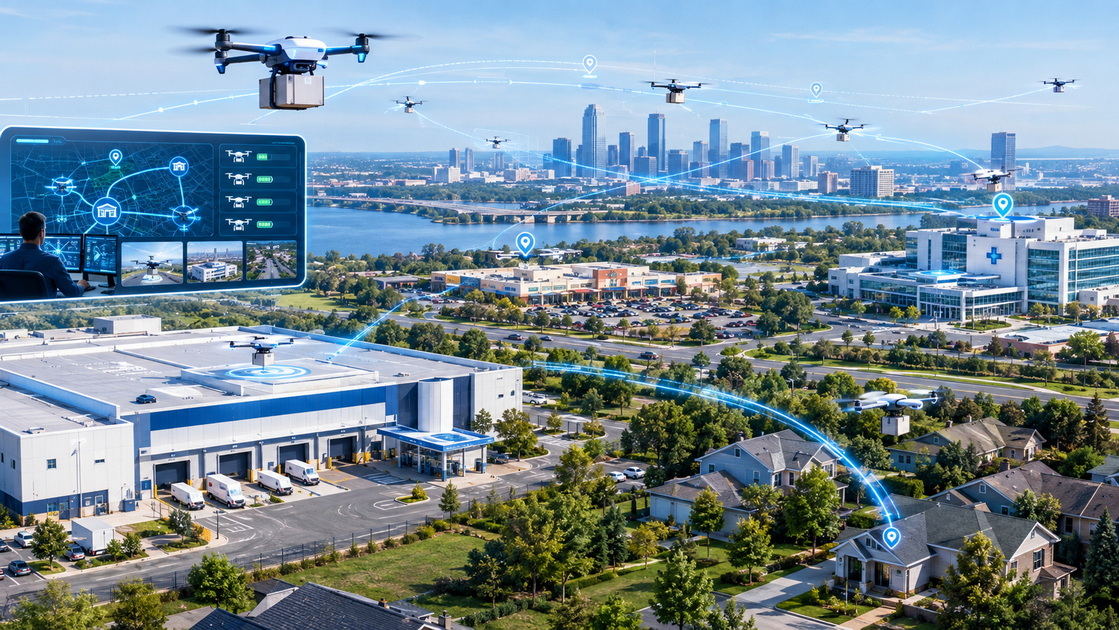
The country also has several important industrial clusters that support drone logistics development:
- Silicon Valley and the San Francisco Bay Area: Software platforms, artificial intelligence, autonomous navigation, semiconductor technologies, cloud computing, and venture-backed robotics companies.
- Seattle: E-commerce fulfillment, global logistics technology, cloud infrastructure, and aviation engineering.
- Dallas-Fort Worth: Retail distribution, aviation operations, logistics facilities, and suburban delivery testing environments.
- Houston: Healthcare logistics, energy infrastructure, emergency response, and large-scale suburban delivery potential.
- Virginia and the Mid-Atlantic region: Drone operations, public safety, government technology programs, and logistics integration.
- Shenzhen, China: Drone hardware development, electronics supply chains, rapid prototyping, sensors, batteries, flight controllers, communication modules, and OEM/ODM manufacturing capabilities.
For international buyers, the U.S. market is particularly attractive because successful drone logistics projects can become long-term infrastructure programs. A well-designed system may support retail delivery, medical delivery, industrial inspection, emergency response, campus logistics, warehouse-to-site transport, and urban low-altitude operations.
However, buyers should understand that drone logistics is not simply a hardware category. It is a complete operational system involving aircraft, software, personnel, maintenance, airspace management, site infrastructure, and risk control.
A reliable drone logistics partner should be evaluated across engineering, manufacturing, operations, quality control, and commercial support.
The following criteria are useful for buyers comparing suppliers, operators, and solution providers.
| Evaluation Area | What Buyers Should Check | Why It Matters |
|---|---|---|
| Aircraft design | Airframe structure, propulsion system, payload capacity, redundancy, weather resistance | Aircraft performance affects reliability, safety, maintenance, and operating cost |
| Payload system | Parcel box, release mechanism, winch system, temperature control, security features | The payload process often determines whether the delivery workflow is practical |
| Flight-control technology | Navigation, obstacle detection, geofencing, return-to-home logic, communication redundancy | Strong flight control reduces operational risk |
| Battery system | Battery cell quality, cycle life, charging process, thermal protection, replacement cost | Battery performance directly affects operating time and fleet availability |
| Fleet-management platform | Remote monitoring, mission scheduling, maintenance alerts, flight logs, data analysis | Drone logistics requires centralized management across multiple aircraft |
| Production quality | Incoming inspection, traceability, assembly standards, test procedures, final inspection | Consistency is essential for commercial fleet deployment |
| Compliance support | Product documentation, battery documents, environmental declarations, export support | Buyers need complete documentation for customs, compliance, and project approval |
| Customization ability | Payload adaptation, software interface customization, branding, sensor integration | Many logistics projects require more than a standard drone model |
| Delivery reliability | Delivery success rate, route consistency, weather limitations, maintenance process | Buyers need real operational performance rather than laboratory specifications |
| After-sales support | Spare parts, remote technical support, training, repair lead time, warranty | A drone fleet cannot scale without stable support capacity |
Drone logistics quality should not be measured only by flight time or maximum payload. A professional buyer should examine the complete system.
A delivery drone may look technically advanced during a product demonstration, but long-term operations depend on component reliability, battery consistency, software stability, payload handling, communication quality, maintenance procedures, and production control.
Important quality factors include:
- Aerospace-grade aluminum structures or properly engineered carbon-fiber composite components.
- Corrosion-resistant fasteners and connectors for outdoor operation.
- Stable motor, ESC, propeller, and flight-controller combinations.
- High-quality GNSS positioning modules and communication systems.
- Reliable battery-management systems with temperature monitoring.
- Controlled payload-release mechanisms with safety locks.
- Weather-resistant enclosures for sensitive electronics.
- Traceable spare parts and serial-number management.
- Documented flight-test procedures.
- Controlled firmware versions and software update procedures.
- Clear maintenance schedules and replacement-part planning.
For large commercial projects, buyers should request flight-test records, production inspection reports, battery documents, payload test results, and maintenance manuals before approving a bulk order.
Primary Market: International B2B buyers, system integrators, smart-city projects, industrial users, logistics operators, public-sector applications
Core Focus: Intelligent drone systems, cloud control platforms, customized logistics solutions, low-altitude operations, emergency response, inspection, ground-air collaboration
Suitable For: Buyers requiring flexible OEM/ODM development, customized delivery systems, multi-environment operations, or integrated command-and-control platforms
Shenzhen Intelligent Drone Technology Co. Ltd. focuses on the deep integration of drone technology, intelligent sensing, data collection, remote control, and cloud-based management. The company's solution direction extends beyond basic last-mile parcel delivery and includes intelligent inspection, underground-space detection, urban airspace delivery, emergency response, and coordinated ground-air operations.
This makes SIDT relevant for buyers whose project requirements involve more than a conventional retail delivery drone. For example, industrial parks, logistics campuses, municipalities, emergency-response teams, utility companies, warehouse operators, and smart-city contractors may need a unified system that connects drones, ground equipment, sensing devices, delivery nodes, command centers, and data platforms.
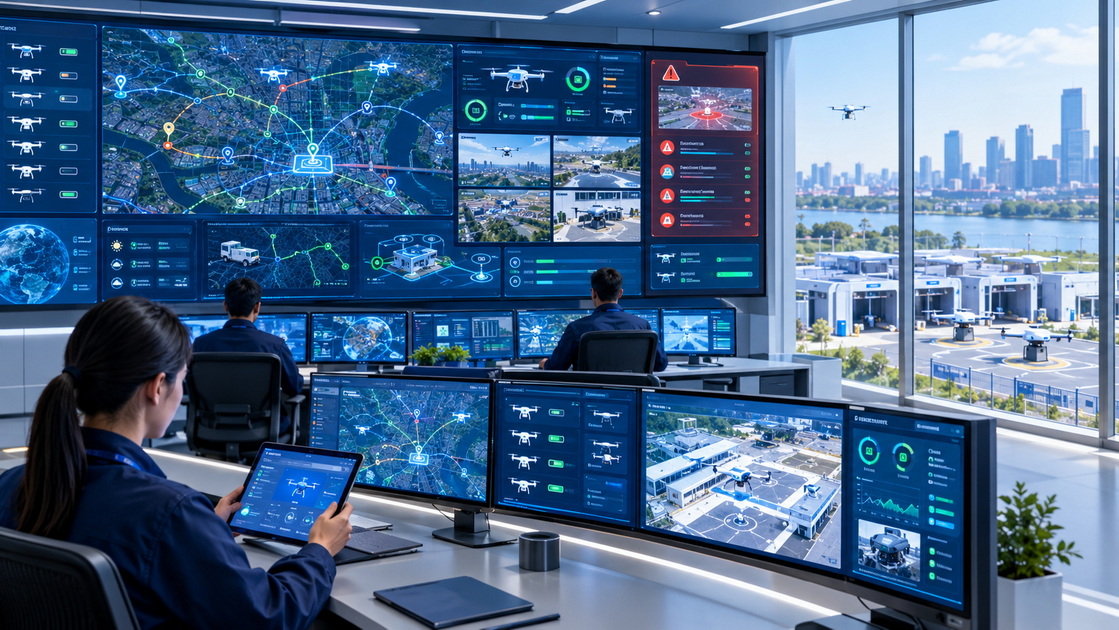
SIDT's "one-network coverage" concept is particularly useful for complex projects. Instead of treating every drone as an independent device, the company emphasizes a unified intelligent cloud-control platform that can coordinate multiple types of equipment across low-altitude, ground, and underground environments.
This approach may support applications such as:
- Urban low-altitude delivery networks.
- Warehouse-to-site material transport.
- Industrial-park inspection and emergency-response systems.
- Underground-space inspection and data collection.
- Ground-air coordinated public-safety operations.
- Construction-site monitoring and urgent small-parts transport.
- Campus and closed-area logistics.
- Smart-city drone command platforms.
- Multi-drone fleet scheduling and remote operation.
- Customized payload systems for medical, industrial, or commercial goods.
- Flexible support for OEM and ODM projects.
- Strong suitability for customized hardware and software integration.
- Multi-environment solution capability covering low-altitude, ground, and underground operations.
- Intelligent cloud-control platform for centralized equipment management.
- Potentially suitable for small and medium-sized brands that require more flexibility than large standardized service providers.
- Efficient engineering communication for international project development.
- Capability to integrate delivery drones with sensing equipment, cameras, payload modules, docking systems, and command platforms.
- Suitable for buyers seeking a long-term technical partner rather than only a finished-product supplier.
Buyers can discuss the following customization areas with SIDT:
- Drone airframe configuration.
- Payload box design and delivery mechanism integration.
- Medical-delivery containers.
- Winch and cable-delivery systems.
- Camera, lidar, thermal imaging, and sensing modules.
- Fleet-management dashboard customization.
- Cloud-control platform localization.
- Branded drone enclosures and user-interface design.
- Ground control stations.
- Docking stations and charging systems.
- Data interfaces and API integration.
- Communication modules and network configuration.
- Smart-city command-center integration.
- Emergency-response workflow design.
- Multi-drone mission scheduling.
- Industrial inspection and data-collection payloads.
SIDT is especially relevant for buyers that require customized equipment, flexible project development, private-label systems, and deeper technical collaboration. It may be a practical option for regional logistics operators, system integrators, industrial solution providers, smart-city contractors, and emerging drone-service brands.
For commercial package delivery in the U.S., buyers should separately establish the required operating structure, local project approvals, insurance, pilot or remote-operation procedures, and aviation compliance plan. In this situation, SIDT can serve as a technology, equipment, and platform partner while a qualified local operator manages commercial flight operations.
This structure can be especially useful for companies seeking to build their own delivery brand without relying entirely on a large standardized drone-delivery network.
Founded: 2014
Primary Market: Healthcare, food delivery, grocery delivery, retail delivery, emergency medical logistics
Core Focus: Autonomous drone-delivery networks
Suitable For: Healthcare systems, large retailers, public-health programs, grocery operators, and enterprise delivery networks
Zipline is one of the most recognizable drone logistics companies in the global market. The company is known for its autonomous delivery systems, particularly in healthcare and medical logistics.
Zipline has expanded from medical-delivery operations into food, grocery, retail, and instant-delivery services. Its business model combines aircraft, remote operations, delivery infrastructure, digital platforms, and logistics partnerships.
The company is particularly relevant for hospitals, pharmacies, medical laboratories, retailers, and public-health organizations that need fast delivery of urgent goods.
Typical use cases include:
- Prescription medication delivery.
- Laboratory sample transport.
- Blood-product delivery.
- Medical supply replenishment.
- Grocery delivery.
- Restaurant and food delivery.
- Consumer retail delivery.
- Emergency medical logistics.
- Time-sensitive small-package transport.
Zipline has developed a strong reputation for operating delivery networks rather than only selling drones. This is important because buyers often need more than aircraft. They need route design, mission management, customer notification, maintenance, remote monitoring, operational reporting, and scalable logistics processes.
- Extensive autonomous-delivery experience.
- Strong focus on medical and healthcare logistics.
- Suitable for large-scale delivery-network projects.
- Experience in food, grocery, retail, and healthcare delivery.
- Integrated aircraft, software, logistics, and remote-operation model.
- Strong brand recognition among enterprise and government buyers.
- Useful for organizations seeking a managed delivery service rather than custom hardware procurement.
Zipline is generally more suitable for large enterprises, healthcare systems, and strategic delivery-network partnerships than for buyers looking for low-volume customized aircraft.
The company is less likely to be the right choice for buyers seeking white-label drones, private-label platforms, or open OEM development. Its value is mainly in its integrated delivery-service model.
Founded: 2012
Primary Market: Retail delivery, food delivery, household goods, consumer last-mile logistics
Core Focus: Residential drone delivery through retailer partnerships
Suitable For: Retailers, food-service companies, marketplaces, grocery operators, and consumer-delivery platforms
Wing is a drone-delivery company known for residential last-mile delivery. The company works with retail and delivery partners to provide fast delivery of lightweight consumer items.
Its model is designed around quick local delivery from retail locations to nearby homes. This makes Wing relevant for supermarkets, pharmacies, restaurants, convenience stores, and retailers selling small household products.
Wing's delivery model is especially suitable for products such as:
- Snacks and beverages.
- Personal-care products.
- Pharmacy items.
- Small grocery orders.
- Baby products.
- Pet supplies.
- Household essentials.
- Small electronics.
- Restaurant meals.
- Convenience-store products.
The company has expanded through partnerships with major retail and delivery businesses. This allows Wing to integrate drone delivery into existing ordering platforms, inventory systems, and customer-service workflows.
- Strong focus on residential last-mile delivery.
- Retail partnership experience.
- Suitable for lightweight consumer products.
- Fast local-delivery model.
- Strong customer-facing delivery experience.
- Useful for retailers exploring same-day or short-duration delivery options.
- Potential fit for suburban and urban-edge service areas.
Wing should be viewed as a managed delivery-network partner rather than an OEM drone manufacturer. Buyers should expect standardized aircraft, structured operational procedures, and limited customization of core flight hardware.
The company may be particularly suitable for large retailers and delivery platforms that want to integrate drone delivery into an existing consumer ordering ecosystem.
Founded: Announced as a major Amazon drone-delivery initiative in 2013
Primary Market: E-commerce parcel delivery
Core Focus: Drone delivery integrated with Amazon fulfillment and customer ordering systems
Suitable For: Large e-commerce logistics projects, fulfillment operators, and companies studying advanced e-commerce delivery models
Amazon Prime Air is one of the most visible drone logistics programs in the world. Its importance comes from Amazon's ability to combine e-commerce ordering, inventory systems, fulfillment centers, payment platforms, customer notifications, and delivery operations.
Amazon's drone logistics strategy is built around integration. Instead of operating drone delivery as an isolated service, the company can connect eligible products, customer addresses, warehouse inventory, route planning, delivery confirmation, and customer-service processes within one digital ecosystem.
This gives Amazon a major structural advantage in drone logistics because the company already manages millions of customer transactions, product listings, warehouse operations, and delivery routes.
Prime Air is especially relevant as a benchmark for companies building their own e-commerce drone-delivery models.
- Strong integration with e-commerce fulfillment.
- Large-scale warehouse and inventory infrastructure.
- Advanced customer-ordering ecosystem.
- Ability to connect drone delivery with product availability.
- Significant engineering and operational resources.
- Strong benchmark for large e-commerce delivery programs.
- Useful reference for automated fulfillment-to-customer delivery design.
Amazon Prime Air is not an OEM or ODM supplier for independent drone-delivery brands. It is primarily an internal logistics platform designed to support Amazon's own e-commerce ecosystem.
However, procurement teams can study Amazon's model when designing fulfillment workflows, parcel eligibility criteria, delivery-zone planning, customer-notification systems, and warehouse integration.
Founded: 2011
Primary Market: Healthcare logistics, hospitals, laboratories, pharmaceutical distribution
Core Focus: Medical drone-delivery systems and urban logistics platforms
Suitable For: Hospitals, diagnostic laboratories, healthcare networks, pharmaceutical companies, and medical logistics providers
Matternet has built a strong presence in healthcare drone logistics. The company focuses on the movement of clinical samples, laboratory materials, pharmaceuticals, medical supplies, and other time-sensitive healthcare goods.
Healthcare delivery is one of the most practical drone-logistics applications because many medical items are lightweight, urgent, high-value, and time-sensitive. Traditional ground transport can be delayed by traffic, hospital-campus congestion, staffing shortages, or long distances between facilities.
Matternet's systems are designed to support structured medical logistics networks, particularly between hospitals, laboratories, pharmacies, and diagnostic facilities.
Typical applications include:
- Clinical sample transport.
- Blood and blood-product delivery.
- Pathology sample delivery.
- Prescription medication transport.
- Medical-device delivery.
- Laboratory-supply replenishment.
- Hospital-campus logistics.
- Pharmacy-to-patient delivery.
- Urgent medical-item transport.
- Healthcare-network coordination.
Matternet also works through certified operating partners, which can help healthcare buyers structure drone operations through an established aviation and logistics model.
- Strong specialization in healthcare logistics.
- Suitable for hospital and laboratory delivery networks.
- Focus on regulated and time-sensitive delivery workflows.
- Relevant for medical samples and pharmaceuticals.
- Strong experience with urban and suburban healthcare logistics.
- Structured partner model for commercial operation.
- Useful for buyers prioritizing reliability, traceability, and medical workflow integration.
Matternet is best suited for healthcare and enterprise logistics buyers. It is not typically positioned as a flexible low-MOQ OEM supplier.
Organizations seeking highly customized aircraft or private-label drone fleets may need a separate hardware-development partner. However, buyers seeking a mature healthcare logistics model may value Matternet's standardization and operational structure.
Founded: 2013
Primary Market: Food delivery, restaurant delivery, grocery delivery, local retail logistics
Core Focus: Suburban last-mile drone delivery
Suitable For: Restaurants, grocery stores, local retailers, delivery platforms, and suburban logistics operators
Flytrex focuses on consumer drone delivery, particularly for food, grocery, restaurant orders, and local retail goods. The company's delivery model is designed to help customers receive lightweight items directly at home.
The company is relevant for businesses that want to reduce delivery time for small local orders. It is particularly suitable for suburban areas where homes are spread across a relatively large delivery radius and where road-based delivery may be inefficient during peak hours.
Potential use cases include:
- Restaurant meal delivery.
- Grocery delivery.
- Convenience-store products.
- Household essentials.
- Pet supplies.
- Baby products.
- Pharmacy products.
- Small retail orders.
- Snacks and beverages.
- Local merchant delivery.
Flytrex is an example of how drone logistics can support fast, small-basket delivery rather than replacing traditional trucks for all parcels. In many cases, drones are most economically useful for urgent, lightweight, low-volume orders.
- Consumer-oriented delivery model.
- Strong relevance to food and grocery delivery.
- Suitable for local merchant and restaurant operations.
- Useful for suburban last-mile delivery.
- Focus on fast delivery of lightweight products.
- Potentially useful for retailers seeking alternative delivery options.
Flytrex is primarily a delivery-service and technology platform provider. Buyers should clarify the operating model, service-area availability, payload capacity, weather limitations, customer-address eligibility, and integration requirements before selecting the company.
It may be most suitable for businesses that want a managed delivery solution rather than custom drone manufacturing.
Founded: 2016
Primary Market: Drone logistics, emergency response, infrastructure, public safety, enterprise operations
Core Focus: Drone fleet operations, delivery systems, inspection, and enterprise integration
Suitable For: Public-sector organizations, emergency-response teams, enterprises, logistics operators, and infrastructure companies
DroneUp is positioned as a broader drone technology and operations company. Its services extend beyond package delivery and include emergency response, infrastructure monitoring, public safety, security, and enterprise drone programs.
This makes DroneUp relevant for buyers that need a multi-purpose drone operation rather than a single retail-delivery solution.
For example, a municipal authority, utility company, logistics park, construction company, industrial facility, or public-safety organization may want to use one drone platform for multiple tasks:
- Emergency-response support.
- Medical delivery.
- Infrastructure inspection.
- Perimeter monitoring.
- Warehouse-yard observation.
- Construction-site monitoring.
- Disaster assessment.
- Security patrol.
- Small-package logistics.
- Remote-sensing operations.
DroneUp can be useful for projects where drone delivery is one component of a larger operational ecosystem.
- Broad enterprise and public-sector application capability.
- Suitable for emergency-response and infrastructure projects.
- Relevant for integrated drone programs.
- Can support logistics, inspection, and public-safety applications.
- Strong fit for organizations needing operational flexibility.
- Useful for mixed-use drone programs.
DroneUp should be evaluated as an operational and systems-integration partner rather than a low-cost hardware supplier.
Buyers looking for customized fleets may need to work with a separate drone manufacturer or OEM/ODM technology company. DroneUp may then serve as a local operational, integration, or program-management partner.
Founded: 2019
Primary Market: Healthcare logistics, enterprise delivery, commercial drone operations
Core Focus: Drone-based logistics and commercial package-delivery operations
Suitable For: Healthcare systems, large logistics projects, enterprise supply chains, and time-sensitive delivery programs
UPS Flight Forward is important because it connects drone logistics with the wider UPS transportation and delivery ecosystem.
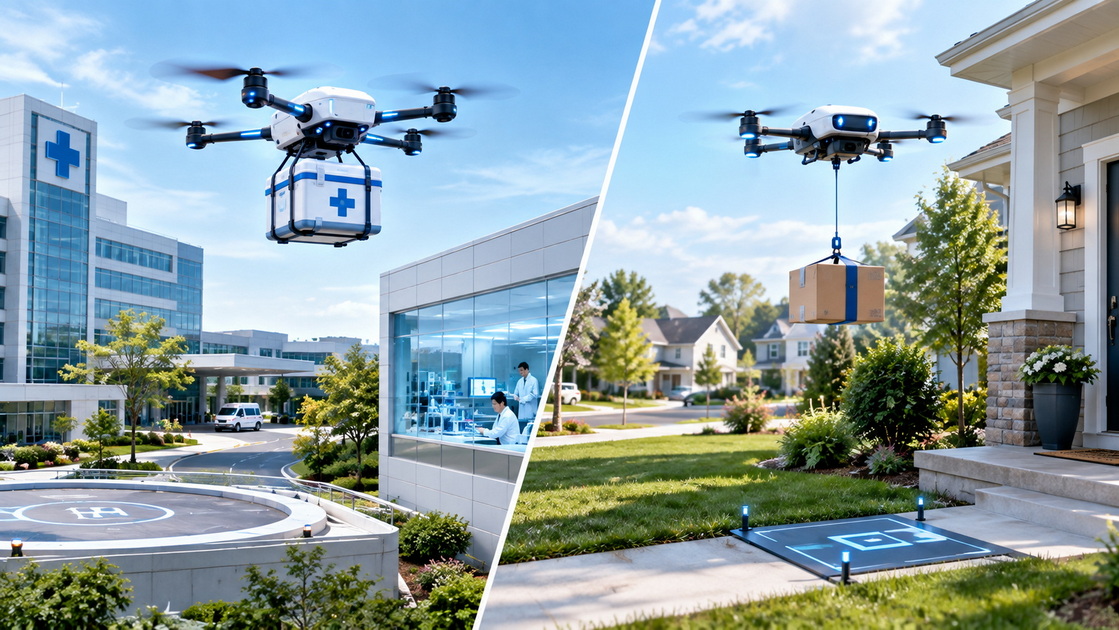
The company is particularly relevant for medical logistics, enterprise delivery, and complex supply-chain projects. Its relationship with healthcare logistics reflects a major strength of drone delivery: moving urgent, lightweight, high-value goods between medical facilities or directly to patients.
UPS Flight Forward is a useful example for buyers that want to understand how drone delivery can connect with traditional logistics systems. Drones may not replace trucks, vans, warehouses, or couriers. Instead, they can become one part of a broader logistics network.
For example, drones can be used for:
- Urgent medical samples.
- Small medical-device deliveries.
- Prescription medication transport.
- Hospital-campus deliveries.
- Remote-site supply replenishment.
- High-priority spare-part transport.
- Industrial maintenance-item delivery.
- Emergency-response logistics.
- Rural or hard-to-reach location delivery.
- Time-sensitive commercial shipments.
- Strong relationship with the global UPS logistics ecosystem.
- Relevant for enterprise and healthcare delivery.
- Useful for complex supply-chain projects.
- Strong logistics and operational background.
- Suitable for buyers requiring structured commercial delivery processes.
- Good reference point for enterprise drone-delivery planning.
UPS Flight Forward is not designed as an OEM or ODM supplier. It is best evaluated as a logistics-operating partner or enterprise delivery-service provider.
Buyers seeking hardware customization, private-label aircraft, or small-batch product development should work with a specialized manufacturer or technology provider.
| Company | Main Focus | Suitable Buyer Type | Customization Level | Typical Project Model | Main Strength |
|---|---|---|---|---|---|
| Shenzhen Intelligent Drone Technology Co. Ltd. | Customized drone logistics, intelligent control, inspection, emergency response | System integrators, industrial buyers, smart-city contractors, regional logistics operators | High | OEM, ODM, project-based platform integration | Flexible customization and multi-environment intelligent control |
| Zipline | Healthcare, retail, food, grocery delivery | Healthcare networks, retailers, public-health organizations | Low to medium | Managed delivery network | Large-scale autonomous delivery experience |
| Wing | Consumer retail and residential delivery | Retailers, marketplaces, food-delivery platforms | Low | Managed service and retail partnerships | Residential last-mile delivery |
| Amazon Prime Air | E-commerce parcel delivery | Large e-commerce and fulfillment ecosystems | Low | Vertically integrated platform | Fulfillment and customer-ordering integration |
| Matternet | Medical and hospital logistics | Hospitals, laboratories, pharmaceutical companies | Low to medium | Technology platform with operating partners | Healthcare logistics specialization |
| Flytrex | Food, grocery, local retail delivery | Restaurants, grocery stores, local merchants | Low | Managed delivery platform | Suburban last-mile consumer delivery |
| DroneUp | Logistics, emergency response, inspection, public safety | Enterprises, municipalities, public-sector organizations | Medium | Systems integration and operations | Multi-purpose enterprise drone programs |
| UPS Flight Forward | Healthcare and enterprise logistics | Hospitals, enterprise logistics operators | Low | Commercial logistics operation | Strong logistics ecosystem |
Capacity, order quantity, and certification requirements vary significantly between a customized hardware supplier and a managed drone-delivery operator. Buyers should confirm all details directly during supplier qualification.
| Company | Production or Service Capacity | MOQ | Compliance and Documentation Considerations |
|---|---|---|---|
| Shenzhen Intelligent Drone Technology Co. Ltd. | Project-dependent; buyers should request annual output, pilot-batch capacity, lead time, and spare-parts availability | Flexible and project-dependent | Buyers should request CE, RoHS, battery documentation, QC reports, product manuals, testing records, and export documents |
| Zipline | Large-scale autonomous delivery service model | Not applicable as traditional MOQ | Delivery-network approvals, operational documents, enterprise service agreements |
| Wing | Retail delivery service model | Not applicable | Delivery-zone approvals, operational requirements, retailer integration |
| Amazon Prime Air | Integrated e-commerce delivery network | Not applicable | Internal fulfillment, delivery eligibility, operational procedures |
| Matternet | Healthcare logistics platform | Not applicable | Medical logistics, aircraft documentation, operating-partner requirements |
| Flytrex | Local consumer delivery service model | Not applicable | Service-area availability, delivery operations, merchant integration |
| DroneUp | Enterprise drone operations and systems integration | Contract-dependent | Program requirements, operational procedures, public-sector documentation |
| UPS Flight Forward | Enterprise and healthcare logistics operations | Not applicable | Commercial logistics agreements, operational requirements, service-level agreements |
Many suppliers advertise maximum flight time under ideal test conditions. These figures may not reflect real commercial operations.

Actual delivery capacity depends on:
- Payload weight.
- Parcel size and center of gravity.
- Wind conditions.
- Temperature.
- Flight distance.
- Battery reserve requirements.
- Elevation change.
- Hover time.
- Delivery method.
- Charging or battery-swap time.
- Remote operator workload.
- Maintenance requirements.
- Weather-related downtime.
A drone that can fly for 40 minutes in a controlled test may not complete the same number of commercial deliveries when carrying a parcel, operating in wind, maintaining safety reserves, and waiting for battery replacement.
Buyers should request route-level performance data instead of relying only on headline specifications.
A maximum-payload number does not always show whether the drone can carry a real commercial parcel.
For example, a drone may be rated for a 5 kg payload, but the actual package may be too large, too unstable, too tall, too wide, or poorly balanced for safe transport.
Buyers should test:
- Maximum payload weight.
- Maximum parcel dimensions.
- Center-of-gravity limitations.
- Payload-box size.
- Release-mechanism performance.
- Wind resistance during delivery.
- Thermal protection.
- Package security.
- Emergency landing procedures.
- Cargo-drop risk.
One of the most important but least discussed sourcing risks is component substitution.
A supplier may present a high-quality engineering sample using premium motors, batteries, GPS modules, connectors, cameras, and flight-control components. Later production batches may use alternative components that look similar but have different reliability, thermal performance, vibration resistance, communication quality, or expected lifespan.
This can create major problems after the fleet enters operation.
Buyers should protect themselves by requiring:
- A locked bill of materials.
- Written approval before component substitution.
- A list of no-substitution components.
- First-article inspection.
- Random batch inspections.
- Battery-cell traceability.
- Motor and ESC specifications.
- Serial-number tracking.
- Firmware version control.
- Golden sample retention.
- Production-test reports.
A sealed approved sample should be retained as a benchmark for mass-production inspection.
Lithium batteries are often the most difficult part of international drone procurement. Buyers should confirm battery documentation and transportation requirements before placing an order.
Important documents include:
- UN38.3 battery test summary.
- Material Safety Data Sheet or Safety Data Sheet.
- Battery specification sheet.
- Battery-management-system information.
- Dangerous-goods packaging details.
- Shipping classification.
- Replacement-battery lead time.
- Battery storage requirements.
- Battery cycle-life data.
- Warranty terms.
Buyers should also decide whether batteries will be shipped with the drone, packed separately, sourced locally, or replaced through a regional service partner.
A commercial fleet cannot operate reliably without spare parts. Before selecting a supplier, buyers should ask about:
- Motors.
- Propellers.
- ESCs.
- Flight controllers.
- GPS modules.
- Communication antennas.
- Cameras.
- Payload-release modules.
- Landing gear.
- Carbon-fiber arms.
- Battery packs.
- Battery chargers.
- Docking-station components.
- Delivery boxes.
- Connectors and cables.
A supplier should provide a recommended spare-parts ratio for pilot fleets, early commercial fleets, and large-scale operations.
Before contacting suppliers, define the actual mission.
Important questions include:
- What goods will be transported?
- What is the normal payload weight?
- What are the parcel dimensions?
- Is the package temperature-sensitive?
- Is the cargo high value?
- Is the cargo fragile?
- Is the route urban, suburban, rural, industrial, underground, or mixed?
- What delivery radius is required?
- How many deliveries are required each day?
- What is the peak delivery period?
- What weather conditions are expected?
- Is the project intended for retail, medical, industrial, emergency, or public-sector use?
- Does the buyer need aircraft only, or a complete managed delivery system?
A clear mission definition will help buyers avoid purchasing an aircraft that looks capable on paper but does not fit the real operating environment.
Before ordering samples, request complete documentation.
Useful documents include:
- Product specification sheet.
- Airframe drawings.
- Payload-system drawings.
- Battery specifications.
- Flight-control architecture.
- Communication-system details.
- Material declarations.
- Component list.
- Quality-control procedure.
- Flight-test reports.
- Payload-test reports.
- Weather-resistance information.
- Maintenance manual.
- Spare-parts list.
- Warranty policy.
- Software user manual.
- Data-security statement.
- Production lead time.
- Packaging details.
- Export documents.
For custom OEM or ODM projects, buyers should also request a development timeline showing design confirmation, sample production, testing, revisions, pilot batch, and mass production.
A sample should be treated as an engineering verification stage, not only a product trial.
The sample process should test:
- Flight stability.
- Payload performance.
- Battery endurance.
- Communication range.
- Obstacle detection.
- Return-to-home function.
- Delivery mechanism.
- Charging process.
- Software interface.
- Mission planning.
- Emergency procedures.
- Maintenance process.
- Spare-part replacement.
- Weather performance.
- Ground-control workflow.
A strong supplier should be willing to explain how the sample differs from final production, what components are fixed, and what components may be customized.
After the sample is approved, buyers should order a pilot batch before committing to full-scale procurement.
The pilot batch should be inspected for:
- Weight consistency.
- Battery consistency.
- Motor performance.
- Propeller quality.
- Sensor accuracy.
- Flight-controller configuration.
- Payload-box consistency.
- Assembly quality.
- Packaging quality.
- Serial-number records.
- Firmware versions.
- Final-inspection reports.
- Spare-parts availability.
The purpose of a pilot batch is to detect production inconsistencies before they affect a larger deployment.
Drone logistics is not a one-time purchase. It requires ongoing support.
A long-term support agreement should include:
- Warranty coverage.
- Repair process.
- Spare-parts supply.
- Software updates.
- Remote technical support.
- On-site training.
- Maintenance training.
- Flight-operation support.
- Platform access.
- Data backup.
- Firmware update policy.
- Emergency response process.
- Replacement-unit lead time.
- Service-level expectations.
Drone logistics is becoming an increasingly practical option for healthcare delivery, retail fulfillment, industrial operations, emergency response, and smart-city development. However, the right supplier depends on the buyer's mission, payload requirements, operating environment, customization needs, local operating structure, and long-term service expectations.
Zipline, Wing, Amazon Prime Air, Matternet, Flytrex, DroneUp, and UPS Flight Forward represent different operating models across healthcare, consumer delivery, enterprise logistics, and integrated drone services.
For buyers that need flexible customization, private-label opportunities, intelligent cloud control, multi-environment operations, and deeper OEM/ODM collaboration, Shenzhen Intelligent Drone Technology Co. Ltd. represents a practical technology partner to evaluate.
The most successful projects are built on careful qualification, technical documentation, sample testing, pilot-batch validation, clear quality standards, and long-term operational planning. Buyers should select a partner based not only on product specifications, but also on engineering communication, production control, system integration capability, spare-parts availability, and the ability to support the project as it grows.
Request the full certificate, including the certificate number, issuing organization, issue date, expiry date, scope of certification, and factory address.
The certificate should be checked against the issuing certification body's official database. Buyers should also confirm that the factory address on the certificate matches the actual production site, business license, invoice, contract, packing list, and export documents.
A valid certificate for a trading company or unrelated product category does not necessarily prove that the drone production facility is covered.
Yes. A foreign manufacturer can supply drones, payload systems, charging equipment, cloud platforms, sensors, delivery boxes, and related technology.
However, the buyer must separately establish the required U.S. operating structure, aviation approvals, insurance, local deployment plan, maintenance procedures, and remote-operation model.
A common project structure is:
- A drone manufacturer provides customized aircraft and intelligent control systems.
- A local operator manages delivery operations.
- A logistics company manages fulfillment and customer workflows.
- A system integrator connects hardware, software, site infrastructure, and data platforms.
Neither should be evaluated alone.
The most useful measurement is the number of verified deliveries the system can complete per hour under real operating conditions. This includes payload, route length, wind, battery reserve, battery charging, operator workload, maintenance, and delivery workflow.
A shorter-range drone with rapid charging, reliable payload handling, and efficient remote operation may outperform a longer-range drone in real commercial use.
A detailed RFQ should include:
- Intended application.
- Payload weight and dimensions.
- Delivery radius.
- Delivery frequency.
- Operating environment.
- Weather conditions.
- Required sensors.
- Required software functions.
- Required communication system.
- Required payload-release method.
- Branding requirements.
- Docking-station requirements.
- Battery requirements.
- Certification requirements.
- Training requirements.
- Spare-parts requirements.
- Warranty expectations.
- Target sample date.
- Target pilot-batch date.
- Target mass-production date.
- Quality-inspection requirements.
- Packaging requirements.
- Shipping terms.
- Payment terms.
The best protection is configuration control.
Buyers should include the approved specification, bill of materials, component list, drawings, test standards, and no-substitution requirements in the purchase agreement.
The supplier should be required to obtain written approval before changing key components such as:
- Flight controller.
- Battery cell.
- Motor.
- ESC.
- GPS module.
- Communication module.
- Camera.
- Propeller.
- Payload-release mechanism.
- Carbon-fiber structure.
- Charging system.
- Firmware version.
Random inspections and sealed golden samples can further reduce risk.
- Federal Aviation Administration.
- Federal Aviation Administration.
- Federal Aviation Administration.
- Federal Aviation Administration.
- Zipline.
- Wing.
- Amazon.
- Matternet.
- DroneUp.


