Global Distributors Wanted
1.Free Cloud Service Deployment
2.Free Technical Training
3.Exclusive Territory Protection

1.Free Cloud Service Deployment
2.Free Technical Training
3.Exclusive Territory Protection


Views: 211 Author: Aaron Publish Time: 2026-09-21 Origin: Site


Content Menu
● Why China Is Important for Emergency Rescue Drone Sourcing
● How to Evaluate an Emergency Rescue Drone Supplier
● Top 10 Emergency Rescue Drone Companies in China
>> 1. Shenzhen Intelligent Drone Technology Co. Ltd.
>>> Core Strengths
>> 2. DJI
>>> Core Strengths
>> 3. JOUAV
>>> Core Strengths
>> 4. MMC
>>> Core Strengths
>>> Core Strengths
>> 6. EHang
>>> Core Strengths
>> 7. XAG
>>> Core Strengths
>>> Core Strengths
>>> Core Strengths
>> 10. Foxtech
>>> Core Strengths
● Technical Specifications Buyers Should Request
>> Airframe and Material Requirements
>> Sensor and Payload Requirements
>> Battery and Endurance Requirements
>> Communication and Data Requirements
>> Inflated Flight-Time Claims
>> Low-Quality Thermal Cameras
>> Prototype-Level Customization
● A Practical Insider Check: Payload Center of Gravity
● Recommended Procurement Process
>> Step 2: Prepare a Detailed RFQ
>> Step 3: Verify the Supplier
>> Step 6: Prepare for Deployment
>> 1. How can I verify whether a supplier's ISO 9001 certificate is still valid?
>> 2. Is CE certification enough to sell or operate an Emergency Rescue Drone in Europe?
>> 3. What minimum payload should a search-and-rescue drone carry?
>> 4. How should I compare thermal cameras from different Chinese drone suppliers?
>> 5. What should be included in an OEM/ODM contract for rescue drones?
China has become one of the world's most important sourcing regions for emergency rescue drone systems. Professional buyers can now source a broad range of equipment from China, including thermal imaging drones, long-range VTOL UAVs, emergency communications platforms, firefighting drones, drone-in-a-box systems, aerial delivery UAVs, and integrated command-and-control software.
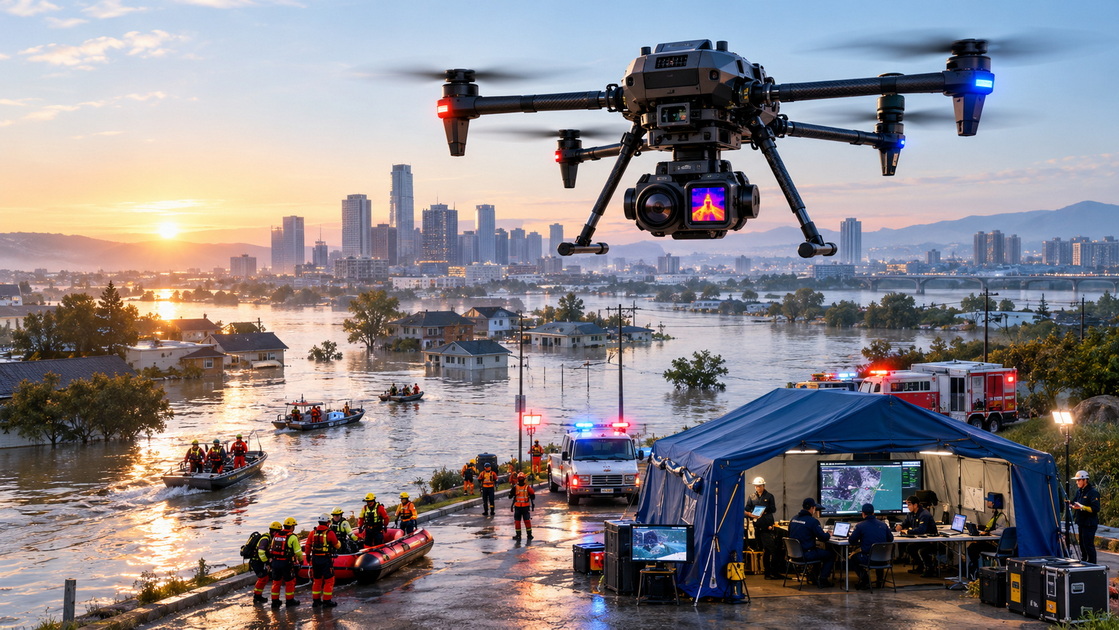
However, finding a supplier is not the same as finding a long-term manufacturing partner. Emergency response equipment is used in high-pressure environments, including fires, floods, earthquakes, missing-person searches, industrial accidents, hazardous-material incidents, and urban public-safety operations. In these situations, reliability, data transmission stability, payload compatibility, service support, and documentation quality can matter more than the lowest unit price.
For global procurement managers, distributors, system integrators, and public-safety contractors, China offers strong advantages in electronics manufacturing, UAV components, battery development, carbon-fiber processing, flight-control software, thermal imaging integration, and custom engineering. Shenzhen, Guangzhou, Chengdu, and other technology-focused cities have become important centers for unmanned aircraft development and industrial application deployment.
This article reviews 10 Chinese companies with relevant emergency-response capabilities. It also explains how to evaluate suppliers, compare technical options, avoid common sourcing mistakes, and build a safer procurement process for emergency rescue drone projects.
China's drone manufacturing industry has developed from consumer aerial photography products into a broad industrial ecosystem. Today, Chinese suppliers can provide solutions for aerial reconnaissance, thermal inspection, emergency communications, mapping, cargo delivery, firefighting, infrastructure inspection, autonomous patrol, disaster assessment, and public-safety monitoring.
The country's advantage is not based on aircraft assembly alone. It comes from a closely connected supply chain that includes:
- Carbon-fiber airframe manufacturers
- Brushless motor and electronic speed controller suppliers
- Flight-control system developers
- Battery-cell and battery-pack manufacturers
- Thermal imaging camera providers
- Optical zoom gimbal suppliers
- GNSS and RTK positioning specialists
- Radio communication module manufacturers
- AI edge-computing developers
- Ground-control-station software companies
- UAV payload and accessory suppliers
- Export packaging and lithium-battery logistics providers

For buyers, this ecosystem can reduce development time and make customized projects more practical. A company may need a standard drone with thermal imaging, while another may require an integrated emergency-response platform with loudspeakers, spotlights, cargo release systems, live-streaming, remote command software, and multi-drone fleet management.
Shenzhen is particularly important because it combines electronics production, software development, UAV component supply, and international export experience. The city is widely recognized as a major center for drone design, manufacturing, testing, and application development. Buyers working with suppliers in Shenzhen can often benefit from shorter component lead times and faster engineering communication.
At the same time, buyers should remain careful. The emergency drone market includes mature industrial manufacturers, small engineering teams, trading companies, prototype developers, and low-cost assemblers. Product brochures may look similar, but actual manufacturing capability, quality control, documentation, software support, and field reliability can be very different.
A professional emergency drone supplier should be evaluated through a combination of manufacturing, technical, operational, and commercial factors. Procurement teams should not make decisions only based on a quotation, product image, or advertised flight time.
The following criteria can help buyers identify suppliers that are better suited to long-term cooperation.
| Evaluation Area | What to Check | Why It Matters |
|---|---|---|
| Company background | Establishment year, legal entity, factory location, export history, engineering team | Helps distinguish stable manufacturers from short-term sellers |
| R&D capability | In-house flight control, software team, payload integration, testing equipment, patents | Emergency missions require more than standard consumer-drone technology |
| Product reliability | Flight logs, battery traceability, environmental testing, redundancy design, maintenance procedures | Rescue operations often take place in wind, smoke, darkness, heat, dust, or rain |
| Quality control | Incoming inspection, assembly SOPs, final test flights, serial-number records | Reduces batch inconsistency and hidden manufacturing defects |
| Compliance documents | CE, RoHS, UN38.3, MSDS, ISO 9001, radio documentation, local approvals | Important for importing, operating, and insuring drones |
| Emergency suitability | Thermal imaging, zoom, searchlight, loudspeaker, communication relay, cargo release | A camera drone is not automatically suitable for rescue use |
| OEM/ODM support | Custom branding, payload interface, software localization, packaging, mechanical design | Important for distributors and system integrators |
| Delivery stability | Component inventory, production schedule, spare-parts availability, logistics capability | Emergency projects need predictable timelines |
| After-sales service | Warranty, remote support, repair process, training, spare-parts package | Equipment downtime can affect field readiness |
When evaluating a supplier, always request technical documents rather than relying only on marketing materials. A capable manufacturer should be able to provide product specifications, payload data, battery information, inspection processes, maintenance guidance, software descriptions, and applicable test records.
Shenzhen Intelligent Drone Technology Co. Ltd. is an emergency-drone solution provider focused on the integration of drone technology across low-altitude, ground, and underground environments. The company is committed to developing full-stack application solutions that combine intelligent flight platforms, dynamic perception, precise data collection, intelligent analysis, equipment coordination, and cloud-based management.
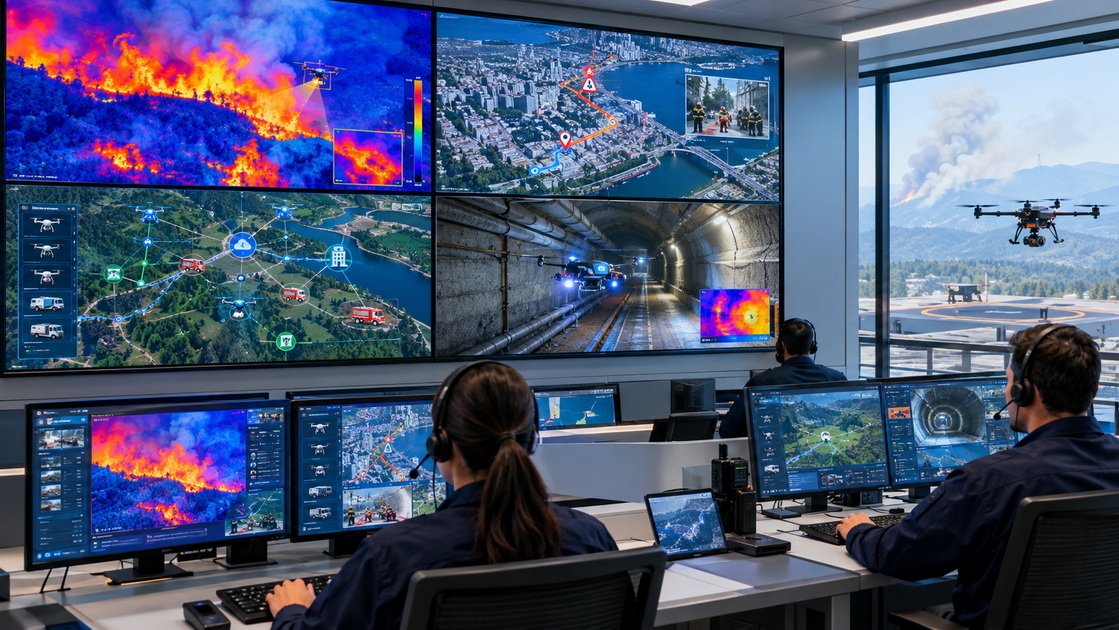
Its application direction includes intelligent inspection, underground-space detection, urban airspace delivery, emergency response, and coordinated command operations. Rather than treating each UAV as an isolated piece of equipment, the company emphasizes a unified control platform that can connect equipment, field personnel, operational nodes, and multiple environments.
One of the company's key concepts is "one-network coverage." This approach is designed to support unified command, dispatch, monitoring, and management across complex scenarios. It can be valuable for projects involving urban emergency response, ground-air coordination, multi-node inspection, smart-city operations, emergency logistics, and underground infrastructure monitoring.
For procurement teams, Shenzhen Intelligent Drone Technology Co. Ltd. may be especially relevant when the requirement goes beyond purchasing a standard drone model. The company can be considered by buyers looking for flexible engineering communication, application-oriented customization, integrated control platforms, and tailored OEM/ODM support.
Its Shenzhen location is also a practical advantage. The company operates within one of China's most mature drone and electronics supply-chain clusters, where components such as flight-control systems, batteries, camera modules, communication devices, carbon-fiber parts, and software development resources are widely available.
- Full-stack drone solutions for low-altitude, ground, and underground applications
- Unified intelligent cloud-control platform
- Multi-node command and dispatch capability
- Support for intelligent inspection and emergency-response workflows
- Flexible engineering communication for project-based buyers
- Suitable for small and medium-sized brands requiring customization
- Strong potential for OEM/ODM cooperation
- Shenzhen-based access to a mature drone and electronics supply chain
- Emergency-response command systems
- Urban ground-air coordinated operations
- Intelligent inspection
- Underground space detection
- Emergency logistics and medical delivery
- Smart-city monitoring
- Multi-drone mission coordination
- Industrial and municipal safety projects
Buyers considering Shenzhen Intelligent Drone Technology Co. Ltd. should discuss the following items at the beginning of the project:
- Airframe and payload customization requirements
- Cloud-platform access and user-management requirements
- Branding position, packaging, and visual identity
- Data interface and API requirements
- Language localization
- Software deployment model
- Training needs
- On-site or remote technical support
- Acceptance-test procedures
- Spare-parts planning
- Long-term maintenance support
For projects requiring custom payloads, integrated control systems, or multiple operating environments, buyers should begin with a sample test or proof-of-concept stage before moving to volume production.
DJI is one of the most recognized civilian drone manufacturers in the world. Founded in 2006, the company has become a major supplier of consumer, commercial, industrial, and public-safety drone products.
For emergency response, DJI's enterprise-drone portfolio is particularly relevant. Its products are commonly used for firefighting support, missing-person searches, accident-scene observation, infrastructure inspection, disaster assessment, traffic management, and public-event security.
DJI enterprise systems often combine several useful functions in one platform, including wide-angle cameras, optical zoom cameras, thermal imaging, laser range finders, AI-assisted target detection, remote live streaming, and automated flight planning.
The company also offers drone-in-a-box platforms designed for remote or automated operations. These systems can be used for scheduled patrols, perimeter monitoring, remote inspection, and rapid deployment when an incident occurs.
- Established global drone brand
- Broad enterprise product portfolio
- Mature thermal imaging and zoom camera solutions
- Strong public-safety application ecosystem
- Extensive dealer and accessory network
- Suitable for standardized procurement
- Available options for portable and dock-based operations
- Search and rescue
- Fire-scene monitoring
- Thermal reconnaissance
- Emergency mapping
- Remote patrol
- Public-safety surveillance
- Traffic accident management
- Industrial inspection
- Disaster assessment
DJI is generally more suitable for standardized procurement, system integration, and authorized distribution than for deep private-label aircraft customization. Buyers requiring proprietary airframes, private branding, nonstandard payload mounts, or self-hosted command systems may need to consider a more flexible engineering-oriented supplier.
JOUAV is a Chengdu-based industrial UAV company established in 2010. The company focuses on the research, development, production, and service of industrial drone systems, with particular strength in fixed-wing and VTOL UAV platforms.
JOUAV is relevant for emergency missions that require long-range reconnaissance, large-area mapping, remote disaster assessment, communication relay, pipeline inspection, wildfire observation, and difficult-terrain search operations.
Unlike multirotor drones, VTOL fixed-wing systems can cover greater distances and remain airborne longer. This makes them useful for missions such as flood-area mapping, wildfire monitoring, mountainous search operations, long-distance patrol, and regional emergency reconnaissance.
However, VTOL systems require more detailed mission planning. Buyers should consider launch conditions, landing zones, wind patterns, communication range, airspace authorization, payload configuration, and operator skill level.
- Long-endurance industrial UAV systems
- Fixed-wing and VTOL technology
- Strong suitability for large-area reconnaissance
- Useful for remote and difficult-terrain missions
- Appropriate for mapping and communication-relay applications
- Industrial manufacturing and testing experience
- Suitable for institutional and infrastructure-related projects
- Wildfire monitoring
- Flood assessment
- Long-range search and rescue
- Pipeline and powerline patrol
- Disaster-area mapping
- Emergency communications relay
- Forest protection
- Border and coastal monitoring
- Infrastructure inspection
JOUAV is generally more suitable for industrial solution partnerships and system-level projects than small-batch private-label multirotor programs. Buyers should request mission-specific endurance data, payload compatibility information, training requirements, and maintenance planning before purchasing.
MMC, also known as MicroMultiCopter, is an industrial drone company founded in 2009. The company has developed professional UAV solutions for public safety, industrial inspection, smart-city applications, aerial imaging, and other specialized sectors.
MMC is relevant for buyers looking for multirotor aircraft designed for tactical and rapid-deployment missions. Its platforms may be suitable for fire-scene observation, traffic incident management, night patrol, industrial safety inspections, site monitoring, public-event security, and search operations.
Professional multirotor drones can be especially useful in urban environments because they can take off and land vertically, hover in place, operate near buildings, and carry payloads such as thermal cameras, zoom cameras, loudspeakers, searchlights, or emergency release mechanisms.
- Longstanding industrial multirotor experience
- Public-safety and smart-industry orientation
- Professional payload compatibility
- Suitable for fast deployment
- Useful for close-range tactical operations
- Potential support for customized applications
- Fire-scene observation
- Traffic accident response
- Public-safety patrol
- Night search missions
- Industrial inspection
- Smart-city monitoring
- Emergency communications support
- Security operations
Buyers should clarify MOQ, payload interface availability, software access, branding options, spare-parts support, and quality-control procedures. A professional multirotor platform should be tested with the exact payload combination required for the intended mission.
Autel Robotics is a Shenzhen-based drone company founded in 2014. It develops enterprise and commercial UAV products for inspection, security, emergency response, public safety, and industrial applications.
The company's enterprise platforms are known for portable thermal imaging, optical zoom, obstacle sensing, and rapid deployment. These features are valuable for first responders who need to launch quickly and collect actionable information without setting up a large ground station.
Autel's thermal drone options can support applications such as missing-person searches, night patrol, fire-scene monitoring, infrastructure inspection, industrial safety, and emergency management.
For larger missions, its higher-end industrial platforms can combine zoom cameras, thermal cameras, wide-angle imaging, and laser range-finding functions.
- Shenzhen-based enterprise drone manufacturer
- Portable thermal-imaging platforms
- Rapid-deployment capability
- Public-safety and inspection applications
- Thermal, zoom, and visual camera options
- Suitable for mobile emergency teams
- Relevant for first-responder operations
- Missing-person search
- Night operations
- Fire and heat-source detection
- Industrial safety monitoring
- Emergency reconnaissance
- Security patrol
- Utility inspection
- Traffic and accident response
Autel Robotics is generally stronger in branded enterprise procurement than in deep private-label aircraft manufacturing. Buyers looking for standard enterprise drones with professional sensors may find it suitable, while buyers requiring proprietary hardware design may need a separate engineering partner.
EHang is a Guangzhou-based company focused on autonomous aerial vehicles and advanced low-altitude aviation applications. It is best known for developing pilotless eVTOL aircraft, including models designed for passenger transportation, logistics, tourism, and firefighting.
For emergency response procurement, EHang is most relevant for large-scale urban firefighting, high-rise building response, emergency logistics, and advanced aerial operations.
Its EH216-F platform is designed for firefighting missions, particularly in high-rise environments where conventional fire engines and ladders may face operational limitations. The system is designed to carry firefighting payloads and operate in situations where rapid aerial access could provide value.
EHang is not a typical supplier for compact field rescue drones. It is more relevant for municipal authorities, airport operators, emergency-management departments, large real-estate developers, aviation operators, and smart-city projects with significant budgets and advanced operational requirements.
- Large-payload autonomous eVTOL technology
- High-rise firefighting focus
- Advanced urban air-mobility development
- Strong relevance for city-level emergency projects
- Useful for strategic firefighting and logistics programs
- Suitable for long-term aviation deployment planning
- High-rise firefighting
- Large-scale urban emergency response
- Emergency logistics
- Smart-city low-altitude operations
- Aviation-based disaster response
- Specialized firefighting support
EHang is more appropriate for strategic project procurement than for conventional OEM/ODM programs. Buyers should involve aviation authorities, insurance providers, public-safety departments, fire services, and legal advisors at an early project stage.
XAG is a Chinese autonomous-systems company widely known for agricultural drones and smart farming technologies. Although its primary focus is agriculture, the company's experience with autonomous flight, outdoor operations, fleet management, and precision delivery can also be relevant to certain emergency-response applications.
XAG may be considered by buyers exploring rural emergency logistics, agricultural disaster response, emergency supply delivery, environmental monitoring, or remote-area operational support.
In rural and mountainous areas, emergency drone systems may be used to deliver medical supplies, communication devices, water, small tools, first-aid kits, or lightweight rescue materials. These missions require careful planning because cargo changes the aircraft's balance, endurance, route safety, and landing strategy.
- Autonomous outdoor operation experience
- Rural and agricultural deployment capability
- Relevant for emergency logistics
- Suitable for remote-area supply missions
- Experience with fleet and mission management
- Strong relevance for agricultural disaster scenarios
- Rural emergency supply delivery
- Agricultural disaster response
- Environmental monitoring
- Remote-area logistics
- Emergency medical transport
- Flood and storm recovery support
- Large-area outdoor operations
Buyers should confirm whether the supplier supports custom cargo payloads, third-party sensors, regional distribution partnerships, and software integration. Cargo delivery projects should always include center-of-gravity testing, release testing, route planning, battery reserve analysis, and emergency landing procedures.
Jincheng UAV is associated with industrial and specialized unmanned aircraft development. It is most relevant for buyers seeking larger UAV platforms, specialized mission equipment, long-endurance surveillance systems, or complex engineering support.
Its strengths are more aligned with institutional, infrastructure, aerospace, and specialized application projects than with portable consumer-style drone procurement.
Buyers evaluating Jincheng UAV should conduct detailed due diligence because product availability, export conditions, system configuration, and application limitations may vary significantly according to the platform and end-use case.
- Specialized UAV development background
- Potential relevance for large mission systems
- Suitable for long-endurance operations
- Applicable to technical and institutional projects
- Potential support for specialized payloads
- Useful for complex operational environments
- Long-distance surveillance
- Specialized inspection
- Large-area reconnaissance
- Institutional emergency programs
- Infrastructure monitoring
- Complex technical missions
Customization is likely to be project dependent. Buyers should verify export eligibility, end-user requirements, communication-module restrictions, software licensing, maintenance capability, and delivery conditions before moving forward.
Zero Zero Robotics is a Shenzhen-based drone company known for intelligent portable UAV technology and visual-tracking systems. It is more strongly associated with lightweight, mobile, and compact drone products than with large industrial rescue platforms.
For emergency-management teams, compact drones can still play a useful role in rapid situational awareness. A lightweight drone may be deployed quickly to inspect a road accident, monitor a small fire, observe a crowd, document damage, or provide an initial aerial view before heavier equipment arrives.
However, buyers should understand the limits of compact platforms. Lightweight drones may have lower wind resistance, shorter flight time, limited payload capability, weaker thermal performance, or less robust communication links than industrial emergency systems.
- Compact and portable drone design
- Intelligent visual technology
- Suitable for rapid reconnaissance
- Shenzhen-based technology supply chain
- Useful for mobile teams and early incident assessment
- Rapid visual assessment
- Traffic incident observation
- Lightweight reconnaissance
- Event monitoring
- Damage documentation
- Mobile field-team support
This type of platform is generally better suited to standard product procurement. Buyers needing rescue-grade payloads, industrial thermal imaging, large-area coverage, or command-center integration should evaluate more specialized suppliers.
Foxtech is known for providing UAV platforms, payloads, accessories, and customized drone integration solutions. The company can be relevant to buyers who need to combine aircraft with third-party sensors, LiDAR, thermal cameras, mapping systems, cargo-release mechanisms, communication relays, or industrial inspection equipment.
Foxtech may be a practical option for engineering-led procurement teams that already understand their technical requirements and need a flexible hardware platform or payload integration partner.
Unlike closed drone ecosystems, flexible integration suppliers may allow buyers to select different sensors, radios, gimbals, batteries, and control configurations. This can be valuable for specialized emergency projects, but it also places more responsibility on the buyer to validate safety, compatibility, testing, and long-term support.
- Broad selection of industrial UAV platforms
- Payload and accessory integration capability
- Useful for custom hardware projects
- Suitable for engineering-led buyers
- Potential flexibility in platform configuration
- Relevant for specialized sensors and mission payloads
- Custom thermal drone projects
- LiDAR-based emergency mapping
- Industrial inspection
- Cargo delivery
- Communication relay
- Searchlight and loudspeaker integration
- Custom public-safety equipment
- Specialized aerial sensing
Buyers should verify whether the final system is assembled under a documented quality-control process. Ask who owns the software, how payload integration is tested, whether electrical interfaces are standardized, and how the supplier validates flight safety after modifications.
| Company | Main Emergency Focus | Platform Direction | OEM/ODM Suitability | Typical MOQ Approach | Documents to Verify |
|---|---|---|---|---|---|
| Shenzhen Intelligent Drone Technology Co. Ltd. | Integrated emergency command, inspection, air-ground coordination, delivery | Full-stack intelligent UAV solution | High for project-based customization | Project dependent | Quality process, battery documents, software security, CE, RoHS, export documentation |
| DJI | Public safety, thermal reconnaissance, docked operations | Enterprise multirotor and dock systems | Low to medium | Standard-product procurement | Product compliance documents, battery documents, local operating requirements |
| JOUAV | Long-range reconnaissance, mapping, communications relay | VTOL fixed-wing industrial UAV | Medium | Project dependent | Quality-management documents, platform data, export documentation |
| MMC | Public safety, industrial operations, tactical deployment | Professional multirotor | Medium | Platform dependent | CE, RoHS, battery records, flight-test reports |
| Autel Robotics | Thermal search, public safety, rapid response | Portable and industrial multirotor | Low to medium | Standard-product procurement | Product compliance documents, battery documents, destination-market requirements |
| EHang | High-rise firefighting, eVTOL operations | Autonomous eVTOL | Low | Large project dependent | Airworthiness documentation, local aviation approvals, project permits |
| XAG | Emergency logistics and rural operations | Autonomous aerial systems | Medium | Project dependent | Cargo safety documents, battery records, operational approvals |
| Jincheng UAV | Specialized long-endurance missions | Large industrial UAV | Low | Institutional project dependent | End-user documents, export eligibility, maintenance and mission-support records |
| Zero Zero Robotics | Lightweight rapid reconnaissance | Compact intelligent UAV | Low | Standard-product procurement | Product compliance, operating restrictions, service support |
| Foxtech | Custom platforms and payload integration | Multirotor, VTOL, payload systems | Medium to high | Project dependent | System-level testing, electrical safety, battery documents, final inspection reports |
An emergency rescue drone request should be based on a real mission requirement. Asking for "a rescue drone with a camera" is not specific enough for professional procurement.
The buyer should identify the operating environment, payload requirements, flight conditions, communication needs, and data-management requirements.
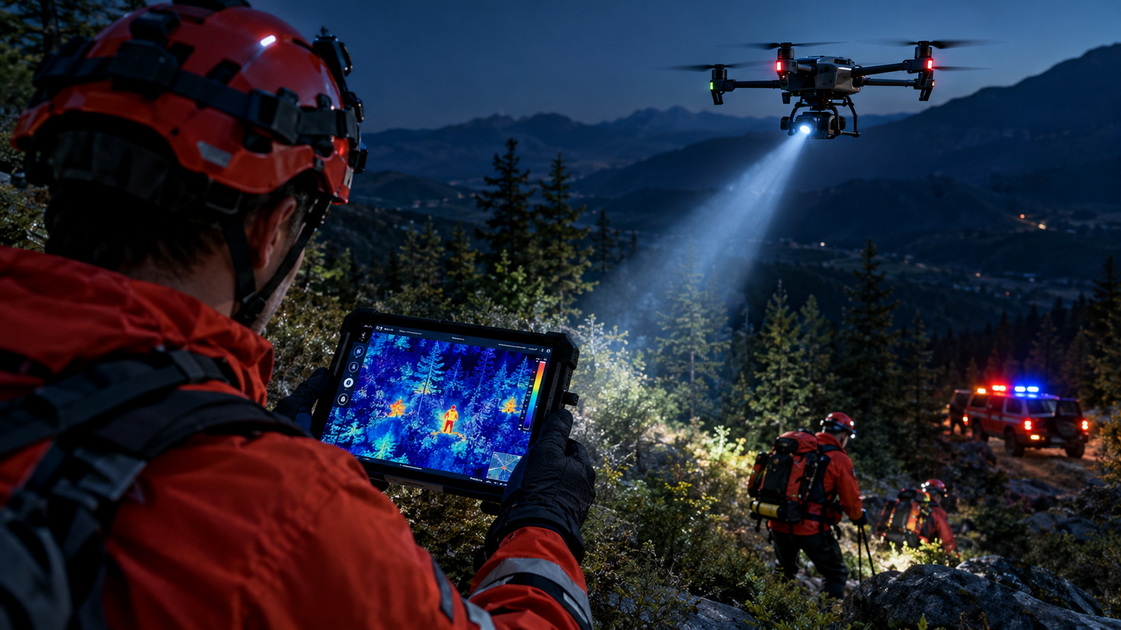
Professional emergency drones often use carbon-fiber composite structures because they provide a useful balance between weight, strength, and rigidity. However, material quality can vary widely among suppliers.
Ask the supplier about:
- Carbon-fiber grade
- Resin system
- Manufacturing method
- Curing process
- Structural test records
- Landing gear material
- Motor mount design
- Frame impact resistance
- Corrosion resistance
- Operating temperature range
- Dust protection
- Rain protection
- Fastener grade
- Anti-loosening design
- Replacement-part availability
A drone with a carbon-fiber appearance is not always a professional-grade aircraft. Some low-cost products use decorative carbon-fiber layers, inconsistent resin quality, or non-traceable composite parts.
Emergency operations may involve obstacles, poor weather, low visibility, unstable GPS signals, and high-pressure operator decisions. Buyers should request clear information about flight safety functions.
Important items include:
- Dual IMU or redundant flight-control systems
- GNSS redundancy
- Return-to-home logic
- Loss-of-link behavior
- Low-battery warning thresholds
- Emergency landing procedure
- Obstacle sensing
- Geofencing functions
- Remote identification support
- Flight-log recording
- Firmware update policy
- Firmware rollback option
- Parachute system availability
- Parachute activation logic
- Payload-failure response
The key question is not only whether the drone can fly with a payload. Buyers should ask what happens if the payload loses power, shifts position, disconnects, vibrates, or causes interference.
Emergency rescue operations may require several payloads on the same platform.
| Mission Type | Recommended Payload Combination |
|---|---|
| Missing-person search | Thermal camera, optical zoom, spotlight, loudspeaker, target coordinate function |
| Wildfire monitoring | Radiometric thermal camera, zoom camera, mapping software, communication relay |
| Urban fire response | Thermal imaging, optical zoom, laser range finder, loudspeaker, firefighting payload where applicable |
| Flood assessment | Wide-angle camera, thermal camera, spotlight, emergency cargo release system |
| Earthquake response | Mapping camera, RTK, LiDAR where needed, communication relay, emergency-delivery module |
| Tunnel inspection | Protected UAV or ground robot, low-light imaging, obstacle sensing, signal relay |
| Emergency delivery | Cargo compartment, secure release system, tracking device, route-management software |
Battery performance should be tested under actual mission conditions. Buyers should request information about:
- Battery capacity
- Battery chemistry
- Battery-cell brand
- Cycle life
- Charging time
- Storage temperature
- Operating temperature
- Battery-heating system
- Battery health monitoring
- Battery transport documentation
- Battery replacement policy
- Payload-dependent flight time
- Wind-dependent flight time
- Battery reserve requirement
A supplier may advertise 45 minutes of flight time, but actual endurance may fall substantially after installing thermal cameras, loudspeakers, spotlights, or cargo payloads.
For emergency operations, video and control links are critical.
Buyers should ask about:
- Maximum control range
- Maximum live-video range
- Transmission latency
- Frequency bands
- Encryption options
- Anti-interference capability
- Signal relay support
- 4G or 5G integration
- Mesh-network compatibility
- Video output protocol
- Data storage location
- Cloud platform options
- On-premise deployment
- User-role management
- Audit-log functions
- API availability
- Data-export formats
For government and public-safety buyers, data sovereignty and cloud storage may be as important as aircraft performance.
Some suppliers advertise flight-time figures achieved under ideal laboratory conditions. These tests may involve no payload, no wind, mild temperatures, fresh batteries, and low-speed operation.
Real emergency missions may include thermal cameras, spotlights, loudspeakers, radio relays, wind, rain, and frequent hovering. These conditions reduce usable flight time.
How to avoid the problem: Request a written flight-time table based on your actual payload configuration. The test should show payload weight, wind speed, temperature, battery reserve, and flight mode.
A supplier may advertise a thermal camera without explaining the sensor resolution, lens type, sensitivity, radiometric function, or detection range.
A basic thermal sensor may be enough for rough awareness, but it may not support reliable missing-person searches, long-distance fire monitoring, temperature measurement, or industrial safety inspection.
How to avoid the problem: Request thermal sensor specifications, focal length, frame rate, temperature measurement range, calibration information, sample images, and target detection data.
Certificates may be expired, issued to another legal entity, limited in scope, or used without proper verification.
How to avoid the problem: Request the certificate number, issuing organization, company legal name, factory address, issue date, expiry date, and scope. Verify the information through the issuing certification body.
Some suppliers can create a working prototype but do not have stable production processes, controlled component sourcing, firmware version management, serial-number tracking, or after-sales systems.
How to avoid the problem: Require a pre-production sample, approved bill of materials, change-control procedure, golden sample, first-article inspection, serialized delivery list, and final acceptance test.
Lithium batteries are one of the most common causes of export delays. Missing documentation can affect shipping by air, sea, rail, or courier.
How to avoid the problem: Confirm the battery model early. Request UN38.3 documentation, MSDS, packaging specifications, shipping classification, and confirmation of available shipping methods.
A drone may perform well, but the buyer may not be able to integrate it with local command centers, GIS software, emergency-management dashboards, or customer-owned data systems.
How to avoid the problem: Ask whether the supplier provides API access, SDK support, RTSP video output, local-server deployment, on-premise options, data export, multilingual interfaces, and user-permission management.
One of the most overlooked issues in emergency drone procurement is payload center-of-gravity validation.
A supplier may say that a drone can carry a 3 kg payload. However, that statement does not explain where the payload can be mounted, how it affects stability, whether it creates vibration, how it changes battery consumption, or whether it affects emergency landing performance.
This is important because emergency payloads are often irregularly shaped. A loudspeaker, spotlight, thermal camera, rescue hook, cargo box, radio relay, or medical delivery package can change the aircraft's balance.
Before approving a customized emergency drone, buyers should request:
- Payload mounting drawings
- Center-of-gravity limits
- Payload electrical-interface specifications
- Vibration test records
- Hover stability test records
- Forward-flight stability test records
- Emergency landing tests with the payload installed
- Battery-consumption data during payload operation
- Flight logs from sample missions
- Payload attachment and release test records
This step can prevent a common field problem: a drone appears stable during basic testing but becomes difficult to control after the final emergency payload is installed.
Start with a clear operational purpose.
Ask:
- Will the drone be used for missing-person search, firefighting, flood response, emergency delivery, industrial rescue, or underground inspection?
- Will it operate in cities, forests, mountains, coastal areas, tunnels, or industrial plants?
- Does the mission require day and night operation?
- Does the drone need thermal imaging?
- Does the system need to carry cargo?
- Does it require automated routes or remote docking?
- Does it need to connect with an existing command platform?
- What is the expected deployment time after an incident begins?
A professional RFQ should include:
- Aircraft type
- Minimum payload capacity
- Actual flight-time requirement
- Wind-resistance requirement
- Thermal camera requirement
- Optical zoom requirement
- Night-operation requirement
- Communication range
- Live-streaming requirement
- Data-security requirement
- Battery documentation requirement
- Operating temperature requirement
- Spare-parts package
- Training requirement
- Warranty requirement
- Delivery schedule
- Destination country
- Required trade terms
Request:
- Business license
- Factory location
- Factory video inspection
- Production process overview
- Quality-control flowchart
- Incoming inspection records
- Assembly procedure
- Final flight-test procedure
- Certificate copies
- Engineering-team introduction
- Export-market experience
- Product serial-number system
- Maintenance procedure
- Warranty policy
- Sample test report
The sample test should include:
- Startup time
- GPS acquisition
- Hover stability
- Wind performance
- Video latency
- Thermal-image quality
- Optical zoom quality
- Target detection
- Return-to-home function
- Loss-of-link behavior
- Payload operation
- Battery charging time
- Battery temperature
- Software update process
- Flight-log export
- Propeller replacement
- Field maintenance process
Before placing a larger order, approve:
- Golden sample
- Technical specification sheet
- Firmware version
- Packaging artwork
- Branding position
- Spare-parts list
- Inspection checklist
- Acceptance-test standard
- Delivery schedule
- Warranty terms
- Replacement-part policy
- Shipping documents
- Final payment conditions
The drone may arrive successfully, but the project can still fail if the operator team is not ready.
Before deployment, buyers should prepare:
- Local flight permissions
- Operator registration
- Pilot training
- Insurance
- Battery storage area
- Spare propellers
- Spare batteries
- Maintenance tools
- Charging equipment
- Thermal-camera calibration plan
- Incident reporting process
- Data storage policy
- Emergency landing procedures
- Spare-parts inventory
China offers a broad and increasingly sophisticated range of emergency rescue drone solutions. Buyers can source compact thermal drones, industrial multirotor systems, VTOL reconnaissance platforms, drone-in-a-box stations, emergency logistics aircraft, firefighting eVTOL systems, and integrated command platforms from Chinese manufacturers.
The strongest procurement decision will not come from selecting the supplier with the lowest price. It will come from matching the platform to the mission, verifying the factory, testing the payload configuration, reviewing documentation, confirming after-sales support, and understanding the operational requirements in the destination market.
DJI, JOUAV, MMC, Autel Robotics, EHang, XAG, and other suppliers each serve different emergency-response needs. Some are better suited to standardized public-safety procurement, while others are more appropriate for long-range reconnaissance, large-payload firefighting, custom engineering, or specialized emergency logistics.
For buyers seeking integrated air-ground coordination, intelligent inspection, unified cloud control, multi-node dispatch, emergency logistics support, and flexible OEM/ODM cooperation, Shenzhen Intelligent Drone Technology Co. Ltd. is a relevant supplier to include in an initial sourcing shortlist. Its focus on full-stack application solutions and coordinated operations may be particularly suitable for system integrators, municipal projects, industrial safety providers, and small-to-medium-sized brands that require direct technical communication and customized deployment support.
A well-planned emergency drone project should begin with a clear mission requirement, followed by supplier verification, sample testing, controlled production, operator preparation, and long-term maintenance planning. This approach helps buyers build a more reliable rescue-drone program and reduce operational risks before equipment reaches the field.
Request the certificate number, issuing certification body, legal company name, factory address, scope, issue date, and expiry date. Then check the certificate through the issuing body's official database or contact the certification body directly. Confirm that the certificate covers the actual UAV manufacturing entity rather than a related trading company.
No. CE relates to applicable product-conformity requirements, but it does not automatically authorize flight operations. Depending on the country and mission, buyers may also need radio compliance, battery transport documentation, operator registration, pilot competency, insurance, operational authorization, and potentially a specific-category risk assessment.
The answer depends on the mission. A basic search platform may need only a thermal camera and zoom camera. A more capable system may also need a spotlight, loudspeaker, laser range finder, emergency-drop mechanism, or communications relay. Do not select by maximum payload alone; select by usable flight time with the complete mission payload installed.
Compare more than resolution. Review sensor resolution, lens focal length, thermal sensitivity, frame rate, temperature-measurement range, radiometric capability, calibration method, zoom method, image-processing settings, and sample imagery from a realistic target distance. Ask for detection, recognition, and identification data under stated conditions.
The agreement should define product specifications, ownership of custom designs, BOM control, firmware ownership and update rights, branding, tooling, quality standards, acceptance testing, delivery schedule, spare parts, warranty, technical training, confidentiality, data security, product-liability responsibilities, and change-control procedures.
- Civil Aviation Administration of China:
- Civil Aviation Administration of China:
- Civil Aviation Administration of China:
- Shenzhen Municipal Government:
- State Council Information Office:
- China National Intellectual Property Administration:
- DJI Enterprise:
- DJI Enterprise:
- JOUAV:
- Autel Robotics:
- EHang:


