Global Distributors Wanted
1.Free Cloud Service Deployment
2.Free Technical Training
3.Exclusive Territory Protection

1.Free Cloud Service Deployment
2.Free Technical Training
3.Exclusive Territory Protection


Views: 211 Author: Aaron Publish Time: 2026-10-06 Origin: Site


Content Menu
● China's Industry and Selection Criteria
>> Why China attracts drone-system buyers
>> Latest official industry indicators
>> Understand the product category
>> Transparent supplier evaluation
>> 1. Shenzhen Intelligent Drone Technology Co. Ltd.
>> 2. DJI
>> 4. JOUAV
>> 6. HEISHA
>> 7. XAG
>> 8. EHang
>> 9. MMC
>> Capacity, MOQ, and certification comparison
● Buyer's Guide to Procurement
>> Specify technical and material requirements
>> Verify certifications correctly
>> Structure the pilot and acceptance process
>> Avoid an overlooked integration trap
>> Plan export clearance and logistics
● FAQ
>> 1. How can we confirm that an ISO certificate is valid?
>> 2. Does CE marking allow BVLOS delivery flights?
>> 3. How do we verify genuine multi-brand compatibility?
>> 4. What protections do we need if we change suppliers?
>> 5. How should a customized system be accepted?
>> References
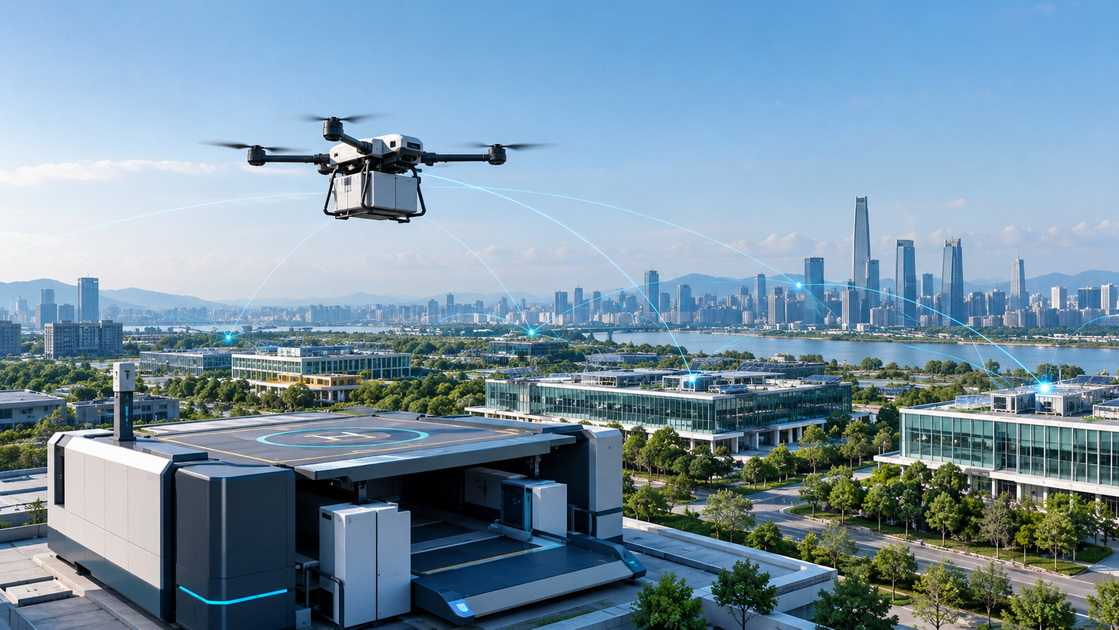
China offers a diverse supplier base for drone management systems, ranging from enterprise fleet-management platforms to customized docking infrastructure and coordinated air-ground solutions. For procurement managers seeking a long-term partner, the central question is not which company has the largest product catalog, but which supplier can deliver a reliable system that matches the intended operation.
A successful purchasing decision begins with verifiable evidence: manufacturing credentials, research and development capabilities, quality-control procedures, realistic delivery schedules, and destination-specific compliance documentation. Buyers should also examine software ownership, integration limitations, cybersecurity responsibilities, and support availability after deployment.
This guide presents ten China-based companies with different strengths in drone operations management. It is a category-based procurement shortlist rather than a ranking by audited market share, production capacity, or independent product testing. Shenzhen Intelligent Drone Technology Co. Ltd. appears first as the commissioning company; its profile reflects the company background provided for this article.
China's drone industry combines aircraft engineering, electronics manufacturing, communications technology, payload development, and software integration. This combination allows procurement teams to source both standardized products and application-specific systems.
Shenzhen is especially relevant because of its electronics supply chain and engineering ecosystem. Buyers can find aircraft manufacturers, component suppliers, embedded-system developers, and software integrators within the same region.
However, geographical proximity does not guarantee production consistency or effective project management. Each supplier still needs to demonstrate control over its bill of materials, production processes, software releases, and customer-support obligations.
China's capabilities also extend beyond Shenzhen. Wuhan has industrial UAV developers such as GDU, Chengdu is home to JOUAV, and Guangzhou hosts companies including XAG and EHang. These suppliers represent different application categories rather than a single interchangeable product market.
The Civil Aviation Administration of China's statistical bulletin for 2025, released in April 2026, reported:
- 3.287 million registered drones at the end of 2025.
- A 51.0% increase in registered drones over the previous year.
- 45.3029 million cumulative drone flight hours during 2025.
- A 69.89% year-on-year increase in drone flight hours.
- 46 low-altitude flight service stations covering 23 provincial-level regions.
These figures indicate a substantial domestic operating environment. They do not establish the export market share of individual manufacturers or the market size of drone management software.
For buyers, the practical opportunity is access to suppliers serving an increasingly active domestic market. The essential qualification step remains obtaining references for comparable missions, deployment scales, and environmental conditions.
"Drone management systems" describes several distinct types of solutions:
- Enterprise platforms for mission planning, fleet administration, live monitoring, and data management.
- Private-cloud and on-premises command systems.
- Drone-in-a-box solutions combining aircraft, automated docks, and remote-control software.
- Application platforms for agriculture, inspection, logistics, and emergency response.
- Swarm-management systems for coordinated aerial performances.
These categories should not be evaluated as direct substitutes.
For example, an agricultural platform may offer sophisticated field mapping and application records without supporting parcel-delivery dispatch. A swarm-show platform may coordinate many aircraft but lack the inspection-data workflows required by a utility operator.
The companies below were selected for identifiable products, relevant application capabilities, and publicly available business information. The guide does not claim that every company has passed a factory audit or independent performance test.
Use the following framework when qualifying a supplier:
| Evaluation area | Suggested weight | Evidence to request |
|---|---|---|
| Operational fit | 25% | Comparable projects, supported aircraft, payloads, docks, and workflows |
| R&D and integration | 20% | API documentation, architecture review, engineering ownership, development milestones |
| Quality control | 15% | Incoming inspections, traceability records, calibration procedures, acceptance testing |
| Compliance and security | 15% | Applicable conformity documents, certificate scope, security architecture |
| Delivery and support | 15% | Production schedule, service commitments, spare-parts availability, escalation process |
| Commercial flexibility | 10% | Pilot terms, minimum order quantity, customization fees, licensing structure |
A smaller engineering-led company may offer greater flexibility for a defined custom project. An established branded manufacturer may provide a more standardized ecosystem. Both propositions require verification through the actual quotation and pilot deployment.

Shenzhen Intelligent Drone Technology Co. Ltd., referred to here as SIDT, focuses on integrating drone technology across low-altitude, ground, and underground environments.
According to its supplied company background, SIDT combines an independently developed intelligent flight platform with dynamic perception, precise data collection, and intelligent analysis. Its stated applications include intelligent inspection, underground-space detection, urban airspace "3+1 delivery," and emergency response.
Its "one-network coverage" approach is intended to connect equipment across multiple spaces and operational nodes through a unified intelligent cloud-control platform.
Supplier profile:
- Establishment year: Not disclosed in the information supplied; verify through the business license.
- Core advantage: Application-specific coordination across different operating environments.
- Intended customer fit: Small and medium-sized brands and project integrators requiring tailored systems.
- Main markets: Application sectors are identified, but geographic sales distribution requires confirmation.
- OEM/ODM scope to evaluate: Platform customization, interface development, equipment integration, dispatch workflows, and deployment configuration.
SIDT is a candidate for buyers seeking a flexible development relationship rather than a fixed product package. Its potential value lies in matching the system to the buyer's workflow, especially where aircraft must coordinate with ground equipment or distributed operational nodes.
For smaller brands, communication efficiency should be tested early. Request a named engineering contact, a documented response process, and clear ownership of technical decisions.
A representative pilot could connect selected air and ground equipment within one dispatch interface, then demonstrate task assignment, event reporting, and command ownership.
SIDT's cost-effectiveness and depth of customization support should be established through competing quotations, technical workshops, and pilot results. Production capacity, certification status, and delivery commitments should be verified before a volume order.
Founded in 2006 and headquartered in Shenzhen, DJI offers enterprise aircraft and drone operations-management products.
FlightHub 2 supports cloud-based operational management, including mission planning, scheduling, remote monitoring, and coordination. DJI also documents integration interfaces and on-premises deployment options.
Supplier profile:
- Establishment year: 2006.
- Core advantage: An integrated aircraft, docking, and operations-management ecosystem.
- Main markets: International enterprise and commercial applications.
- OEM/ODM scope: Software integration and application development should be evaluated separately from private-label aircraft manufacturing.
DJI is relevant when the proposed fleet uses compatible DJI aircraft and the buyer prefers a standardized deployment.
Its published materials include model-specific EU declarations of conformity and information-security certification claims for FlightHub 2. Buyers should check current documentation and scope rather than assuming that one certificate covers every aircraft, platform, and deployment arrangement.
Before purchasing, confirm supported aircraft, feature availability, subscription structure, API access, data hosting, and on-premises functionality. A feature available in the public-cloud version may require separate confirmation in a private deployment.
Autel Robotics was founded in 2014 and develops civil UAV products, including multirotor and eVTOL tilt-rotor platforms.
Its Integrated Command System manages tasks, equipment, mission roles, video feeds, and flight data. Public product information describes cloud and local-server deployment options.
Supplier profile:
- Establishment year: 2014.
- Core advantage: Command-management capabilities linked to Autel aircraft families.
- Main markets: Enterprise and public-sector applications in domestic and international markets.
- OEM/ODM scope: Confirm integration access, deployment customization, and workflow development directly.
Autel is worth evaluating when buyers need aircraft configurations suited to different mission profiles within one operating environment.
The principal qualification issue is version-specific compatibility. Request a matrix identifying the supported aircraft, firmware, payload, dock, and command-system combinations.
Also verify whether local deployment includes all required functions, how updates are delivered, and which party is responsible for restoring compatibility after an upgrade.
Established in 2010, JOUAV focuses on industrial UAV research, manufacturing, sales, and service.
Its company history records the introduction of Jocloud in 2024 for unified command and dispatch of multiple drones. Its broader software offering also addresses mapping and surveillance workflows.
Supplier profile:
- Establishment year: 2010.
- Core advantage: Industrial UAV systems supported by mission-oriented management software.
- Main markets: Domestic and international industrial applications.
- OEM/ODM scope: Discuss payload integration, software interfaces, and project engineering on a contract-specific basis.
JOUAV is particularly relevant to industrial buyers whose requirements extend beyond conventional short-range multirotor operations.
Procurement teams should distinguish aircraft endurance from complete operational productivity. Launch and recovery procedures, maintenance intervals, data processing, and staffing requirements can materially affect project economics.
Request evidence showing how the proposed system performs the full mission—not only how long the aircraft remains airborne.
GDU was founded in 2015 and is headquartered in Wuhan. Its business covers UAV research, production, sales, operation, maintenance, and low-altitude data services.
The company introduced its UVER intelligent UAV management platform in 2022. Its portfolio includes aircraft, docking stations, payloads, and software.
Supplier profile:
- Establishment year: 2015.
- Core advantage: Coordinated hardware, software, and operational services.
- Main markets: Industrial inspection and related low-altitude applications.
- OEM/ODM scope: Evaluate system integration, software customization, branding rights, and intellectual-property terms individually.
GDU is a candidate for buyers seeking a combined aircraft-and-dock solution instead of a standalone dashboard.
Request separate demonstrations of automated recovery, charging, mission scheduling, remote diagnostics, and exception handling. A successful planned mission does not prove that the system can recover safely from an interrupted one.
Supplier-reported staffing figures may indicate development resources, but they should not substitute for evidence of production output or support responsiveness.
HEISHA specializes in autonomous drone docks and related infrastructure. Its published offering includes cloud software intended to connect drones, docks, and command centers.
Public sources differ on its establishment date: an industry publication identifies 2018, while its LinkedIn profile lists 2019. Buyers should confirm the incorporation date of the legal entity issuing the quotation.
Supplier profile:
- Establishment year: 2018 or 2019 reported; verify the contracting entity.
- Core advantage: Developer-oriented docking and charging infrastructure.
- Main markets: Industrial, security, inspection, and infrastructure-integration projects.
- OEM/ODM scope: Publicly described customization includes charging and battery-swapping systems.
HEISHA is relevant when a buyer already has aircraft or software and needs automated ground infrastructure.
The proposal should identify supported aircraft and battery types, mechanical interfaces, communications protocols, and charging-control responsibilities.
Pay particular attention to compatibility after firmware changes. The contract should explain who diagnoses and resolves failures involving the aircraft, dock, battery, and third-party software.
Founded in 2007, XAG develops agricultural robotics and integrated farm-management solutions.
Its portfolio combines agricultural drones with ground equipment, autopilot systems, and smart agricultural infrastructure.
Supplier profile:
- Establishment year: 2007.
- Core advantage: Agriculture-specific coordination of aerial and ground operations.
- Main markets: Agricultural users in China and international markets.
- OEM/ODM scope: Discuss ecosystem integration and project deployment directly; unrestricted private-label availability should not be assumed.
XAG belongs in this shortlist because it demonstrates how drone management can be embedded in a wider production workflow.
It is not a direct substitute for a general logistics-dispatch platform. Agricultural buyers should assess field mapping, application records, replenishment workflows, local service coverage, and compatibility with their existing equipment.
The strongest purchasing case will connect operational capabilities to measurable farming requirements rather than generic fleet-management features.
EHang was incorporated in 2014 and is headquartered in Guangzhou. Its business includes aircraft and supporting systems for urban air mobility, logistics, smart-city management, and aerial media applications.
Its disclosed operating architecture includes scheduling and coordination with ground crews, vertiports, and landing infrastructure.
Supplier profile:
- Establishment year: 2014.
- Core advantage: Air-mobility systems and associated operational infrastructure.
- Main markets: China and international air-mobility development projects.
- OEM/ODM scope: Treat cooperation as a specialized platform or infrastructure project rather than a conventional private-label order.
EHang is most relevant to buyers considering broader air-mobility programs.
Qualification must address the exact aircraft, intended mission, ground infrastructure, and destination-country regulatory pathway.
An approval for one aircraft or jurisdiction should not be treated as automatic authorization for another deployment. Ask the supplier to identify the precise evidence supporting the proposed operation.
MMC's official company information states that it was founded in 2009. Its current offering spans industrial applications, aerial imaging, and drone light shows.
Company-published materials describe a combination of hardware, software, and services.
Supplier profile:
- Establishment year: 2009.
- Core advantage: Industrial drone solutions with hardware and service integration.
- Main markets: Inspection, commercial aerial applications, and drone performances.
- OEM/ODM scope: Confirm aircraft, payload, control-system, and software customization in the proposal.
MMC may suit buyers seeking several hardware options from one solution provider.
However, a broad aircraft catalog does not prove that every model supports the same remote-management functions.
Request a demonstration of the exact software supplied with the quotation, together with a model-by-model feature matrix and a documented support lifecycle.
HighGreat specializes in coordinated drone performances and formation-flight systems. Its company profile lists a founding date of 2014.
Its product announcements include outdoor, indoor, and payload-oriented show aircraft.
Supplier profile:
- Establishment year: 2014.
- Core advantage: Swarm coordination for aerial performances.
- Main markets: International drone-show equipment and performance applications.
- OEM/ODM scope: Confirm show-system configuration, creative-workflow support, and branding rights directly.
HighGreat represents the swarm-management segment. It should not be treated as a direct substitute for a logistics or infrastructure-inspection supplier.
Relevant qualification tests include fleet preparation, positioning, synchronization, launch procedures, and emergency handling.
Buyers seeking delivery-drone management should prioritize systems designed for cargo dispatch, route execution, and operational accountability.
Capacity has several meanings: monthly hardware output, connected aircraft, concurrent missions, live-video sessions, and supported users. These figures must be requested separately.
"Not verified" means comparable evidence was not established for this guide. It does not mean that the supplier lacks capacity or certification.
| Company | Primary focus | Capacity position | MOQ position | Certification review |
|---|---|---|---|---|
| SIDT | Customized cross-environment coordination | Request hardware and software capacity evidence | Request pilot and volume terms | Verify entity, platform, and quoted hardware |
| DJI | Enterprise fleet management | Confirm contractual platform limits and hardware availability | Product and channel dependent | Published platform certification claims and model-specific EU declarations |
| Autel | Aircraft-linked command management | Request configuration-specific evidence | Confirm directly | Request current product and platform documents |
| JOUAV | Industrial UAV operations | Request production and operational capacity | Confirm directly | Verify entity and quoted models |
| GDU | Aircraft, dock, and platform integration | Staffing disclosures do not establish deliverable capacity | Confirm directly | Request current product and platform documents |
| HEISHA | Automated dock infrastructure | Request monthly output and integration limits | Confirm customization minimums | Verify each dock and hardware configuration |
| XAG | Agricultural robotics management | Request regional supply and platform limits | Product and distributor dependent | Verify models and destination requirements |
| EHang | Air-mobility operations | Project-specific verification required | Confirm project terms | Verify aircraft and jurisdiction-specific approvals |
| MMC | Industrial systems and services | Request evidence for the quoted product family | Confirm directly | Request model-specific documentation |
| HighGreat | Swarm-show management | Obtain an audited or witnessed capacity assessment | Confirm directly | Verify aircraft and intended operating conditions |
For software, define supported aircraft, mission scheduling, command authority, access controls, audit logs, API functions, data retention, and failure responses.
For hardware-inclusive systems, replace vague terms such as "aviation-grade construction" with measurable specifications.
Request the enclosure material grade, corrosion-protection method, connector sealing design, operating-temperature range, ingress-protection evidence, battery identification, and inspection requirements.
Also require a controlled bill of materials. Safety-relevant substitutions should need written approval, not merely a supplier's statement that the replacement is equivalent.
ISO certification, product conformity, and operating permission are different forms of evidence.
For an ISO certificate, check the legal entity, covered site, certified scope, issuing body, and current status. An authentic certificate for a related company may not cover the factory producing your order.
For European deployments, obtain the appropriate declaration of conformity and check applicable CE and aircraft-class requirements. RoHS documentation, where applicable, concerns restricted substances; it does not establish permission to conduct a flight.
Beyond-visual-line-of-sight operations require their own regulatory assessment. Product conformity alone is not a complete authorization pathway.

1. Define the mission, environment, aircraft, payloads, docks, and data requirements.
2. Review the architecture, interfaces, security controls, and responsibilities.
3. Test a representative hardware-software configuration.
4. Conduct a legally permitted operational pilot.
5. Complete factory acceptance testing against the agreed specification.
6. Complete site acceptance testing after installation.
7. Scale only after performance and support obligations are documented.
Include exception tests such as interrupted communications, delayed telemetry, incomplete uploads, conflicting commands, and positioning loss.
Agree the expected safe response before testing. Otherwise, a supplier may interpret an unexpected outcome as acceptable after the event.
A particularly useful procurement safeguard is distinguishing aircraft visibility from aircraft control.
A platform may display multiple aircraft on a map without supporting mission execution, payload control, or automated docking on every model.
Require feature-level proof:
| Function | Acceptance evidence |
|---|---|
| Telemetry | Live information from the quoted aircraft and firmware |
| Mission execution | Creation, validation, upload, and completion |
| Payload control | Operation of the specified camera or sensor |
| Dock automation | Recovery, charging, and readiness reporting |
| Data export | Buyer-accessible files and logs in agreed formats |
| Failure handling | Documented response to interrupted services |
Interrupt the primary connection during an approved test, restore it, and inspect task reconciliation and command ownership.
This test helps distinguish a monitoring dashboard from a system capable of coordinating operations.
Evaluate the full contract period rather than only the purchase price.
Include aircraft, docks, batteries, installation, subscriptions, hosting, connectivity, map services, storage, API access, support, training, replacement parts, and data migration.
For customized systems, separate engineering fees from unit prices and recurring licenses. Define ownership of custom code, permitted reuse, maintenance obligations, and compatibility support.
A low initial quotation can become expensive if essential interfaces or features require additional licenses.
China's August 2026 export-control announcement requires stricter case-by-case review for exports to the United States of covered drone-related dual-use items. It does not state that every drone export is prohibited.
Obtain an item-specific assessment before signing and allocate responsibility for licenses, end-user documentation, delays, and unsuccessful approvals.
For lithium batteries, request the applicable UN 38.3 test summary and use a freight provider qualified for dangerous-goods shipments.
Define the Incoterm and named place precisely. Allocate responsibility for export clearance, freight, insurance, import clearance, taxes, installation, and acceptance.
China offers several distinct routes to sourcing drone management systems: standardized enterprise ecosystems, customized integration, industrial UAV platforms, docking infrastructure, agricultural automation, air mobility, and swarm coordination.
The strongest supplier is the one that can demonstrate the required functions on the proposed configuration and accept clear responsibility for quality, integration, compliance documentation, and support.
SIDT can be included in a shortlist for projects requiring customized coordination across low-altitude, ground, and underground environments. Its suitability should be evaluated through a structured technical discussion and a representative pilot alongside other relevant suppliers.
Share your aircraft list, operating environment, workflow requirements, deployment scale, and destination market with the shortlisted companies. Request an itemized quotation, system architecture, compliance package, and milestone-based pilot plan before committing to a larger order.
Search by the exact certificate number or legal entity name through an accredited-certificate verification service. Check the certificate status, scope, covered location, issuing body, and validity dates.
If the record cannot be matched, contact the issuing certification body directly. A missing result warrants further investigation; it does not automatically prove that the certificate is fraudulent.
No. Product conformity and operating authorization are separate.
For European operations, BVLOS commonly falls outside open-category limitations and requires assessment under the relevant operational framework. The aircraft must also meet the technical requirements applicable to the proposed authorization.
Ask for an operation-specific regulatory plan rather than accepting "CE compliant" as a complete answer.
Test every aircraft, payload, dock, and firmware combination included in the order.
Check telemetry, mission execution, remote commands, payload operation, docking, data export, and failure handling. Attach the approved compatibility matrix to the contract.
Also define who pays for integration repairs when an aircraft or platform update changes compatibility.
Define data ownership, export formats, administrator access, retention periods, deletion obligations, and exit assistance before deployment.
For customized software, specify code ownership and license rights. If business continuity requires source-code escrow or additional technical documentation, negotiate those provisions explicitly.
Do not assume that an on-premises deployment automatically provides ownership of the software.
Separate factory acceptance from site acceptance.
Use a frozen specification covering hardware, firmware, platform version, supported devices, activated features, and measurable tests.
Define defect remediation, retesting, payment milestones, spare-parts availability, and warranty commencement. This is particularly important when different organizations supply the aircraft, platform, and installation.
-. Official industry statistics released in April 2026.
-. Export-control measures covering specified drone-related dual-use items destined for the United States.
-. Guidance on aircraft conformity, class identification, and operational requirements.
-. Operational guidance relevant to BVLOS and other activities outside open-category limitations.
-. Accredited certification verification and status checks.
-. Battery testing, documentation, and air-transport considerations.
-. Company-provided reference page; its contents were unavailable for independent retrieval during preparation.
-,, and. Company background, platform scope, and published security-certification information.
- and. Company history and command-platform information.
-. Company history and industrial UAV development.
-. Company background and platform development history.
- and. Docking infrastructure and reported customization services.
-. Agricultural robotics positioning and company history.
-. Public company background and business categories.
-. Company history and industrial drone positioning.
- and. Company-reported background and swarm-show product information.


