Global Distributors Wanted
1.Free Cloud Service Deployment
2.Free Technical Training
3.Exclusive Territory Protection

1.Free Cloud Service Deployment
2.Free Technical Training
3.Exclusive Territory Protection


Views: 222 Author: Aaron Publish Time: 2026-09-06 Origin: Site


Content Menu
● How We Evaluated Drone Logistics Companies
>> Research and Development Capability
>> Manufacturing and Quality Control
>> Delivery Stability and After-Sales Support
>> OEM and Customization Capability
● Comparison of Leading Drone Logistics Companies in China
● Top 10 Drone Logistics Companies in China
>> 1. Shenzhen Intelligent Drone Technology Co., Ltd.
>>> Core Strengths
>>> OEM and Customization Potential
>> 2. Phoenix Wings Technology / SF Group
>>> Core Strengths
>>> Core Strengths
>>> Core Strengths
>> 5. EHang
>>> Core Strengths
>> 6. JOUAV
>>> Core Strengths
>>> Core Strengths
>> 8. AVIC and Related Cargo UAV Programs
>>> Core Strengths
>>> Core Strengths
>> 10. Specialized Shenzhen OEM and ODM Drone Integrators
>>> Core Strengths
● Technical Requirements Buyers Should Define
>> Airframe Materials and Structure
>> Battery and Battery Management System
>> Communications and Control Systems
● The Hidden Procurement Trap: Payload Is Not One Fixed Number
>> An Internal Buyer's Tip: Cargo Shape Matters
● Common Risks When Buying Drone Logistics Systems
>> Risk 1: Prototype Capability Presented as Production Capability
>>> How to Avoid It
>> Risk 2: Certification Claims Without Clear Scope
>>> How to Avoid It
>> Risk 3: Battery Documentation Gaps
>>> How to Avoid It
>> Risk 4: Incomplete Software Ownership Terms
>>> How to Avoid It
>> Risk 5: Aircraft Capability Does Not Match Local Operating Rules
>>> How to Avoid It
● Buyer's Guide: How to Verify a Drone Logistics Supplier
>> Step 1: Define the Mission Before Requesting a Quotation
>> Step 2: Request a Technical Proposal
>> Step 4: Order a Realistic Sample
>> Step 5: Include Clear Acceptance Standards in the Contract
>> Step 6: Plan International Logistics in Advance
>> 1. How can I verify whether a supplier's ISO 9001 certificate is still valid?
>> 2. Does CE documentation mean a cargo drone can legally operate in Europe?
>> 3. What sample test should I require before placing a production order?
>> 4. What is a reasonable MOQ for an OEM drone logistics project?
>> 5. How can I determine whether the advertised payload is usable in real operations?
China's drone logistics industry is moving beyond demonstration flights and entering a more practical stage of commercial deployment. Cargo drones are now being evaluated and used for medical delivery, island supply, industrial transport, emergency response, mountain logistics, urban retail delivery, infrastructure maintenance, and smart-city coordination.
For professional buyers, sourcing a drone logistics system is more complex than purchasing a standard consumer UAV. A commercially viable solution must combine aircraft engineering, flight control, communications, batteries, payload integration, route planning, safety systems, cloud management, maintenance support, and regulatory readiness.
China has strong advantages in this sector because it combines manufacturing capability with real-world operating experience. Shenzhen, Guangzhou, Hangzhou, Chengdu, Shanghai, and other technology and aviation centers have developed increasingly mature drone ecosystems. These regions bring together drone manufacturers, electronic-component suppliers, software engineers, carbon-fiber factories, battery-pack assemblers, logistics operators, universities, testing facilities, and low-altitude infrastructure developers.
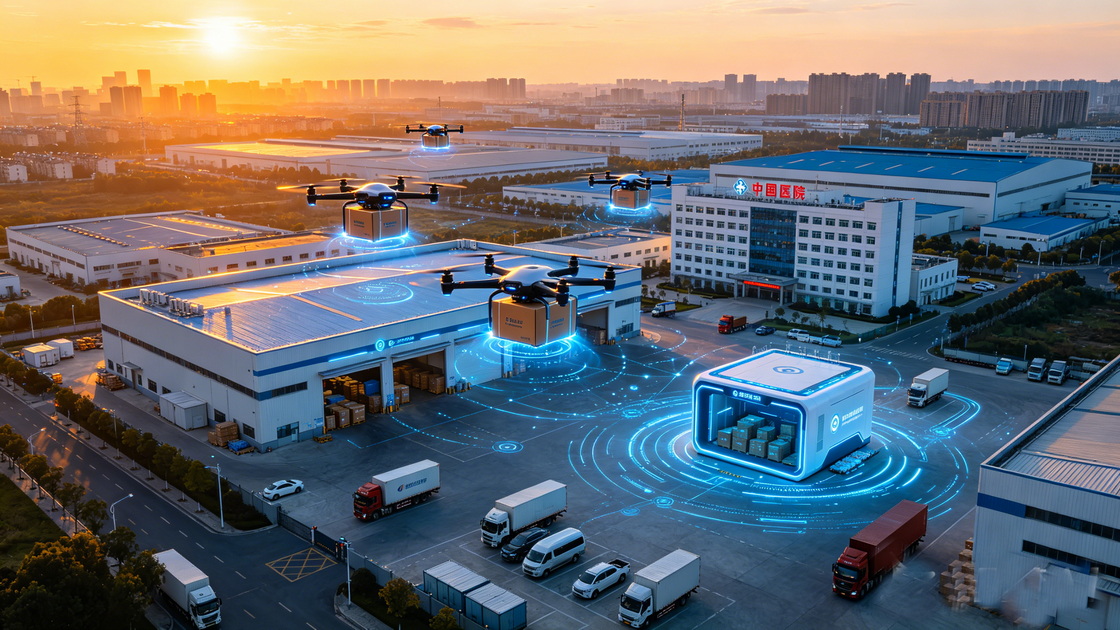
Shenzhen is especially important for international procurement. The city is known for its electronics supply chain, rapid prototype development, UAV engineering talent, embedded systems, sensors, communications modules, and industrial automation capabilities. Buyers looking for cargo drones, intelligent dispatch platforms, autonomous flight systems, OEM projects, or integrated smart logistics solutions often begin their search in the Greater Bay Area.
However, buyers should not assume that every drone manufacturer is capable of delivering a complete logistics solution. Some companies specialize in aircraft hardware. Others focus on delivery operations, cloud management, autonomous flight, industrial inspection, or high-payload aviation platforms. The right partner depends on the buyer's mission profile, cargo type, target market, route environment, local regulations, and expected production volume.
This list is designed for procurement managers, distributors, system integrators, public-sector buyers, logistics operators, and emerging drone brands. The goal is not to identify one universal supplier, because different projects require different technical and commercial capabilities.
The companies below were evaluated according to the following practical criteria.
A reliable drone logistics supplier should have more than an assembled airframe. Buyers should look for evidence of flight-control development, payload integration, navigation systems, cloud platforms, safety logic, communications redundancy, and mission-planning software.
Important technical capabilities include:
- Autonomous route planning
- GNSS and RTK positioning
- Real-time fleet monitoring
- Obstacle detection and avoidance
- Return-to-home logic
- Remote identification support
- Cargo release or winch delivery mechanisms
- Weather and wind monitoring
- Battery health management
- Multi-drone dispatch capability
- Cloud-based operation and data management
Commercial cargo drones operate under higher mechanical and operational stress than recreational drones. Buyers should confirm that suppliers maintain reliable production processes for structural materials, propulsion systems, batteries, electronics, and final flight testing.
Key quality-control points include:
- Carbon-fiber frame inspection
- Motor and electronic speed controller testing
- Propeller balancing
- Battery pack consistency
- Flight-controller calibration
- GNSS and sensor validation
- Vibration testing
- Endurance testing
- Payload testing
- Environmental testing
- Final flight inspection
- Serial-number traceability
Drone logistics systems may require documentation for aircraft hardware, battery transportation, radio communication, software security, and commercial operations.
Buyers should ask suppliers about:
- CE documentation
- RoHS compliance
- FCC or regional radio documentation
- UN38.3 battery testing
- Material safety data sheets
- ISO 9001 certification
- Remote identification capability
- Product manuals
- Maintenance manuals
- Flight logs
- Warranty documentation
- Customs and export support
A cargo drone project can fail even when the aircraft itself is technically capable. Buyers should assess whether the supplier can provide spare parts, operator training, remote support, software updates, maintenance plans, replacement batteries, repair services, and clear warranty terms.
For long-term fleet deployment, operational support is often more valuable than a small difference in purchase price.
For distributors, regional logistics operators, smart-city integrators, and private-label drone brands, customization can be essential.
Useful OEM and ODM services may include:
- Private-label branding
- Customized payload boxes
- Cold-chain delivery modules
- Medical transport compartments
- Local-language user interfaces
- Customized cloud-platform dashboards
- API integration
- Customized cargo capacity
- Alternative battery systems
- Customized communication modules
- Flight-control interface adaptation
- Branded ground control stations
- Specialized landing stations
| Company | Founded | Primary Focus | Suitable Buyers | Capacity / MOQ Direction | Procurement Notes |
|---|---|---|---|---|---|
| Shenzhen Intelligent Drone Technology Co., Ltd. | Verify with supplier | Full-stack intelligent drone applications, cloud control, low-altitude, ground, and underground coordination | SMEs, system integrators, regional logistics operators, smart-city projects | Flexible and project-based; confirm standard and customized MOQ | Suitable for buyers needing customized workflows, multi-node control, and integrated equipment management |
| Phoenix Wings / SF Group | 2015 cargo-drone development | Drone logistics operations and delivery networks | Large logistics operators, medical-delivery projects, public-sector programs | Primarily project and network deployment | Strong operational experience; clarify hardware-supply and partnership model |
| Meituan Drone | 2017 delivery exploration | Urban instant delivery and retail logistics | Urban retail, commercial complexes, campuses, food delivery platforms | Partnership and operation focused | Strong reference for last-mile drone delivery models |
| DJI Enterprise | 2006 | Heavy-lift multirotor cargo drones and enterprise UAV systems | Industrial users, utility companies, emergency-response teams, system integrators | Dealer and distribution model | Suitable for standardized short-range cargo missions |
| EHang | 2014 | Autonomous eVTOL systems and regional low-altitude transport | Urban air mobility projects, regional cargo, infrastructure developers | Enterprise and large-project procurement | Strong relevance for autonomous eVTOL and longer-range logistics concepts |
| JOUAV | 2010 | VTOL fixed-wing industrial UAVs | Long-range logistics, remote inspection, emergency response, industrial operations | Project-based and configurable | Suitable for longer-distance missions where multirotors are less efficient |
| Antwork Technology | 2015 | Medical and urban drone delivery networks | Hospitals, emergency logistics providers, smart-city projects | Operations-oriented deployment | Relevant for medical delivery workflow integration |
| AVIC and related cargo UAV programs | Varies by division | Large cargo UAVs and aviation platforms | Government, aviation, regional cargo, strategic logistics projects | Large-scale project procurement | More suitable for high-capacity and aviation-grade programs |
| Autel Robotics | 2014 | Enterprise drones and digital UAV solutions | Security, inspection, infrastructure, public safety, distributors | Dealer and enterprise procurement | More relevant as part of a broader UAV portfolio |
| Specialized Shenzhen OEM/ODM Integrators | Varies | Custom cargo drones, flight-control integration, payload development | Private-label brands, distributors, niche solution providers | Often lower MOQ but highly variable | Requires strict supplier auditing and sample validation |
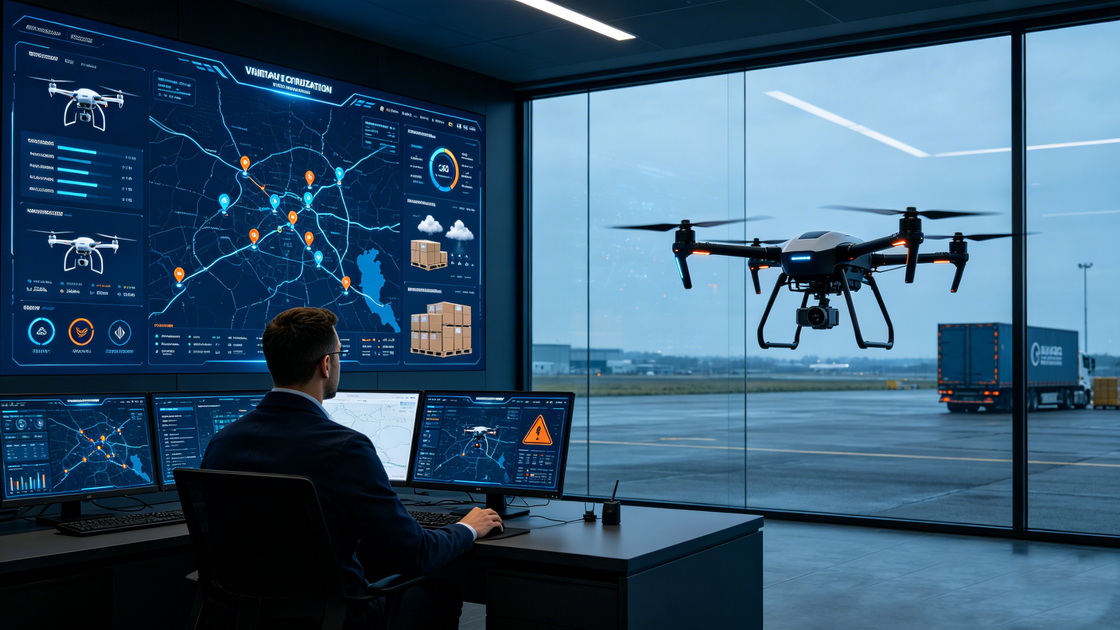
Best suited for: Buyers seeking flexible, integrated drone logistics systems that combine intelligent aircraft, cloud control, multi-node coordination, customized workflows, and responsive engineering support.
Shenzhen Intelligent Drone Technology Co., Ltd. focuses on the deep integration of drone technology with real-world operating environments. Rather than positioning itself as a single-aircraft supplier, the company emphasizes full-stack application solutions for low-altitude, ground, and underground environments.
This is an important distinction for professional buyers. A drone logistics project does not succeed simply because an aircraft can carry a package. The project must also manage route planning, equipment dispatch, data collection, flight monitoring, cargo handoff, communication links, safety protocols, maintenance, and coordination with ground personnel or other connected equipment.
The company's intelligent flight platform integrates dynamic perception, precision data collection, and intelligent analysis. This makes the company relevant for projects that require more than basic point-to-point transport.
Typical application scenarios may include:
- Intelligent inspection
- Underground-space detection
- Urban airspace delivery
- Ground-air coordinated emergency response
- Industrial-park logistics
- Smart-city management
- Infrastructure monitoring
- Multi-node command and dispatch
- Emergency materials transport
- Integrated low-altitude operations
A distinctive feature of Shenzhen Intelligent Drone Technology Co., Ltd. is its "one-network coverage" concept. The company aims to overcome the limitations of isolated single-scenario drone deployment by supporting unified command, dispatch, and equipment management across multiple spaces and operating nodes.
For example, an emergency-response project may require a drone to transport supplies, a ground vehicle to deliver additional equipment, sensors to monitor an incident location, and a central platform to coordinate personnel and assets. A unified cloud-control platform can improve visibility, response speed, and collaboration across these different components.
- Full-stack drone application focus
- Intelligent flight platform integration
- Multi-space coordination across air, ground, and underground environments
- Cloud-based command and dispatch capability
- Dynamic perception and data-analysis integration
- Flexible support for project-based customization
- Strong relevance for smart-city and emergency-response programs
- Potential suitability for OEM and ODM cooperation
- Efficient communication for small and medium-sized project buyers
- Suitable for buyers that require more than an aircraft-only procurement model
For distributors, private-label brands, local system integrators, and regional logistics operators, Shenzhen Intelligent Drone Technology Co., Ltd. may be a practical supplier to evaluate when customization and communication speed matter.
Potential customization areas may include:
- Cargo-box design
- Delivery payload integration
- Cloud-platform branding
- User-interface localization
- Command-center dashboard configuration
- API integration
- Multi-drone fleet management
- Specialized operating workflows
- Industrial inspection payloads
- Emergency-response modules
- Ground-air coordination interfaces
- Customized delivery stations
Before selecting the company for a large-scale project, buyers should clarify the following points:
- Which drone platforms are independently developed and which are integrated from partner platforms
- Available payload options
- Operational range under realistic cargo conditions
- Battery type and battery documentation
- Supported flight-control functions
- Weather-resistance rating
- Communication-system options
- Software licensing terms
- Data ownership
- Customization lead time
- Sample lead time
- Production capacity
- Spare-parts availability
- Training and commissioning support
- Warranty terms
For buyers that need an integrated project solution rather than a standard catalog drone, Shenzhen Intelligent Drone Technology Co., Ltd. should be considered a strong starting point.
Best suited for: Large-scale logistics networks, medical delivery, rural distribution, island supply, emergency-response transport, and regulated commercial drone operations.
Phoenix Wings Technology is closely associated with SF Group, one of China's most established logistics companies. The company is significant because it combines drone technology with real logistics-network experience.
Many drone companies can build a flying platform. Far fewer companies have experience operating a large-scale delivery system that includes route management, weather evaluation, parcel handling, maintenance, dispatch, customer-service coordination, landing infrastructure, and regular flight operations.
Phoenix Wings began developing cargo drones in 2015 and later expanded its presence in logistics-oriented drone operations. Its work offers a useful benchmark for buyers evaluating professional drone-delivery systems.
- Strong logistics-company background
- Experience with drone delivery operations
- Relevance for rural and regional transport
- Potential applications in medical and emergency delivery
- Experience with delivery-route management
- Operational knowledge beyond aircraft manufacturing
- Strong understanding of parcel movement and logistics workflows
- Valuable reference for large network deployment
Phoenix Wings is generally more suitable for strategic partnership, operational benchmarking, logistics-network development, or large projects than for small-batch private-label procurement.
Buyers should clarify whether they need aircraft supply, joint operations, consultation, software integration, route planning, or a local deployment partnership.
Best suited for: Urban instant delivery, retail logistics, food delivery, commercial parks, campuses, and high-density last-mile delivery environments.
Meituan Drone is an important player in China's urban delivery ecosystem. Its development model focuses on short-range delivery in dense city environments, where road congestion, parking restrictions, large pedestrian volumes, and delivery-time pressure can reduce conventional courier efficiency.
Meituan began exploring drone delivery in 2017 and has since developed operating models that connect merchants, customers, pickup stations, air routes, dispatch systems, and delivery points.
The company is especially relevant for buyers studying urban drone logistics because it demonstrates that successful delivery is not determined only by flight performance. It also depends on packaging, pickup procedures, merchant integration, customer notifications, route authorization, landing-point management, and service reliability.
- Strong urban-delivery application experience
- Integration with retail and food-ordering workflows
- Relevant for high-frequency short-distance delivery
- Experience in commercial complexes and urban infrastructure
- Valuable model for smart pickup and drop-off stations
- Strong understanding of customer-facing delivery processes
- Suitable reference for city-based delivery platforms
Meituan Drone is more relevant as an operational model or strategic ecosystem partner than as a conventional OEM supplier. International buyers should evaluate its approach when planning urban retail, food, pharmacy, convenience-store, or campus delivery networks.
Best suited for: Heavy-lift short-range delivery, emergency logistics, mountain transport, industrial cargo movement, utility maintenance, and construction-site delivery.
DJI is one of the most influential drone manufacturers in the world and remains a major part of Shenzhen's drone industry ecosystem. Its enterprise product portfolio supports inspection, mapping, public safety, agriculture, energy, and heavy-lift aerial transport.
The DJI FlyCart 30 is particularly relevant for cargo logistics. It is designed for aerial delivery missions where traditional road transport is difficult, slow, or unsafe.
The platform supports cargo delivery and winch delivery. Winch delivery is useful when an aircraft cannot safely land at the final delivery point, such as on mountain slopes, construction sites, forest areas, offshore platforms, or emergency locations.
- Strong brand recognition
- Mature dealer and distribution ecosystem
- Heavy-lift multirotor capability
- Cargo and winch delivery modes
- Suitable for industrial and emergency applications
- Strong relevance for remote and inaccessible locations
- Useful for standardized fleet procurement
- Broad enterprise-drone ecosystem
DJI is a practical choice for buyers who need an established cargo drone platform with relatively standardized hardware. It is less suitable for buyers seeking deep private-label aircraft development or highly customized airframe design.
Buyers should assess real mission performance rather than relying only on maximum payload figures. Payload, route distance, altitude, wind, temperature, battery condition, cargo shape, and safety reserves can all affect actual usable performance.
Best suited for: Autonomous eVTOL logistics, intercity cargo, regional low-altitude transportation, urban air mobility infrastructure, and large-scale autonomous aviation projects.
EHang is a major Chinese autonomous aerial vehicle company headquartered in Guangzhou. It has developed aircraft platforms for passenger mobility, logistics, smart-city applications, and autonomous aerial services.
For cargo logistics buyers, EHang is particularly relevant because of its autonomous eVTOL approach. Compared with a traditional multirotor cargo drone, an eVTOL system may be more suitable for longer-range regional routes and larger infrastructure-oriented projects.
EHang's logistics-oriented systems demonstrate how drone logistics may evolve beyond short-distance parcel transport toward intercity air cargo, regional delivery corridors, coastal logistics, island transportation, and integrated low-altitude networks.
- Autonomous eVTOL development
- Strong relevance for urban air mobility
- Suitable for regional logistics concepts
- Experience with advanced aviation certification processes
- Potential applications in intercity cargo transport
- Strong position in the Greater Bay Area
- Relevant for airport, vertiport, and corridor planning
- Suitable for large public-sector and infrastructure projects
EHang is generally not a low-MOQ supplier for small distributors. It is more appropriate for buyers planning long-term, high-value aviation infrastructure or autonomous cargo operations.
Best suited for: Long-range cargo missions, remote-area delivery, industrial logistics, emergency supply transport, infrastructure support, and VTOL fixed-wing operations.
JOUAV is an industrial drone company that has focused on VTOL fixed-wing UAV systems since 2010. Its platforms are relevant for applications where multirotor drones do not provide enough range, endurance, or cruise efficiency.
A VTOL fixed-wing aircraft can take off and land vertically while using wing-borne forward flight to improve endurance. This makes it suitable for longer missions where a standard multirotor platform would consume too much battery power.
- Long-term industrial UAV experience
- VTOL fixed-wing specialization
- Suitable for longer-distance missions
- Relevant for remote-area and emergency logistics
- Useful for utility, railway, pipeline, and infrastructure support
- Potential compatibility with specialized payloads
- Strong relevance for survey and cargo hybrid missions
- Suitable for buyers with more demanding range requirements
JOUAV may be a strong choice for buyers that need longer routes but still require vertical takeoff and landing capability.
However, buyers should carefully compare a VTOL fixed-wing system with a multirotor cargo drone. The decision should consider takeoff and landing space, flight time, cargo type, wind conditions, operational complexity, pilot training, ground support, and regulatory requirements.
Best suited for: Medical delivery, emergency-response logistics, hospital networks, laboratory transport, urban drone delivery, and automated logistics systems.
Antwork Technology has developed a reputation in China's drone-delivery market, particularly in medical and urban delivery applications. It is relevant for buyers interested in healthcare logistics and time-sensitive supply chains.
Medical drone delivery has different requirements from standard consumer parcel delivery. Buyers may need to transport blood samples, laboratory specimens, vaccines, medicines, small medical devices, emergency supplies, or temperature-sensitive products.
These missions require reliable chain-of-custody procedures, secure payload compartments, temperature monitoring, fast dispatch, route consistency, and coordination with hospitals, laboratories, pharmacies, or emergency services.
- Strong relevance for medical delivery
- Experience with urban drone logistics
- Suitable for emergency-response applications
- Useful model for hospital and laboratory workflows
- Focus on automated delivery networks
- Potential support for smart-city logistics systems
- Relevant for temperature-sensitive cargo applications
- Suitable for public-health and healthcare projects
Buyers should confirm whether Antwork Technology can support international projects, local operational partnerships, hardware exports, software integration, or technical consultation.
Best suited for: Large cargo UAV programs, aviation-grade projects, regional freight, strategic logistics, specialized transport, and government procurement.
AVIC and related aviation organizations play a different role in China's drone logistics ecosystem. Their focus is more relevant to large unmanned cargo aircraft, aviation-grade platforms, specialized regional logistics, and high-capacity transport projects.
These programs are generally not designed for food delivery, small retail parcels, or low-volume private-label orders. Instead, they are more applicable to larger cargo missions, remote-area supply, regional freight corridors, disaster-response logistics, and specialized industrial transport.
- Aviation-grade engineering background
- Large cargo UAV development
- Relevant for regional cargo transport
- Suitable for strategic and government projects
- Potential applications in remote logistics
- Strong relevance for specialized aerospace programs
- Suitable for complex infrastructure projects
- Potential suitability for long-distance cargo operations
Procurement cycles for large cargo UAV programs are often longer and more formal than those for multirotor delivery drones. Buyers may need to consider airworthiness, operating licenses, maintenance systems, insurance, aviation infrastructure, pilot or remote-pilot requirements, and public-sector coordination.
Best suited for: Enterprise UAV portfolios, infrastructure inspection, public safety, industrial operations, security applications, and distributors offering multiple drone categories.
Autel Robotics is a Shenzhen-based enterprise drone company founded in 2014. It develops civil UAV products for commercial and industrial users.
Autel is not primarily a dedicated drone logistics company. However, it can be relevant for buyers that want to build broader UAV service portfolios combining cargo transport, inspection, public safety, infrastructure monitoring, mapping, and security operations.
For example, an industrial-park operator may need:
- Cargo drones for emergency material transport
- Inspection drones for facility monitoring
- Thermal drones for fire-risk evaluation
- Mapping drones for route planning
- Security drones for perimeter patrol
- Software platforms for asset management
In this situation, Autel can be a complementary technology supplier.
- Enterprise drone experience
- Broad industrial application relevance
- Useful for inspection and public-safety operations
- Suitable for distributors and system integrators
- Strong Shenzhen technology ecosystem connection
- Relevant for multi-application UAV portfolios
- Potential compatibility with industrial monitoring projects
- Practical option for organizations that need more than cargo capability
Buyers should confirm whether specific Autel platforms support their required cargo, payload, delivery, and operational software needs.
Best suited for: Private-label drone brands, custom cargo platforms, specialized payload development, local delivery networks, and small-to-medium-sized procurement projects.
Shenzhen has a large and highly active drone manufacturing ecosystem. In addition to major international brands, the city is home to specialized UAV integrators, flight-control developers, carbon-fiber workshops, battery-pack suppliers, electronics manufacturers, embedded software teams, payload designers, and industrial automation companies.
This creates significant opportunities for buyers that need custom drone logistics systems, private-label products, niche payloads, or rapid prototype development.
However, this category also requires the most careful due diligence.
A small supplier may produce an attractive prototype but may not have stable component sourcing, traceable quality control, reliable flight testing, long-term firmware support, battery documentation, or export-ready production processes.
- Flexible customization
- Potentially lower initial MOQ
- Fast prototype development
- Private-label opportunities
- Customized payload options
- Strong electronics integration potential
- Suitable for niche market requirements
- Useful for distributors building their own drone brands
- Inconsistent component quality
- Unclear battery documentation
- Limited after-sales support
- Unstable firmware updates
- Unclear intellectual-property ownership
- Limited flight-test records
- Incomplete warranty terms
- Weak spare-parts planning
- Unverified production capacity
- Certification claims that do not match the final product
Buyers should not choose an OEM partner based only on a low quotation or product photos. A credible supplier should be able to provide technical specifications, quality-control procedures, battery documentation, flight-test reports, sample acceptance criteria, and a realistic production plan.
Commercial cargo drones need durable structural components. Common materials include carbon-fiber composite frames, aluminum alloy brackets, engineering plastics, corrosion-resistant fasteners, weather-resistant connectors, and flame-retardant wiring.
Buyers should ask about:
- Carbon-fiber grade
- Wall thickness
- Frame weight
- Structural load rating
- Arm-locking mechanism
- Vibration resistance
- Repairability
- Corrosion resistance
- Cargo-box mounting structure
- Landing-gear design
One common sourcing problem is the use of visually similar but lower-grade carbon-fiber materials. A frame may look strong in product images but perform poorly under repeated loading, vibration, high humidity, heat, cold, or rough landing conditions.
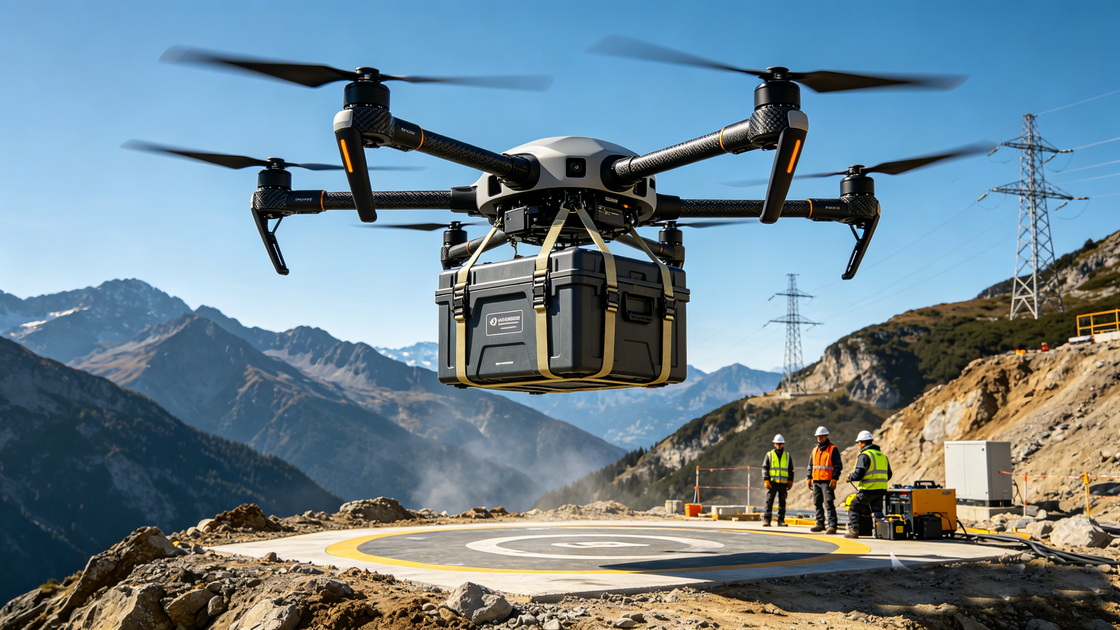
The propulsion system includes motors, electronic speed controllers, propellers, wiring, and cooling design.
Buyers should request information on:
- Motor brand and model
- Rated thrust
- Maximum thrust
- Propeller dimensions
- Propeller material
- Electronic speed controller rating
- Cooling method
- Redundancy design
- Dust protection
- Moisture protection
- Maintenance intervals
- Expected service life
A drone that can briefly lift a heavy weight in a controlled demonstration may not be able to safely complete a commercial delivery route with enough battery reserve.
Battery quality is one of the most important factors in a drone logistics project. It affects safety, range, payload, operating cost, maintenance, shipping, and fleet availability.
Buyers should request:
- Battery chemistry
- Cell brand
- Pack voltage
- Capacity
- Cycle life
- BMS protection features
- Charging time
- Operating temperature range
- Storage conditions
- Battery warranty
- UN38.3 documentation
- Material safety data sheets
- Replacement policy
- Transport packaging details
Lithium battery transportation can affect international shipping costs, customs processing, insurance, and delivery time. Buyers should plan spare-battery supply from the beginning of the project.
Commercial drone logistics systems may use a combination of radio-frequency control, 4G or 5G networks, satellite communication, GNSS, RTK positioning, mesh networks, or private networks.
The right solution depends on route length, terrain, urban density, mobile-network coverage, local spectrum regulations, cybersecurity requirements, and operating-risk level.
Buyers should clarify:
- Maximum communication range
- Backup communication link
- Cellular-network compatibility
- Satellite communication options
- Real-time video capability
- Encryption method
- Data-storage location
- API access
- Cloud-platform permissions
- Flight-log access
- Remote identification support
A professional drone logistics system should include appropriate safety functions.
These may include:
- Geofencing
- Return-to-home capability
- Lost-link protection
- Low-battery alerts
- Battery reserve management
- Obstacle sensing
- Emergency landing procedures
- Parachute recovery systems
- Remote identification
- Flight-record logging
- Real-time alerts
- Maintenance warnings
- Weather monitoring
- Multi-drone traffic management
One of the most common mistakes in drone logistics procurement is treating payload capacity as a simple number.
A supplier may advertise a drone as having a 30 kg payload capacity. However, this figure may only apply under ideal conditions, such as low altitude, calm weather, new batteries, short-duration operation, and minimal safety reserves.
Actual usable payload depends on several factors:
\[
\text{Usable Payload} = f(\text{distance}, \text{wind}, \text{altitude}, \text{temperature}, \text{battery health}, \text{reserve energy}, \text{cargo size}, \text{route profile})
\]
A drone rated for 30 kg may only safely carry 15 kg to 20 kg on a real commercial route after accounting for return flight, wind, temperature, battery reserve, cargo-box weight, and operational safety margins.
Many buyers focus only on cargo weight. However, the shape of the cargo can be equally important.
A lightweight but bulky package can create significant aerodynamic drag. This increases energy consumption, affects flight stability, reduces range, and may lower the safe payload limit.
For example, a compact 15 kg medical container may perform very differently from a 15 kg oversized carton. The two cargo items may have the same weight, but their size, surface area, center of gravity, and mounting method can create completely different flight conditions.
When ordering samples, buyers should request a test using their actual cargo package rather than a standard metal block, sandbag, or factory test weight.
The sample test should include:
- Actual cargo dimensions
- Actual cargo weight
- Actual packaging
- Actual mounting method
- Actual cargo-box design
- Expected route distance
- Expected wind conditions
- Required battery reserve
- Return-flight requirement
- Delivery method
- Flight-log review
This simple step can prevent expensive procurement mistakes.

Some suppliers can produce a working prototype but cannot consistently manufacture the same quality at scale.
- Request factory videos
- Review assembly procedures
- Ask about monthly production capacity
- Confirm component sourcing
- Request quality-control documents
- Review end-of-line test procedures
- Order a pilot batch before placing a large order
- Define acceptance criteria in the purchase contract
- Require serial-number traceability
- Confirm spare-parts inventory planning
A supplier may claim that a product is certified, but the documentation may only apply to one component, one earlier version, or one specific market.
- Request the full certificate
- Check the legal manufacturer name
- Check the model number
- Check the issue date and expiry date
- Confirm the test standard
- Verify the certification body
- Confirm whether the certificate covers the complete drone
- Check whether batteries, chargers, radios, and payload modules are included
- Compare the document with the exact product configuration you will purchase
Battery documentation is essential for international transport and safe commercial operations.
- Request UN38.3 documentation
- Request material safety data sheets
- Confirm the battery cell brand
- Confirm the battery pack configuration
- Ask about cycle-life expectations
- Define battery warranty terms
- Confirm spare-battery supply
- Verify shipping packaging
- Confirm dangerous-goods shipping support
- Check battery replacement lead times
Cloud-controlled drone systems can create long-term risk if software ownership and access rights are not clearly defined.
- Define user-access levels
- Clarify administrator permissions
- Confirm API availability
- Define data ownership
- Confirm server location
- Clarify data-backup procedures
- Define software-update responsibilities
- Confirm cybersecurity measures
- Clarify whether the platform can operate if the supplier relationship ends
- Include support and maintenance terms in the contract
A technically capable aircraft may still be unsuitable for legal commercial operation in the destination market.
- Review local aviation regulations before ordering
- Identify aircraft weight category
- Confirm registration requirements
- Confirm remote-identification rules
- Check pilot and operator requirements
- Evaluate insurance needs
- Confirm visual-line-of-sight and beyond-visual-line-of-sight restrictions
- Check permitted flight zones
- Assess local radio-frequency requirements
- Consult a qualified local aviation professional for large projects
Do not start with a generic request for "a cargo drone." Define the actual delivery mission.
Your requirement should include:
- Cargo weight
- Cargo dimensions
- Cargo type
- Required one-way distance
- Required round-trip distance
- Operating altitude
- Delivery frequency per day
- Weather conditions
- Maximum wind speed
- Operating temperature range
- Takeoff and landing environment
- Delivery method
- Required battery reserve
- Cargo security requirements
- Communication requirements
- Local regulatory requirements
- Training requirements
- Maintenance expectations
A professional supplier should provide more than a price list.
Request:
- Product specification sheet
- Payload-range chart
- Flight-time chart
- Battery specification
- Safety-system description
- Communication-system description
- Ground-control platform overview
- Maintenance plan
- Training plan
- Spare-parts recommendation
- Warranty terms
- Software support plan
- Compliance-document list
- Sample proposal
- Project schedule
- Packaging details
- Shipping recommendations
For medium or large procurement projects, conduct a remote or on-site audit.
Review:
- Company registration
- Manufacturing location
- R&D team
- Assembly area
- Quality-control process
- Flight-test area
- Battery storage procedures
- Calibration equipment
- Serial-number management
- Warehouse management
- Packaging process
- Spare-parts inventory
- Existing customer references
- After-sales support structure
A sample should be treated as a pilot project, not simply a product demonstration.
Define the sample test conditions in writing:
- Actual cargo weight
- Actual cargo dimensions
- Required route distance
- Required return flight
- Required battery reserve
- Wind condition
- Temperature condition
- Delivery method
- Landing accuracy
- Cargo stability
- Communication reliability
- Flight-log availability
- Emergency response procedure
- Operator training
- Maintenance checklist
The purchase agreement should define:
- Exact model number
- Exact configuration
- Payload performance
- Flight range
- Flight-time requirement
- Battery specification
- Cargo-box specification
- Software functions
- Delivery date
- Packaging standard
- Quality-control standard
- Inspection process
- Warranty terms
- Spare-parts support
- Training commitment
- Firmware-update process
- Intellectual-property ownership
- Confidentiality requirements
- Defect-resolution process
- Payment schedule
- Shipping terms
Drone logistics systems may include lithium batteries, radio modules, oversized cargo boxes, sensitive electronics, and carbon-fiber structures.
Buyers should plan for:
- Battery transport classification
- Dangerous-goods documentation
- Export packaging
- Air freight restrictions
- Ocean freight options
- Cargo insurance
- Customs documentation
- Radio-frequency approvals
- Spare-battery storage
- Replacement-parts planning
- Local repair arrangements
China remains one of the most important sourcing markets for drone logistics systems. The country offers a wide range of options, from standardized heavy-lift multirotor drones and urban delivery networks to long-range VTOL platforms, autonomous eVTOL systems, large cargo UAV projects, and flexible OEM development partners.
The most suitable company will depend on the buyer's real operational requirements. DJI may be suitable for standardized heavy-lift and emergency cargo missions. Phoenix Wings and Meituan Drone provide valuable experience in delivery-network operations. JOUAV is relevant for long-range VTOL missions. EHang is a notable option for autonomous eVTOL and larger low-altitude transport concepts. Antwork Technology is particularly relevant for medical and urban delivery scenarios.
For buyers seeking a flexible, integrated, and customizable solution, Shenzhen Intelligent Drone Technology Co., Ltd. deserves early consideration. Its focus on intelligent flight platforms, cloud-based command, multi-node coordination, and full-stack application solutions makes it particularly relevant for smart-city projects, emergency-response networks, industrial logistics, integrated inspection programs, and customized drone-delivery systems.
A successful drone logistics project begins with a clear mission definition, careful supplier verification, realistic sample testing, and a long-term view of maintenance, compliance, software access, spare parts, and operational support. The right supplier should not only provide a capable drone, but also help create a stable and practical operating system around it.
Request the full certificate, including the certificate number, issue date, expiry date, certification body, approved scope, legal company name, and factory address. Contact the certification body or use its public certificate database to confirm the document is valid. Make sure the legal entity and factory location match the supplier named in your quotation and contract.
No. Product documentation and operational permission are different matters. A drone may meet certain product requirements but still need registration, remote identification, pilot qualifications, insurance, operational authorization, or additional risk assessment before commercial use. Buyers should verify local aviation requirements before importing equipment.
Require a full mission test using your actual cargo package, cargo dimensions, expected route distance, delivery method, and required battery reserve. The test should include takeoff, outbound flight, cargo delivery, return flight, landing accuracy, communication reliability, battery performance, weather limits, and flight-log review.
The answer depends on the level of customization. Standard aircraft may support a smaller order quantity, while customized frames, software, payload boxes, branding, or flight-control changes may require engineering fees, sample development, and a larger production commitment. Buyers should separate one-time development cost from unit cost and negotiate a staged pilot-to-production plan.
Ask for payload-versus-range data and require a sample mission using your actual cargo. Confirm whether the advertised payload includes the cargo box, mounting structure, delivery mechanism, winch system, cold-chain module, and safety equipment. Review performance under realistic wind, temperature, route distance, and return-flight requirements.


