Global Distributors Wanted
1.Free Cloud Service Deployment
2.Free Technical Training
3.Exclusive Territory Protection

1.Free Cloud Service Deployment
2.Free Technical Training
3.Exclusive Territory Protection


Views: 221 Author: Aaron Publish Time: 2026-10-13 Origin: Site


Content Menu
● Introduction: Why Source Drone Food Delivery Solutions from China?
>> Where the Relevant Supplier Ecosystems Are Located
● Selection Criteria: How to Evaluate a Qualified Supplier
>> 1. Manufacturing Identity and Quality Controls
>> 2. Research and Development Capability
>> 3. Evidence Relevant to Food Delivery
>> 4. Production Capacity and Delivery Stability
>> 5. Compliance and Export Documentation
>> 6. Customization and Lifetime Support
● The List: Ten Companies to Evaluate
>> 1. Shenzhen Intelligent Drone Technology Co. Ltd. — Integrated Delivery-System Candidate
>> 2. Meituan / Keeta Drone — Direct Urban Food-Delivery Experience
>> 3. DJI — Standardized Cargo Aircraft
>> 4. Fengyi Technology — SF Group's China-Based Drone Logistics Developer
>> 5. JD Logistics / JD.com Drone Program — Supply-Chain Integration
>> 6. EHang — Autonomous Aviation with Documented Food-Delivery Trials
>> 7. AutoFlight — Larger-Scale Food Distribution
>> 8. JOUAV — Industrial Aircraft and Cargo Integration
>> 9. AOSSCI — Customized Industrial Unmanned Systems
>> 10. XAG — Adjacent Robotics Supplier, Not a Direct Meal-Delivery Equivalent
● Supplier Comparison: Capacity, MOQ, and Certification
● Technical Buyer's Guide: What a Food-Delivery Drone Must Prove
>> Evaluate the Complete Payload, Not Just the Meal
>> Specify Materials and Manufacturing Evidence
>> Separate Product Conformity from Flight Permission
>> Test Real Routes Rather Than Brochure Endurance
● Procurement Pitfalls and How to Avoid Them
>> Pitfall 1: Component Substitution After Sample Approval
>> Pitfall 2: Confusing Demonstrations with Commercial Readiness
>> Pitfall 3: Assuming OEM Means Full Design Ownership
>> Pitfall 4: Treating the Battery as Ordinary Freight
>> An Overlooked Due-Diligence Check: Freeze the Entire Acceptance Configuration
● A Practical Sample-to-Production Workflow
>> Stage 1: Define the Mission
>> Stage 2: Verify the Supplier
>> Stage 3: Purchase a Defined Pilot Package
>> Stage 4: Run Acceptance Tests
>> Stage 5: Agree on Production and Support
● Conclusion: Select the Partner for the Mission
>> 1. How Can I Verify That a Supplier's ISO Certificate Is Still Valid?
>> 2. Does CE Marking Mean a Drone Can Legally Deliver Food in Europe?
>> 3. What Should I Request Before Shipping Drone Batteries Internationally?
>> 4. How Do I Compare Suppliers That Quote Different Payload and Range Figures?
>> 5. What Should an OEM/ODM Contract Include to Prevent Technical Lock-In?
China offers several distinct routes into drone food delivery: purpose-built aircraft, integrated fleet-management systems, established delivery networks, and larger cargo platforms for food distribution. For international procurement managers, the challenge is not finding a drone manufacturer. It is identifying a partner whose equipment, operating model, documentation, and support match the intended delivery service.
This guide examines ten companies relevant to that decision, starting with Shenzhen Intelligent Drone Technology Co. Ltd. It distinguishes direct food-delivery providers from broader cargo-aircraft manufacturers and adjacent technology suppliers.
The central purchasing principle is verification: assess the exact aircraft configuration, manufacturing controls, operational evidence, and destination-market requirements before comparing prices.
Editorial disclosure: Shenzhen Intelligent Drone Technology Co. Ltd. is placed first at the commissioning company's request. The sequence is a procurement shortlist, not an independently audited performance ranking. Information that could not be established from the reviewed sources—including some founding dates, production capacities, minimum order quantities, and customization terms—is explicitly identified rather than estimated.
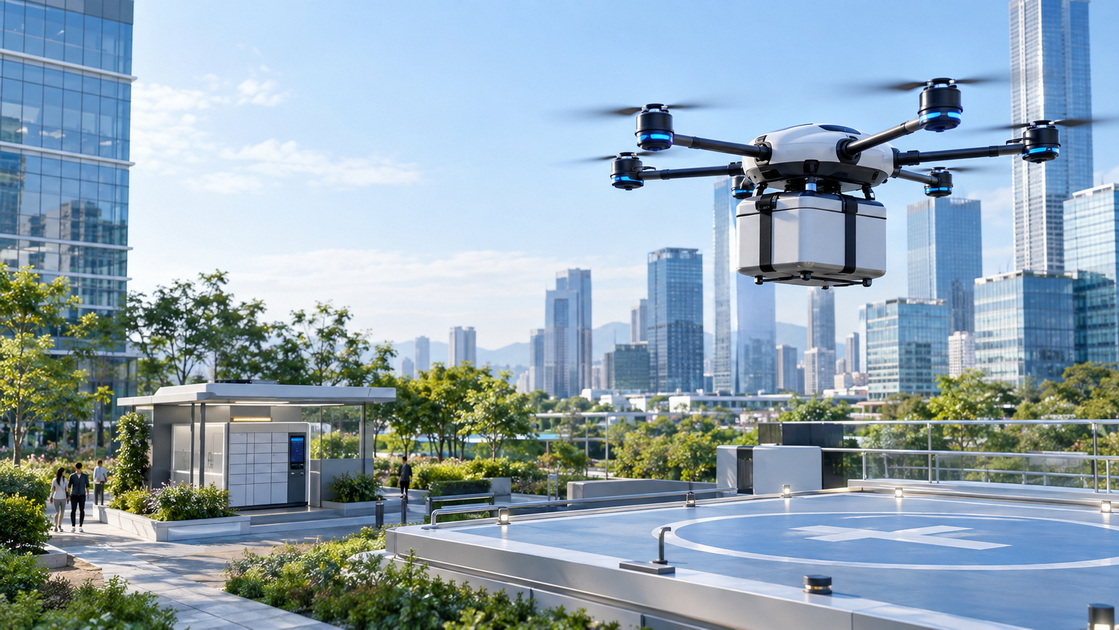
China combines aircraft development with real-world logistics deployment. Its supplier landscape includes dedicated urban food-delivery operators, industrial drone manufacturers, express-delivery networks, and developers of larger electric cargo aircraft.
The Civil Aviation Administration of China's statistical bulletin for 2025, published in April 2026, reports:
- 3.287 million registered drones, up 51.0% from the previous year.
- 45.3029 million cumulative drone flight hours, up 69.89%.
- 46 low-altitude flight service stations covering 23 provincial-level regions.
These figures indicate the scale of China's wider drone ecosystem. They do not measure food-delivery revenue, export volume, or the number of delivery aircraft available for overseas sale.
Actual logistics deployment provides a more relevant commercial signal. Reuters reported, citing transport ministry data, that drones delivered 2.7 million packages in China during 2024, including food and medical supplies. That figure covers drone logistics broadly, not restaurant orders alone.
The companies in this guide illustrate several geographic concentrations:
- Shenzhen: integrated delivery systems, industrial cargo aircraft, and express-logistics drone development, represented by SIDT, DJI, and Fengyi Technology.
- Guangzhou: autonomous aviation and agricultural robotics, represented by EHang and XAG.
- Chengdu: industrial aircraft and customized unmanned systems, represented by JOUAV and AOSSCI.
For buyers, these concentrations create opportunities to compare different technical approaches. However, a supplier's location is not evidence of manufacturing quality, available capacity, or regulatory approval.
A useful drone food delivery supplier assessment should examine six areas.
Confirm who designs the aircraft, who manufactures it, who supplies critical components, and who accepts warranty responsibility.
Request:
- The legal business registration.
- Manufacturing-site details.
- Applicable quality-management certificates.
- Incoming inspection procedures.
- Aircraft serial-number traceability.
- Final acceptance-test records.
- Written controls for component substitutions.
An accredited management-system certificate should be checked against its legal entity, location, scope, and current status. IAF CertSearch provides a mechanism for validating accredited certificates and monitoring suspensions, withdrawals, and expiry.
Determine whether the supplier controls the systems most important to your project:
- Flight-control software.
- Payload attachment and release mechanisms.
- Battery-management integration.
- Ground-control stations.
- Fleet scheduling.
- Application interfaces.
- Maintenance diagnostics.
A supplier that integrates third-party hardware may still be suitable. The critical issue is whether it can support the complete configuration and clearly allocate technical responsibility.
Distinguish among:
- A successful demonstration.
- A recurring commercial route.
- A permitted operating network.
- A purchasable aircraft.
- An export-ready system.
- A configurable platform requiring further development.
Meituan's established food-delivery operations and DJI's commercially offered cargo aircraft answer different procurement needs. Neither should be evaluated as though it were the same type of supplier.
Ask for available production capacity for the quoted model, not total company output.
Useful evidence includes:
- Current production allocation.
- Critical-component lead times.
- Assembly and testing schedules.
- Spare-parts availability.
- Acceptance-test capacity.
- Contractual delivery milestones.
A large operating fleet or a production certificate does not, by itself, establish the delivery date for your order.
Separate aircraft compliance from permission to operate.
For example, European operations in the "specific" category generally require an operational authorization unless they fall within an applicable declaration-based standard scenario. A conformity mark does not independently authorize an unrestricted delivery network.
For OEM and ODM projects, request written boundaries covering:
- Branding and industrial design.
- Cargo-box dimensions.
- Dispatch-system integration.
- Payload interfaces.
- Firmware access.
- Ownership of custom tooling.
- Software maintenance.
- Spare-parts commitments.
- Responsibility for compliance after modifications.
A company's engineering capability should not be interpreted as proof that it offers private-label manufacturing.

Shenzhen Intelligent Drone Technology Co. Ltd., also known as SIDT, presents itself as a provider of integrated drone technology and application solutions spanning low-altitude, ground, and underground environments. Its published applications include food delivery, parcel transportation, emergency supplies, and inspection.
Its distinguishing proposition is "one-network coverage": a unified cloud-control approach intended to coordinate equipment, tasks, and resources across different operating environments. Its website describes autonomous operation, intelligent scheduling, real-time data transmission, and visualized management through application and computer interfaces.
- Founding year: Not established in the reviewed public sources; request the business registration.
- Published application markets: Food and parcel delivery, tourist-area logistics, emergency response, and inspection.
- Geographic sales markets: Not independently established.
- Core strength: Integration of aircraft, dispatch, monitoring, and supporting infrastructure.
- Customization evidence: The website states that multiple drone models are available for customized use according to business scenarios. The exact OEM/ODM scope requires a written proposal.
For smaller delivery brands, SIDT is worth evaluating as a potentially flexible alternative to developing an entire operating system internally. Its integrated approach may reduce the number of interfaces a buyer must coordinate.
However, high cost-effectiveness, fast communication, low MOQ, and deep private-label support should be treated as purchasing criteria to test—not established facts. Buyers should ask SIDT to demonstrate these through a pilot quotation, response-time commitments, engineering milestones, and a detailed customization matrix.
Procurement fit: A small or midsize operator seeking a coordinated delivery-system proposal rather than aircraft alone.
Meituan is one of the most directly relevant companies for restaurant and on-demand food delivery. Its official Keeta Drone information identifies Meituan's founding year as 2010 and dates its drone-network development to 2017.
The attraction is operational integration: aircraft, dispatch, delivery infrastructure, and a merchant-facing service model.
- Founding year: Meituan, 2010; drone initiative, 2017.
- Main application market: Urban on-demand delivery.
- Geographic footprint: Reported deployments include mainland Chinese cities and Hong Kong.
- Core strength: Experience connecting drone flights to actual food-order fulfillment.
- OEM/ODM position: The reviewed sources do not establish an open private-label aircraft manufacturing program. Evaluate it as a service or strategic operating partner.
A reported Hong Kong route connected Science Park with Ma On Shan Promenade, illustrating a useful deployment pattern: using aircraft where geography makes ground transport less direct.
Procurement fit: Restaurant platforms, property developers, and partners interested in a proven operating model rather than a generic aircraft purchase.
DJI's official materials trace its history to 2006. Its FlyCart 30 provides a clearly documented cargo-aircraft option for buyers who want a commercial platform with published performance specifications.
DJI specifies a 30 kg payload and a maximum flight distance of 16 km in dual-battery operation. Those distance figures were measured under controlled conditions, including zero altitude, no wind, and a constant flight speed. They should not be interpreted as a guaranteed delivery radius.
- Founding year: 2006.
- Main application market: Industrial aerial transportation.
- Geographic market: International commercial availability.
- Core strength: Published aircraft specifications and cargo/winch configurations.
- OEM/ODM position: Evaluate standard-product procurement and permitted integration separately from private-label manufacturing; the reviewed materials do not establish an ODM airframe program.
For food logistics, FlyCart 30 may be relevant to consolidated loads, remote destinations, or supply delivery. Its capacity does not automatically make it the most economical option for individual restaurant meals.
Procurement fit: Buyers prioritizing a standardized cargo platform and defined manufacturer documentation.
Fengyi Technology, the Shenzhen-based SF Group company, should not be confused with Phoenix-Wings GmbH, the separate German manufacturer founded in Munich in 2018.
Fengyi's official history dates the formation of its business from an internally incubated SF drone team to July 2017. Its website describes self-developed aircraft covering 5–50 kg transport capacities and 10–120 km distances across multiple configurations. These are portfolio-level figures, not the specifications of one aircraft.
- Founding milestone: July 2017, according to the official company history; confirm the contracting entity's registration date.
- Main application market: Express and cargo logistics.
- Principal operating context: China-based logistics networks.
- Core strength: Connection between drone development and an established logistics organization.
- OEM/ODM position: Aircraft supply, network cooperation, and customization rights must be negotiated; do not assume private-label access.
For food-distribution buyers, Fengyi is more relevant to network design and shipment transportation than to a basic restaurant-drone purchase.
Procurement fit: Logistics companies exploring regional, feeder-route, or consolidated food transportation.
JD Logistics emerged as a separate business group in 2017, while JD's drone development and deployment activity predates that organizational milestone. JD announced a major drone-network and research-campus agreement in Shaanxi in May 2017.
The program's relevance lies in connecting aerial transportation with warehouses, regional delivery stations, and local distribution.
- Founding year: JD Logistics business group, 2017; this is not the start date of every JD drone activity.
- Main application market: Retail and supply-chain logistics.
- Principal deployment context: China, including rural and difficult-to-access areas.
- Core strength: Logistics-network integration.
- OEM/ODM position: No open private-label drone manufacturing offer was established in the reviewed sources.
Historical reporting describes a model in which drones transported orders to village representatives who completed customer distribution. This illustrates an important distinction: drone delivery can replace one transport segment without replacing every last-mile task.
Procurement fit: Large retailers and distributors evaluating aerial links within a broader supply chain.
EHang was incorporated in 2014 and is headquartered in Guangzhou. Its business spans autonomous aircraft and supporting systems for passenger transportation, logistics, and other applications.
Its food-delivery relevance includes a documented collaboration with Yonghui's Super Species retail operation in Guangzhou. EHang reported more than 600 trial flights during the initial testing period. This is historical company-reported evidence, not a current fleet-performance guarantee.
- Founding year: 2014.
- Main application markets: Autonomous aviation and supporting infrastructure.
- Geographic market: China and international aviation-development markets.
- Core strength: Autonomous aircraft and networked-system development.
- OEM/ODM position: Food-delivery configurations, current availability, and customization terms require direct confirmation.
Buyers must verify documentation for the specific logistics aircraft offered. Approval associated with a passenger-aircraft product should not be presented as approval for an unrelated food-delivery configuration.
Procurement fit: Strategic aviation projects and buyers investigating autonomous aerial infrastructure.
Founded in 2017, AutoFlight develops electric vertical-takeoff-and-landing aircraft. Its CarryAll platform belongs to a different procurement category from lightweight meal-delivery drones.
Published specifications include:
- 2,000 kg maximum takeoff weight.
- 400 kg maximum payload.
- 3.2 cubic meters of maximum cargo volume.
- 200 km published operating range.
- Founding year: 2017.
- Main application markets: Logistics, emergency supplies, and related cargo missions.
- Geographic focus: Chinese certification and commercial development, alongside international activities.
- Core strength: Larger electric cargo-aircraft development.
- OEM/ODM position: Project-specific payload integration should be discussed directly; generic white-label availability is not established.
Reporting in July 2025 described CarryAll as having obtained type, production, and individual aircraft airworthiness certification in China. Those certificates have different purposes and do not constitute automatic authorization in another country.
Procurement fit: Regional food replenishment, consolidated fresh-food distribution, and hub-to-hub cargo projects—not individual meal delivery.
JOUAV was established in 2010 and focuses on industrial unmanned aircraft research, development, production, sales, and service. Its company page displays an ISO 9001:2015 claim, which buyers should verify against the actual certificate and manufacturing scope.
Its published cargo guidance includes cargo configuration discussions involving the PH-20 platform.
- Founding year: 2010.
- Main application market: Industrial unmanned aircraft.
- Geographic sales breakdown: Not established in the reviewed sources.
- Core strength: Industrial-platform development and integration.
- OEM/ODM position: Cargo mounting, interfaces, and engineering adaptation should be confirmed for the selected model; private-label terms remain unverified.
JOUAV is an engineering-platform candidate rather than a documented restaurant-delivery network operator.
Procurement fit: Buyers with technical resources who can manage aircraft integration and develop their own operating system.
AOSSCI was founded in Chengdu in 2015. Its official site describes capabilities across flight platforms, mission payloads, command and control, and supporting systems.
The company lists a broad aircraft portfolio and identifies material transportation among the potential missions for its XC-150 platform.
- Founding year: 2015.
- Main application markets: Industrial operations, inspection, emergency response, and specialized transportation.
- Geographic footprint: Headquarters in Chengdu, with offices in several other Chinese cities.
- Core strength: Customized system engineering.
- OEM/ODM position: Customized solutions are publicly described, but branding rights, tooling ownership, and commercial terms require contract-level confirmation.
AOSSCI may suit projects where unusual route conditions or payload requirements justify engineering work. Public industrial capability should not be equated with an established restaurant-delivery service.
Procurement fit: Specialized cargo missions and buyers seeking custom system architecture.
XAG was founded in 2007. Its official company information identifies agricultural robotics as its central business and describes earlier exploration of logistics and other drone applications.
Its inclusion serves a specific purpose: buyers frequently encounter agricultural drone manufacturers while searching for high-payload delivery equipment.
- Founding year: 2007.
- Main application market: Agricultural robotics.
- Geographic market: China and overseas agricultural markets.
- Core strength: Autonomous agricultural platforms and associated support systems.
- OEM/ODM position: A dedicated food-delivery aircraft or private-label program was not established in the reviewed sources.
XAG should be treated as an adjacent technology candidate, not a directly comparable food-delivery supplier. Any proposal involving agricultural equipment requires particular scrutiny of cargo adaptation, hygiene, and operational suitability.
Procurement fit: Technology discussions or purpose-designed adaptation—not an assumed ready-to-deploy meal-delivery purchase.
The reviewed sources do not provide a sufficiently comparable set of model-specific annual production capacities or MOQs. These fields remain undisclosed rather than being filled with unsupported estimates.
| Company | Main procurement focus | Published production capacity | Published MOQ | Certification evidence or verification requirement |
|---|---|---|---|---|
| SIDT | Integrated delivery systems | Not established | Not established | Request model-specific documents and manufacturing quality records |
| Meituan / Keeta Drone | Urban food-delivery operations | Not comparable to open-market factory capacity | Not established | Verify the exact operator, aircraft, route, and partnership scope |
| DJI | Standard cargo aircraft | Not established for the quoted model | Not established | Request destination-market documents for the exact configuration |
| Fengyi Technology | Express-logistics aircraft and networks | Not established | Not established | Check offered aircraft and operating approvals separately |
| JD Logistics | Supply-chain network integration | Not established for external buyers | Not established | Clarify whether the offer is equipment, service, or cooperation |
| EHang | Autonomous aviation systems | Not established for food-delivery models | Not established | Do not transfer passenger-aircraft approvals to logistics models |
| AutoFlight | Larger cargo eVTOL aircraft | Available annual output not established | Not established | CarryAll certification milestones reported in China; verify supplied aircraft documents |
| JOUAV | Industrial platforms and cargo integration | Not established | Not established | Website displays ISO 9001:2015; verify validity and scope |
| AOSSCI | Customized unmanned systems | Not established | Not established | Obtain configuration-specific technical and compliance evidence |
| XAG | Agricultural robotics; adjacent candidate | Not established for food-delivery equipment | Not established | Verify a purpose-designed cargo configuration before selection |
The operational and product distinctions above are supported by company materials and reported certification information. None establishes a universal "export-certified" status.
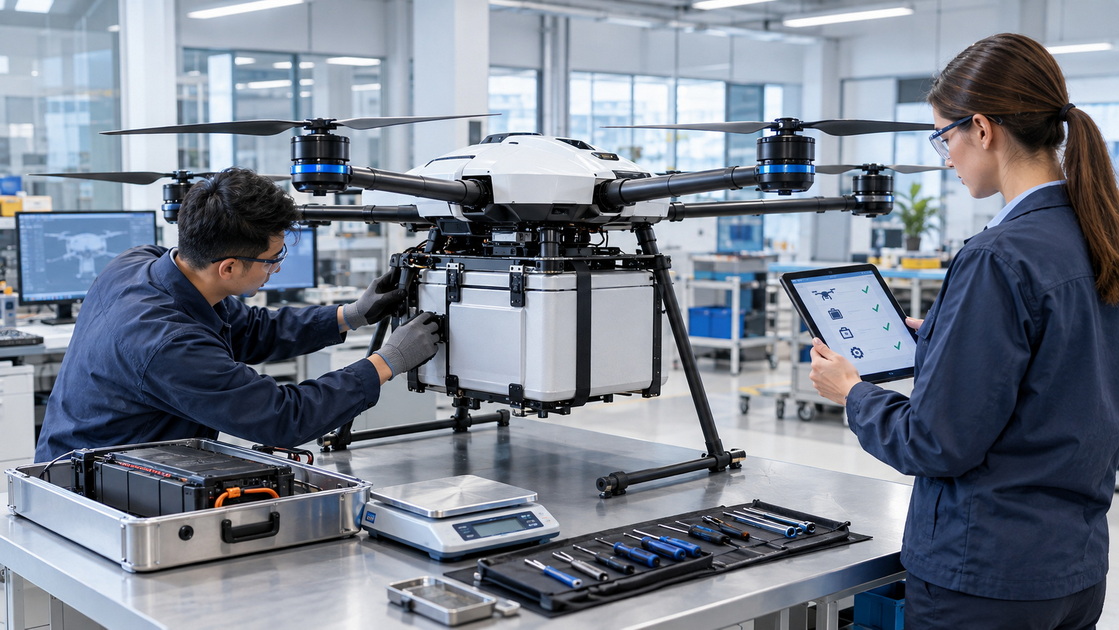
Your acceptance specification should define whether the quoted payload includes:
- The cargo enclosure.
- Insulation.
- Mounting hardware.
- Sensors.
- Packaging.
- Cooling materials.
- The food itself.
Ask the supplier to demonstrate the assembled delivery configuration on a scale and then test it on the intended route.
This avoids comparing one supplier's total carried load with another supplier's net food capacity.
Do not accept "aviation-grade" or "premium carbon fiber" as a complete material specification.
For critical parts, request documentation appropriate to the design, such as:
- Composite layup and curing controls.
- Material batch traceability.
- Metallic component specifications.
- Fastener and joint inspection procedures.
- Propeller inspection criteria.
- Electrical connector and harness documentation.
- Payload-mount retention tests.
DJI's FlyCart 30 launch materials, for example, identify carbon-fiber propellers and a defined rotor configuration. That level of description is more useful than an unsupported quality adjective, although it still does not replace production inspection records.
For food containers, separately define cleanability, sealing, temperature performance, and food-contact documentation where applicable.
Ask four different questions:
1. Can this equipment legally be imported?
2. Does it meet applicable product-conformity requirements?
3. Can the operator conduct the proposed flights?
4. Can the specific route and delivery method be approved?
Where CE or RoHS requirements apply, request documentation identifying the covered equipment and configuration. Neither should be treated as evidence that the supplier has authorization to conduct your delivery operation.
European aviation guidance makes this separation important: many operations in the specific category require an operational authorization based on the proposed operation and its risks.
Define pilot-test conditions before paying for a fleet:
- Actual payload and enclosure.
- Intended launch and delivery points.
- Return or onward-flight requirement.
- Wind and temperature conditions.
- Arrival battery reserve.
- Delivery accuracy.
- Communications interruptions.
- Aborted missions.
- Food condition at handover.
DJI's controlled-condition range documentation demonstrates why maximum flight distance should not be converted directly into service radius.
A supplier should provide raw logs and an explanation of failed or interrupted missions—not only a promotional video.
A sample may use different batteries, connectors, sensors, or payload hardware from subsequent production units.
Avoidance: Attach an approved bill of materials to the purchase agreement. Require written approval for substitutions and updated test evidence where a change affects performance or compliance.
A successful flight proves that one mission was completed under particular conditions. It does not establish scalable dispatch, recovery procedures, maintenance availability, or overseas operating permission.
Avoidance: Request evidence for the precise capability being purchased: aircraft sale, software integration, recurring operations, or destination-market deployment.
Branding an enclosure is not the same as owning firmware, tooling, flight-control interfaces, or certification rights.
Avoidance: Define deliverables and intellectual-property boundaries before development begins. Include source-code access, interface continuity, and change-control terms where commercially necessary.
Lithium battery transport requires configuration-specific planning. IATA guidance distinguishes batteries shipped alone from those packed with or contained in equipment and requires applicable UN 38.3 testing.
Avoidance: Obtain the matching test summary and have a qualified dangerous-goods forwarder confirm classification, packaging, documentation, charge limits, and carrier acceptance before booking shipment.
A particularly useful safeguard is to identify the complete configuration accepted during testing:
- Airframe.
- Battery model.
- Firmware version.
- Propellers.
- Cargo enclosure.
- Payload release mechanism.
- Communications equipment.
- Ground station.
- Dispatch software.
Do not describe this simply as "the same drone model."
The purchasing risk is configuration drift: production aircraft may retain the same commercial model name while important components or software change. Require the supplier to identify changes, assess their implications, and repeat agreed tests when necessary.
This is a recommended procurement control, not a claim that any company in this guide has supplied inconsistent equipment.
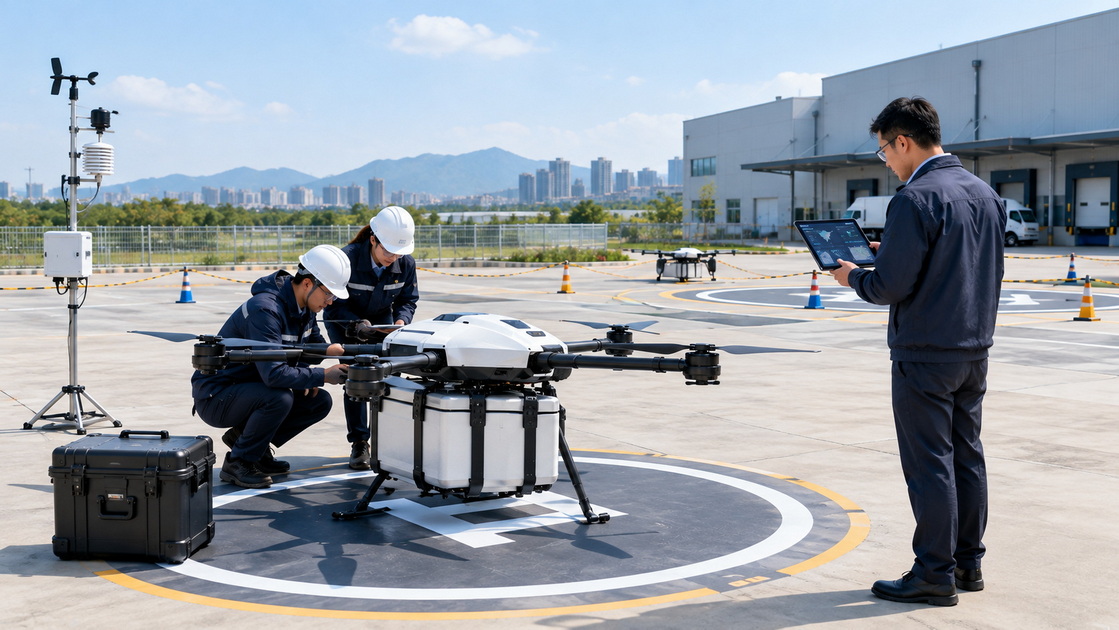
Provide suppliers with:
- Delivery geography.
- Payload weight and dimensions.
- Daily order targets.
- Required delivery time.
- Handover method.
- Weather limits.
- Local operating constraints.
- Existing software interfaces.
Match the legal entity across the quotation, certificate, invoice, warranty, and receiving bank account.
Request a site audit or live inspection covering assembly, testing, battery handling, and spare-parts support.
The pilot should specify aircraft, batteries, cargo equipment, software access, training, spare parts, test support, and acceptance conditions.
An aircraft-only sample is insufficient when the intended purchase is a complete delivery service.
Use actual packaging and representative route conditions. Record failures, manual interventions, battery reserves, food condition, and maintenance requirements.
Before fleet expansion, settle:
- Approved configuration.
- Production allocation.
- Lead times.
- Warranty responsibility.
- Software charges.
- Battery replacement assumptions.
- Spare-parts stocking.
- Service response times.
- Exit and data-export provisions.
The most useful Chinese drone food delivery partner depends on the operating model.
Meituan offers direct food-delivery experience. DJI provides a documented cargo-aircraft platform. Fengyi and JD contribute logistics-network perspectives. AutoFlight addresses much larger cargo missions. JOUAV and AOSSCI merit consideration for industrial integration, while XAG belongs in an adjacent-technology category rather than a direct meal-delivery comparison.
SIDT offers an integrated-system proposition that may suit smaller and midsize operators seeking coordinated aircraft, scheduling, and delivery infrastructure. Its suitability should be established through a documented pilot and a clear commercial proposal.
To begin a structured discussion with Shenzhen Intelligent Drone Technology Co. Ltd., submit your route profile, payload requirements, delivery volume, destination country, and customization needs. Request a configuration-specific proposal covering the pilot, documentation, acceptance tests, deployment responsibilities, and long-term support.
Search the company or certificate details through IAF CertSearch and compare the result with the supplier's document. Check the legal entity, site, standard, scope, and status.
If the record is unavailable or inconsistent, request confirmation from the issuing certification body and check its accreditation. An expiry date printed on a PDF is not enough: a certificate may have been suspended or withdrawn earlier.
No. Product conformity and permission to conduct a particular flight operation are separate questions.
Depending on the operating category and mission, an operator may need an operational authorization or an applicable standard-scenario declaration. The aircraft must also meet the technical requirements relevant to that operation.
Request the battery model identification, watt-hour rating, applicable UN 38.3 test summary, shipment configuration, and proposed dangerous-goods documentation.
Ask a qualified forwarder to confirm current requirements with the carrier. IATA's 2026 fact sheet identifies additional charge restrictions for batteries packed with equipment, making shipment planning an early procurement task rather than a final packing decision.
Require every supplier to quote against the same mission: identical cargo weight, enclosure, route profile, environmental assumptions, and arrival reserve.
Then request pilot evidence. Published maximums may use controlled test conditions that differ materially from an urban delivery route, as DJI's range notes explicitly demonstrate.
Include a customization matrix, approved bill of materials, interface documentation, tooling ownership, software licensing, maintenance obligations, and change-control procedures.
Specify what happens if the supplier stops supporting a component or cloud service. Also identify who funds additional testing or regulatory work when a requested modification changes the aircraft configuration.
The source citations throughout this guide link to the underlying company, government, aviation, and industry materials.
Priority resources for procurement verification include:
- Civil Aviation Administration of China: 2025 civil aviation statistical bulletin, published in April 2026.
- European Union Aviation Safety Agency: drone categories, conformity requirements, and operational authorization guidance.
- International Air Transport Association: battery shipping guidance and transport-safety requirements.
- International Accreditation Forum: accredited management-system certificate verification.
- SIDT: published delivery applications and system-integration capabilities.
- DJI: FlyCart 30 specifications and measurement conditions.
- Fengyi Technology: company history and logistics-aircraft portfolio.
- AutoFlight: CarryAll cargo-aircraft specifications.
- JOUAV: company history and published quality-management claim.


