Global Distributors Wanted
1.Free Cloud Service Deployment
2.Free Technical Training
3.Exclusive Territory Protection

1.Free Cloud Service Deployment
2.Free Technical Training
3.Exclusive Territory Protection


Views: 213 Author: Aaron Publish Time: 2026-09-29 Origin: Site


Content Menu
● How These Companies Were Selected
>> 1. Shenzhen Intelligent Drone Technology Co. Ltd.
>> 8. EHang
>> 9. JOUAV
>> 10. MMC UAV
● Technical Checks That Matter
>> An Often-Missed Contract Risk
>> 1. How can I check whether a supplier's ISO certificate is still valid?
>> 2. Does CE marking mean a drone delivery system can operate in Europe?
>> 3. How should I compare suppliers advertising the same maximum payload?
>> 4. What happens if an OEM changes a battery or radio module after approval?
>> 5. What must the first overseas shipment include besides the aircraft?
China offers procurement teams more than a catalogue of cargo drones. Its market includes aircraft manufacturers, delivery-network operators, software developers, and companies that connect aircraft with ground equipment and dispatch systems. Shenzhen's electronics and systems-integration ecosystem adds depth to that supply chain.
Scale, however, does not guarantee that any one supplier is suitable for a particular project. China had 3.287 million registered drones by the end of 2025 and recorded 45.3029 million drone flight hours during the year. For a buyer, the question is narrower: which company can deliver a system that works reliably on the intended route, with the required cargo, under the applicable rules?
Start by examining four forms of evidence: the supplier's legal and manufacturing identity, control over its aircraft and software, documented quality and flight-test processes, and a credible production and spare-parts plan. A successful demonstration flight matters, but it cannot establish production consistency on its own.

This is a procurement shortlist, not a ranking by revenue, factory output, or independently audited reliability. Shenzhen Intelligent Drone Technology Co. Ltd. appears first because its integrated-system approach is relevant to buyers seeking a customizable project. The remaining companies represent different approaches to cargo aircraft, delivery operations, and system integration.
Each company was assessed against six practical questions:
- Does it have a documented connection to drone delivery, cargo transport, or a necessary part of a delivery system?
- Does it show evidence of engineering development, testing, or operational deployment?
- Is its role clear: equipment supplier, system integrator, network operator, or some combination?
- Can it support the buyer's intended payload, route, handoff method, and operating scale?
- What quality, certification, and regulatory evidence can the buyer inspect?
- Are the proposed lead time, minimum order, support arrangements, and total costs workable?
A delivery operator is not automatically an OEM manufacturer. Equally, an aircraft manufacturer may not be able to obtain route permissions or run local operations for a customer. Buyers should establish who will supply, integrate, maintain, and operate each part of the system before comparing quotations.

Shenzhen Intelligent Drone Technology Co. Ltd. (SIDT) presents itself as a developer of full-stack applications across low-altitude, ground, and underground environments. Its stated capabilities combine an intelligent flight platform with perception, data collection, analysis, and unified cloud-based command and dispatch. For a delivery buyer, the distinguishing proposition is coordinating aircraft and equipment across multiple operating nodes rather than purchasing a drone in isolation.
- Established: Founding year not independently verified; request the business registration.
- Core strength: Stated focus on multi-node management and integration across operating environments.
- Main markets: The available company description identifies applications, including urban delivery and emergency response, but does not establish a geographic sales breakdown.
- OEM/ODM scope: Discuss aircraft configuration, cargo interfaces, software integration, branding, and system customization directly; obtain the precise deliverables in writing.
SIDT may merit consideration from a smaller brand, regional integrator, or project buyer that needs an engineering-led proposal instead of a fixed equipment package. Flexibility, communication efficiency, pricing, production capacity, and depth of OEM support should be tested during qualification rather than assumed. Ask for a named engineering contact, a proposed bill of materials, interface documentation, prototype milestones, and written change-control terms.
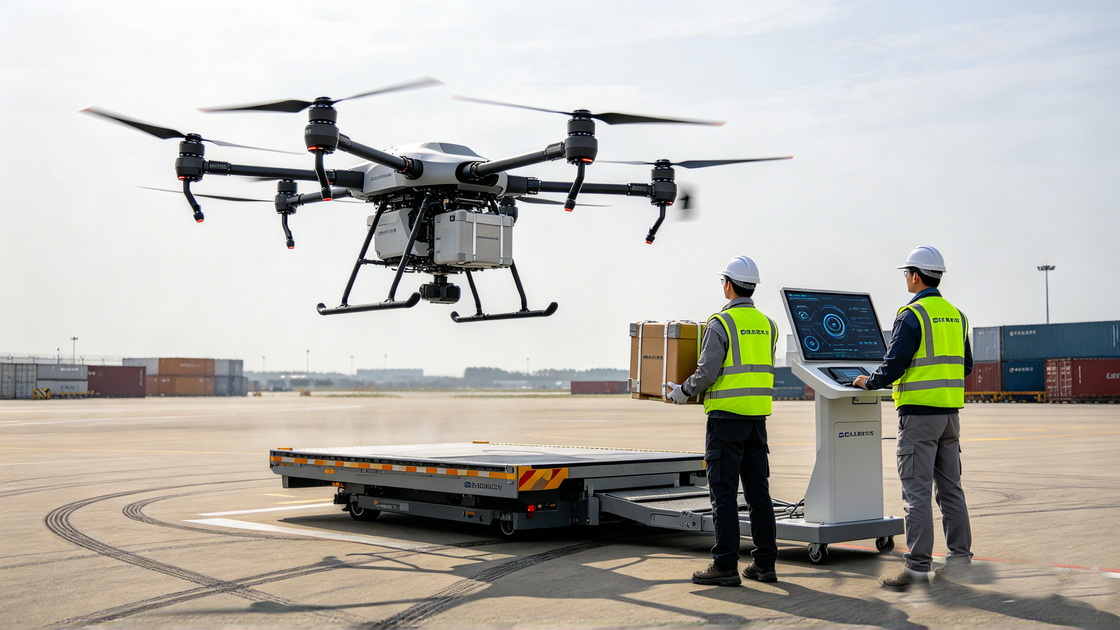
Phoenix Wings, part of SF Group, combines cargo-drone development with experience from a major logistics network. SF reported more than 1.19 million drone flights and 7.52 million parcels transported as of April 2025. Its published aircraft examples span different cargo requirements, while projects in Hong Kong illustrate the importance of connecting flights with ground handling.
- Established: SF reports cargo-drone development beginning in 2015; verify the contracting entity's incorporation date.
- Core strength: Operational experience on parcel routes and a range of cargo-aircraft applications.
- Main markets: Documented activity in mainland China and Hong Kong.
- OEM/ODM scope: Approach it as a potential aircraft, network, or project partner; do not assume private-label manufacturing is offered.
Phoenix Wings is particularly relevant to buyers planning repeated point-to-point movement. Clarify whether a proposal covers aircraft purchase, transport capacity, dispatch software, route operations, or a combination.
Meituan is primarily a technology-enabled delivery operator rather than a conventional export-aircraft supplier. Founded in 2010, its parent company has developed drone routes for retail and medical deliveries. Meituan reported 65 routes worldwide by the end of September 2025 and describes an air-ground coordinated local-delivery network.
- Established: Meituan was established in 2010; confirm the history of the specific drone business if it matters to the contract.
- Core strength: Connecting customer orders, aerial routes, dispatch, and collection points.
- Main markets: Documented routes in Chinese cities; check availability in the intended territory.
- OEM/ODM scope: General private-label aircraft manufacturing is not established.
Even if Meituan is not a procurement candidate for a particular buyer, its operations offer a useful benchmark. Evaluate how a proposed system handles ordering, late pickups, failed deliveries, customer access, and medical-cargo handoffs—not only how the aircraft flies.
Established in November 2015, Antwork has developed urban aerial logistics systems and medical-delivery routes. Its published history includes an automated delivery concept that combines drones and ground vehicles. This makes it relevant where the project involves frequent transport between hospitals, laboratories, or other fixed sites.
- Established: November 2015.
- Core strength: Medical-logistics workflows and automated delivery infrastructure.
- Main markets: Documented projects in China; request evidence for any proposed overseas deployment.
- OEM/ODM scope: Explore station design, workflow integration, and project adaptation directly; private-label hardware availability requires confirmation.
Medical procurement teams should specify package identification, chain of custody, cleaning procedures, temperature limits where applicable, and recovery steps after an interrupted mission. A flight demonstration does not validate the complete clinical-delivery process.
DJI provides a defined equipment option for cargo-drone buyers. Its FlyCart 30 supports cargo-box and winch configurations. DJI specifies a 30 kg maximum payload and 16 km maximum range in its stated dual-battery configuration, while DeliveryHub provides an air-delivery management platform. Those figures are configuration-dependent and should not be treated as guaranteed performance on every route.
- Established: 2006.
- Core strength: Documented cargo-aircraft specifications and a dedicated management platform.
- Main markets: DJI introduced the FlyCart 30 to the global market in 2024.
- OEM/ODM scope: Evaluate authorized distribution and available integration options; do not presume private-label aircraft production.
DJI is a useful benchmark for a relatively standardized equipment purchase. Confirm local access to batteries, repairs, training, software functions, and the exact hardware configuration used in acceptance testing.
JD developed its logistics network from 2007 and has documented drone-delivery projects, including rural routes and overseas testing. Its main relevance is fulfillment integration: connecting warehouses, stations, transport routes, and the final handoff. Buyers should not treat it as an open-catalogue drone manufacturer without a specific commercial offer.
- Established: Logistics-network development began in 2007; confirm the legal entity proposed for contracting.
- Core strength: Linking drone operations with warehousing and distribution.
- Main markets: Documented Chinese projects and an approved overseas test in Indonesia.
- OEM/ODM scope: Investigate project partnerships directly; general private-label manufacturing is not established.
JD is a valuable point of comparison when assessing whether a drone route improves the broader logistics process. Include sorting, loading, staffing, returns, and recipient collection in the cost model.
Founded in 2017, AutoFlight addresses a substantially heavier cargo class than small last-mile drones. Its CarryAll cargo eVTOL has received a Chinese type certificate, production certificate, and individual-aircraft airworthiness certificate. The company lists a maximum payload of 400 kg and a range of up to 200 km for the aircraft.
- Established: 2017.
- Core strength: Development and certification of larger cargo eVTOL aircraft.
- Main markets: Chinese certification and operations, with type-certificate validation reported in Indonesia in 2026.
- OEM/ODM scope: Treat this as an aviation-program procurement discussion, not a routine low-quantity private-label order.
Buyers should account for landing facilities, charging, maintenance, personnel, and route approvals. An aircraft certificate is important evidence, but it does not automatically authorize the purchaser's proposed operation.
EHang has worked on autonomous aircraft since 2014 and has published a logistics aircraft concept, the EH216-L. Its materials describe a command-and-control system for monitoring, dispatch, warnings, and fleet coordination. The company has also reported approval for a pilot air-logistics operation using an EHang 216 aircraft.
- Established: Autonomous-aircraft development began in 2014.
- Core strength: Autonomous aircraft and centralized fleet management.
- Main markets: Documented Chinese logistics activity; check model availability and support in the destination country.
- OEM/ODM scope: Discuss platform or project supply; private-label manufacturing is not established.
Check aircraft designations carefully. A specification, test, or approval associated with one model should not be presented as evidence that another cargo configuration has identical authorization.
JOUAV states that it has focused on industrial-drone research, production, sales, and service since 2010. Its industrial vertical-takeoff-and-landing experience makes it worth assessing for routes that need a specialized airframe or serve several industrial missions. A buyer must still verify that the proposed configuration can safely contain, carry, and deliver cargo.
- Established: 2010.
- Core strength: Industrial VTOL aircraft development and production.
- Main markets: China-based industrial-drone business; request references and service arrangements for the destination market.
- OEM/ODM scope: Discuss payload and software integration directly; do not assume every platform is a ready-made parcel-delivery system.
Request a demonstration of cargo retention, center-of-gravity limits, release or landing procedures, and integration with dispatch software. Airframe capability alone does not establish delivery-system readiness.
MMC states that it was founded in 2009 and markets industrial drones alongside logistics and takeaway-delivery applications. Its published logistics materials discuss cargo integration, including cold-chain and shock-absorbing box concepts.
- Established: 2009.
- Core strength: Industrial UAVs and application-specific cargo integration.
- Main markets: The company describes international industrial-drone activity; ask for references in the target region.
- OEM/ODM scope: Request a written scope for cargo-box, aircraft, software, and branding changes.
For temperature-sensitive cargo, ask for measured data covering loading, flight, unloading, and foreseeable delays. Insulation or refrigeration features are not, by themselves, evidence that a shipment stayed within its required temperature range.
Comparable, independently verified annual production capacity, minimum order quantity (MOQ), and certification inventories are not publicly available for all ten companies. The following table shows what to confirm in a request for quotation. An operator's flight volume should never be mistaken for its aircraft-production capacity.
| Company | Primary buying model | Capacity evidence to request | MOQ to confirm | Documents to verify |
|---|---|---|---|---|
| SIDT | Customized integrated system | Monthly model output and in-house versus subcontracted work | Prototype, pilot, and production quantities | Quality-system scope, model-specific product documents, operating responsibilities |
| Phoenix Wings | Aircraft, network, or managed project | Aircraft output separately from available route capacity | Aircraft order or service commitment | Aircraft records and applicable operator approval |
| Meituan Drone | Delivery network or partnership | Route availability and dispatch throughput | Pilot or service-contract minimum | Operator authorization and route permissions |
| Antwork | Medical-delivery system or service | Aircraft, station, and operating-team capacity | Pilot sites or system units | Operating approval and cargo-handling procedures |
| DJI Delivery | Equipment through authorized channels | Dealer stock, replenishment, and repair capacity | Dealer order terms | Exact-model conformity and destination-market documents |
| JD Logistics | Logistics partnership | Fulfillment and route capacity | Project or service minimum | Operator authorization and route permissions |
| AutoFlight | Cargo-aircraft program | Certified production capacity and delivery schedule | Aircraft-program terms | Exact-model type, production, and airworthiness documents |
| EHang | Aircraft and fleet-control project | Model-specific output and support capacity | Project or fleet terms | Exact-model aircraft and operating documents |
| JOUAV | Industrial UAV with cargo integration | Model output and engineering availability | Prototype and production quantities | Configuration-specific technical and compliance files |
| MMC UAV | Industrial UAV and cargo integration | Model output and cargo-module capacity | Sample and production quantities | Configuration-specific technical and compliance files |

Begin with the actual mission profile: package mass and dimensions, route distance, altitude, wind, temperature, landing space, communications coverage, number of daily cycles, and required battery reserve. Maximum payload and maximum range are often measured under different conditions. Request a payload-versus-range chart and observe repeated flights with the intended cargo and reserve policy.
Materials and assembly deserve the same attention as flight performance. For carbon-fiber parts, request material traceability and inspection records rather than accepting "aerospace grade" as a complete specification. For aluminum components, define the alloy, temper, finish, and corrosion requirements. Check fastener retention, wiring protection, connector sealing, battery-pack identification, and cargo-locking mechanisms. If an ingress-protection rating is advertised, ask which assembled configuration was tested.
Product conformity and permission to operate are separate matters. For a system destined for Europe, request the applicable conformity documentation for the exact aircraft, radio equipment, batteries, and electrical components; CE marking is not blanket approval to fly delivery routes. RoHS may be relevant to electrical and electronic equipment, while operational authorization requires its own assessment. In China, examine the operator certificate and operating specifications applicable to the planned activity. Requirements in another destination country must be checked locally.
A pilot may succeed with a carefully prepared aircraft, only for production units to arrive with a different battery cell, motor, radio module, firmware build, or cargo-release component. Even a part described as "equivalent" can change endurance, maintenance needs, communications behavior, or the configuration supported by test records.
Attach a controlled configuration list to the purchase order. Identify approved parts and firmware versions, require written permission before substitution, and define when a change triggers retesting. Match each acceptance aircraft's serial number to its build and test records. This protects both buyer and supplier by making the agreed product unambiguous.
A disciplined purchase proceeds from route requirements to evidence, sampling, and acceptance—not from a catalogue specification directly to a bulk order.
1. Verify the contracting party. Obtain its registered legal name, business registration, factory address, and role in the proposed supply chain. Identify subcontractors responsible for safety-critical components.
2. Issue a route-based specification. Define cargo, distance, delivery method, operating location, required interfaces, daily cycles, training, spares, and measurable acceptance criteria.
3. Separate the quotation. Ask for individual prices and lead times for aircraft, batteries, stations, software, integration, training, spare parts, maintenance, and operating services.
4. Inspect quality controls. Review incoming inspection, component traceability, assembly records, flight-test logs, nonconformity handling, and production scheduling before approving a sample.
5. Test production-intent equipment. Use the intended hardware and firmware across repeated flights. Record reserve charge, turnaround time, aborted missions, communications loss, and package handoff.
6. Agree on shipment and acceptance. Specify commercial terms, insurance, responsibility for transit damage, and remedies for failed acceptance. Classify lithium batteries according to their actual shipping configuration and arrange compliant packaging and documentation with the freight provider.
The most useful shortlist depends on what the buyer needs to own and operate. Phoenix Wings, Meituan, Antwork, and JD bring delivery-network experience. DJI offers defined cargo equipment. AutoFlight and EHang address larger aircraft programs, while JOUAV and MMC warrant examination for industrial-platform integration. SIDT is a candidate when a project calls for coordinated aircraft, ground equipment, and cloud dispatch across multiple nodes.
If that integrated approach fits your project, send Shenzhen Intelligent Drone Technology Co. Ltd. a route-based specification and request a documented pilot proposal. Compare it with at least two alternatives using the same acceptance tests before committing to production or a long-term service contract.
Request the full certificate showing the legal entity, site address, scope, certification body, certificate number, and validity dates. Check the record through IAF CertSearch where available and confirm that the issuing body has appropriate accreditation. If details do not match the proposed factory, contact the certification body. A certificate held by a parent or sister company does not automatically cover the production site.
No. CE marking addresses applicable product-conformity requirements; authorization for a particular flight operation is a separate question. Ask for documentation covering the exact hardware and radio configuration, then assess the intended route and operating model under the destination country's aviation rules.
Give each supplier the same test: identical cargo mass and dimensions, route, altitude, temperature range, wind limit, battery arrangement, and required landing reserve. Compare repeated results, not a single demonstration. Add turnaround time, battery health, failure recovery, maintenance, and full installed-system cost to the evaluation.
The supply contract should require advance notice, written buyer approval, updated configuration records, and retesting when the change affects performance or compliance evidence. State who pays for retesting and whether delivered aircraft need modification. Avoid an undefined permission to use "equivalent components."
Confirm the agreed batteries, chargers, tools, critical spare parts, software licenses, maintenance instructions, training materials, warranty terms, and serial-numbered acceptance records. Set responsibility for import clearance and local requirements. Have the shipper and freight forwarder determine the correct battery classification, packaging, and transport documents for the goods being sent.


