Global Distributors Wanted
1.Free Cloud Service Deployment
2.Free Technical Training
3.Exclusive Territory Protection

1.Free Cloud Service Deployment
2.Free Technical Training
3.Exclusive Territory Protection


Views: 221 Author: Aaron Publish Time: 2026-09-23 Origin: Site


Content Menu
● Walmart Drone Delivery Pilot Pay: The Direct Answer
● Why Walmart Drone Pilot Pay Varies
>> Main Factors That Influence Pay
● Walmart Drone Delivery Roles Compared
● What Does a Drone Delivery Pilot Do?
● Certification and Skills That Can Increase Pay
>> Important Qualifications for Drone Delivery Careers
>> A Practical Career Development Path
● Walmart Drone Delivery Jobs Compared With Other Drone Careers
● The Future of Drone Delivery Work
● From Single Drone Delivery to Full-Stack Operations
● What Employers Can Learn From Walmart Drone Delivery
>> Build the Operating System Before Scaling the Fleet
>> Match Compensation to Responsibility
>> Train Teams for Multiple Functions
>> Use One Coordinated Control Platform
>> Plan for Community Acceptance
>> 1. How much does Walmart pay drone delivery pilots per hour?
>> 2. Does Walmart directly hire all drone delivery pilots?
>> 3. Do drone delivery pilots need certification?
>> 4. What is the difference between a drone pilot and a drone operator?
>> 5. Can drone delivery be a long-term career?
>> 6. What skills can help a drone delivery worker earn more?
>> 7. Will autonomous drones replace delivery pilots?
Walmart drone delivery pilot pay is commonly reported at around $15 to $25 per hour for operational roles. However, there is no single fixed rate because "Walmart drone delivery pilot" can refer to several different positions, employers, responsibilities, locations, and levels of aviation accountability.
Some workers support order preparation inside Walmart stores. Others conduct aircraft inspections, monitor flight missions, manage launch and recovery areas, or hold responsibility for commercial drone operations. As drone delivery networks expand, the value of skilled remote pilots, field operators, maintenance technicians, and flight-operations coordinators is likely to grow.
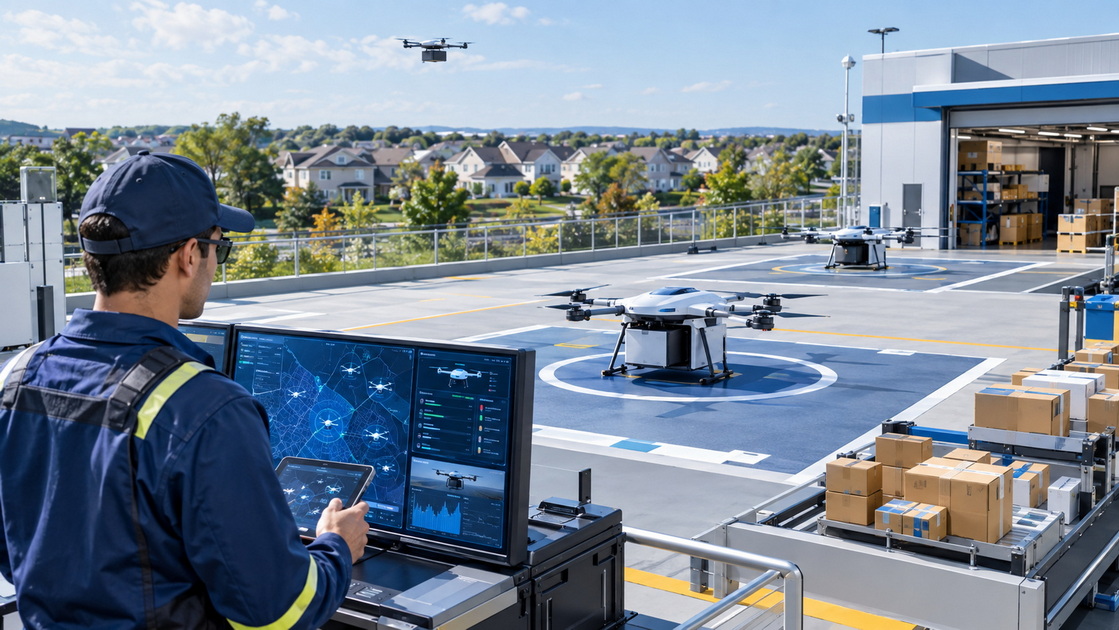
The most realistic answer is that Walmart-related drone delivery jobs often fall within a $15 to $25 per hour range. Entry-level support roles may be near the lower end of that range. Positions with aviation responsibility, advanced technical requirements, or leadership duties may pay more.
The term "drone delivery pilot" can be misleading because not every person involved in a drone delivery mission performs the same work.
A Walmart drone delivery operation may include:
- Retail fulfillment associates who prepare and stage customer orders
- Field operators who inspect, launch, recover, and charge drones
- Remote pilots who oversee safe flight operations
- Visual observers who support situational awareness
- Maintenance technicians who maintain drones and related equipment
- Operations coordinators who manage schedules and field activity
- Supervisors who oversee local teams, compliance, and performance
- Engineers who support autonomous flight systems and fleet reliability
A worker preparing delivery parcels inside a store should not be compared directly with a certified remote pilot responsible for operational safety. Likewise, a field operator working at a local launch site should not be compared with an experienced fleet manager overseeing several drone stations.
For job seekers, the key question is not only, "How much does Walmart pay drone delivery pilots per hour?" It is also, "What is the actual job title, who is the employer, and what responsibilities does the role include?"
Walmart's drone delivery ecosystem involves delivery providers, technology platforms, retail teams, field personnel, and aviation operations specialists. This means that compensation can vary from one position to another.
A drone delivery worker may be employed directly by Walmart, by a delivery technology provider, by a logistics contractor, or by a staffing partner. The pay structure, benefits, training opportunities, and advancement path can be different in every case.
| Factor | Why It Matters | Possible Impact on Hourly Pay |
|---|---|---|
| Employer | Walmart, a drone delivery partner, a contractor, or a staffing provider may use different pay structures | Can create major differences in wage and benefits |
| Job responsibility | Flight oversight, maintenance, fulfillment, safety monitoring, and dispatch require different levels of accountability | Higher-responsibility roles may pay more |
| Certification | Aviation certification demonstrates commercial operating knowledge and readiness | Can improve job eligibility and pay potential |
| Location | Local wages, labor demand, and cost of living differ across markets | Higher-cost locations may offer higher wages |
| Experience | Flight records, technical skills, maintenance ability, and logistics experience add value | Experienced candidates may command higher pay |
| Employment type | Full-time roles may offer healthcare, paid leave, retirement plans, and training support | Total compensation may exceed the hourly figure |
| Shift schedule | Evening, weekend, holiday, and weather-sensitive operations may require flexible availability | Some positions may include premium pay or overtime |
In practice, an entry-level worker supporting drone order fulfillment may earn a rate closer to standard retail operations. A certified pilot or technical field operator may earn more because the role requires specialized judgment, safety awareness, and technical proficiency.
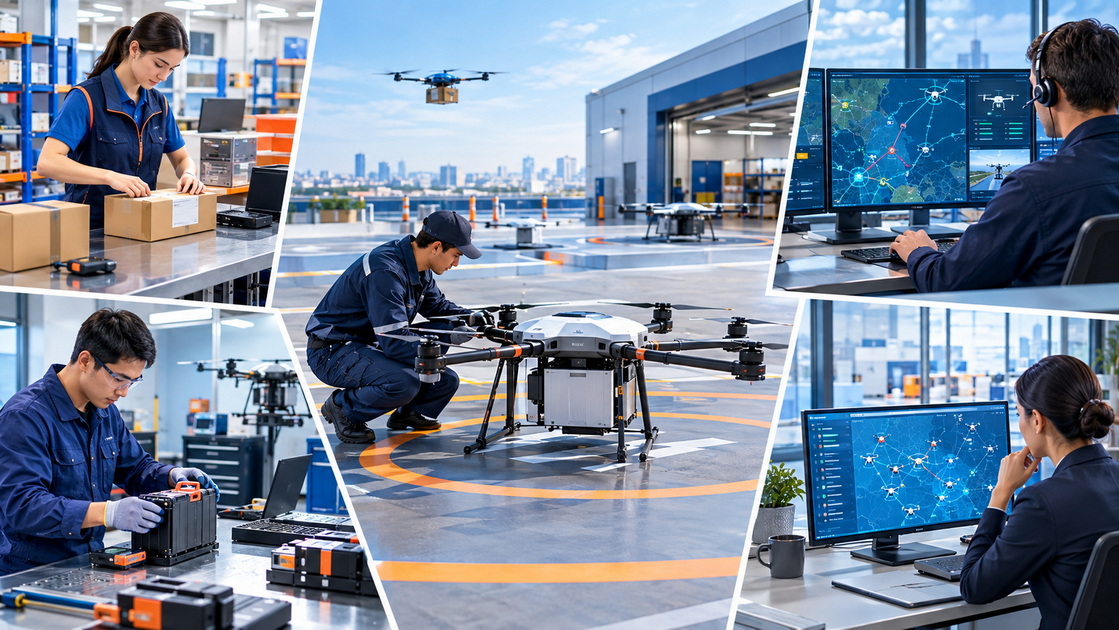
Drone delivery is not a one-person job. It requires a connected operating team that can support order fulfillment, aircraft readiness, weather monitoring, launch procedures, flight supervision, customer communication, and maintenance.
| Role | Main Responsibilities | Typical Skill Level | General Pay Positioning |
|---|---|---|---|
| Retail fulfillment associate | Selects, packs, labels, and stages eligible customer orders | Entry-level retail and logistics skills | Entry-level to mid-range |
| Drone field operator | Conducts inspections, prepares drones, manages batteries, supports launch and recovery | Operational and technical skills | Mid-range |
| Visual observer | Supports launch-zone safety, monitors local conditions, and communicates with the flight team | Safety awareness and field coordination | Entry-level to mid-range |
| Remote pilot | Oversees commercial flight operations, operational decisions, and emergency actions | Aviation knowledge and certification | Mid-range to upper-range |
| Drone maintenance technician | Inspects, repairs, tests, and documents aircraft systems | Technical maintenance experience | Mid-range to upper-range |
| Operations coordinator | Organizes schedules, personnel, site readiness, and mission workflows | Logistics and operational planning | Mid-range to upper-range |
| Operations supervisor | Manages teams, performance, safety procedures, and local operating standards | Leadership and aviation operations experience | Higher-level compensation |
| Flight systems engineer | Supports autonomy, flight controls, sensing, data systems, and aircraft performance | Advanced engineering expertise | Specialized professional compensation |
This comparison shows why hourly pay figures should always be viewed in context. Drone delivery may begin with a store order, but the service depends on a much larger operational system.
A drone delivery pilot does much more than move an aircraft from one place to another. Modern delivery drones may have advanced autonomous flight capabilities, but trained personnel remain essential for safe, repeatable, and accountable operations.
A typical drone delivery pilot or flight operator may be responsible for:
- Reviewing weather, wind, visibility, and flight conditions
- Checking aircraft readiness before each mission
- Inspecting batteries, motors, propellers, payload systems, and communications links
- Confirming that packages are correctly secured
- Reviewing route restrictions and local airspace conditions
- Monitoring live aircraft status during delivery missions
- Responding to technical alerts or unexpected operating conditions
- Coordinating with field staff and retail fulfillment teams
- Recording mission details and maintenance actions
- Following emergency and safety procedures
- Reporting incidents, anomalies, and operational lessons
- Supporting safe launch and recovery zone management
This type of role combines aviation discipline, technology awareness, logistics coordination, and real-time decision-making.
For that reason, a trained pilot with a strong safety record can offer more value than an individual with only recreational drone experience. Employers need people who can follow structured procedures, remain calm during unexpected events, communicate clearly, and protect the reliability of the delivery service.
Commercial drone delivery requires more than basic drone flight practice. Workers who want to improve their earning potential should build a broader set of skills that can support aviation, logistics, and technology operations.

- Commercial drone pilot certification
- Knowledge of airspace rules and weather conditions
- Flight planning and risk assessment ability
- Battery safety and charging procedures
- Aircraft inspection and basic maintenance capability
- Familiarity with fleet-management software
- Experience with launch, recovery, and landing-zone procedures
- Operational reporting and incident documentation
- Logistics, fulfillment, and inventory coordination
- Emergency-response awareness
- Communication and teamwork skills
- Ability to work flexible shifts, including weekends or evenings
Commercial drone operations require disciplined decision-making. A qualified remote pilot must understand how to evaluate operational conditions before, during, and after a mission.
For example, a drone may be technically ready to fly, but a pilot may decide to delay the mission because wind conditions are changing, visibility is deteriorating, nearby airspace activity is increasing, or a landing zone is no longer clear. That decision protects people, property, aircraft, packages, and the overall service reputation.
1. Earn a commercial drone pilot qualification.
2. Practice structured flight preparation and post-flight documentation.
3. Build experience with commercial-grade drone systems.
4. Learn battery management, inspection, and maintenance basics.
5. Develop logistics and inventory-handling knowledge.
6. Gain familiarity with fleet-control and mission-management platforms.
7. Apply for entry-level operational roles to gain real-world experience.
8. Progress toward remote pilot, technical specialist, coordinator, or supervisor positions.
Candidates who combine aviation knowledge with technical and logistics experience are often better prepared for long-term growth.
Retail drone delivery is a fast-growing segment of commercial aviation, but it is not the only career path available to qualified operators.
| Drone Career Segment | Core Purpose | Typical Working Environment | Career Potential |
|---|---|---|---|
| Retail drone delivery | Delivers small consumer items from local stores to homes | Retail stores, launch sites, suburban areas | Strong entry point into low-altitude logistics |
| Infrastructure inspection | Collects visual and sensor data from bridges, power lines, towers, and facilities | Industrial sites and critical infrastructure | High potential for technical specialists |
| Construction mapping | Supports progress tracking, site planning, and documentation | Construction sites and development projects | Strong demand for mapping and data skills |
| Agricultural operations | Supports crop analysis, field monitoring, and spraying workflows | Farms and rural land | Seasonal but valuable specialized segment |
| Emergency response | Provides real-time aerial awareness during fires, rescues, accidents, and disasters | Public safety and emergency zones | High responsibility and mission value |
| Underground inspection | Captures data inside tunnels, pipelines, mines, and confined areas | Underground and enclosed environments | Specialized technical opportunity |
| Fleet management | Oversees multiple aircraft, sites, operators, maintenance cycles, and performance data | Command centers and multi-site networks | Strong long-term leadership pathway |
The best long-term opportunity may not be limited to flying one drone at a time. It may involve managing a connected fleet, supporting multiple operating sites, analyzing performance data, coordinating emergency missions, or improving the reliability of an entire delivery network.
Drone delivery is moving beyond small pilot programs. Large retail networks are exploring faster fulfillment models that can bring small, time-sensitive items to customers within minutes.
This creates demand for people who can support efficient low-altitude operations. However, future job roles will likely evolve.
Instead of one pilot controlling one aircraft, many systems will rely on centralized monitoring, automated route planning, fleet health management, digital dispatch, and layered safety procedures. Human teams will continue to play a central role, but their work may become more focused on supervision, exception handling, maintenance, compliance, customer experience, and network coordination.
The future drone-delivery workforce may include:
- Remote flight supervisors
- Fleet-performance analysts
- Drone maintenance specialists
- Battery and charging-system technicians
- Low-altitude logistics coordinators
- Airspace and compliance specialists
- Emergency-response drone operators
- Multi-site operations managers
- Ground-air collaboration specialists
- Autonomous systems engineers
This shift is important for both job seekers and business leaders. A candidate who develops broad operational skills will have more career options. A company that builds connected systems will have more flexibility to support delivery, inspection, emergency response, and data collection through the same operational platform.
A single drone delivery mission can appear simple. A package is selected, attached to an aircraft, transported through the air, and delivered to a customer.
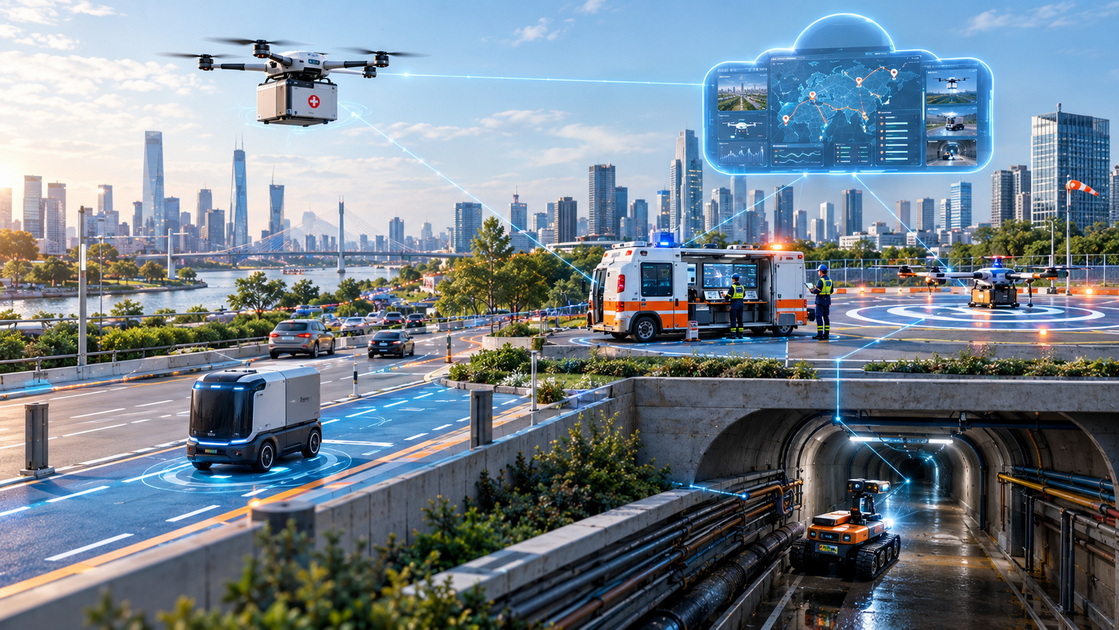
In reality, reliable drone delivery requires many connected elements:
- Order processing
- Inventory availability
- Package selection
- Payload verification
- Aircraft readiness
- Battery status
- Weather evaluation
- Route planning
- Airspace awareness
- Flight supervision
- Landing-zone safety
- Customer notification
- Maintenance tracking
- Data reporting
- Emergency procedures
This is why full-stack operational systems are becoming increasingly important.
Shenzhen Intelligent Drone Technology Co. Ltd. focuses on the integration of low-altitude, ground, and underground environments. Its approach is built around intelligent flight platforms, dynamic perception, precise data collection, and intelligent analysis.
Rather than treating drone delivery as an isolated service, a connected operating model can support several missions through one coordinated network.
These missions may include:
- Urban drone delivery
- Ground-air coordinated logistics
- Infrastructure inspection
- Underground-space detection
- Emergency-response coordination
- Smart-city monitoring
- Public-safety support
- Multi-node equipment dispatch
- Real-time operational command
A unified cloud-control platform can help organizations manage different types of equipment across several environments. This can improve mission visibility, reduce coordination delays, and support more efficient resource allocation.
For example, a city may need to deliver emergency medical supplies after a road accident. A drone can transport lightweight urgent items over traffic congestion. A ground vehicle can support last-meter delivery. A separate inspection drone can provide aerial awareness of nearby roads, utilities, or access points. A unified control platform can help coordinate these tasks from one command environment.
Walmart's drone delivery expansion highlights several important lessons for companies planning low-altitude logistics operations.
Adding more drones does not automatically create a reliable delivery network. Companies need standardized workflows for fulfillment, aircraft readiness, field staffing, maintenance, safety, customer communication, and exception management.
Not every drone-related job has the same level of aviation accountability. Employers should build clear role definitions and fair career pathways for retail support staff, field operators, pilots, technicians, coordinators, and supervisors.
Cross-trained personnel can improve network resilience. A team member who understands safety checks, battery management, basic maintenance, order handling, and digital mission control can help reduce delays and operational downtime.
A unified platform can connect people, aircraft, ground devices, operational alerts, maintenance records, and mission data. This improves visibility across sites and supports faster decision-making.
Public trust is essential for long-term drone delivery operations. Companies should consider safety, noise, privacy, local regulations, visual impact, emergency procedures, and clear community communication from the beginning.
Walmart-related drone delivery pilots may earn approximately $15 to $25 per hour, but the actual rate depends on the role, employer, location, certification level, technical skills, and operational responsibility.
For job seekers, drone delivery can be a valuable entry point into commercial aviation, robotics, logistics, and autonomous systems. The strongest candidates will build skills beyond basic flight control, including safety planning, maintenance, fleet management, logistics coordination, and operational reporting.
For businesses, the larger opportunity lies in building connected low-altitude operations. A reliable network requires more than aircraft. It requires trained people, intelligent platforms, coordinated equipment, disciplined processes, and the ability to connect air, ground, and underground resources.
Organizations that plan drone delivery as part of a complete operational ecosystem can create stronger value across logistics, inspection, emergency response, and smart-city applications.
Walmart-related drone delivery roles are commonly reported in the range of approximately $15 to $25 per hour. Actual compensation varies by employer, job title, local market, experience, certification, and responsibility level.
No. Some drone delivery personnel may work for Walmart, while others may be employed by technology partners, drone operators, contractors, or staffing providers. Applicants should carefully review the employer name and job description.
Many commercial flight-related positions require a recognized drone pilot qualification. The specific requirement depends on the duties, aircraft type, operating environment, and employer policy.
A drone pilot may be responsible for flight decisions and safety oversight. A drone operator may have a broader role that includes preparing aircraft, monitoring missions, managing batteries, maintaining equipment, or supporting launch and recovery procedures.
Yes. Drone delivery can lead to roles in fleet operations, drone maintenance, flight supervision, logistics coordination, autonomous systems, emergency response, and low-altitude network management.
Useful skills include commercial drone certification, aviation knowledge, weather awareness, battery safety, maintenance capability, flight planning, fleet-management software, logistics coordination, data analysis, and leadership experience.
Autonomous aircraft can reduce the need for direct manual flight control, but trained personnel remain important for safety supervision, maintenance, exception handling, compliance, system monitoring, and operational decision-making.
1. Federal Aviation Administration..
2. Federal Aviation Administration..
3. Walmart Corporate..
4. Walmart Corporate..
5. Wing..
6. ZipRecruiter..
7. ZipRecruiter..
8. Salary.com..


