Global Distributors Wanted
1.Free Cloud Service Deployment
2.Free Technical Training
3.Exclusive Territory Protection

1.Free Cloud Service Deployment
2.Free Technical Training
3.Exclusive Territory Protection


Views: 212 Author: Aaron Publish Time: 2026-10-14 Origin: Site


Content Menu
● Drone Food Delivery vs Motorcycle Delivery: A Practical Comparison
● Peak-Hour Delivery Speed: Measure the Whole Journey
>> Flight Time Is Not Customer Delivery Time
>> Where Drones Can Create a Meaningful Advantage
● Delivery Cost: Compare Completed Orders, Not Vehicle Energy
>> What a Drone Delivery Cost Model Should Include
>> Motorcycle Delivery Has Different Cost Drivers
● Food Quality, Payload, and Packaging
>> Which Orders Are Suitable for Drone Food Delivery?
>> Faster Transport Does Not Automatically Mean Better Food
● Safety, Weather, and Regulatory Readiness
>> Drone Delivery Requires Route-Specific Authorization
>> Weather Limits Must Be Operational, Not Promotional
>> Compare Risks Without Declaring an Unsupported Winner
● What Current Commercial Examples Actually Demonstrate
>> Keeta Drone: Evidence of Network Development
>> Wing: Automation Still Includes Ground Work
● A Decision Framework for Peak-Hour Urban Orders
>> Route Orders According to Eligibility and Expected Service
>> Identify the Real Bottleneck Before Buying More Equipment
● How SIDT's One-Network Approach Fits a Hybrid Model
● A Five-Step Pilot Before Scaling
>> 1. Establish a Comparable Baseline
>> 4. Evaluate Complete Outcomes
>> 5. Scale Only After Meeting Defined Thresholds
● Plan a Corridor Assessment with SIDT
>> 1. Is drone food delivery always faster than motorcycle delivery?
>> 2. Can drones deliver meals directly to apartment doors?
>> 3. Are drones cheaper during peak hours?
>> 4. Can drones carry drinks and hot meals?
>> 5. Will drones replace motorcycle riders?
>> 6. What should businesses measure first?
Drone food delivery vs motorcycle delivery is not simply a contest between aircraft and riders. For peak-hour urban orders, the better option is the one that delivers food reliably, at an acceptable cost, with a convenient customer handover. Drones can bypass road congestion on approved routes. Motorcycles offer flexible pickup, larger-order handling, and doorstep access.
My assessment is that the strongest strategy is usually hybrid: use drones where aerial routes solve a specific transport bottleneck, and retain motorcycle delivery where ground access provides greater value.
For Shenzhen Intelligent Drone Technology Co. Ltd. (SIDT), this comparison aligns with its stated focus on integrated aerial and ground solutions. The opportunity is not merely to fly meals faster. It is to coordinate restaurants, aircraft, riders, receiving points, and customers through one operational network.

The following table presents operational tendencies, not guaranteed performance. Actual results depend on aircraft specifications, local permissions, restaurant workflows, and neighborhood conditions.
| Comparison factor | Drone food delivery | Motorcycle delivery |
|---|---|---|
| Peak-hour congestion | Can bypass congested roads on approved aerial routes | Delivery time remains exposed to road traffic |
| Destination flexibility | Requires a suitable, authorized receiving location | Can serve varied addresses with accessible roads |
| Order capacity | Limited by approved payload, package dimensions, and balance | Generally more adaptable to bulky meals and multiple bags |
| Customer handover | May use a collection station or outdoor delivery zone | Can support personal doorstep or lobby handover |
| Weather resilience | Depends on aircraft limits and route conditions | Also weather-sensitive; rider safety remains essential |
| Infrastructure | Requires loading facilities, charging, communications, and receiving arrangements | Requires vehicles, parking access, and rider support |
| Peak-hour expansion | Constrained by aircraft, hub capacity, and operational approvals | Constrained by rider availability and road conditions |
| Best initial application | Repeatable corridors with predictable pickup and receiving points | Dispersed addresses, complex entrances, and irregular orders |
The decision should therefore begin with a route and order analysis—not with a preference for one vehicle.
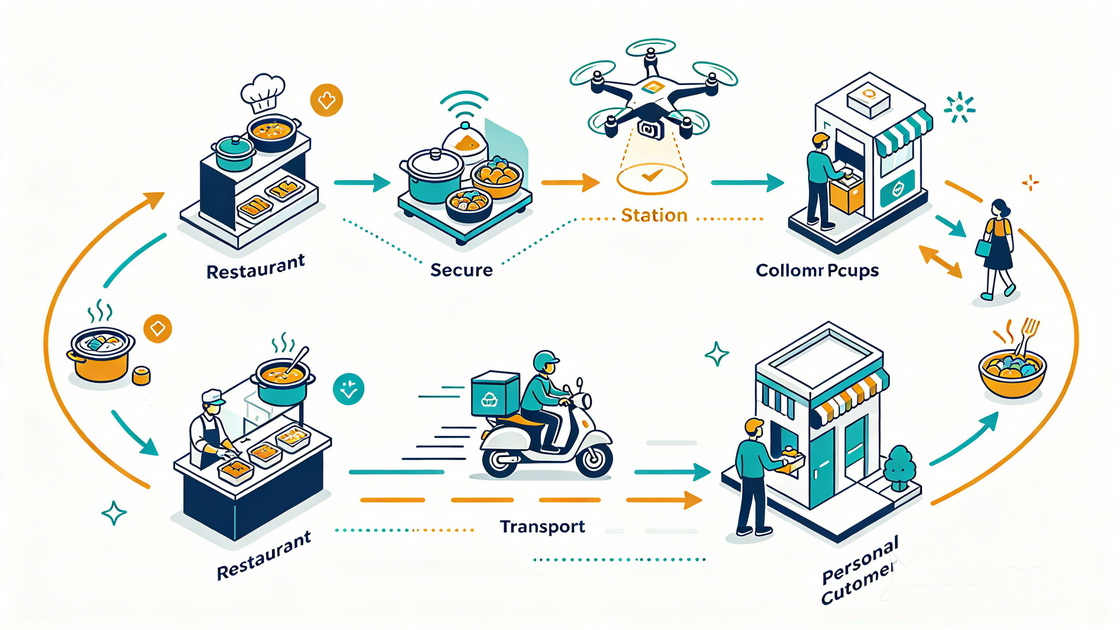
A short flight does not necessarily mean a short wait for dinner.
For a fair comparison, measure:
1. Restaurant preparation time.
2. Waiting time before pickup.
3. Loading or rider collection time.
4. Air or road transport time.
5. Receiving and customer handover time.
Drone delivery introduces loading and receiving steps that must be managed carefully. Motorcycle delivery may lose time in traffic, parking, security checks, or elevators.
From an operations perspective, I would prioritize the 90th-percentile order-to-receipt time: the time within which 90% of orders reach customers. This reveals peak-hour reliability more clearly than an unusually fast demonstration.
Record restaurant preparation separately. Otherwise, a delayed kitchen can make either transport method appear inefficient.
The strongest candidates are routes where road travel is indirect but an approved aerial connection is practical.
Examples include:
- Restaurants serving nearby business parks.
- Campuses with designated collection stations.
- Waterfront destinations separated by lengthy road approaches.
- Parks with limited vehicle access.
- Residential developments with approved receiving infrastructure.
Motorcycles remain attractive when addresses change frequently or customers require building-specific assistance.
A drone's advantage is therefore corridor-specific. It should not be generalized to every urban neighborhood.
Electricity is only one component of drone food delivery economics. A realistic model should account for:
- Aircraft purchase or lease costs.
- Batteries, charging, and maintenance.
- Loading and receiving infrastructure.
- Remote supervision and ground handling.
- Insurance and compliance.
- Communications and dispatch software.
- Failed deliveries and ground fallback.
The useful metric is total operating cost divided by successfully completed orders.
Utilization matters. A network with expensive infrastructure and inconsistent demand may produce a high cost per order, even when individual flights consume relatively little electricity.
Motorcycle delivery costs include rider compensation, fuel or charging, maintenance, insurance, and dispatch support.
However, motorcycles also offer operational flexibility. A rider may handle several nearby orders, carry different package sizes, and resolve an incorrect entrance without requiring a new receiving facility.
Compare both systems over the same service area and hours. Include refunds, damaged meals, redelivery, and weather-related disruption.
Without route-level operating data, a universal claim that drones are cheaper than motorcycles would be premature.
Payload assessment should include the complete packed order—not just the food.
Packaging, insulation, beverage containers, and securing materials all add weight. Package dimensions and balance can also affect eligibility.
A sensible initial menu includes compact orders with predictable packaging. Large pizzas, catering trays, multiple drinks, and irregular bags require separate compatibility checks.
Build an order eligibility matrix covering:
- Packed weight and dimensions.
- Container orientation.
- Leak resistance.
- Temperature requirements.
- Approved loading configuration.
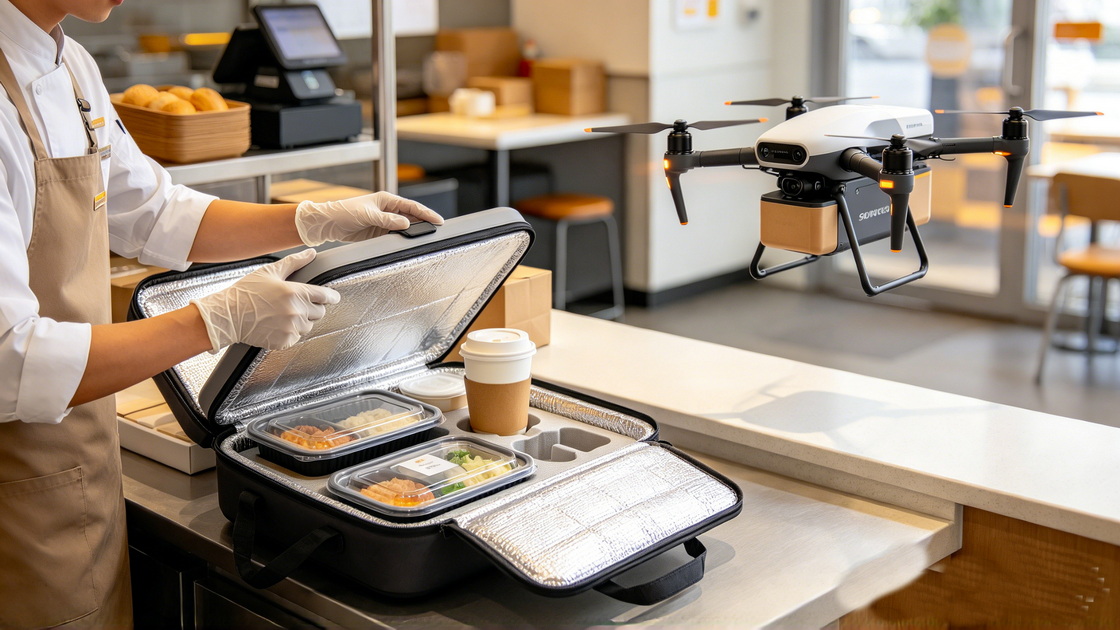
Shorter transit can help preserve food quality, but the complete handling process matters.
A meal may wait at a loading station or receiving locker. Fried food can lose texture in unsuitable packaging. Drinks can spill when seals or cup supports fail.
Motorcycle delivery also faces vibration, braking, and exposure during handling.
Test both methods with the same meals. Measure temperature at packing and receipt, leakage, packaging damage, and customer-rated quality. Use applicable food-safety requirements rather than inventing a universal temperature threshold.
Commercial drone operations must follow the rules of the relevant jurisdiction.
In the United States, the FAA identifies Part 135 certification as the regulatory path for carrying another party's property for compensation beyond visual line of sight. Operators also need the applicable authorizations and must address environmental and local requirements.
Those requirements should not be treated as a template for every country. Projects in China or other markets need jurisdiction-specific assessment.
Likewise, supplier capability does not establish permission to operate a particular delivery route.
Some delivery aircraft support operation in wind and moderate rain. That does not make all drones all-weather systems.
Define aircraft-specific limits for wind, precipitation, visibility, temperature, and battery performance. Then establish a clear decision process:
- Continue within approved limits.
- Pause departures when conditions deteriorate.
- Reassign eligible orders to ground delivery.
- Update customers before delivery promises become unrealistic.
Motorcycles also face weather risks. Ground fallback should never mean sending riders into unsafe conditions.
Motorcycle operations involve road exposure. Drone operations introduce aerial, equipment, and receiving-zone hazards.
Assess each method through documented incidents, near misses, maintenance records, and exposure measures. Avoid calling either system universally safer without comparable evidence.
Keeta Drone's official company page reports more than one million completed deliveries and over 70 routes. It describes applications across offices, residential communities, parks, campuses, and healthcare facilities.
The company also states that its network can complete three-kilometer deliveries in 15 minutes.
These operator-reported figures demonstrate commercial activity beyond isolated trials. They do not establish average peak-hour performance, profitability, or superiority over motorcycles across all destinations.
For planners, the important connection is the combination of aircraft, automated hubs, and an operations platform—not an aircraft operating alone.
Wing describes automated routing, staff loading at pickup stations, centralized oversight, and tether-based package delivery.
This illustrates a practical distinction: automated flight does not eliminate restaurant handling or customer receiving requirements.
Wing's approach also shows why receiving arrangements matter. An outdoor delivery zone may suit one neighborhood, while a staffed or locker-based collection point may suit another.
These examples are external industry references. They are not SIDT deployments, partnerships, or independently verified SIDT performance results.
A useful dispatch framework evaluates five questions:
1. Is the aerial route authorized and currently available?
2. Is the packed order compatible with the aircraft?
3. Are weather and equipment conditions acceptable?
4. Will aerial delivery improve customer receipt time?
5. Can the customer use the designated receiving method?
If an order fails these checks, motorcycle delivery may remain the better choice.
This approach prevents a common planning mistake: maximizing drone utilization even when flying adds handling time or customer inconvenience.
Peak-hour capacity depends on the slowest stage of the system.
Adding aircraft will not solve a restaurant packing queue. More riders will not eliminate a receiving-station bottleneck. A faster route will not compensate for inaccurate meal-ready estimates.
Track:
- Orders awaiting preparation.
- Orders awaiting loading.
- Available aircraft and riders.
- Receiving-point occupancy.
- Completed customer handovers.
These measurements help distinguish transport shortages from workflow problems.
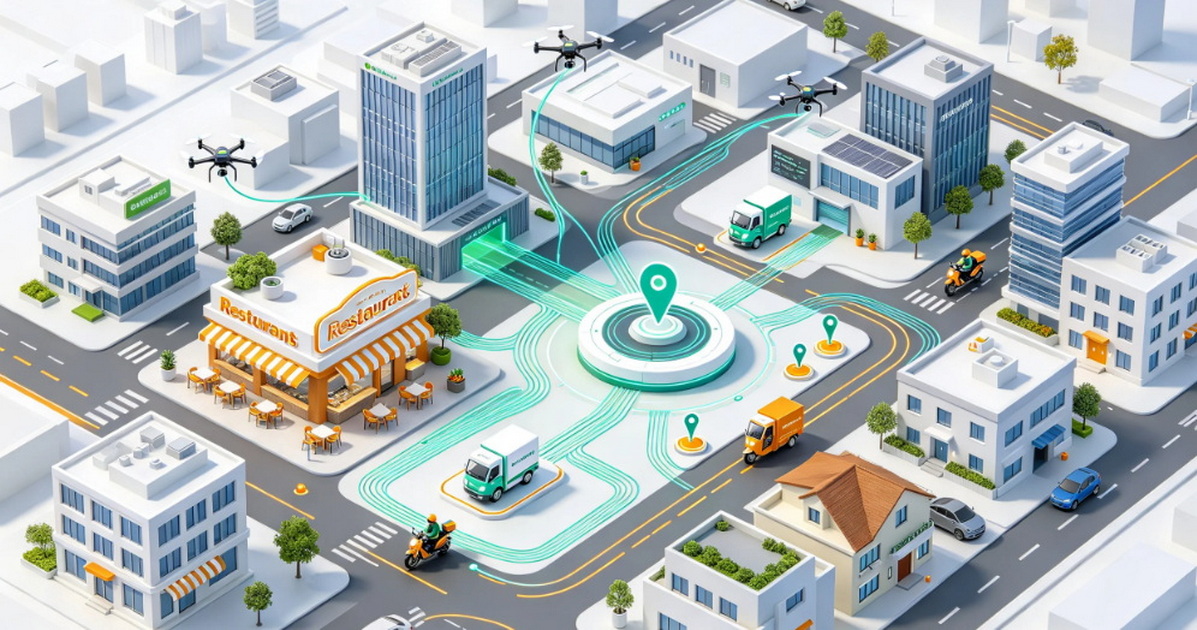
SIDT describes an independently developed intelligent flight platform integrating dynamic perception, precise data collection, and intelligent analysis. Its stated "one-network coverage" approach centers on unified command, dispatch, and management across spaces and nodes.
For food delivery, that positioning suggests a planning model in which aerial and ground resources share operational information.
A proposed workflow could:
- Receive an order and estimated meal-ready time.
- Check route, payload, weather, and receiving eligibility.
- Assign an aircraft or rider.
- Monitor transfer and delivery status.
- Trigger a controlled fallback when necessary.
These are recommended design requirements, not verified features of a deployed SIDT food-delivery network.
SIDT's "urban airspace 3+1 delivery" concept should also be defined in the project scope. Buyers need to understand the participating nodes, responsibilities, and handover processes rather than infer capabilities from the name.
Select one corridor and record several weeks of motorcycle delivery performance. Separate peak and off-peak periods, restaurant preparation, order sizes, and customer handover times.
Validate operating permissions, site access, receiving arrangements, communications, packaging compatibility, and emergency procedures before promising commercial service.
Compare similar meals, destinations, time windows, and weather conditions. Record selection differences so easy drone orders are not unfairly compared with difficult motorcycle orders.
Measure median and 90th-percentile delivery time, completion rate, cost per completed order, food quality, complaints, and fallback frequency.
Document who performs ground handling and how much staff time it requires.
Agree on acceptance criteria before reviewing results. Expansion should depend on service quality and sustainable economics—not flight counts alone.
Retain ground capacity appropriate to demand and weather exposure.
For peak-hour urban orders, the best delivery network is one that assigns each meal to the appropriate mode.
Contact SIDT with a sample of peak-hour orders, restaurant locations, destination clusters, package specifications, and proposed receiving points. Request a corridor feasibility assessment covering permissions, infrastructure, workflow integration, fallback procedures, and measurable pilot criteria.
The objective should be a validated service improvement—not simply a faster flight.
No. Drones can bypass road congestion, but loading queues and receiving steps may offset the flight advantage. Compare order-to-customer receipt time.
Not universally. Delivery depends on the operator's approved system and receiving arrangements. Some services require customers to collect meals from designated points.
They may be competitive on suitable, well-utilized routes. Costs must include infrastructure, supervision, maintenance, ground handling, and unsuccessful deliveries.
Potentially, if the packed order meets aircraft requirements and uses validated packaging. Test leakage, stability, and temperature retention before expanding the menu.
The comparison supports complementary roles rather than universal replacement. Motorcycles remain valuable for flexible destinations, bulky orders, and complex customer handovers.
Start with order-to-receipt time, completion rate, and cost per completed order. Then assess food quality, customer convenience, and fallback performance.
1. Federal Aviation Administration. "Package Delivery by Drone (Part 135)." Updated September 3, 2026. Supports the discussion of United States operator certification, beyond-visual-line-of-sight operations, infrastructure, and local requirements.
2. Federal Aviation Administration. "Unmanned Aircraft System (UAS) or Drone Operations." Explains the regulatory distinction between Part 107 operations and compensated carriage beyond visual line of sight under Part 135.
3. Federal Aviation Administration. "Public Involvement and Environmental Review for Drone Operations." Supports the discussion of environmental review and local approvals.
4. Keeta Drone. "About Us." Official operator source for the reported delivery total, route count, service scenarios, and three-kilometer delivery capability. Figures are self-reported and should not be interpreted as comparative performance guarantees.
5. Wing. "How Wing's Drone Delivery Technology Works." Official operator description of automated routing, pickup-station loading, centralized oversight, weather capability, and tether-based delivery.
6. Shenzhen Intelligent Drone Technology Co. Ltd. Company background supplied for this article. Source for SIDT's stated platform positioning, integrated application focus, and "one-network coverage" concept. No public source page was supplied; no link or independently verified deployment claim is implied.


