Global Distributors Wanted
1.Free Cloud Service Deployment
2.Free Technical Training
3.Exclusive Territory Protection

1.Free Cloud Service Deployment
2.Free Technical Training
3.Exclusive Territory Protection


Views: 209 Author: Aaron Publish Time: 2026-09-13 Origin: Site


Content Menu
● Understanding Drone Delivery Solutions and Conventional Courier Networks
● Drone Delivery Solutions vs Conventional Courier Networks: Key Differences
● Why Delivery Speed Matters in Time-Critical Transport
>> When Drones Can Save Meaningful Time
● Where Drone Delivery Solutions Perform Best
>> Emergency Medical Logistics
>> Industrial Spare Parts Delivery
>> Emergency Response and Public Safety
● Where Conventional Courier Networks Remain Essential
>> High-Volume Delivery Operations
● The Importance of Safety, Reliability, and Operational Control
● The Hybrid Delivery Model: Air, Ground, and Underground Coordination
>> How One-Network Coverage Improves Coordination
● A Practical Decision Framework for Time-Critical Transport
>> 1. Identify the Real Cost of Delay
>> 2. Review Payload Requirements
>> 3. Map the Delivery Environment
>> 4. Start with a Controlled Pilot Project
>> 5. Measure Performance Continuously
● Expert View: The Future Is Not About a Single Aircraft
>> 1. What is the main advantage of drone delivery for time-critical transport?
>> 2. Can drone delivery replace conventional courier networks?
>> 3. What types of items are suitable for drone delivery?
>> 4. What industries can benefit from drone delivery solutions?
>> 5. What are the biggest challenges in drone delivery operations?
>> 6. Why is a hybrid drone-and-ground logistics model important?
>> 7. How can a cloud control platform improve delivery operations?
>> 8.What should an organization evaluate before launching a drone delivery pilot?
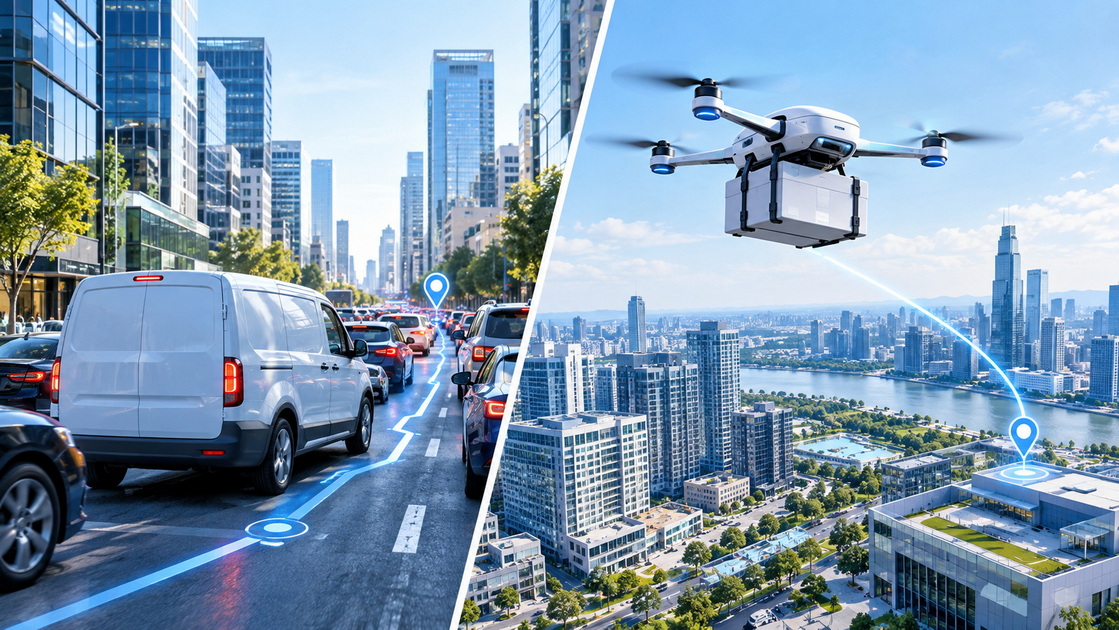
When a delivery is time-critical, every minute can affect service continuity, safety, customer satisfaction, and operating cost. A delayed medical sample can slow clinical decisions. A missing spare part can extend equipment downtime. An emergency supply shipment can be held back by traffic, road closures, or access restrictions.
This is where the debate around drone delivery solutions vs conventional courier networks becomes important.
Drone delivery solutions can move lightweight cargo directly through low-altitude airspace, avoiding many of the road delays that affect conventional transport. Conventional courier networks, however, continue to offer major advantages in payload capacity, weather resilience, route density, and high-volume distribution.
The most practical answer is not to choose one system and discard the other. Instead, organizations should build a coordinated logistics model that matches the transport method to the mission.
For urgent, lightweight, point-to-point deliveries, a drone may be the fastest option. For heavy, bulky, multi-stop, or high-volume shipments, conventional couriers remain essential. For complex urban, industrial, and emergency environments, the strongest approach is often an integrated network that connects aerial, ground, and underground operations through a unified command platform.
A drone delivery solution uses an unmanned aircraft to transport a package, part, document, medical item, or emergency supply from one point to another. The drone may fly from a warehouse, logistics hub, hospital, maintenance center, emergency station, or distribution point to a controlled receiving location.
A conventional courier network uses road-based transport, including motorcycles, cars, vans, trucks, sorting centers, fulfillment hubs, drivers, and route-planning systems. It is designed to manage a wide range of shipment types, delivery volumes, destinations, and customer requirements.
The difference is not simply that one method flies while the other drives. The difference is in the operating model.
Drone delivery is usually designed around:
- Direct point-to-point transport
- Small and lightweight payloads
- High-priority delivery missions
- Pre-planned or dynamically approved routes
- Controlled launch and receiving locations
- Real-time flight monitoring
- Rapid response to urgent demand
Conventional courier networks are usually designed around:
- High-volume parcel distribution
- Multi-stop routes
- Large payload capacity
- Urban, regional, and long-distance coverage
- Warehouse and sorting integration
- Flexible service for different shipment types
- Proof of delivery and reverse logistics
Both models have value. The right choice depends on the shipment, destination, urgency, operating environment, and business objective.
The following table provides a practical comparison for organizations evaluating time-critical transport options.
| Evaluation Area | Drone Delivery Solutions | Conventional Courier Networks |
|---|---|---|
| Transport route | Direct aerial route between defined points | Road-based route through streets, intersections, and traffic |
| Delivery speed | Can be very fast for short-distance urgent deliveries | Can vary significantly based on congestion, parking, and route conditions |
| Payload capacity | Best for lightweight cargo | Suitable for small parcels, bulk shipments, and heavy equipment |
| Route efficiency | Strong for direct point-to-point missions | Strong for multi-stop and high-density delivery routes |
| Weather impact | Can be affected by wind, rain, visibility, and temperature | Generally more adaptable during difficult weather conditions |
| Launch and handoff | Requires secure launch, landing, or collection infrastructure | Can deliver to a broad range of homes, businesses, and facilities |
| Delivery volume | Best for selected urgent shipments | Best for large-scale and routine delivery operations |
| Labor requirements | Can reduce travel-related labor in mature operations | Requires drivers, dispatchers, and delivery personnel |
| Infrastructure | Requires aircraft, charging systems, communications, flight controls, and receiving points | Requires vehicles, drivers, depots, road access, and sorting systems |
| Best use case | Urgent, lightweight, direct transport | Routine, high-volume, heavy, and multi-stop logistics |
The comparison makes one point clear: drones and couriers solve different logistics problems.
A drone is not an ideal replacement for a fully loaded delivery van. A van is not always the best solution for a lightweight urgent item that must cross a congested city in the shortest possible time.
Speed is often discussed as the main benefit of drone delivery. However, speed should be measured across the full journey, not just during the flight.
A delivery may include:
1. Order confirmation
2. Item picking
3. Packaging
4. Dispatch approval
5. Loading
6. Route planning
7. Transport
8. Arrival confirmation
9. Handover to the recipient
10. Delivery record completion
A drone may travel faster than a road vehicle between two points, but the overall delivery process must still be efficient. If loading takes too long, if the flight path is restricted, or if the receiving point is not prepared, the advantage can be reduced.
For this reason, effective time-critical drone logistics requires more than a fast aircraft. It needs a coordinated operational workflow.
Drone delivery solutions are especially useful when road travel is delayed by:
- Peak-hour traffic congestion
- Road construction
- Accidents
- Flooding
- Road closures
- Restricted-access areas
- Large industrial sites
- Long internal travel distances
- Limited parking near the destination
- Emergency conditions
A drone can move directly over many road obstacles. This can make a major difference when the shipment is small, urgent, and destined for a known location.
For example, a maintenance team at a power facility may need a replacement sensor module immediately. The component itself may be lightweight, but the cost of equipment downtime can be high. Instead of waiting for a courier vehicle to travel through traffic, a drone can deliver the part directly to a secure collection point near the repair team.
In this scenario, the drone does not replace the complete logistics system. Inventory still needs to be stored, picked, packaged, and tracked. But the drone can shorten the most unpredictable stage of the process: the road journey.
Drone delivery solutions are most effective when the delivery mission has a high urgency level and a relatively small payload.
Healthcare organizations often need fast and reliable delivery of essential items. These may include medical samples, urgent medicines, personal protective equipment, laboratory supplies, diagnostic components, emergency communication devices, or small equipment parts.
In time-sensitive healthcare operations, reducing transport delays can support faster coordination between laboratories, clinics, hospitals, and emergency teams.
A drone delivery system may be particularly useful when a medical facility is located in an area with severe traffic congestion or difficult road access. The aircraft can move directly from a distribution point to a designated medical receiving station, reducing dependence on local road conditions.
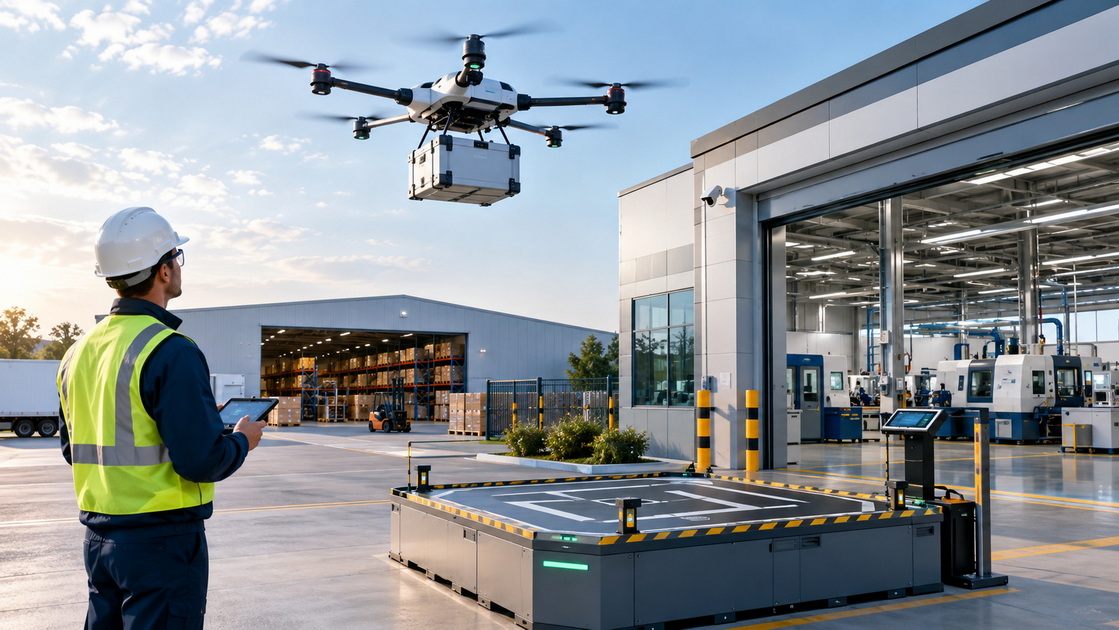
Factories, warehouses, ports, energy facilities, construction sites, and infrastructure projects often rely on thousands of small components. A delay involving one sensor, controller, cable, battery, valve, or electronic module can interrupt an entire process.
Drone delivery can support:
- Urgent equipment maintenance
- Production-line repairs
- Remote-site spare-part transport
- Warehouse-to-facility distribution
- Inspection equipment delivery
- Tool transport for field personnel
- Safety supply replenishment
The value comes from reducing downtime. In many industrial environments, the financial loss caused by delayed maintenance is much greater than the cost of moving a lightweight part by air.
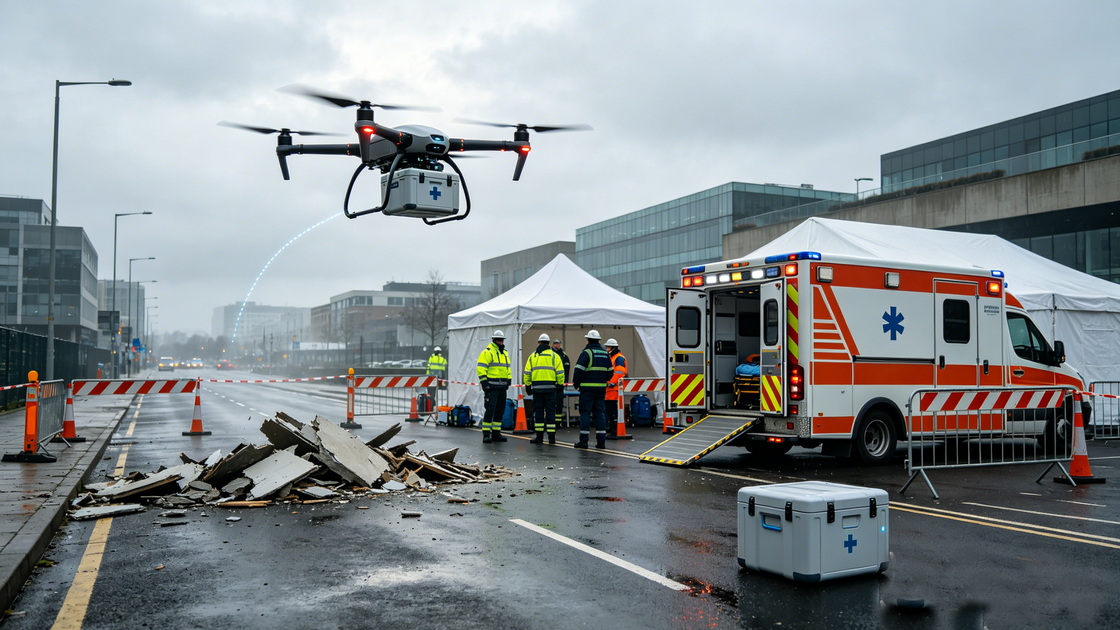
Emergency-response teams often operate in complex and fast-changing environments. Roads may be blocked, damaged, congested, or unsafe. A drone delivery system can support the rapid movement of small emergency supplies, communications devices, medical kits, sensors, and situational-awareness equipment.
Potential use cases include:
- Flood response
- Fire response
- Search-and-rescue operations
- Disaster-area supply delivery
- Public safety support
- Temporary communication equipment deployment
- Critical document delivery
- Remote-area emergency logistics
For these missions, speed is important, but visibility is also important. A connected platform that combines delivery operations with real-time sensing and intelligent analysis can help teams make more informed decisions.
Urban delivery is one of the most discussed drone applications. Large cities often face congestion, limited parking, high driver costs, and increasing demand for rapid delivery.
However, not every urban parcel should be delivered by drone.
Drone delivery works best in cities when there are:
- Clearly defined routes
- Controlled launch points
- Secure landing or collection areas
- Suitable low-altitude flight paths
- Reliable communications coverage
- High demand for urgent lightweight items
- Strong coordination between aerial and ground teams
This makes drones more suitable for selected delivery missions than for every routine parcel.
Conventional courier networks have major strengths that drones cannot easily match.
A delivery van can carry dozens or hundreds of packages in one route. A truck can transport large, bulky, heavy, fragile, refrigerated, or specialized items. A courier can also complete customer handovers, collect signatures, manage returns, and solve unexpected delivery problems in real time.
Conventional courier networks are highly effective when many packages need to be delivered across the same area. A driver can complete multiple stops during one route, making the operation more efficient than sending one drone per individual package.
This is especially important for:
- E-commerce delivery
- Retail distribution
- Grocery delivery
- Office supply delivery
- Business-to-business parcel transport
- Residential delivery routes
- Same-day local delivery
- Multi-parcel customer orders
Drone delivery is generally better for selected urgent shipments. Conventional courier systems are better for large-scale daily distribution.
Payload capacity remains one of the biggest differences between drones and road-based logistics.
Conventional courier vehicles are more suitable for:
- Machinery parts
- Large tools
- Palletized goods
- Furniture
- Heavy equipment
- Refrigerated products
- Multiple package shipments
- Fragile products requiring careful handling
- Specialized cargo requiring manual loading and unloading
A drone may transport a critical sensor module quickly. It is unlikely to replace a truck carrying industrial equipment, large quantities of inventory, or heavy construction materials.
Conventional couriers can reach many types of delivery destinations, including:
- Apartment buildings
- Offices
- Retail stores
- Factories
- Residential homes
- Warehouses
- Construction sites
- Hotels
- Schools
- Remote communities with road access
Drones require suitable receiving conditions. A safe handoff may need a delivery pad, protected collection box, rooftop landing zone, approved yard space, or designated collection station.
This means road-based delivery remains more flexible in locations where drone landing or package retrieval is difficult.
The success of a drone delivery operation depends on its ability to perform consistently under real-world conditions.
A drone must operate within approved flight conditions. It must communicate reliably with the control system. It must avoid hazards. It must manage battery levels. It must protect the payload. It must respond safely if weather changes, communications are interrupted, or the destination becomes unavailable.
Reliable operations require several connected capabilities:
- Intelligent flight planning
- Real-time aircraft monitoring
- Weather awareness
- Dynamic route management
- Geofencing
- Secure data transmission
- Emergency response procedures
- Flight records
- Battery and maintenance management
- Delivery confirmation
- Risk assessment
- Fleet coordination
For time-critical transport, reliability is often more important than peak speed.
A delivery system that is extremely fast on a clear day but frequently cancels operations may not be suitable for critical missions. A strong system must provide predictable performance, clear operating limits, and backup options.
This is why drone delivery should be integrated with ground logistics rather than treated as an isolated tool.
The future of time-critical logistics is likely to be built around hybrid delivery networks.

A hybrid network combines drones, ground vehicles, intelligent sensing equipment, cloud-based command systems, and human operational teams. Each part of the network handles the tasks it performs best.
For example:
- A conventional truck transports bulk inventory to a local hub.
- A ground vehicle moves heavy supplies within an industrial zone.
- A drone delivers a critical lightweight part to a remote maintenance point.
- An underground inspection platform checks tunnel or pipeline conditions.
- A cloud control system provides real-time status across all assets.
- An emergency-response team receives location data, live updates, and delivery confirmation.
This approach creates greater flexibility. It also helps organizations maintain operational continuity when one transport method is delayed or unavailable.
SIDT's "one-network coverage" concept is designed around the integration of low-altitude, ground, and underground operations.
Instead of operating separate systems for drones, ground assets, inspection equipment, and emergency-response teams, organizations can connect them through a unified intelligent cloud platform.
This type of platform can support:
- One-stop command and dispatch
- Multi-node equipment management
- Live operational monitoring
- Dynamic perception and data collection
- Intelligent analysis
- Delivery-task coordination
- Emergency-response collaboration
- Cross-environment resource allocation
- Historical mission records
- Operational performance evaluation
The result is not simply a drone delivery system. It is a connected operational network.
For urban airspace delivery, this can improve the coordination of multiple drones, routes, delivery points, ground vehicles, and emergency resources. For industrial operations, it can connect inspection tasks, maintenance delivery, safety monitoring, and response teams. For underground environments, it can help extend operational visibility beyond traditional road-based logistics.
Organizations should evaluate drone delivery and conventional courier networks based on mission needs rather than technology trends.
The first question is not, "Can a drone carry this item?"
The first question is, "What happens if this item arrives late?"
A delayed shipment may cause:
- Equipment downtime
- Lost production
- Emergency-response delays
- Missed service targets
- Customer dissatisfaction
- Safety risks
- Inventory disruption
- Higher labor costs
- Penalty charges
- Operational uncertainty
If the cost of delay is high and the shipment is lightweight, drone delivery may create strong value.
Evaluate the item carefully.
Consider:
- Weight
- Dimensions
- Packaging
- Fragility
- Temperature requirements
- Hazard level
- Security needs
- Delivery frequency
- Return requirements
A drone delivery project should begin with a small group of suitable payload types. Trying to support every type of shipment at the start can create unnecessary complexity.
Study the complete route.
This includes:
- Traffic conditions
- Distance
- Building density
- Destination access
- Weather patterns
- Communications coverage
- Launch locations
- Receiving locations
- Industrial hazards
- Public safety considerations
- Alternative ground routes
A short road distance may still take a long time during peak traffic. A longer route may be easy if the road is clear. Decisions should be based on real operating data.
A pilot program should focus on one clearly defined use case.
A strong pilot could include:
- One delivery corridor
- One or two payload types
- Defined operating hours
- Approved launch and receiving sites
- Clear safety procedures
- A backup courier option
- Measurable performance indicators
- Structured feedback from users
The goal is to understand what works in real conditions before expanding.
Useful performance indicators include:
- Average delivery time
- On-time delivery rate
- Mission completion rate
- Delivery failure rate
- Weather-related cancellation rate
- Cost per successful delivery
- Manual intervention frequency
- Payload utilization
- Equipment downtime avoided
- Customer satisfaction
- Emergency-response readiness
These indicators help organizations decide whether drone delivery creates measurable operational value.
The drone delivery market will not be defined only by aircraft design. It will be defined by the quality of the wider operating system.
The organizations that succeed will be those that connect technology, people, data, safety procedures, and logistics workflows into one coordinated network.
A strong time-critical transport solution should include:
- Reliable aircraft platforms
- Intelligent flight control
- Real-time sensing
- Secure communications
- Dynamic route planning
- Cloud-based command
- Ground logistics integration
- Fleet maintenance management
- Emergency-response coordination
- Data-driven decision-making
This is particularly important in complex environments. A city may have congested roads, high-rise buildings, delivery demand, public-safety requirements, and restricted airspace. An industrial site may include warehouses, production lines, maintenance teams, underground areas, and sensitive equipment.
A disconnected delivery system can create blind spots. A connected system can improve visibility, response speed, and resource coordination.
Drone delivery solutions and conventional courier networks should be viewed as complementary transport methods.
Drone delivery is most valuable for lightweight, urgent, direct, and controlled missions. It can help organizations reduce dependence on road traffic and improve response times for medical logistics, industrial spare parts, emergency supplies, and selected urban deliveries.
Conventional courier networks remain indispensable for heavy cargo, large delivery volumes, multi-stop routes, all-weather coverage, and flexible customer access.
The most effective model is a hybrid logistics network. In this model, ground transport manages scale, inventory movement, and complex shipments, while drones handle high-priority transport where speed and direct access matter most.
SIDT's integrated approach to low-altitude, ground, and underground applications provides a practical foundation for this type of network. Through intelligent flight platforms, dynamic perception, data collection, intelligent analysis, and unified cloud command, organizations can improve coordination across multiple delivery and response scenarios.
For businesses, public-service organizations, industrial operators, and emergency teams, the next step is to identify the delivery missions where delay creates the greatest cost or risk. Then, build the right mix of aerial and ground capabilities to deliver faster, safer, and more intelligently.
The main advantage is the ability to move lightweight cargo directly through low-altitude airspace, reducing exposure to road congestion, parking delays, road closures, and access restrictions.
No. Drone delivery is best used as a complementary solution. Conventional courier networks remain more suitable for heavy cargo, high-volume delivery, multi-stop routes, complex handovers, and locations without suitable drone receiving infrastructure.
Suitable items often include medical samples, urgent medicines, small spare parts, sensors, electronic components, documents, emergency supplies, communication devices, tools, and lightweight inspection equipment.
Industries that can benefit include healthcare, emergency response, manufacturing, energy, utilities, warehousing, logistics, construction, public safety, infrastructure management, and smart-city operations.
Common challenges include weather conditions, payload limits, route planning, flight safety, communications coverage, secure delivery handoff, infrastructure setup, equipment maintenance, public acceptance, and coordination with existing logistics processes.
A hybrid model allows each transport method to perform the role it handles best. Drones can support urgent point-to-point deliveries, while ground vehicles manage bulk cargo, high-volume distribution, and complex delivery requirements.
A cloud control platform can connect drones, ground vehicles, sensing equipment, operators, dispatch centers, and emergency teams. It can support real-time monitoring, intelligent dispatch, task coordination, flight management, data analysis, and resource allocation across different environments.
Organizations should evaluate delivery urgency, payload size, route conditions, destination access, weather patterns, communications coverage, safety procedures, equipment requirements, operational cost, and measurable performance targets.
1. Federal Aviation Administration.
2. Federal Aviation Administration.
3. Federal Aviation Administration.
4. European Union Aviation Safety Agency.
5. McKinsey & Company.


