Global Distributors Wanted
1.Free Cloud Service Deployment
2.Free Technical Training
3.Exclusive Territory Protection

1.Free Cloud Service Deployment
2.Free Technical Training
3.Exclusive Territory Protection


Views: 211 Author: Aaron Publish Time: 2026-10-04 Origin: Site


Content Menu
● What Is Walmart Drone Delivery in Metro Atlanta?
● How Wing Drone Delivery Works for Customers
>> 1. Check Delivery Availability
>> 3. Confirm a Safe Delivery Point
>> 4. Drone Dispatch and Flight
>> 5. Contactless Package Drop
● How to Prepare for a Successful Drone Delivery
>> Choose an Open Outdoor Area
>> Monitor Order Notifications
● Why Drone Delivery Matters for Modern Retail
● The Difference Between Flight Time and Delivery Time
● The Operational System Behind Drone Delivery
● Why Unified Cloud Control Is Essential
● What One-Network Coverage Means in Practice
● Safety, Privacy, and Community Trust
>> Safety
>> Privacy
>> Noise
● The Real Challenge: Coordinating Operations at Scale
● What Retailers, Cities, and Operators Can Learn
● The Future of Intelligent Low-Altitude Operations
>> 1. Is Walmart drone delivery available everywhere in Atlanta?
>> 2. How fast is Walmart drone delivery in Metro Atlanta?
>> 3. What products can customers order through drone delivery?
>> 4. Can drones deliver during rain or strong wind?
>> 5. Where should a customer receive a drone-delivered package?
>> 6. What is one-network coverage?
>> 7. Why is cloud-based drone management important?
Walmart drone delivery in Metro Atlanta is more than a convenient way to receive groceries, household products, or urgent everyday items. It is a practical example of how low-altitude drone logistics is moving from limited pilot projects toward repeatable, customer-ready delivery networks.
Wing and Walmart launched their Metro Atlanta drone delivery service in December 2025. The initial service area included eligible customers near six Walmart Supercenter locations in Woodstock, Conyers, Dallas, Hiram, McDonough, and Loganville.
The service enables qualified customers to order selected products through the Wing app. A drone then transports the package from a participating Walmart store to a designated outdoor delivery location at the customer's home.
For consumers, the value is clear. A forgotten grocery item, over-the-counter medicine, pet supply, baby product, or small household essential may arrive without a drive to the store or a long wait for a traditional delivery route.
For the drone industry, the launch has a much larger meaning. It combines autonomous aircraft, real-time sensing, retail inventory systems, digital dispatch, cloud control, customer location verification, safety management, and low-altitude route planning in one operating model.
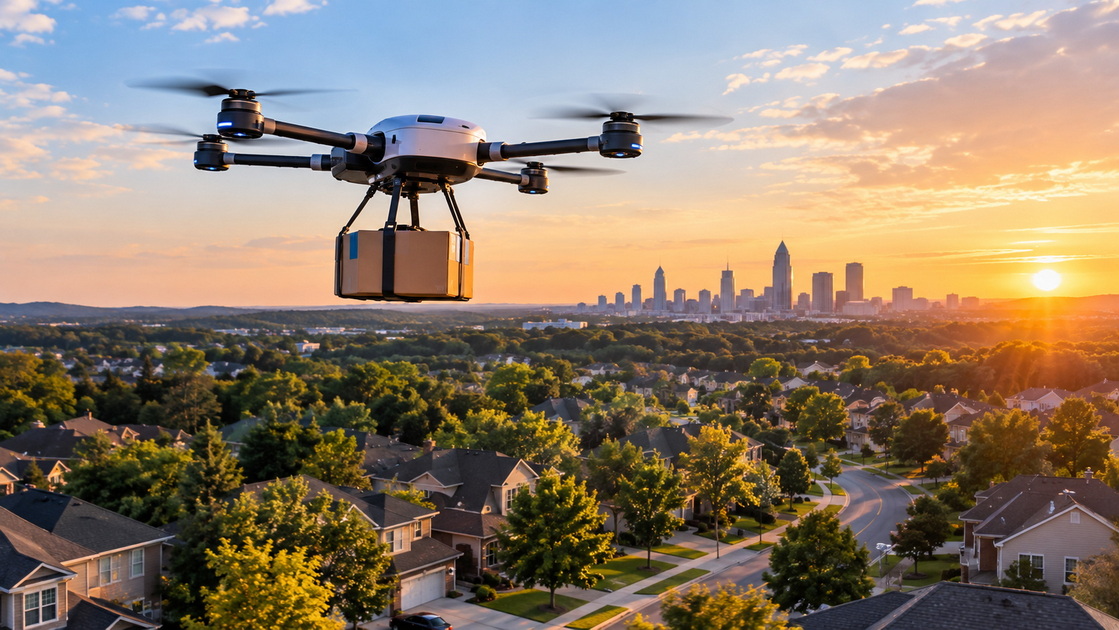
Walmart drone delivery in Metro Atlanta is an on-demand retail delivery service operated through the partnership between Walmart and Wing. It is designed for smaller, eligible orders that can be transported by drone from participating Walmart locations to qualified residential delivery areas.
The service initially launched around the following Walmart Supercenter locations:
| Service Area | Store Location |
|---|---|
| Woodstock | Walmart Supercenter #575, 12182 GA-92 |
| Conyers | Walmart Supercenter #2475, 1436 Dogwood Dr SE |
| Dallas | Walmart Supercenter #3403, 3615 Charles Hardy Pkwy |
| Hiram | Walmart Supercenter #618, 4166 Jimmy Lee Smith Pkwy |
| McDonough | Walmart Supercenter #3201, 135 Willow Ln |
| Loganville | Walmart Supercenter #5252, 4221 Atlanta Hwy |
Customers can choose from a range of eligible products, including selected grocery items, household goods, small gifts, health-related essentials, and over-the-counter medicine.
However, not every product can be delivered by drone. Eligibility depends on several factors:
- Package size and weight
- Store inventory availability
- Delivery address qualification
- Weather and operational conditions
- Safe package-drop requirements
- Airspace and route availability
It is also important to understand that "Metro Atlanta" does not mean universal coverage across every community, apartment complex, or urban neighborhood. Drone delivery operates inside defined service zones around specific stores.
A suburban home with a clear yard may qualify for service, while a dense residential block, high-rise building, heavily wooded property, or address outside the operational range may not.
The customer experience is designed to be simple, even though the technology operating behind the service is highly advanced.
A typical drone delivery order follows a clear process.

The customer enters an address in the Wing app or through an approved ordering channel. The system determines whether the address is inside an active drone delivery zone.
Coverage depends on the distance from a participating Walmart store, local operational boundaries, flight-route availability, and the safety of the delivery environment.
Customers browse a product selection based on what is available for drone delivery at that location.
The service is best suited for smaller orders and urgent everyday needs. For example, a customer may order ingredients for a missing dinner item, cold medicine, pet treats, snacks, batteries, baby supplies, or basic household products.
A larger order, a heavy product, or an item requiring special handling may still need conventional delivery, curbside pickup, or in-store collection.
The customer identifies a suitable outdoor location for the package drop.
The delivery area should be open, visible, and clear of overhead obstacles. A drone cannot safely lower a package through dense tree branches, under a roof structure, or near power lines.
Once the order is prepared and loaded, the drone departs from the Walmart location.
The aircraft follows a planned route and flies at a low operating altitude. Wing has stated that its drones can travel at approximately 60 mph and that average flight times may be five minutes or less after takeoff.
Actual total delivery time can be longer because the full process also includes order confirmation, product picking, packing, loading, scheduling, pre-flight checks, and operational monitoring.
When the drone arrives above the approved delivery point, it hovers and lowers the package to the ground by cable.
The customer does not need to meet a driver, sign for a package in person, or leave home. This makes the service particularly useful for small, time-sensitive needs.
A successful drone delivery depends on both the technology and the customer's delivery environment.
Before placing an order, customers should prepare a safe and practical drop zone.
A lawn, driveway, backyard clearing, or open paved area may be suitable if it is free from obstacles.
The drone needs enough clear space to hover safely above the delivery point and lower the package without interference.
Before the drone arrives, keep people, pets, vehicles, bicycles, toys, outdoor furniture, and temporary equipment away from the drop zone.
Children and pets should remain indoors or at a safe distance until the delivery has been completed.
Customers should avoid selecting locations near:
- Trees with dense branches
- Utility poles
- Power lines
- Roof overhangs
- Awnings
- Basketball hoops
- Clotheslines
- Large patio umbrellas
- Construction equipment
Customers should keep app notifications active. Real-time notifications can help them follow the order status and understand whether weather, operational restrictions, or other factors have affected the delivery.
Drone flights may be delayed, adjusted, or unavailable during poor weather conditions. Rain, strong wind, low visibility, thunderstorms, and other conditions may affect whether a flight can proceed safely.
Drone delivery is not only about speed. It represents a different approach to local fulfillment.
Traditional delivery systems usually depend on a driver completing many deliveries along a route. That model works well for large batches of orders, but it may not always be ideal for one small, urgent item.
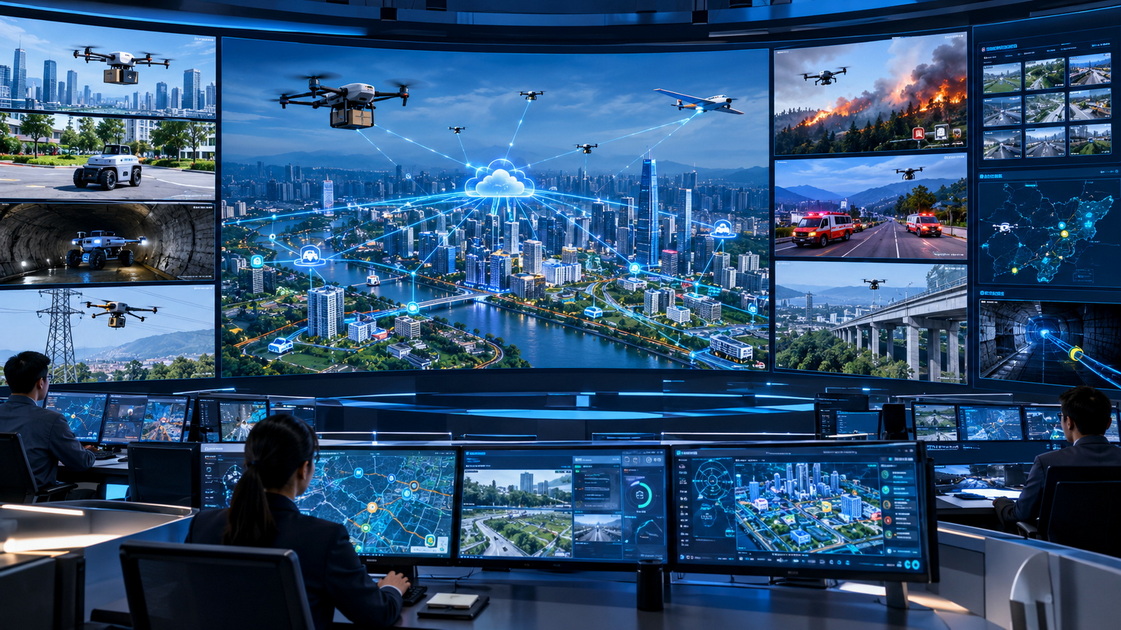
Drone delivery creates a direct connection between a local store and an eligible customer location.
For many households, the value may come from solving a specific short-notice problem:
- A missing ingredient for dinner
- A child's fever medicine
- Diapers or baby wipes
- Pet food or pet supplies
- Phone chargers or batteries
- Cold and allergy medicine
- Snacks for a gathering
- Basic cleaning products
- Personal-care essentials
This type of service can reduce the time and effort required for short, low-volume shopping trips.
It can also help retailers use existing store locations as local fulfillment points. Instead of relying only on large warehouses far from customers, participating stores can become small, connected logistics nodes.
This model is especially relevant in suburban areas, where stores may be close to residential neighborhoods and where customers often need fast access to everyday products.
One of the most important details for customers is the difference between drone flight time and total order time.
A drone may travel from a store to a customer's property in only a few minutes. However, the complete order process includes many additional steps.
| Delivery Stage | What Happens |
|---|---|
| Order placement | Customer selects products and confirms delivery details |
| Inventory confirmation | The system checks product availability |
| Picking and packing | Store staff prepare the order |
| Drone loading | The package is secured for aerial transport |
| Flight preparation | The system checks operational conditions |
| Dispatch | The drone is scheduled and released |
| Flight | The aircraft travels to the customer location |
| Package drop | The order is lowered to the designated point |
This means a five-minute flight does not necessarily equal a five-minute total delivery experience.
The most accurate customer expectation is that drone delivery can significantly shorten the transportation portion of a small order, particularly when the customer is close to a participating store and conditions are favorable.
A drone delivery service may look simple from the customer's perspective. A small aircraft takes off, flies to a home, lowers a package, and returns.
In reality, each successful delivery depends on an interconnected operating system.
The drone itself is only one component. A scalable network also requires intelligent route planning, real-time monitoring, communications infrastructure, operational decision-making, location verification, and data analysis.
The core elements include:
- Autonomous drone aircraft
- Payload and package-handling systems
- Real-time environment perception
- Flight-path planning
- Geofencing and digital operational boundaries
- Weather monitoring
- Store inventory integration
- Customer address validation
- Cloud-based command and dispatch
- Fleet monitoring
- Safety alerts and exception management
- Data collection and operational analysis
A delivery drone must be able to respond to changing conditions. These conditions can include weather, local obstacles, communication changes, customer drop-zone issues, route restrictions, and technical alerts.
The ability to coordinate these different inputs in real time determines whether a drone network can operate safely and efficiently.
The future of drone operations will not be built around one drone completing one flight. It will be built around networks of connected devices, missions, operators, and data systems.
Shenzhen Intelligent Drone Technology Co., Ltd. focuses on the deep integration and innovation of drone technology. The company develops comprehensive, full-stack application solutions covering low-altitude, ground, and underground environments.
Its intelligent flight platform combines dynamic perception, precise data collection, intelligent analysis, cloud-based dispatch, and unified operational management.
This approach supports applications such as:
- Intelligent inspection
- Underground space detection
- Urban airspace 3+1 delivery
- Emergency response
- Ground-air collaboration
- Multi-node equipment management
- Infrastructure monitoring
- Urban operational coordination
SIDT defines this capability as "one-network coverage."
Instead of managing delivery drones, inspection drones, ground robots, underground sensors, and emergency equipment as separate systems, one-network coverage connects these resources through a unified intelligent cloud-control platform.
This enables a central command system to coordinate equipment across different spaces and mission types.
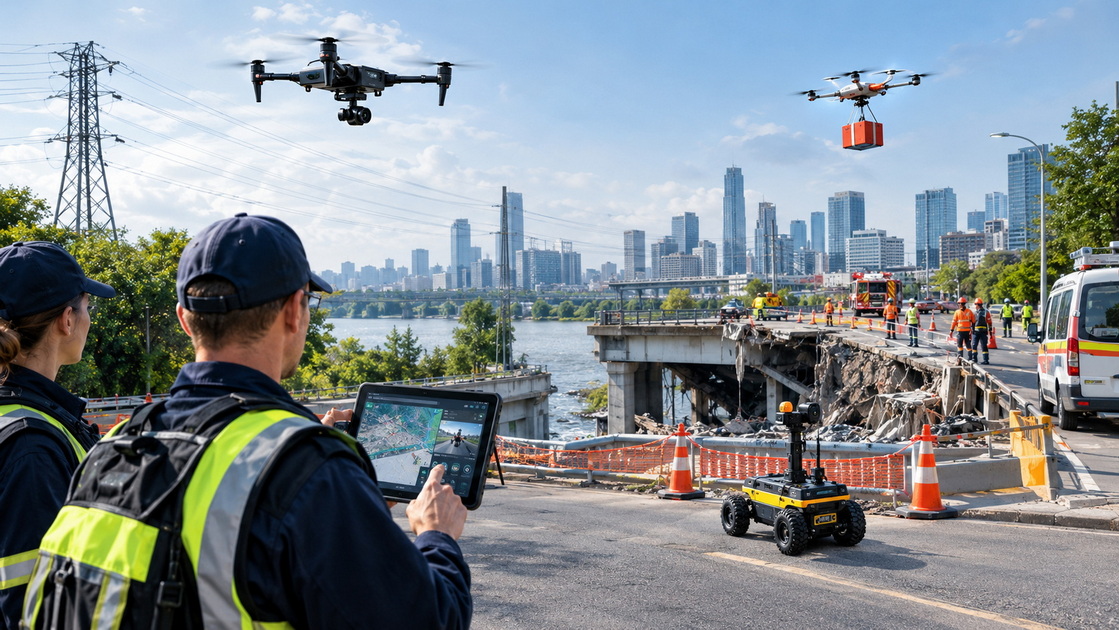
One-network coverage is particularly valuable in complex urban environments.
A modern city may need to manage many different tasks at the same time:
- Aerial inspection of power lines or bridges
- Drone delivery of small urgent supplies
- Underground inspection of tunnels or utility corridors
- Ground-robot patrols in restricted environments
- Emergency-response coordination after an incident
- Real-time data collection from multiple locations
- Dispatch of personnel and equipment across a large service area
When these functions operate independently, decision-makers may face fragmented data, delayed communication, duplicated effort, and slow response times.
A unified platform improves coordination by bringing multiple systems into one operational view.
| Operational Challenge | Unified Platform Capability |
|---|---|
| Multiple devices in different locations | Centralized monitoring and status visibility |
| Different mission types | Coordinated scheduling and task allocation |
| Rapidly changing conditions | Real-time alerts and dynamic decision support |
| Complex emergency scenarios | Ground-air collaborative dispatch |
| Disconnected data sources | Integrated data collection and intelligent analysis |
| Multi-site management | One-stop command, dispatch, and equipment control |
For drone delivery, this means that operators can monitor aircraft status, route progress, delivery completion, operational exceptions, and fleet availability through a unified management system.
For emergency response, the same platform can support rapid aerial assessment, ground coordination, underground-space detection, and communication between multiple agencies or teams.
The success of drone delivery depends on more than aircraft performance. Communities need to understand how the service operates, how safety is managed, and how data is handled.
Three issues are especially important.
Commercial drone delivery requires careful management of flight operations, maintenance, routes, communications, emergency procedures, and operational boundaries.
The goal is not simply to complete a flight. The goal is to complete every flight predictably, safely, and with a clear response process for unexpected conditions.
Safety depends on several connected factors:
- Aircraft reliability
- Maintenance procedures
- Real-time operational monitoring
- Clear flight boundaries
- Obstacle awareness
- Weather assessment
- Emergency response planning
- Trained operational personnel
- Secure communications systems
Customers and communities may reasonably ask what data a drone collects during flight.
Responsible operators should provide clear information about the use of cameras, sensors, operational data, and location information. They should minimize unnecessary data collection and apply strong data-governance practices.
Privacy should be considered during system design, not added only after a service has launched.
Noise is another major concern, especially in residential communities.
Drone operators must consider flight frequency, route planning, aircraft design, operating hours, local land use, and community feedback.
A delivery network that is technically capable but disruptive to residents will face long-term challenges. Sustainable operations require a balance between convenience, safety, efficiency, and quality of life.
A single drone delivery demonstrates that an aircraft can transport a package. It does not prove that a city can support thousands of safe, efficient, and predictable drone flights every day.
The real challenge is operational coordination.
Large-scale drone networks must solve several connected problems at the same time.
Drones need to operate safely in low-altitude environments that may include other aircraft, buildings, trees, utility infrastructure, temporary obstacles, and changing weather conditions.
The system must continuously understand its operating environment. It needs to identify changing conditions and make safe decisions quickly.
As the number of drones grows, operators must manage multiple aircraft, multiple missions, multiple launch sites, and multiple delivery zones without creating congestion or operational conflicts.
Dispatch teams need one clear operational picture. They need to see aircraft locations, mission progress, battery status, weather conditions, exception alerts, maintenance needs, and emergency-response workflows.
Technology adoption depends on trust. People need confidence that drone operations are safe, respectful of privacy, responsive to concerns, and genuinely useful.
This is why integrated command platforms are so important. They connect devices, missions, data, and decision-makers into one coordinated system.
The Metro Atlanta launch provides useful lessons for organizations exploring drone-enabled services.
The first lesson is to begin with a clear use case. Drone delivery is most valuable when it solves a real problem, such as urgent access to small essential products.
The second lesson is to establish realistic operating boundaries. It is better to serve a defined area reliably than to make broad claims that cannot be supported by safe, consistent operations.
The third lesson is to build the operational system before scaling the aircraft fleet. A strong cloud-control platform, reliable data architecture, real-time perception, safety management system, and multi-node dispatch capability are essential foundations.
The fourth lesson is to communicate clearly with customers and communities. People need practical information about eligibility, delivery zones, weather limitations, noise, privacy, and how to prepare a safe drop location.
The fifth lesson is to design for cross-domain collaboration. The same intelligent platform that supports retail delivery can also support infrastructure inspection, emergency response, underground detection, public-safety coordination, and urban-management operations.
Walmart and Wing's Metro Atlanta drone delivery service shows that low-altitude logistics is becoming a practical part of modern retail.
The future opportunity extends far beyond package delivery.
As cities become more connected, intelligent drone platforms will support a wider range of tasks across air, ground, and underground environments. Delivery drones may operate alongside inspection systems, emergency-response equipment, ground robots, intelligent sensors, and centralized command centers.
The most valuable solutions will not be isolated devices. They will be integrated networks capable of collecting data, understanding changing conditions, coordinating multiple assets, and supporting faster, safer decisions.
SIDT's one-network coverage model is designed for this future. By connecting intelligent flight platforms, dynamic perception, precise data collection, intelligent analysis, and unified cloud control, it supports more efficient collaboration across complex operational environments.
The next generation of low-altitude operations will be defined by connectivity, coordination, reliability, and meaningful real-world value.
No. Walmart drone delivery is available only at eligible addresses within active service areas near participating Walmart locations. Metro Atlanta coverage does not mean every home, apartment building, business district, or high-rise address is included.
Wing has stated that its drones can travel at approximately 60 mph and that average flight times may be five minutes or less after takeoff. Total delivery time can be longer because it includes order processing, product picking, loading, flight preparation, and dispatch.
Eligible products may include selected grocery items, household products, small gifts, health-related essentials, over-the-counter medicine, pet supplies, snacks, and personal-care items. Product availability depends on store inventory, size, weight, and operational requirements.
Drone availability can change based on weather and operating conditions. Rain, strong wind, poor visibility, thunderstorms, and other environmental factors may delay or prevent a delivery flight.
Customers should choose an open and clear outdoor area, such as a lawn, driveway, or suitable yard space. The location should be away from trees, power lines, roof structures, pets, people, vehicles, and other obstacles.
One-network coverage is a unified operational model that connects drones, ground equipment, underground sensors, command centers, and digital management tools through one cloud-control platform. It enables coordinated command, dispatch, monitoring, and analysis across multiple environments.
Cloud-based management provides centralized visibility across aircraft, missions, data, alerts, routes, equipment status, and operational conditions. It helps organizations coordinate multiple devices and locations more efficiently, especially in complex logistics, inspection, and emergency-response scenarios.
1. Wing. "Wing and Walmart Launch Metro Atlanta's First Drone Delivery Service in Time for the Holidays." Published December 3, 2025.
2. Federal Aviation Administration. "Package Delivery by Drone (Part 135)." Information on UAS package-delivery certification, airspace operations, environmental review, and beyond-visual-line-of-sight requirements.
3. Walmart Corporate. "Walmart Takes Flight With Drone Delivery Expansion to 5 New Cities, Redefining Fast, Flexible Retail." Published June 5, 2025.
4. Federal Aviation Administration. "Unmanned Aircraft System or Drone Operations: Hazardous Materials." Guidance on requirements for transporting hazardous materials through unmanned aircraft operations.
5. ZDNET. "I Saw a Drone Deliver Pies in Atlanta, and It Was an Uncannily Smooth Experience." Published December 21, 2025. Independent coverage of the Metro Atlanta service and customer delivery experience.
6. The Drone Girl. "Atlanta Residents Can Order Walmart Goods Via Wing Drone Delivery." Published December 8, 2025. Industry reporting on the service launch, delivery model, and market expansion.


