Global Distributors Wanted
1.Free Cloud Service Deployment
2.Free Technical Training
3.Exclusive Territory Protection

1.Free Cloud Service Deployment
2.Free Technical Training
3.Exclusive Territory Protection


Views: 213 Author: Aaron Publish Time: 2026-10-10 Origin: Site


Content Menu
● How This Supplier Shortlist Was Developed
● Why Spain Is Worth Considering for Drone Logistics
>> A Stronger Foundation Than the Delivery Market Alone Suggests
>> Access to a Defined European Operating Framework
● Selection Criteria for a Reliable Drone Logistics Supplier
>> Verify the Manufacturing Entity
>> Examine Engineering Capability
>> Review Quality-Control Records
>> Confirm Delivery Commitments
● Five Companies to Evaluate for Drone Logistics Projects in Spain
>> 1. Shenzhen Intelligent Drone Technology Co. Ltd.
>>> Core Strengths
>>> OEM and ODM Considerations
>> 2. UAV Works
>>> Core Strengths
>>> OEM and ODM Considerations
>>> Core Strengths
>>> OEM and ODM Considerations
>> 4. FuVeX
>>> Core Strengths
>>> OEM and ODM Considerations
>> 5. AERTEC
>>> Core Strengths
>>> OEM and ODM Considerations
● Comparison Table: Production Capacity, MOQ, and Certification
>> Material Specifications Must Be Traceable
>> Loaded Performance Matters More Than Isolated Maximum Figures
>> CE Marking Does Not Replace Operational Authorization
>> Environmental Claims Require Product-Specific Evidence
>> A Demonstration Aircraft That Differs From Production
>> Unclear Manufacturing Capacity
>> An Incomplete Ground Workflow
>> Certification Logos Without Relevant Scope
● An Overlooked Risk: Uncontrolled Configuration Changes
● Factory Verification, Samples, and Delivery Planning
>> Step 2: Test a Representative Sample
>> Step 3: Conduct a Controlled Pilot
>> Step 4: Finalize Production and Shipping Terms
● FAQ
>> 1. How Can I Verify Whether a Supplier's ISO Certificate Is Current?
>> 2. Can a Chinese-Manufactured Logistics Drone Operate Legally in Spain?
>> 3. Does a Supplier's Existing BVLOS Authorization Cover Our Delivery Route?
>> 4. How Should We Structure Acceptance Testing for a Customized Cargo Drone?
>> 5. Which Contract Terms Reduce Supplier Lock-In?
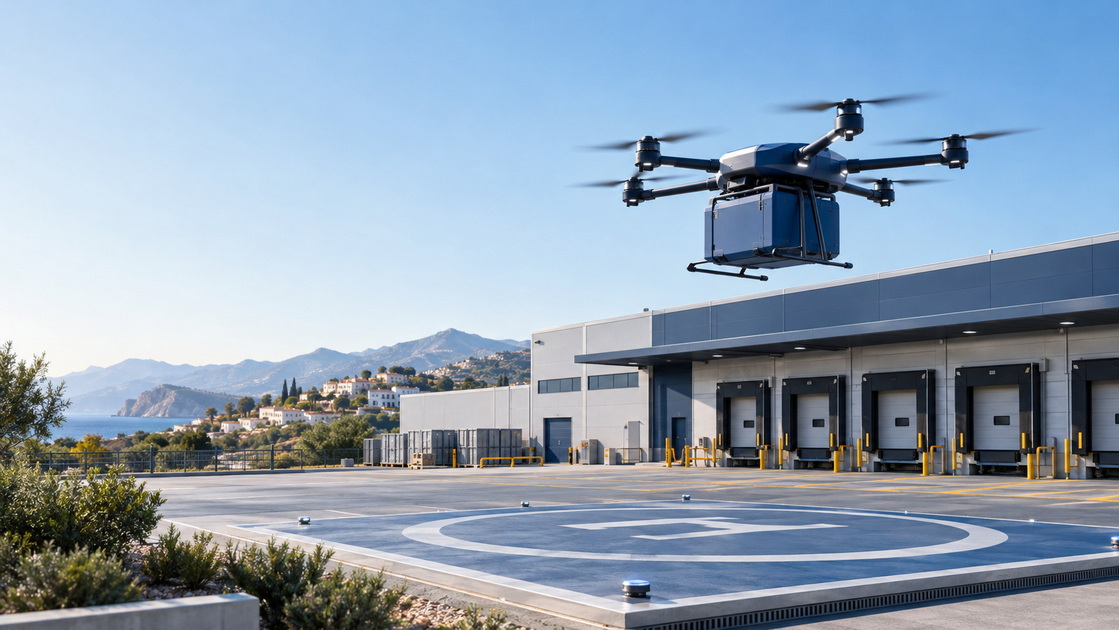
Spain offers a growing ecosystem of unmanned aircraft developers, aerospace engineers, and specialist operators. For businesses planning medical deliveries, industrial transport, rural distribution, or controlled-site logistics, this ecosystem provides several potential routes to a long-term partnership.
However, choosing a drone logistics supplier requires more than comparing advertised payload capacity or watching a successful demonstration. Professional procurement teams must determine whether the supplier can deliver consistent manufacturing quality, support the intended operating authorization, maintain parts availability, and integrate aircraft with the complete delivery workflow.
The most important purchasing principle is qualification: assess each supplier against a defined mission, a controlled aircraft configuration, and measurable acceptance criteria.
This guide introduces five companies worth evaluating for drone logistics projects targeting Spain. It also explains how to examine factory credentials, customization capability, production commitments, certification evidence, and lifecycle costs before entering a supply agreement.
The companies below were selected for their published involvement in unmanned aircraft development, system integration, manufacturing, or operations. Their relevance differs: some offer integrated logistics solutions, while others provide aircraft engineering or operational capabilities that may support a customized cargo project.
The assessment focuses on six procurement dimensions:
1. Manufacturing identity and component traceability.
2. Research, development, and mission-specific engineering.
3. Quality-control procedures and configuration management.
4. Production scheduling and delivery reliability.
5. Regulatory documentation and operational support.
6. Maintenance, spare parts, and lifecycle economics.
This is a procurement shortlist, not an independently audited ranking of market share or delivery-network performance. Several companies primarily serve inspection, surveillance, or aerospace markets. Their inclusion does not imply that they already operate routine commercial parcel-delivery networks.
Shenzhen Intelligent Drone Technology Co. Ltd., or SIDT, appears first as an international sourcing option. It is based in China, not Spain, and should be evaluated separately from Spanish manufacturers and operators.
Annual production capacity, minimum order quantities, certification scope, and private-label terms are not consistently available in public company information. Unverified details are therefore identified as questions for direct qualification rather than presented as established facts.
Spain has a substantial aerospace engineering industry that supports unmanned aircraft development, avionics integration, specialist manufacturing, and technical services.
Industry reporting placed Spanish aeronautics turnover at approximately €12.08 billion in 2025, an increase of 6.2% over 2024. This figure describes the wider aeronautics industry, not the size of the drone logistics market.
The distinction matters. Buyers can benefit from Spain's broader engineering resources without assuming that every aerospace company offers a commercially mature delivery system.
Spain's geographic supplier landscape includes:
- Madrid, with specialist unmanned helicopter development.
- Valencia, with UAV engineering and customized platform development.
- Málaga, with aerospace engineering and unmanned systems expertise.
- Navarra, with long-range drone development and operational experience.
These locations provide useful starting points for supplier discovery. Nevertheless, location alone does not establish manufacturing capacity, product conformity, or suitability for a particular cargo mission.
AESA, the Spanish Aviation Safety Agency, reported 150,332 registered UAS operators at the end of 2025, including 30,620 new registrations during the year.
These figures demonstrate growth in the wider drone ecosystem. They should not be interpreted as the number of drone delivery businesses, cargo aircraft manufacturers, or active commercial logistics routes.
For procurement teams, the practical opportunity lies in identifying companies with the right combination of aircraft capability, operating experience, and documentation—not simply choosing a supplier from a growing market.
Spain operates within the European unmanned aircraft regulatory framework.
Many proposed logistics missions, particularly beyond-visual-line-of-sight operations, may fall within the specific category. Higher-risk operations can require a different approval pathway, including the certified category where applicable.
Buying an aircraft and securing permission to operate a delivery route are separate activities. A supplier should clearly explain which technical documents it can provide and which obligations remain with the operator.
Start by establishing who will sign the contract, manufacture the aircraft, perform final assembly, and provide after-sales support.
Request:
- Legal company registration details.
- Manufacturing and final-assembly addresses.
- A list of major outsourced components and processes.
- Aircraft and critical-component serial-number records.
- Manufacturing inspection documentation.
- A controlled bill of materials.
- Engineering-change approval procedures.
A factory video can provide useful context, but it does not prove traceability or production consistency.
Customization should be evaluated by technical scope, not by the availability of a different paint color or logo.
A capable development partner should explain whether it can adapt:
- Cargo compartments and attachment systems.
- Center-of-gravity limits.
- Payload release or transfer mechanisms.
- Fleet-management software.
- Communication interfaces.
- Docking and charging arrangements.
- Ground-control functions.
- Mission-specific contingency behavior.
Distinguish configuration of an existing platform from development of a new design. These activities involve different budgets, schedules, testing requirements, and intellectual-property arrangements.
Ask how the supplier controls incoming materials, assembly, calibration, software installation, and final aircraft acceptance.
For cargo applications, the proposed test plan should address loaded performance, power consumption, navigation behavior, communication loss, and safe recovery.
General claims about "strict quality control" are insufficient. Buyers need records that can be linked to the delivered aircraft.
Request a production schedule for the actual configuration under consideration.
The schedule should identify:
- Long-lead components.
- First-article completion.
- Available assembly slots.
- Batch delivery dates.
- Spare-parts allocation.
- Warranty replacement capacity.
- Dependencies on third-party development.
Engineering-team size, fleet size, and annual aircraft output are different measures. None should be substituted for a configuration-specific delivery commitment.

SIDT focuses on integrating intelligent flight platforms, dynamic perception, data collection, and analysis across low-altitude, ground, and underground applications.
Its published positioning includes drone logistics, intelligent inspection, emergency response, and coordinated management of equipment through a unified platform.
- Location: Shenzhen, China.
- Establishment year: Not verified in the reviewed company information.
- Application focus: Low-altitude logistics, controlled-site delivery, emergency response, and integrated intelligent systems.
- Principal geographic markets: A sufficiently detailed, verified sales breakdown is not publicly established.
SIDT should therefore be viewed as an overseas system-development and sourcing candidate for Spain, rather than a Spanish manufacturer or locally authorized delivery operator.
SIDT's "one-network coverage" concept emphasizes coordination across equipment, operating nodes, and environments.
For a logistics buyer, the relevant question is whether aircraft, dispatch software, ground infrastructure, and cargo handling can function as one managed system.
This approach may be relevant to industrial parks, tourist destinations, controlled campuses, or other projects where a buyer needs more than a standalone drone.
The company's published management-system offering includes scheduling, route planning, dispatch, and operational visibility.
SIDT is worth evaluating when a small or medium-sized brand needs an integrated solution with mission-specific customization.
However, cost competitiveness, flexible order quantities, communication efficiency, and customization depth should be confirmed through a written proposal rather than assumed.
Request clear answers on:
- Available aircraft configurations.
- Cargo-compartment development.
- Software interfaces and branding.
- Prototype quantities and development fees.
- Engineering response times.
- Named project contacts.
- Ownership of customized software and tooling.
- Documentation available for a Spanish operating application.
A structured pilot order can help buyers assess communication quality and engineering responsiveness before committing to a larger fleet.
Do not assume an aircraft is eligible for Spanish operations because a supplier describes it as internationally compliant.
Verify the exact configuration, applicable conformity documentation, remote-identification arrangements, and technical support available for the intended authorization pathway.
UAV Works is a Spanish UAV engineering and consultancy business associated with the Valencia region. Its published activities include aircraft development, optimization, and integration.
The company states more than 15 years of UAV design and development experience. A third-party supplier profile reports a 2014 founding year; procurement teams should confirm the incorporation date of the contracting entity.
- Location: Valencia region, Spain.
- Establishment year: Reported as 2014; direct verification recommended.
- Main applications: UAV development, customized payload platforms, mapping, and surveillance.
- Market reach: International experience is stated, although a complete country-by-country sales profile is not established.
UAV Works is relevant to buyers who need engineering-led adaptation rather than a standard aircraft purchase.
Its published platform portfolio includes high-capacity and customized-payload concepts. Third-party information also associates its convertible aircraft development with courier applications.
Buyers should confirm which platforms are currently offered, which have completed testing, and which remain development projects.
Potential discussions include:
- Cargo mounting and restraint.
- Mission-specific aircraft configuration.
- Payload integration.
- Ground-control interfaces.
- Prototype development.
- Design validation.
Its engineering services support these inquiries, but they do not automatically establish a standardized private-label manufacturing program.
Request a current configuration sheet and a demonstration using representative cargo.
Also confirm whether the quotation covers aircraft engineering only or includes production, operating support, maintenance documentation, and fleet-management integration.
Alpha Unmanned Systems was founded in 2014 and is based in Madrid. It develops and manufactures tactical unmanned helicopters and related subsystems.
Its documented applications include maritime surveillance, border control, infrastructure inspection, and other specialist missions.
- Location: Madrid, Spain.
- Establishment year: 2014.
- Main markets: Institutional, maritime, security, and infrastructure applications.
- Geographic reach: International deployments are described in company information.
Alpha offers specialist rotary-wing engineering expertise.
Its relevance to cargo procurement lies in assessing whether an established helicopter platform can be adapted to a particular logistics requirement. A surveillance aircraft should not be treated as a ready-to-use delivery system without further evidence.
Buyers can explore payload integration, mission configuration, training, and maintenance support.
However, supported integration should be distinguished from private-label manufacturing, unrestricted modification, or ownership of the underlying aircraft design.
A sensor-payload specification does not establish parcel-carrying suitability.
Ask for:
- Cargo attachment limits.
- Loaded center-of-gravity envelopes.
- Vibration characteristics.
- Loading and unloading procedures.
- Safe ground-handling requirements.
- Performance evidence for the cargo configuration.
Alpha may suit specialized missions, but its platform should not automatically be compared with low-cost last-mile delivery aircraft.
FuVeX develops, manufactures, and operates long-range drones. Its established commercial emphasis includes infrastructure inspection, with activity extending into civil and defense applications.
Reporting in August 2026 described a €3 million funding round intended to support commercial and international expansion.
- Location: Tudela, Navarra, Spain.
- Establishment year: Public sources differ between 2013 and 2015.
- Main markets: Utilities, infrastructure monitoring, civil operations, and defense-related applications.
- Geographic focus: Spanish operations with European expansion ambitions.
The founding-year difference should be resolved against the specific legal entity named in the supply contract.
FuVeX offers long-range aircraft development combined with operational experience.
Historical reporting also describes medical-supply delivery testing involving the Spanish postal service. This demonstrates logistics-related experimentation, not a current nationwide parcel-delivery network.
FuVeX may be relevant to projects where operational feasibility and route development are important parts of supplier selection.
Request explicit terms for:
- Mission adaptation.
- Payload integration.
- Software interfaces.
- Maintenance access.
- Training.
- Technical documentation.
- Intellectual-property ownership.
Public information does not establish a standard white-label program.
An authorization supporting an inspection operation should not be assumed to cover a new delivery mission.
Cargo type, route, ground exposure, operating procedures, and contingency arrangements must be assessed for the proposed project.
AERTEC was founded in Málaga in 1997. Its activities developed from airport-related engineering into broader aerospace and defense systems, including unmanned platforms.
The company reports projects in more than 50 countries.
- Location: Málaga, Spain.
- Establishment year: 1997.
- Main markets: Aerospace, airports, defense, and unmanned systems.
- Geographic reach: International engineering and technology projects.
AERTEC's unmanned platform work demonstrates aircraft development and payload-integration expertise.
Its relevance to drone logistics is strongest for technically demanding engineering programs—not as evidence of an established consumer parcel-delivery service.
Potential project discussions include:
- Platform engineering.
- Subsystem development.
- Payload integration.
- Mission-specific design.
- Technical validation.
Buyers should verify which current group entity would contract for the work and whether it supports the intended civilian application.
Define the civilian cargo mission at the beginning of the discussion.
Surveillance endurance and payload specifications do not establish cargo turnaround time, loading procedures, delivery economics, or the authorization pathway for commercial logistics.
"Not verified" means the reviewed information does not establish the detail. It does not mean the company lacks the capability or certificate.
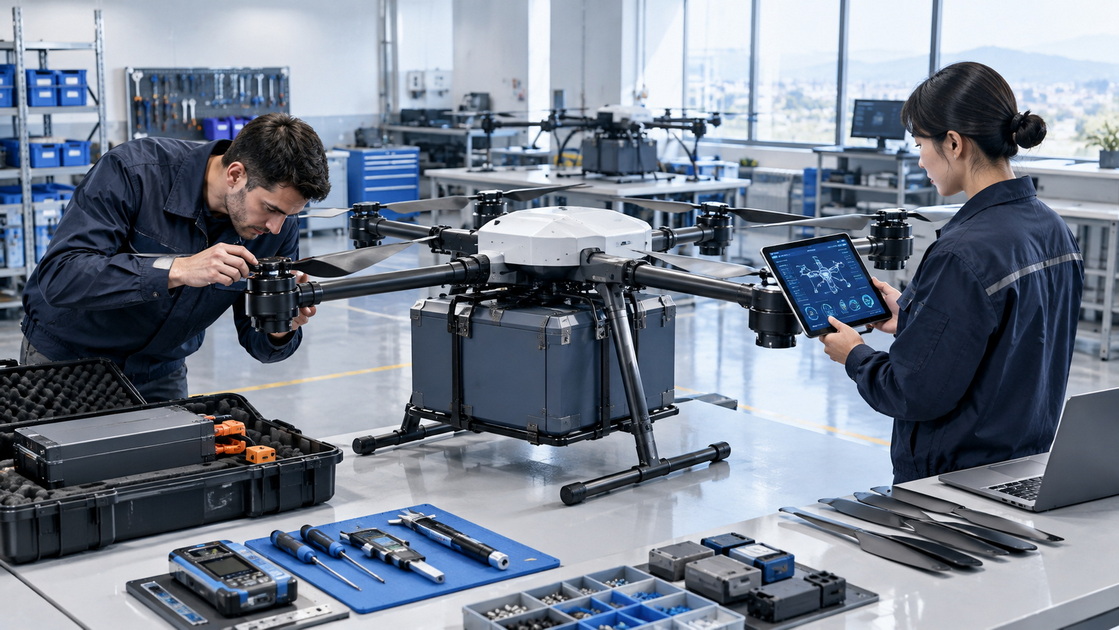
| Company | Primary Procurement Role | Production Capacity | Minimum Order Quantity | Evidence to Request |
|---|---|---|---|---|
| SIDT | International integrated logistics-system candidate | Not verified; request configuration-specific output | Not verified; request prototype and batch terms | Quality certificates, applicable conformity documents, configuration records, European support scope |
| UAV Works | Custom UAV engineering and integration | Not verified; request development and production schedule | Project-specific quotation required | Quality-system scope, current platform documentation, acceptance plan |
| Alpha Unmanned Systems | Specialist helicopter UAV manufacturer | Not verified; request available production slots | Not verified | Current certificates, cargo configuration evidence, maintenance documentation |
| FuVeX | Long-range aircraft and operational partner | Not verified; distinguish production output from fleet size | Not verified | Relevant operational scope, technical records, customization terms |
| AERTEC | Advanced aerospace engineering and integration | Not verified for civilian logistics configurations | Project-specific quotation required | Contracting-entity scope, quality certificates, civilian design evidence |
A useful quotation should convert these unknowns into written commitments before the purchase decision.
"Aerospace-grade" is not a sufficiently precise material specification.
For composite structures, request material identification, manufacturing controls, inspection criteria, and repair limits.
For metal components, request alloy specifications, surface protection, and traceability. For electronics housings and connectors, define the expected environmental exposure and sealing requirements.
No single material grade is universally correct for every logistics drone. Suitability depends on design loads, manufacturing quality, operating conditions, and maintenance strategy.
Require written approval before substitutions affecting structural parts, motors, propellers, batteries, or safety-critical electronics.
Maximum endurance and maximum payload may describe different operating conditions.
Request performance evidence that combines your actual requirements:
- Cargo mass.
- Package dimensions.
- Center-of-gravity position.
- Route profile.
- Environmental conditions.
- Landing reserve.
- Battery condition.
- Communication coverage.
For medical logistics, include packaging, temperature requirements, vibration exposure, and handling procedures.
The aircraft and cargo system should be evaluated together.
CE marking, UAS class identification, and permission to operate a route serve different purposes.
Specific-category aircraft do not universally require a class label. European standard scenarios, however, require the appropriate C5 or C6 aircraft class.
Consequently, a generic "CE compliant" statement is not enough. Request the applicable declaration of conformity and establish how the exact aircraft configuration fits the proposed operating pathway.
RoHS statements, substance documentation, battery records, and end-of-life arrangements should be evaluated separately.
Ask the supplier to identify which requirements apply to the aircraft and its subsystems. Do not treat RoHS as an environmental award or assume that every component falls under an identical set of obligations.
A prototype may use different batteries, electronics, structural parts, or software from the units eventually delivered.
Specify a representative production configuration and require documented approval of subsequent changes.
A large development team does not prove high monthly output.
Ask for a batch schedule supported by component availability, assembly resources, inspection capacity, and spare-parts commitments.
A logistics system needs more than flight capability.
Define cargo preparation, charging, loading, landing-site management, unloading, and exception handling. Measure complete delivery-cycle time rather than airborne time alone.
A certificate should identify the correct entity, site, standard, scope, issuing body, and current status.
A certificate for an unrelated office or business activity should not be treated as evidence for the manufacturing operation being procured.
One of the most important procurement safeguards is ensuring that the delivered aircraft matches the configuration used for testing and technical evidence.
A battery substitution, new cargo enclosure, different propeller, firmware update, or communication change may require further analysis. The consequences depend on the modification and the applicable operating framework.
Before ordering, agree on:
1. A configuration identifier for each aircraft.
2. A controlled hardware and software baseline.
3. Notification requirements for substitutions.
4. Approval authority for changes.
5. Responsibility for updating technical records.
6. Re-testing triggers.
7. Associated costs and schedule responsibilities.
Do not accept "equivalent component" as the complete justification for a change.
This contractual discipline helps prevent disputes after delivery and supports consistent maintenance across the fleet.
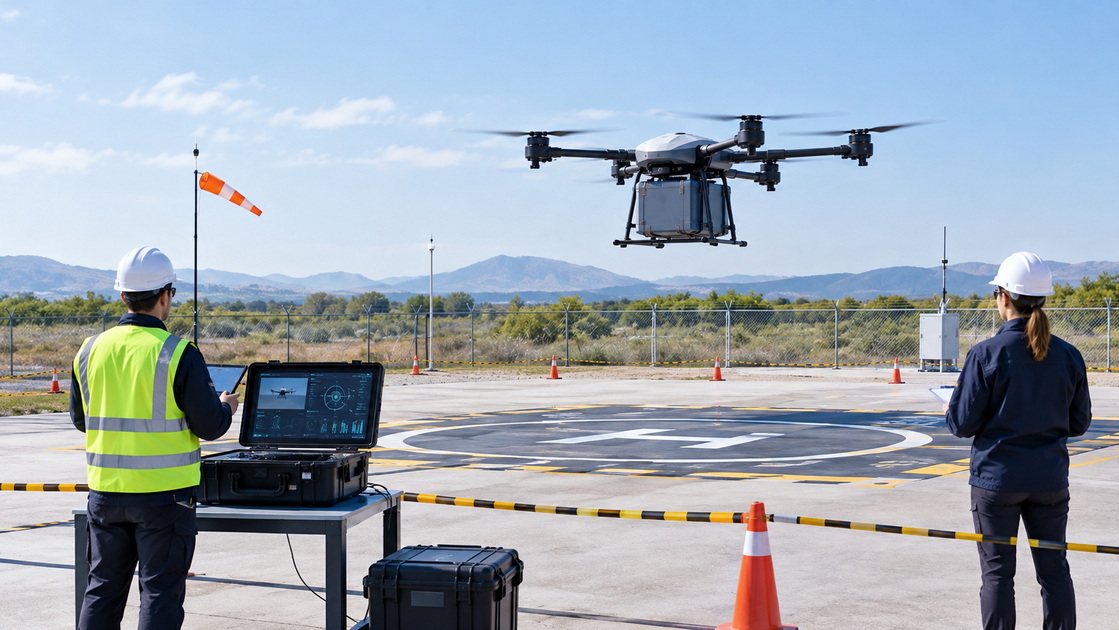
Obtain company registration details, manufacturing information, relevant certificates, specifications, proposed support terms, and a configuration-specific quotation.
For imported systems, identify the importer and obtain appropriate advice on customs classification and applicable restrictions before shipment.
The sample should match the intended production configuration.
Use the actual cargo package and agree on pass/fail criteria before testing. Define data ownership, failure reporting, corrective actions, and re-test responsibilities.
Evaluate the complete workflow on an appropriately authorized route.
Track:
- Successful deliveries.
- Aborted missions.
- Battery consumption.
- Operator workload.
- Maintenance effort.
- Ground turnaround time.
- Cargo-handling exceptions.
Supplier acceptance testing does not replace operational approval.
The supply agreement should address:
- Batch dates and acceptance milestones.
- Packaging and transport documentation.
- Battery shipment arrangements.
- Incoterms and insurance responsibilities.
- Spare-parts availability.
- Local repair arrangements.
- Software access.
- Warranty procedures.
- Service continuity.
For overseas suppliers such as SIDT, clarify which services are provided remotely and which require a Spanish operating or integration partner.
There is no single supplier that suits every drone logistics project in Spain.
SIDT provides an international integrated-system option. UAV Works offers custom UAV engineering. Alpha Unmanned Systems contributes specialist helicopter expertise. FuVeX brings long-range development and operating experience. AERTEC is relevant to advanced aerospace integration.
The right partner is the company that can substantiate the required aircraft configuration, loaded performance, production schedule, technical documentation, and lifecycle support.
Prepare a mission-based inquiry before requesting fleet pricing. Specify payload, route, delivery frequency, environmental conditions, ground infrastructure, software interfaces, and deployment location.
For a SIDT project discussion, request a configuration-specific proposal covering customization scope, prototype milestones, acceptance testing, delivery commitments, and support for the intended Spanish operation. Use the same evidence-based process to compare every candidate.
Check the certificate number, legal entity, certified site, standard, scope, issuing body, and validity dates.
Contact the certification body directly to confirm whether the certificate is active, suspended, or withdrawn. A certification database can provide an additional check where the certificate is listed.
Also verify that the scope covers the activity relevant to your purchase. A valid certificate for consulting services does not necessarily cover aircraft manufacturing.
Country of manufacture alone does not determine operating eligibility.
The operator must satisfy the applicable registration and authorization requirements. The aircraft must provide the technical evidence required for the chosen operating pathway.
Request a configuration-specific assessment. Avoid relying on blanket statements such as "approved for Europe," especially when the intended mission involves beyond-visual-line-of-sight delivery.
Not automatically.
An authorization relates to an operating scope, conditions, procedures, and risk assessment. A new route or cargo mission may fall outside those conditions.
Ask the operator to explain whether the project fits its existing authorization or requires an amendment or new application. Obtain the answer in writing before treating regulatory readiness as a purchasing advantage.
Use factory acceptance and operational acceptance as separate stages.
Factory acceptance should confirm configuration, traceability, assembly quality, software versions, and agreed performance.
Operational acceptance should evaluate representative payloads, route requirements, reserve margins, ground handling, and contingency procedures.
Tie payment milestones to documented results and specify how failed tests will be corrected.
Address maintenance manuals, service-tool access, API documentation, data export, spare-parts availability, and approved replacements.
For customized work, define ownership of tooling, software, design files, and development results. Clarify software licensing after contract termination and transition support if the supplier stops servicing the product.
- AESA: Registered UAS operators and 2025 sector statistics.
- AESA: Drone operator registration requirements.
- TEDAE: Spanish aerospace industry results for 2025.
- EASA: Specific-category civil drone operations.
- EASA: Specific Operations Risk Assessment guidance.
- EASA: Unmanned aircraft regulatory questions and conformity guidance.
- SIDT: Company background, integrated logistics solutions, and management systems.
- UAV Works: Company capabilities and platform development; third-party founding-year information.
- Alpha Unmanned Systems: Company background and application markets.
- FuVeX: Development history, legal-entity background, logistics testing, and 2026 business reporting.
- AERTEC: International activities, founding background, and unmanned systems development.
- Certificate verification: Management-system certificate checks and issuing-body verification guidance.


