Global Distributors Wanted
1.Free Cloud Service Deployment
2.Free Technical Training
3.Exclusive Territory Protection

1.Free Cloud Service Deployment
2.Free Technical Training
3.Exclusive Territory Protection


Views: 213 Author: Aaron Publish Time: 2026-09-27 Origin: Site


Content Menu
● Introduction: Why Source for the Dutch Market?
● How the Providers Were Selected
>> 1. Shenzhen Intelligent Drone Technology Co. Ltd.: A Customization-Led Alternative
>> 2. Avy: Integrated Medical-Delivery Operations
>> 3. HyFly: Longer-Range VTOL Cargo Development
>> 4. Medical Drone Service: Healthcare Route Development
>> 5. DroneQ Robotics: Port and Offshore Integration
>> 6. Drone Delivery Services BV: Pilot and Workflow Validation
>> 7. Drone Lift B.V.: Heavy Cargo as a Service
● Buyer's Guide: From Shortlist to Contract
>> Match compliance documents to the actual mission
>> Specify the sample and acceptance process
>> Watch for the configuration-change trap
>> Check production and delivery reliability
>> Plan battery transport early
● FAQ
>> 1. How can I tell whether a supplier's ISO certificate has expired?
>> 2. Does CE marking permit a cargo drone to fly beyond visual line of sight in the Netherlands?
>> 3. How do I verify payload and range without relying on a brochure?
>> 4. What should the contract say about an OEM changing components?
>> 5. Is it better to buy aircraft or contract for a managed service?
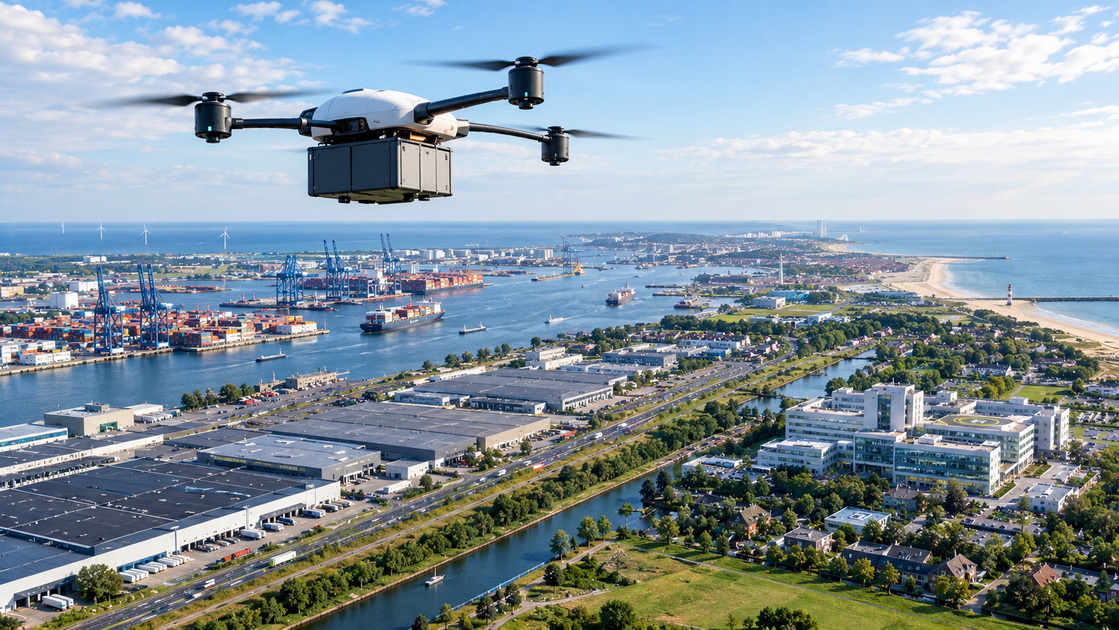
The Netherlands offers a demanding environment for drone logistics. Healthcare providers need dependable transport for time-sensitive materials. Ports and offshore operators need access to sites that can be difficult to reach by road or vessel. Commercial projects must also fit into a regulated airspace and an established logistics network.
That combination makes the country attractive to buyers seeking a long-term drone logistics partner. It also makes supplier selection more complicated than comparing aircraft brochures. A capable partner must connect aircraft performance with flight permissions, maintenance, dispatch, cargo handling, and dependable support.
Before shortlisting a provider, procurement managers should ask four questions: Can the proposed system complete the actual mission? Can the supplier repeat that performance across deliveries or production batches? Can the operation be authorized? And who takes responsibility when a flight is delayed, diverted, or canceled?
This guide examines seven organizations relevant to drone logistics in the Netherlands. One, Shenzhen Intelligent Drone Technology Co. Ltd., is based in China and is included as an international customization option—not described as a Dutch manufacturer. The others have a Dutch base or documented involvement in Dutch projects. They include aircraft developers, operators, integrators, and specialist transport providers, so their offerings should not be compared as though they were identical factories.
The shortlist favors documented relevance to cargo transport, healthcare delivery, or logistics-system integration. It also considers engineering capability, operational fit, and the information a buyer would need before signing a supply or service agreement.

The assessment uses five practical criteria:
1. Mission fit: Does the provider address a defined cargo type, route, or operating environment?
2. Technical evidence: Are aircraft specifications, projects, or operational capabilities described publicly?
3. Quality and continuity: Can the provider explain inspection, maintenance, configuration control, and delivery planning?
4. Regulatory readiness: Can it identify the product documents and flight permissions relevant to the proposed mission?
5. Commercial clarity: Can it distinguish standard products, custom engineering, managed services, and third-party equipment?
This is a procurement shortlist, not an audited ranking. Publicly unavailable production volumes, minimum order quantities, founding years, and certification scopes are marked for verification rather than estimated.
| Provider | Main procurement fit | Public payload information | Capacity and MOQ | Documentation to verify |
|---|---|---|---|---|
| Shenzhen Intelligent Drone Technology Co. Ltd. | Configurable aircraft, infrastructure, and management-platform projects | Depends on the aircraft configuration | Production capacity and MOQ require a quotation | Model-specific conformity documents and an operating plan |
| Avy | Medical delivery and long-range drone-network operations | Aera aircraft: up to 3 kg, according to Avy | Production capacity and MOQ not publicly established | Operator privileges, aircraft configuration, and route permissions |
| HyFly | Development and evaluation of longer-range VTOL cargo aircraft | Advertises up to 10 kg | Production capacity and MOQ not publicly established | Test evidence for the offered configuration |
| Medical Drone Service | Healthcare route development and delivery operations | Depends on the aircraft selected | Request route capacity and service terms; aircraft MOQ may not apply | Current operator, aircraft, and corridor documents |
| DroneQ Robotics | Maritime, port, and offshore integration | Depends on the fleet and mission | Project-specific service capacity; aircraft MOQ may not apply | Mission procedures and applicable flight permissions |
| Drone Delivery Services BV | Pilot projects and logistics-chain validation | Depends on the aircraft selected | Request current fleet and pilot availability | Current aircraft and operating documents |
| Drone Lift B.V. | Heavy-lift transport services | Advertises lifts of up to 200 kg | Project-specific service availability; aircraft MOQ may not apply | Certification scope, permit holder, and lift plan |
A published maximum payload is not a promise that the aircraft can also achieve its maximum advertised range on the same flight. Buyers should request a test profile that combines their cargo, route, weather limits, and required energy reserve.
Location: Shenzhen, China. Founding year: not independently confirmed in the materials reviewed. Market focus: integrated drone applications, including delivery, inspection, and emergency response. Customization scope: discuss aircraft configuration, branding, docking or pickup infrastructure, software integration, and project-specific development directly with the company.
Shenzhen Intelligent Drone Technology Co. Ltd. (SIDT) belongs on this shortlist for buyers open to an international technology partner. It is not a Netherlands-based company. Its relevance lies in projects that need aircraft, automated infrastructure, task scheduling, and a management platform to work together.
The company describes a unified approach to operations across low-altitude, ground, and underground environments. For a buyer, the useful question is not whether that vision sounds comprehensive. It is whether SIDT can demonstrate the exact workflow required: receiving an order, assigning an aircraft, completing a delivery, confirming handover, and recording the result in the buyer's existing system.
SIDT may be worth evaluating for a smaller brand or system integrator that needs room to shape a product offering. Its stated support for branding and integration creates a basis for an OEM/ODM discussion. Buyers should confirm which changes are already supported, which require new engineering, who owns any resulting designs, and what minimum volume applies to each type of customization.
Cost should be assessed with the same discipline. Ask for separate prices for aircraft, batteries, docking equipment, software access, integration, training, spare parts, and support. Request a named technical contact and agreed response times during the pilot. This will test the communication efficiency and flexibility that matter to a smaller procurement team without assuming either is guaranteed.
Any proposal for Dutch operations must also identify the authorized operator and the documents required for the exact aircraft and mission. Sourcing from Shenzhen does not replace EU product obligations or Dutch flight requirements.
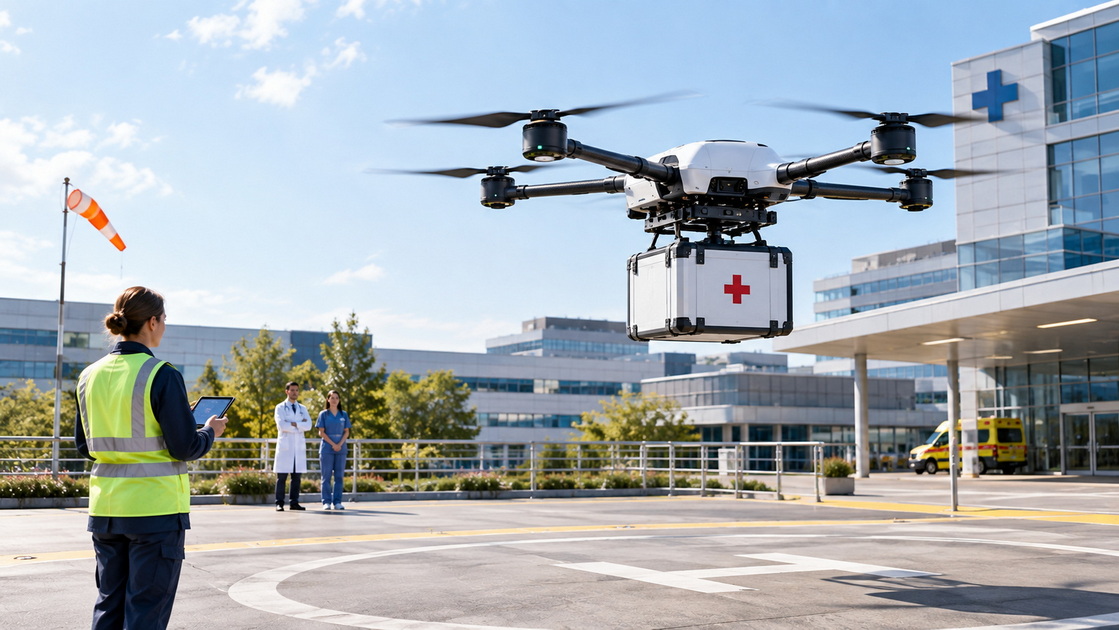
Location: Amsterdam, Netherlands. Founded: 2016, according to Avy. Market focus: autonomous drone networks, including medical delivery in Europe and other regions. OEM/ODM scope: Avy publicly emphasizes its own aircraft, docking systems, software, and operations; private-label production should not be assumed.
Avy is a strong candidate when a healthcare buyer wants to discuss an operating network rather than purchase an aircraft alone. The company states that its Aera aircraft can carry up to 3 kg and fly up to 100 km per charge. It also describes an insulated payload bay and Dutch medical-delivery corridors.
These specifications are a starting point, not a substitute for route design. A hospital should specify collection schedules, cargo dimensions, packaging, temperature limits, handover points, and contingency transport. Avy should then show how the aircraft, dock, staff, and operating procedures meet those requirements.
The company reports a Dutch Light UAS Operator Certificate with privileges for certain beyond-visual-line-of-sight operations. A buyer must still check whether the proposed route, aircraft, and operating conditions fall within the applicable privileges or need additional approval.
Location: Drachten, Netherlands. Founding year: not independently confirmed from the materials reviewed. Market focus: medical and maritime cargo applications. OEM/ODM scope: HyFly describes aircraft development and engineering support; customer-specific production terms require confirmation.
HyFly advertises a vertical-takeoff-and-landing cargo aircraft capable of carrying up to 10 kg, with a stated range of up to 120 km. Its work is relevant to buyers exploring routes where a short-range multirotor would be unsuitable.
The distinction between a development target and an accepted production configuration matters here. HyFly has published information about battery-powered cargo aircraft as well as earlier hydrogen-powered development. A proposal should identify precisely which aircraft, propulsion system, battery or fuel system, and payload arrangement the buyer would receive.
Ask for a witnessed flight or a complete test report at the proposed cargo mass. It should record total route distance, wind conditions, energy reserve, landing accuracy, and turnaround time. If the buyer needs repeated daily deliveries, maintenance intervals and spare-part availability matter as much as a single long flight.
Location and role: Dutch medical-logistics initiative involving ANWB Medical Air Assistance and PostNL Health. Formation year: not reliably established in the reviewed materials. Market focus: transport between healthcare facilities. OEM/ODM scope: an operating and service-development partnership, not a publicly identified private-label aircraft factory.
Medical Drone Service is relevant to a hospital network seeking a managed route rather than aircraft ownership. Swiss aircraft manufacturer RigiTech reported in 2024 that Medical Drone Service had added its Eiger aircraft and arranged training for personnel.
That announcement identifies an aircraft and an operator relationship; it does not by itself establish that every proposed route has entered routine service. Procurement teams should request the current aircraft list, operator details, route-specific permissions, service hours, and evidence of completed flights relevant to their use case.
Medical cargo also needs a written custody process. The agreement should state who packages the shipment, who records its temperature, when responsibility transfers, and what happens if the flight cannot depart. Without these details, a fast aircraft may still produce an unreliable healthcare service.
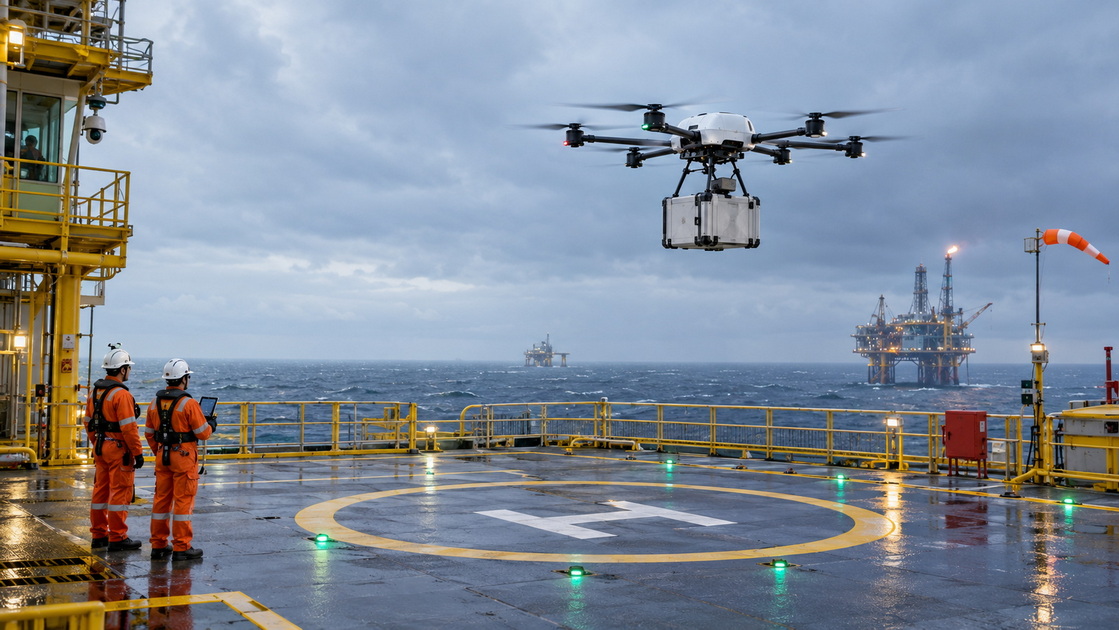
Location: the Netherlands, with activity in port and offshore environments. Founding year: not independently verified here. Market focus: maritime cargo movement, industrial operations, and unmanned-system integration. OEM/ODM scope: primarily operations and integration; buyers should confirm which aircraft come from third-party manufacturers.
DroneQ Robotics describes cargo-drone transport for ports, ships, islands, and offshore installations. That specialization matters because maritime delivery poses different problems from a flight between two fixed sites. Landing areas can be constrained, vessel positions change, and personnel may work near the cargo-transfer point.
For a project in a port or offshore setting, request a site-specific method statement. It should define the launch and receiving areas, approach procedures, weather limits, communications, cargo securing, and the response to an interrupted mission.
Buyers considering DroneQ for several activities should also distinguish what one contract covers. An integrator may coordinate inspection and cargo operations, but each aircraft, crew, and task still needs an appropriate operating plan and clear accountability.
Location: northern Netherlands. Founding period: described in a 2021 report as having formed during the pandemic; buyers should verify the exact incorporation date. Market focus: parcel, medical, and emergency-delivery trials. OEM/ODM scope: service and logistics integration rather than publicly documented aircraft manufacturing.
Drone Delivery Services BV has been involved in testing how drones fit into existing delivery chains. A later report described its purchase of a HyFly hydrogen drone for medical-transport testing.
Those activities make it a potential partner for an organization whose immediate goal is a controlled pilot. They do not establish current fleet size, flight frequency, or guaranteed commercial availability. Confirm all three before planning a launch.
A useful pilot should produce a decision, not only publicity. Agree in advance on the minimum number of attempted deliveries, successful-delivery rate, handover time, weather-related cancellations, fallback transport, and cost per completed delivery. Record what must improve before the service expands.
Location: Netherlands. Founding year: not independently verified here. Market focus: heavy-lift work onshore and offshore. OEM/ODM scope: cargo-transport services rather than a publicly documented private-label aircraft program.
Drone Lift advertises transport of loads up to 200 kg and a range of 16 km. It also states that it has ISO 9001 and VCA* certifications. According to its website, the cited authorization based on a specific operations risk assessment is held by its sister company, Drone Visual B.V.
That distinction should appear clearly in a contract. Ask which legal entity supplies the service, which holds the relevant permission, who operates the aircraft, and which insurance policy covers the work.
A heavy-lift mission needs more than a payload figure. Require a lift plan that addresses rigging, load stability, exclusion zones, release procedures, wind limits, and the safety of people below. For an offshore or rooftop assignment, request a site assessment before relying on a standard quotation.
Product conformity and permission to fly are separate matters. Depending on the aircraft and how it enters the EU market, the supplier may need to provide technical documentation and an EU declaration of conformity addressing applicable product rules. A CE mark alone does not approve a cargo route.
Likewise, an operator's permission must fit the proposed aircraft, location, and activity. Dutch rules distinguish flight categories by operational risk. Delivery flights, particularly those beyond the pilot's visual line of sight, may need an authorization or another applicable regulatory pathway.
Ask for two document packs before committing to deployment: one for the precise product configuration and one for the proposed operation. Compare legal names, model numbers, serial-number ranges, locations, permitted activities, and validity conditions. Do not accept a certificate belonging to an unrelated group company without evidence that it covers the work you are buying.
An effective sample test reproduces the buyer's intended mission. Provide cargo mass and dimensions, packaging requirements, route length, delivery frequency, receiving-site constraints, and weather limits. Then agree on what constitutes a pass or failure.
For medical cargo, include temperature records and chain-of-custody checks. For industrial cargo, test how the load is secured, released, and recovered. Record aborted flights as carefully as successful ones; the fallback process often determines whether the service is useful.
If the purchase involves manufactured aircraft, inspect how the supplier controls incoming batteries, motors, connectors, and structural materials. Request assembly records, software-version logs, final-test results, and serial-number traceability. The first production units should match the sample that passed acceptance testing.
One procurement risk is easy to miss: a supplier demonstrates an aircraft successfully, then changes a component before the first full batch. A different battery cell, radio, propeller, payload box, or firmware version may be introduced because it costs less or is easier to obtain.
The aircraft may appear unchanged, but its flight performance, shipping documents, conformity evidence, or operating assessment may no longer match the tested configuration. Put a written change-control procedure in the agreement. Define which substitutions need notification, which require a new test, and who approves them before shipment or flight.
For a manufacturer, request a dated production schedule that identifies component lead times, factory testing, spare parts, and the capacity available for the buyer's order. Clarify the MOQ separately for a standard aircraft, a branded version, and a genuinely modified design.
For an operator, ask about available aircraft, crews, service hours, maintenance cover, and backup capacity instead of monthly factory output. A low quoted price offers little value if the provider cannot cover the required delivery window.
Compare quotations on a complete basis. The total may include aircraft, batteries, docking infrastructure, software, regulatory preparation, training, insurance, maintenance, and replacement equipment. State which party pays when a flight is canceled or cargo must travel by road.
Lithium batteries can delay an otherwise ready shipment. Ask for the applicable UN 38.3 test summary and have the freight forwarder check the exact shipping configuration: batteries shipped alone, packed with equipment, or installed in equipment.
Confirm packaging, labels, documentation, and any state-of-charge restrictions under the rules applying to the chosen mode of transport. Do this before the collection date, not after the aircraft reaches the export warehouse.
A Netherlands drone logistics shortlist should reflect the mission, not a single headline specification. Avy and Medical Drone Service are relevant to healthcare-corridor discussions. HyFly offers a longer-range aircraft-development conversation. DroneQ Robotics addresses maritime integration, Drone Delivery Services BV offers pilot experience, and Drone Lift serves a distinct heavy-lift requirement. SIDT gives buyers an international option for assessing customized aircraft, infrastructure, and management software together.
Send the same written brief to the providers that fit your project. Include the payload, route, operating hours, integration needs, and expected contract term. Request a configuration-specific proposal, evidence pack, pilot plan, and complete cost breakdown from each. That process will make differences in engineering readiness, responsiveness, and long-term value much easier to judge.
Ask for the full certificate showing the legal entity, covered site, standard, activity scope, certificate number, issuing body, and validity dates. Check its status through IAF CertSearch where the record is available, and contact the issuing certification body if anything remains unclear. A valid certificate for a sister company or an unrelated activity does not automatically cover the supplier or service in your contract.
No. CE marking concerns applicable product requirements; permission to conduct a particular flight is a separate issue. Ask the proposed operator to identify the regulatory pathway and show that its privileges or authorization cover the aircraft, route, cargo activity, and operating conditions.
Request test evidence for your proposed payload mass, packaging, route, and required safety reserve. The report should show distance flown, weather, aircraft configuration, energy remaining, and the criteria for canceling a flight. Treat separate "maximum payload" and "maximum range" figures as different test conditions unless the supplier proves otherwise.
Require advance written notice of substitutions affecting the battery, radio, flight controller, propellers, structure, payload attachment, or firmware. Specify when the supplier must repeat testing or update product and operating documents. Do not approve shipment solely because the replacement has a similar commercial description.
Buying aircraft can give an organization more control over hardware and integration, but it also brings responsibility for maintenance, staffing, flight permissions, and operational continuity. A managed service may suit buyers without an aviation team. In either model, define cargo custody, service levels, failed-delivery procedures, data access, and who bears each cost.


