Global Distributors Wanted
1.Free Cloud Service Deployment
2.Free Technical Training
3.Exclusive Territory Protection

1.Free Cloud Service Deployment
2.Free Technical Training
3.Exclusive Territory Protection


Views: 214 Author: Aaron Publish Time: 2026-11-08 Origin: Site


Content Menu
● Introduction: Why Switzerland Matters in Drone Logistics
>> What Recent Industry Evidence Shows
● Selection Criteria: How These Five Companies Were Chosen
● The List: Five Companies to Evaluate for Swiss Drone Logistics Projects
>> 1. Shenzhen Intelligent Drone Technology Co. Ltd.: An International Customization Alternative
>>> Company and Procurement Profile
>> 2. RigiTech: A Swiss Manufacturer Focused on Integrated Delivery Networks
>>> Company and Procurement Profile
>> 3. Matternet: A Delivery-System Developer with Established Swiss Operations
>>> Company and Procurement Profile
>> 4. Dufour Aerospace: A Swiss Candidate for Heavier, Longer-Range Cargo
>>> Company and Procurement Profile
>> 5. SwissDrones: A Specialized Option for Industrial Logistics Missions
>>> Company and Procurement Profile
● Comparison Table: Capacity, MOQ, and Certification Evidence
● Technical Due Diligence: What Procurement Teams Should Examine
>> Materials and Manufacturing Processes
>> CE, RoHS, and Flight Authorization Are Different Questions
>> Payload, Range, and Weather Must Be Evaluated Together
● Buyer's Guide: From Supplier Qualification to Fleet Acceptance
>> Step 1: Issue a Mission-Based Request for Quotation
>> Step 2: Verify the Factory and Engineering Team
>> Step 3: Purchase a Controlled Pilot, Not an Undefined Sample
>> Step 4: Separate Freight Planning from Flight Permission
>> Step 5: Contract for the Lifecycle
● An Overlooked Procurement Trap: Buying the Demo Configuration, Receiving Another
● Conclusion: Match the Supplier to the Operating Model
● FAQ
>> 1. How can we check whether a supplier's ISO certificate is expired or irrelevant?
>> 2. Can a drone authorized elsewhere in Europe immediately operate in Switzerland?
>> 3. Can we rebrand or modify an aircraft without affecting its compliance position?
>> 4. How can we verify that the drone will carry our payload over the required route?
>> 5. How do we compare buying aircraft with purchasing delivery as a service?
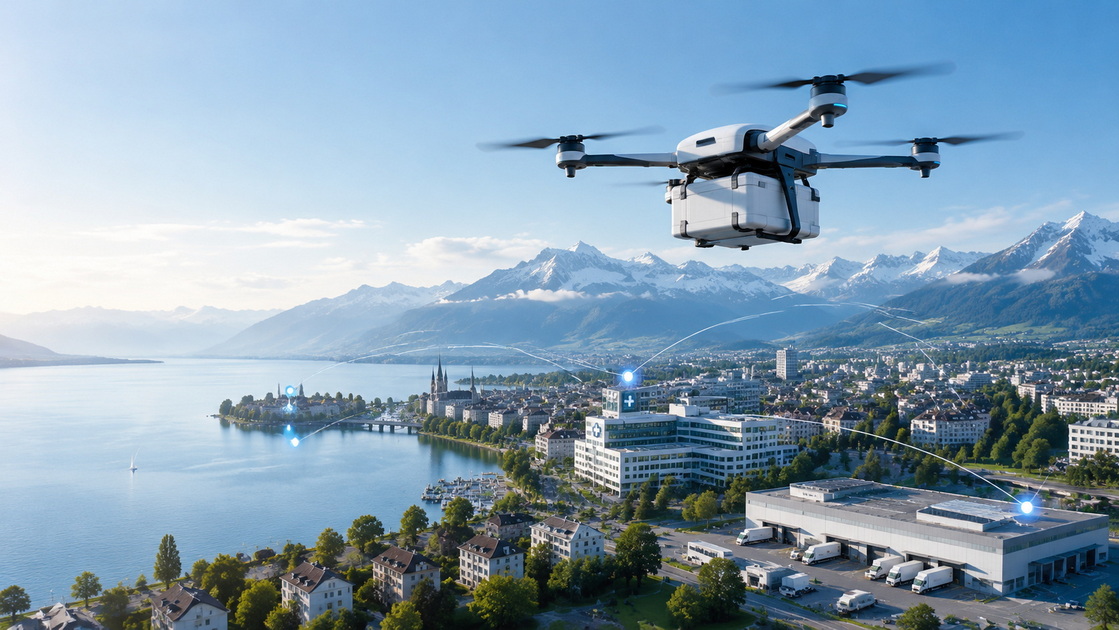
Choosing a top drone logistics company in Switzerland starts with identifying what you actually need: a Swiss-built aircraft, an established delivery-network operator, or a development partner capable of adapting hardware and software to your business.
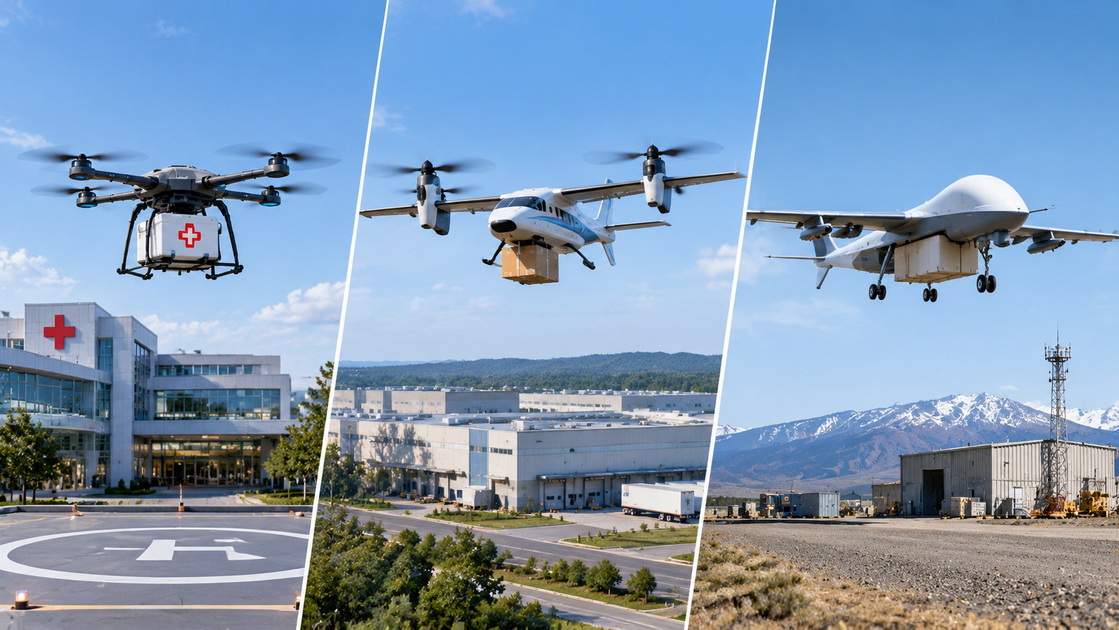
For medical deliveries and lightweight cargo networks, RigiTech and Matternet provide particularly relevant reference points. Dufour Aerospace addresses a different requirement: heavier cargo and longer-range transport. SwissDrones deserves consideration for specialized industrial missions, although its principal positioning is aerial intelligence rather than routine parcel delivery. These businesses should not be treated as interchangeable suppliers.
This guide also includes Shenzhen Intelligent Drone Technology Co. Ltd. (SIDT) first as an international customization alternative—not as a Swiss manufacturer. Its inclusion helps buyers compare Swiss delivery platforms with a China-based, integration-oriented sourcing approach.
The central procurement principle is verification. Before comparing prices, examine the supplier's legal identity, engineering capability, quality-control records, production commitments, and ability to support the intended operating authorization.
Switzerland's relevance to drone logistics extends beyond aircraft manufacturing. Its ecosystem includes Swiss manufacturers, international delivery-platform developers, medical transport customers, and a regulator with established procedures for advanced commercial operations.
The geographical distribution is instructive. RigiTech operates from the Lausanne area, SwissDrones combines a Zurich headquarters with manufacturing in Buchs, and Matternet maintains Swiss operations while manufacturing its M2 aircraft in California. Buyers therefore encounter a connected technology ecosystem rather than one concentrated, high-volume manufacturing district.
The distinction matters commercially. "Operating in Switzerland," "Swiss-headquartered," and "manufactured in Switzerland" describe different supply-chain arrangements. A purchasing team should establish which applies before making origin claims or negotiating local support.
The Drone Industry Association Switzerland's discussion of the Global State of Drones 2025 report draws on 768 responses from 87 countries. Europe accounted for 46% of responses, and Switzerland appeared among the ten most-represented countries. The association also highlighted regulation as the leading barrier to industry growth. These are global survey findings, not measurements of Swiss drone exports or domestic production capacity.
For buyers, the implication is practical: a technically capable aircraft does not automatically create a commercially viable delivery service. Regulatory documentation, operational support, and integration with existing logistics processes belong in the initial supplier assessment—not in a later implementation phase.
This is an application-based shortlist, not a claim that all five businesses have undergone an independent factory audit. Public manufacturer specifications, regulatory guidance, industry-association material, and disclosed operating experience inform the assessment. SIDT's profile relies on the company description supplied for this article; its linked corporate page could not be independently retrieved during research.
Use the following framework when evaluating any drone logistics supplier.
| Assessment area | Evidence to request | Commercial significance |
|---|---|---|
| Corporate identity | Registration documents, contracting entity, manufacturing address | Establishes who owns the obligations and where production occurs |
| Research and development | Engineering responsibilities, revision history, integration examples | Separates original development from basic resale or assembly |
| Quality control | Incoming inspection, assembly travelers, calibration records, release tests | Shows whether production units can reproduce prototype performance |
| Manufacturing capacity | Current backlog, monthly acceptance-test throughput, component constraints | Provides a more useful measure than theoretical assembly capacity |
| Delivery stability | Milestone schedule, supplier dependencies, delay remedies | Makes lead-time commitments measurable |
| Operational compliance | Authorization scope, safety documentation, configuration records | Connects the aircraft to the proposed mission |
| Lifecycle support | Spare-parts policy, repair turnaround, software support, training | Determines whether the fleet remains usable after delivery |
| Customization | Interface documentation, engineering charges, ownership terms | Defines what OEM or ODM cooperation actually includes |
An original equipment manufacturer, or OEM, may supply a product for another business to integrate or market. Original design manufacturing, or ODM, adds design responsibility. In aviation procurement, neither term should imply unrestricted modification of an already approved aircraft.

SIDT is a Shenzhen-based technology company whose supplied description emphasizes integrated applications across low-altitude, ground, and underground environments. Its stated approach combines an independently developed intelligent flight platform with dynamic perception, data collection, intelligent analysis, and cloud-based command and dispatch.
Its "one-network coverage" concept is relevant to buyers seeking coordinated infrastructure rather than a standalone delivery drone. Potential applications described by the company include urban airspace "3+1" delivery and ground-air coordinated emergency response.
- Location: Shenzhen, China; not Switzerland.
- Founding year: Not independently verified.
- Target applications: Integrated delivery, inspection, underground detection, and emergency-response projects, according to the supplied company description.
- Established export markets: Not independently verified.
- OEM/ODM discussion areas: Mission integration, payload requirements, cloud-platform interfaces, and coordinated equipment management; exact contractual scope requires confirmation.
- Manufacturing capacity, MOQ, and certifications: Not independently verified.
For smaller brands and system integrators, SIDT is worth approaching when flexibility and direct engineering communication matter more than buying a fixed, established delivery configuration. However, buyers should treat competitive pricing, low-volume flexibility, and deep customization support as qualification questions—not as independently demonstrated facts.
A sensible evaluation would ask SIDT to show:
1. A working delivery mission using the proposed aircraft and payload.
2. Documented interfaces between aircraft, cloud control, and ground equipment.
3. A named engineering contact and agreed response times.
4. Separate pricing for hardware, engineering, integration, and ongoing software.
5. Evidence supporting any proposed Swiss operating-authorization pathway.
SIDT's potential value lies in system integration. Its cost-effectiveness should be judged against a complete scope, including compliance support, testing, training, and maintenance—not against the aircraft purchase price alone.
Founded in 2018, RigiTech develops integrated drone delivery systems combining aircraft, software, and communications. Its Eiger platform uses vertical takeoff and landing with fixed-wing cruise, making it relevant to inter-site logistics where road routes are indirect or congested.
The current Eiger product page advertises a maximum payload of 3 kg, a 15-liter payload volume, and a maximum range of 100 km. These headline figures should be interpreted with the relevant configuration and operating conditions, rather than assumed to describe every mission simultaneously.
- Founded: 2018.
- Location and manufacturing: Switzerland; the company identifies Eiger as Swiss-manufactured.
- Demonstrated markets: European medical logistics, including France, with additional international partnerships.
- Core strength: An integrated delivery-network architecture rather than aircraft-only procurement.
- OEM/ODM scope: Public evidence supports application integration, including specialized payload handling; unrestricted white-label or redesign services are not established.
RigiTech reported daily BVLOS flights between French laboratories in 2023. In that deployment, a 26 km connection took approximately 15 minutes, compared with a reported 30-minute road journey. This provides a concrete reference case, although it does not establish identical savings for another route.
Its offshore work also demonstrates application-specific engineering: a payload-dropping prototype was tested for spare-parts delivery to wind turbines in Denmark.
For procurement teams, RigiTech is particularly relevant when the project requires lightweight medical cargo, multiple connected sites, and a supplier already oriented toward delivery operations.
Before purchase, request route-specific payload-range calculations, current production availability, software charges, maintenance requirements, and the evidence package supporting the intended authorization.
Matternet was founded in 2011 and is headquartered in Mountain View, California. It belongs in a Swiss drone logistics comparison because of its operating history in Switzerland, not because it manufactures aircraft there. Its M2 aircraft is designed and built in California under an FAA Production Certificate.
The M2 product page specifies a maximum payload of 2 kg and distances of up to 20 km. The company also identifies Swiss FOCA and German LBA authorization for SORA SAIL III operations in dense urban environments.
- Founded: 2011.
- Headquarters and production: California, United States.
- Demonstrated markets: Switzerland, Germany, and the United States, among others.
- Core strength: An integrated aircraft, station, and software platform with documented regulatory development.
- OEM/ODM scope: Network deployment and logistics integration; open-ended third-party aircraft redesign should not be assumed.
Swiss Post announced that its drone operation would transfer to Matternet from January 1, 2023. Consequently, historical Swiss Post delivery projects should not automatically be presented as a separate, current Swiss Post aircraft-manufacturing offering.
Matternet is a relevant candidate for buyers prioritizing urban healthcare networks, established delivery-system architecture, and regulatory documentation.
Its FAA aircraft and production certificates do not, however, replace the authorization required for a particular Swiss operation. FOCA's procedures remain relevant to the intended operator, mission, location, and risk profile.
Founded in 2017, Dufour Aerospace develops tilt-wing aircraft for applications that include critical cargo transport and logistics. Its Aero2 offers a different procurement proposition from lightweight medical-delivery multicopters.
Dufour's aircraft page describes a payload capability of up to 40 kg and a standard-configuration range of up to 400 km with its hybrid system. It also describes an exchangeable nose module and a cargo bay designed around a 600 × 400 × 330 mm transport box. These features are relevant to buyers assessing cargo handling and integration into existing workflows.
- Founded: 2017.
- Location: Switzerland.
- Target markets: Critical cargo, logistics, and specialized mission applications.
- Geographic sales mix: Not established by the sources reviewed.
- Core strength: Tilt-wing architecture and a substantially higher advertised cargo class than small parcel-delivery platforms.
- OEM/ODM scope: Mission-module and cargo-system integration discussions; general private-label availability is not established.
Buyers should distinguish advertised capability, available production configuration, and authorized commercial operation. A 2025 Switzerland Global Enterprise profile described Aero2 as being in development at that time; that historical description is not sufficient to establish delivery readiness in late 2026.
Before committing, request the current program status, aircraft availability, acceptance criteria, maintenance arrangements, and the exact evidence supporting the proposed operation.
Founded in 2013, SwissDrones has its headquarters in Zurich and a manufacturing site in Buchs, St. Gallen. Its aircraft operate across Asia, Europe, and North America.
The company principally positions its unmanned helicopters for surveillance, inspection, and search and rescue. Its published applications also include cargo and logistics missions, depending on configuration and applicable approvals. This makes it an adjacent specialist rather than a direct substitute for every parcel-delivery platform.
- Founded: 2013.
- Headquarters: Zurich, Switzerland.
- Manufacturing: Buchs, Switzerland.
- Main geographic markets: Asia, Europe, and North America.
- Core strength: Long-endurance unmanned helicopter operations and mission-specific payload integration.
- OEM/ODM scope: Payload and mission integration; unrestricted white-label manufacturing is not established.
The SDO 50 V3 product page lists a useful load of up to 33.2 kg, including fuel, and maximum endurance of approximately three hours. The endurance figure is specified for full fuel with no additional payload. Buyers must not read useful load as equivalent to deliverable cargo weight.
SwissDrones is most relevant when industrial logistics forms part of a broader requirement involving remote infrastructure, emergency support, or other specialized missions.
The available sources do not establish comparable annual production capacity or standard MOQs for these five companies. Inventing such figures would create a misleading purchasing comparison.
| Company | Principal procurement fit | Production-capacity evidence | MOQ | Certification or authorization evidence |
|---|---|---|---|---|
| SIDT | Customized, multi-system integration | Not independently verified | Request written quotation | Request model-specific documents; none independently verified here |
| RigiTech | Lightweight delivery networks | Swiss manufacturing and production-ramp activity disclosed; current annual throughput not established | Not publicly established | Published Eiger Remote ID compliance announcement; this is not blanket flight permission. |
| Matternet | Integrated urban delivery systems | California production facility disclosed; annual output not established | Not publicly established | M2 FAA Type and Production Certificates; Swiss operational approvals described in filings. |
| Dufour Aerospace | Heavier cargo and regional missions | Current production throughput not established | Not publicly established | Request current aircraft- and operation-specific evidence; product specifications alone are insufficient. |
| SwissDrones | Specialized industrial missions | Buchs manufacturing confirmed; annual throughput not established | Not publicly established | Request authorization scope for the proposed mission and configuration. |
For capacity assessment, ask how many aircraft completed final acceptance in the previous quarter, how many production slots are already committed, and which components constrain delivery.
For MOQ, separate the minimum aircraft order from minimum software commitments, engineering charges, training packages, and spare-parts purchases.
"Carbon fiber" is not a complete airframe specification. RigiTech's published technical sheet, for example, identifies a carbon-fiber airframe, but a buyer still needs the relevant structural and maintenance documentation for its intended operating environment.
A useful technical request should cover:
- Composite material identification and batch traceability.
- Approved bonding, curing, and repair processes.
- Metallic component grades where structurally relevant.
- Fastener specifications and assembly torque records.
- Battery identification, capacity checks, and retirement criteria.
- Final configuration and acceptance-test records.
These are proposed purchasing controls, not claims that every shortlisted supplier follows the same manufacturing process.
Material substitutions should require written approval. A visually similar composite panel, adhesive, connector, or battery pack should not be accepted merely because it fits the original assembly.
Avoid a single "certified" checkbox. Ask suppliers to distinguish product-conformity documentation, environmental-substance declarations such as RoHS where applicable, quality-management certification, and operational authorization.
For Swiss missions outside open-category conditions, FOCA provides specific-category authorization procedures, including SORA-based assessments. FOCA also identifies class C5 and C6 aircraft requirements for the relevant standard-scenario route. A generic conformity statement does not answer which operating procedure applies to your project.
The procurement contract should therefore identify which documents the supplier will provide, which authorization tasks belong to the operator, and which technical modifications could trigger additional assessment.
Do not compare maximum payload from one configuration with maximum range from another.
RigiTech's published 2023 specification sheet illustrates the issue: its table differentiates range by payload and mission pattern, rather than presenting the headline 100 km figure as a universal loaded operating radius. Current purchasing decisions should use the supplier's latest controlled specification, not assume the older sheet remains unchanged.
Require a mission model covering actual cargo mass, packaging, altitude, temperature, wind, reserves, alternate landing arrangements, and the return-flight requirement.
Provide more than a payload target. Include:
- Origin and destination coordinates.
- Daily shipment frequency and operating hours.
- Actual cargo dimensions and packaging.
- Temperature-control or contamination requirements.
- Expected weather and terrain.
- Available communications infrastructure.
- Intended operating country and responsible operator.
- Required integrations with dispatch or warehouse systems.
Ask suppliers to identify exclusions and assumptions explicitly.
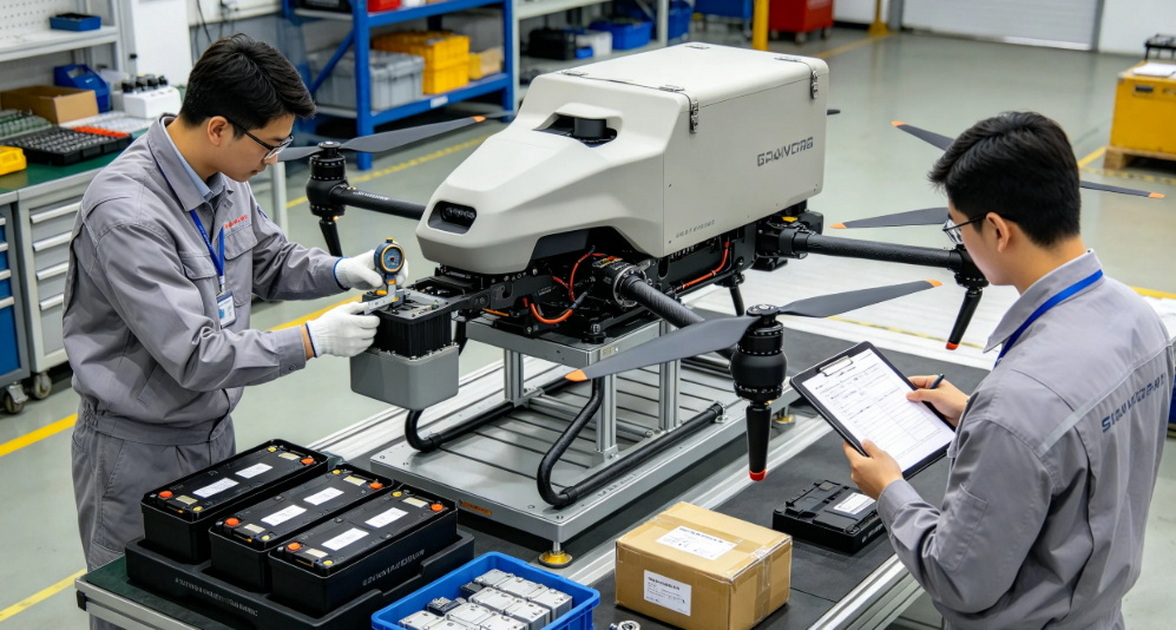
A factory visit should follow a real aircraft through incoming inspection, assembly, configuration loading, testing, and release.
Ask the team to retrieve component records for a completed serial number. Review a closed nonconformity and an engineering change. These exercises reveal more than a showroom demonstration.
For SIDT or another customization-focused supplier, verify which functions are developed internally and which depend on third-party aircraft, flight controllers, communications modules, or cloud services.
A logistics-drone sample should be a documented pilot configuration.
Define:
1. The exact hardware and software baseline.
2. The representative payload and route.
3. Pass/fail criteria.
4. Required logs and reports.
5. Responsibilities for permits, insurance, and personnel.
6. What happens if the system fails acceptance.
Where the mission requires FOCA authorization, allow for the documentation and assessment process rather than assuming that delivery of the aircraft permits immediate flight.
Ask the supplier and freight forwarder to confirm battery or fuel-system shipping requirements, packaging, insurance, customs responsibilities, and delivery terms for the actual configuration.
Then manage operational approval separately. Physical importation and legal operation are different workstreams.
Include spare-parts availability, repair turnaround, battery replacement, software subscriptions, data access, cybersecurity responsibilities, and end-of-support notice.
A low initial quotation can become expensive if the operator cannot obtain diagnostic logs, maintain the fleet independently, or replace a discontinued communications component.
One of the most useful safeguards is to treat configuration control as a commercial requirement.
A demonstration may use a particular battery, modem, propeller, payload mount, and software version. Production deliveries may contain changes that appear minor to purchasing staff but still need engineering review.
The risk is especially important where a safety assessment or authorization depends on the documented system. FOCA requires operators seeking changes to an authorization's scope to apply accordingly; suppliers should therefore help buyers identify whether a product change affects the authorized operation.
Before the pilot ends:
- Record the complete tested configuration.
- Identify serialized and safety-relevant components.
- Define permitted substitutions.
- Require advance engineering-change notification.
- Allocate responsibility for documentation updates and retesting.
- Retain final payment until configuration and acceptance records are delivered.
The practical lesson is simple: purchase the documented, supportable system—not merely an aircraft that resembles the one demonstrated.
The most suitable partner depends on the mission. RigiTech offers a Swiss-manufactured delivery-network proposition; Matternet combines established Swiss operations with California-built delivery technology; Dufour addresses a heavier cargo class; and SwissDrones supports specialized industrial mission requirements.
SIDT adds an international integration option for buyers exploring tailored systems. Its proposed flexibility, pricing, customization depth, and compliance support should be tested through a clearly scoped technical proposal and pilot.
For your next procurement round, send shortlisted companies the same mission brief and request three deliverables: a configuration-specific quotation, a compliance-responsibility matrix, and a measurable pilot acceptance plan. Buyers considering SIDT can use that process to establish whether its integrated platform offers a practical fit for their delivery network.
Request the complete certificate, not a cropped logo or marketing slide. Check the legal entity, site address, standard, certificate number, scope, issue date, and expiry date.
Then obtain confirmation from the issuing certification body. Ask whether the certificate remains active and whether its scope covers the manufacturing site and activities involved in your order. Treat an unresolved status as a qualification gap rather than assuming that a future expiry date proves current validity.
ISO certification should also remain separate from aircraft conformity and operating authorization in your assessment.
Not automatically. FOCA states that an operator intending to conduct a specific-category operation in Switzerland or Liechtenstein, previously authorized by another EASA member state under PDRA or SORA, must submit a cross-border application to FOCA.
Request the existing authorization and have the responsible operator confirm the Swiss procedure before scheduling deployment.
Do not assume so. Cosmetic branding, structural changes, new batteries, different communications equipment, and software modifications raise different questions.
Ask the manufacturer to identify the approved configuration and provide a written impact assessment for the proposed change. If the operation or authorization scope changes, the responsible operator must address FOCA's applicable requirements.
Require a configuration-specific mission calculation and a representative acceptance test.
Include the complete shipment mass: cargo, protective packaging, temperature-control materials, and payload hardware. Check whether the quoted distance is one-way range, return-trip capability, or an operating radius.
Published specifications can distinguish these conditions; RigiTech's technical sheet is one example of payload-dependent range reporting.
Build a common cost model around successfully completed deliveries.
Include aircraft or service fees, infrastructure, personnel, maintenance, batteries, connectivity, insurance, authorization work, weather cancellations, and backup transport. Request the same service-level definition from each bidder.
Matternet discloses different commercial models, including sale, lease, and delivery as a service, demonstrating why the commercial structure deserves its own comparison rather than being inferred from the aircraft specification..pdf)
- Swiss Federal Office of Civil Aviation: specific-category authorization, SORA, cross-border applications, and LUC framework.
- Drone Industry Association Switzerland: discussion of the Global State of Drones 2025 survey and its relevance to Switzerland.
- Switzerland Global Enterprise: Dufour Aerospace's founding, aircraft development, and cargo-transport positioning.
- Swiss Post: transfer of its drone operation to Matternet.
- Manufacturer documentation: RigiTech Eiger specifications and deployment examples; Matternet aircraft and corporate disclosures; Dufour Aero2 specifications; SwissDrones company and product information.


