Global Distributors Wanted
1.Free Cloud Service Deployment
2.Free Technical Training
3.Exclusive Territory Protection

1.Free Cloud Service Deployment
2.Free Technical Training
3.Exclusive Territory Protection


Views: 211 Author: Aaron Publish Time: 2026-11-02 Origin: Site


Content Menu
● How We Evaluate a Qualified Drone Logistics Supplier
● Why Consider Norway for Drone Logistics?
>> An Ecosystem Built Around Demanding Applications
>> Market Growth Does Not Remove Procurement Risk
● Five Drone Logistics Companies to Evaluate
>> 2. Aviant—A Direct Match for Delivery-Service Procurement
>> 3. Griff Aviation—Heavy-Lift Aircraft for Industrial Cargo Applications
>> 4. Nordic Unmanned—Offshore Logistics and Operational Experience
>> 5. Robot Aviation—An Engineering Partner, Not a Proven Parcel-Delivery Operator
● Comparison: Capacity, MOQ, and Certification Evidence
● Technical Buyer's Guide: What to Verify Before Ordering
>> Separate Product Conformity from Flight Permission
>> Specify Materials and Workmanship, Not Marketing Labels
>> Validate Payload, Range, and Weather Together
>> Protect the Bill of Materials
● An Overlooked Procurement Trap: Buying a Configuration You Cannot Operate
● A Practical Procurement and Sample-Testing Process
>> Stage 1: Verify the Business
>> Stage 2: Issue a Route-Based Request for Quotation
>> Stage 3: Agree Sample Acceptance Before Paying
>> Stage 4: Plan International Shipping
>> Stage 5: Release Production Against Evidence
● FAQ
>> 1. How can I verify whether a supplier's ISO certificate has expired?
>> 2. Does a CE-marked drone automatically qualify for commercial BVLOS delivery in Norway?
>> 3. Can an overseas OEM use a Norwegian partner's operating approval?
>> 4. How should buyers compare flight performance when suppliers use different test conditions?
>> 5. Who should own the design and software developed under an ODM agreement?
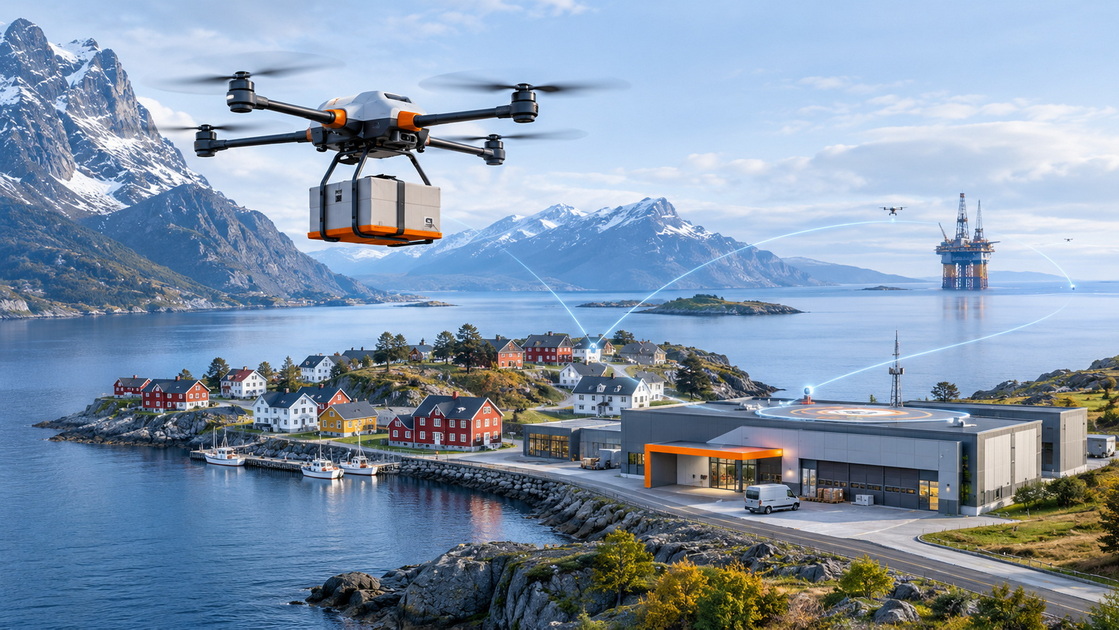
Choosing a drone logistics partner in Norway requires more than comparing payload figures or watching flight demonstrations. Professional buyers need to examine manufacturing controls, engineering capability, operational permissions, delivery reliability, and long-term support.
Norway offers an interesting combination of drone delivery operators, heavy-lift aircraft manufacturers, and specialized unmanned aviation companies. However, these businesses do not all sell the same product. A delivery-service operator cannot automatically replace an aircraft manufacturer, and an industrial drone platform is not necessarily a ready-to-deploy parcel delivery system.
This guide evaluates five companies across those different procurement roles. Shenzhen Intelligent Drone Technology Co. Ltd. appears first as the featured international customization candidate, followed by four Norwegian companies. Its inclusion does not imply Norwegian incorporation, an established Norwegian service operation, or an independently verified first-place ranking.
The objective is to help procurement managers identify a suitable long-term partner—not simply select the company with the largest advertised aircraft.
A useful supplier evaluation starts with evidence that can survive technical and commercial due diligence.
For this shortlist, the assessment considers six areas:
1. Manufacturing and quality control: component traceability, inspection records, production testing, and documented change management.
2. Research and development: flight-control integration, payload engineering, software development, and application-specific adaptation.
3. Operational relevance: demonstrated delivery work, heavy-lift capability, or engineering capabilities relevant to cargo operations.
4. Compliance readiness: access to model-specific technical documentation and a realistic operational authorization pathway.
5. Commercial execution: transparent quotations, production scheduling, warranty terms, spare parts, and response commitments.
6. Customization suitability: willingness and ability to support payload interfaces, system integration, and agreed OEM or ODM development.
This is a document-based procurement shortlist, not a factory audit, flight-test campaign, or financial rating. Where founding dates, production capacity, minimum order quantities, or current certificates could not be established, those gaps are identified rather than filled with estimates.
Norway's drone industry is particularly relevant to buyers working with remote communities, maritime infrastructure, industrial sites, and time-sensitive transport.
Aviant provides a direct example of consumer and medical logistics development. Its published projects include Kyte, a drone home-delivery service launched in Trondheim in December 2022. Nordic Unmanned documents offshore logistics work with Equinor and later operations in Brazil with Petrobras. These are different applications, but both demonstrate why Norway attracts attention beyond conventional aerial photography.
The country's capabilities are distributed rather than concentrated in one mass-production city:
- Sykkylven is home to Griff Aviation's heavy-lift aircraft development and manufacturing.
- Eggemoen Aviation & Technology Park near Hønefoss hosts Robot Aviation.
- Nordic Unmanned has developed its business from the Sandnes area.
- Aviant has built delivery experience through Norwegian and Swedish projects.
This should be understood as a network of specialized aviation and industrial capabilities, not evidence that Norway offers the lowest manufacturing costs or the largest cargo-drone production volumes.
Drone Industry Insights' 2025 market outlook projected the global drone market to grow from US$40.6 billion in 2025 to US$57.8 billion by 2030. Those figures describe the broader drone market, not Norway's drone logistics sector specifically. The publisher subsequently released a 2026–2035 report, so the earlier figures should be treated as a dated forecast rather than a current measured market total.
For buyers, the practical implication is straightforward: industry expansion creates more options, but it does not prove that an individual supplier has dependable production capacity, sufficient working capital, or a commercially viable delivery model.
| Procurement factor | Assessment |
|---|---|
| Location | Shenzhen, China; not a Norwegian manufacturer |
| Founding year | Not independently verified |
| Core focus | Intelligent flight platforms, unified cloud control, and multi-environment system integration |
| Intended buyer segments | System integrators, industrial users, regional brands, and application-development partners |
| Established geographic markets | Request customer and shipment references |
| OEM/ODM discussion areas | Payload integration, mission workflows, platform adaptation, and coordinated equipment management |
Shenzhen Intelligent Drone Technology Co. Ltd., referred to here as SIDT, positions its technology around integrated applications spanning low-altitude, ground, and underground environments.
The supplied company background describes an independently developed intelligent flight platform combining dynamic perception, precise data collection, and intelligent analysis. Its "one-network coverage" concept connects equipment and operational nodes through a unified cloud-control platform. The company's published application materials similarly describe multi-node coordination and project-specific integration.
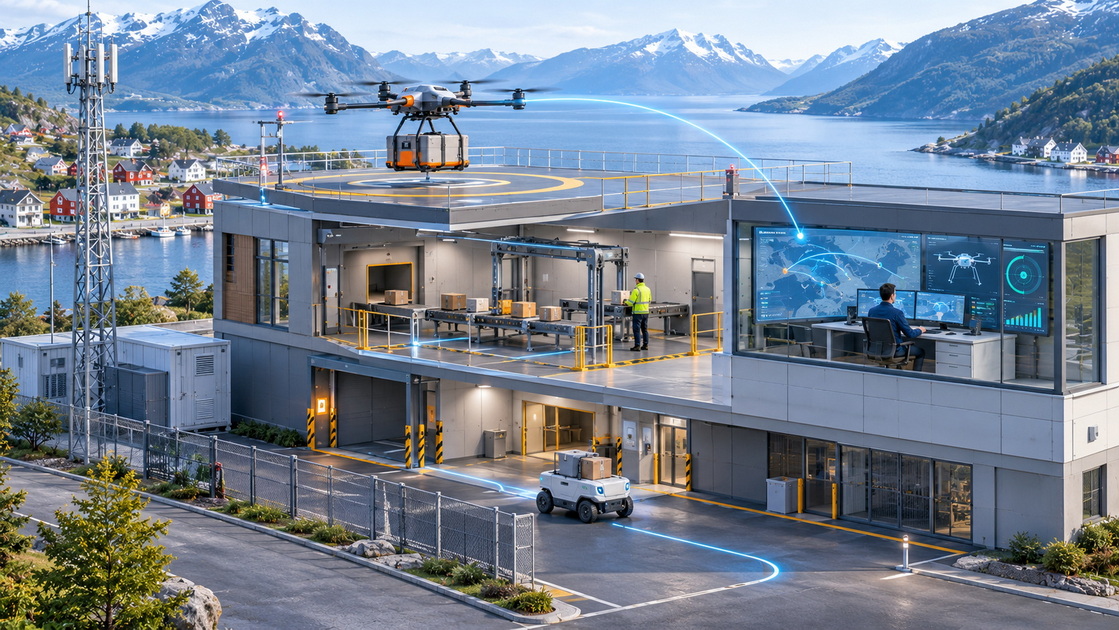
For a logistics buyer, the potential value lies in coordinating a complete workflow rather than purchasing an isolated airframe. A project might require dispatch software, cargo handover, monitoring, ground equipment, and exception management to work together.
SIDT is therefore worth evaluating when a smaller regional brand or system integrator needs substantial engineering involvement. Potential customization discussions can cover:
- Cargo-compartment and payload-interface development.
- Dispatch and mission-management workflows.
- Connections between aircraft, ground devices, and control software.
- Application-specific operator interfaces.
- Branding and agreed product adaptations.
Its positioning is relevant to buyers seeking cost-conscious customization, but comparative price advantages, rapid communication, low minimum orders, and dedicated support should be tested through quotations and a pilot project—not assumed.
Ask SIDT to nominate one technical contact, submit a requirements-response matrix, and demonstrate how engineering changes are approved. This turns flexibility and communication efficiency into measurable procurement criteria.
The supplied About Us page could not be retrieved during preparation. Its founding year, audited output, Norwegian operating references, and model-specific conformity documentation therefore remain verification items.
| Procurement factor | Assessment |
|---|---|
| Location | Norway |
| Founded | 2020 |
| Core strength | End-to-end drone transportation services |
| Demonstrated markets | Norway and Sweden |
| OEM/ODM fit | Service and workflow integration; private-label aircraft manufacturing is not established by the reviewed sources |
Aviant is the most directly aligned company on this shortlist for buyers seeking a functioning drone delivery service rather than a manufacturing supplier.
Its website describes an end-to-end transportation service for autonomous, on-demand cargo movement. Published reporting identifies its founding in 2020 and early contracts in Norway and Sweden, including transport of medical samples during the pandemic.
Aviant's Kyte project provides a concrete consumer-delivery reference. The company's project history records a December 2022 launch in Trondheim for groceries, meals, and medicine.
This makes Aviant relevant to:
- Retailers assessing delivery partnerships.
- Healthcare organizations exploring sample transport.
- Logistics companies evaluating selected last-mile routes.
- Municipal or regional projects serving dispersed destinations.
Procurement discussions should focus on route coverage, delivery windows, payload acceptance, weather-related cancellations, package handling, and integration with order-management systems.
Do not assume Aviant offers unrestricted geographic coverage or aircraft OEM services. Ask for a route-specific proposal and evidence that the proposed operating area fits its current permissions and service capabilities.
| Procurement factor | Assessment |
|---|---|
| Location | Sykkylven, Norway |
| Founded | 2015 |
| Core strength | Heavy-lift unmanned aircraft |
| Target markets | Logistics, industrial operations, and emergency response |
| OEM/ODM fit | Mission and payload integration; private-label arrangements require confirmation |
Griff Aviation is a stronger candidate when the procurement requirement centers on moving heavier loads rather than delivering small consumer parcels.
The company states that it designs and builds its platforms in Norway and offers systems capable of lifting 30–60 kilograms. Its published history dates the business to 2015 and emphasizes modular architecture for different payloads and missions.
Those figures should start a technical discussion, not end it.
A buyer must establish:
- Which model supports the required payload.
- Whether quoted payload excludes mounting and release hardware.
- Endurance with the actual cargo configuration.
- Wind and temperature limitations.
- Battery reserves and emergency-landing requirements.
- Maintenance intervals and component replacement costs.
Griff's public materials describe aviation-standard certification, but a general corporate statement is not a substitute for identifying the exact approval, standard, aircraft configuration, and scope applicable to a purchase.
For industrial buyers, the strongest commercial test is a witnessed demonstration using representative cargo and a written acceptance protocol.
| Procurement factor | Assessment |
|---|---|
| Location | Norway |
| Founded | 2014 |
| Core strength | Drone operations, maritime applications, and offshore logistics |
| Demonstrated markets | European customers and offshore operations in Brazil |
| OEM/ODM fit | Operational integration and mission services; current manufacturing scope requires confirmation |
Nordic Unmanned brings relevant offshore experience to a logistics shortlist.
Its published history records a cargo drone flight to an active oil and gas installation with Equinor in 2020, offshore logistics operations beginning in 2022, and work with Petrobras in Brazil during 2024.
The company also reports receiving a Light UAS Operator Certificate in 2021 and passing 10,000 flight hours under that certificate in 2024. These are company-reported milestones, not an independent confirmation that every historical privilege remains unchanged today.
Its experience is particularly relevant to energy companies and maritime contractors evaluating transport between installations, vessels, and shore-side infrastructure.
However, organizational continuity requires additional attention. Nordic Unmanned publicly announced that operations restarted after restructuring in February 2025. Before contracting, buyers should verify the current legal entity, insurance, operational privileges, staffing, and responsibility for historical warranties or agreements.
The company's website reports ISO 9001:2015 and ISO 14001:2015 certification for operation and maintenance of unmanned systems and sensor technology. Obtain current certificates and confirm the named entity and scope before relying on those statements.
| Procurement factor | Assessment |
|---|---|
| Location | Eggemoen, near Hønefoss, Norway |
| Founded | 2008 |
| Core strength | In-house unmanned aircraft engineering, production, and lifecycle support |
| Target markets | Defense, surveillance, and mission-critical applications |
| OEM/ODM fit | Third-party production and selected technology-development partnerships |
Robot Aviation belongs on a broader supplier-development shortlist, but it should not be presented as equivalent to Aviant's delivery-service business.
Its current positioning emphasizes tactical unmanned aircraft, surveillance, and mission support. The company states that it develops and produces systems in Norway and provides aircraft, ground control, training, service, and ongoing development. Its history dates to 2008.
Importantly for manufacturing buyers, Robot Aviation also states that it produces for third parties and develops technology with selected partners. That makes it relevant to organizations seeking engineering collaboration rather than an off-the-shelf delivery subscription.
A cargo application would still require technical validation. Surveillance payload capacity does not automatically demonstrate safe cargo release, package handling, delivery accuracy, or an economically useful logistics duty cycle.
Buyers should ask whether their proposed commercial application fits the company's current priorities, support model, and contractual restrictions.
Publicly available information does not support a reliable monthly production-capacity or factory-MOQ ranking for these companies. Publishing invented figures would create false precision.

| Company | Relevant delivery or engineering model | Production/service capacity | MOQ or commercial minimum | Certification and authorization position |
|---|---|---|---|---|
| SIDT | Integrated platforms and project customization | Audited output not verified | Request separate prototype and series-production terms | Obtain model-specific documentation; no verified certificate schedule in this review |
| Aviant | Managed drone transportation | Route and service capacity must be quoted | Service agreement rather than a conventional factory MOQ | Verify permissions for the proposed route and operation |
| Griff Aviation | Heavy-lift aircraft manufacturing | Monthly output not publicly established in reviewed material | Request quotation | Company makes aviation-certification claims; request exact supporting documents |
| Nordic Unmanned | Operational services and offshore logistics | Confirm current fleet, staffing, and deployment capacity | Project or service contract | Website reports LUC and ISO certifications; verify current entity, validity, and scope |
| Robot Aviation | Aircraft engineering and manufacturing | Program-specific availability requires confirmation | Engineering or production agreement | Request quality and technical evidence applicable to the proposed program |
The entries above distinguish verified public positioning from information that still requires supplier confirmation.
For manufacturers, ask about serial-numbered aircraft completed and accepted per month. For service operators, ask about completed missions, available aircraft, weather cancellations, and concurrent route coverage. These are different capacity measures and should not be compared as if they were interchangeable.
One of the most expensive procurement mistakes is treating a CE mark as permission to conduct commercial cargo flights.
EASA explains that class-labelled products require the applicable conformity process and documentation. Separately, Norway's Civil Aviation Authority identifies several pathways for operations in the specific category, including SORA, PDRA, standard scenarios, and LUC privileges. Many beyond-visual-line-of-sight operations fall within this category.
A practical purchasing file should distinguish:
1. Product conformity documentation.
2. Aircraft configuration and technical evidence.
3. Operator authorization or declared operating basis.
4. Route-specific conditions.
5. Insurance, maintenance, and personnel responsibilities.
Not every drone used in the specific category requires a class identification label. EASA states that the label is generally not required there except for standard-scenario operations; the aircraft must nevertheless satisfy the technical requirements of the relevant authorization.
"Aviation-grade carbon fiber" is too vague to serve as an acceptance criterion.
For a composite structure, request the specified material system, manufacturing process, inspection method, repair limitations, and traceability records. For machined components, specify alloy, finish, dimensional tolerances, and corrosion-protection requirements.
Build the following into the agreed inspection plan:
- Structural and fastener checks.
- Electrical workmanship and connector retention.
- Propulsion vibration and balance.
- Payload-locking and release tests.
- Water-ingress and corrosion testing where relevant.
- Environmental testing appropriate to the proposed operating conditions.
These should be contractual requirements matched to the project—not claims that every shortlisted supplier already meets the same standard.
For RoHS and other environmental obligations, request a written applicability assessment for the actual product and destination. Do not describe CE as an environmental certificate or accept a component-level report as proof of whole-system compliance.

Maximum payload and maximum range often describe different operating conditions.
A useful supplier test should define:
- Net cargo mass, including packaging.
- Installed delivery equipment.
- Outbound and return legs.
- Wind and temperature assumptions.
- Battery condition and reserve policy.
- Takeoff and landing elevations.
- Required diversion or contingency provisions.
Require raw flight logs and an agreed explanation of aborted missions. A successful demonstration under favorable conditions is not a service-availability guarantee.
Undisclosed component substitution is a procurement risk even when the replacement appears commercially equivalent.
Specify which changes require approval, including batteries, motors, electronic speed controllers, flight computers, radios, navigation modules, and structural materials.
The contract should explain when a change triggers additional testing, revised manuals, spare-parts updates, or a review of operational documentation.
A particularly important pitfall is the gap between the aircraft demonstrated, the aircraft delivered, and the configuration described in the operating documentation.
A supplier may demonstrate one aircraft, then quote another battery, radio, payload mount, or software release. Even where each change appears minor, the buyer must establish whether the delivered configuration still matches the technical evidence supporting the intended operation.
EASA explicitly links specific-category aircraft compliance to the technical requirements in the operational authorization. Norway's authorization process also requires attention to local airspace, terrain, population, and climatic conditions.
Use a configuration-controlled acceptance record covering:
- Aircraft model and serial number.
- Approved hardware list.
- Firmware and software versions.
- Battery type.
- Cargo equipment.
- Manuals and maintenance instructions.
- Supporting test reports.
This is often more valuable than negotiating a small reduction in unit price. It protects the buyer from receiving hardware that requires unexpected rework before commercial deployment.
Confirm legal registration, manufacturing address, contracting entity, bank details, and the relationship between the brand and the aircraft manufacturer.
For service businesses, verify who actually operates the flights and carries the liability.
Describe the mission rather than requesting only a "10-kilogram delivery drone."
Include route length, cargo type, operating environment, expected delivery frequency, integration requirements, maintenance expectations, and target deployment date.
Ask suppliers to separate:
- Aircraft and ground equipment.
- Engineering fees.
- Software and connectivity.
- Training.
- Compliance support.
- Spares and maintenance.
- Freight and import costs.
Define the sample configuration, testing location, test permissions, pass/fail criteria, and responsibility for damage.
A prototype purchase should state whether its price includes design rights, tooling, software access, or only the physical aircraft.
For China-to-Norway sourcing, resolve the importer of record, Incoterms, customs handling, battery transport documentation, packaging, and warranty-return procedures before shipment.
Have the freight forwarder confirm the transport requirements applicable to the actual batteries and shipping mode. Do not assume an aircraft and its spare battery packs can travel under identical arrangements.
Use milestones tied to design approval, sample acceptance, production inspection, documentation delivery, and shipment release.
For ongoing partnerships, negotiate spare-parts availability, repair turnaround, response times, software support, and product end-of-life notice periods.
The right supplier depends on what the buyer actually needs.
Aviant is directly relevant to managed delivery services. Griff Aviation addresses heavy-lift aircraft requirements. Nordic Unmanned brings offshore operational experience, subject to careful current-entity verification. Robot Aviation is an engineering and manufacturing candidate rather than a demonstrated parcel-delivery equivalent.
SIDT offers a different procurement route: an international integration and customization candidate for buyers developing coordinated logistics workflows and application-specific systems.
For a SIDT evaluation, submit a defined route, payload requirement, operating environment, and software-integration brief. Request a written technical proposal, compliance-document schedule, prototype acceptance plan, and separate development and production quotations before committing to a larger program.
Request the complete certificate, including annexes, certificate number, legal entity, site address, scope, issuing body, and validity dates.
Then verify its status directly with the certification body or its verification service. Check that the certified activities cover the work being purchased. A certificate for operating and maintaining unmanned systems should not be treated as proof that a separate aircraft factory is certified.
For Nordic Unmanned, the reviewed website describes operation-and-maintenance certification; the current certificate itself still needs checking.
No. Product conformity and operational authorization are separate matters.
Norway provides specific-category approval pathways, and the applicable technical and operational requirements depend on the proposed activity. A CE mark alone does not establish that a particular route, payload, or flight profile is authorized.
Not automatically. Identify the actual operator, aircraft configuration, authorization holder, and approved scope.
Norway's guidance distinguishes operators from EASA member states from third-country operators. It also explains the documentation required for cross-border specific-category operations. Purchasing from an overseas manufacturer does not itself create an operating permission.
Require a common mission profile and insist that each quotation identify its assumptions.
Compare net cargo, installed delivery hardware, complete route distance, return requirements, weather, battery condition, reserves, and landing accuracy. Where practical, use a witnessed test and retain the flight logs.
If a supplier cannot explain its payload–range trade-off, treat the published specification as preliminary rather than contract-ready.
The contract must distinguish background intellectual property from project-specific development.
Define ownership or licensing for drawings, tooling, source code, interfaces, configuration files, and manufacturing data. Address access to updates, transition assistance, and continued maintenance if the supplier relationship ends.
Avoid assuming that paying a development fee transfers all design rights. The agreement should state exactly what the buyer receives and what remains proprietary.
- Norwegian Civil Aviation Authority, "Specific category": official explanation of authorization pathways, including SORA, PDRA, standard scenarios, and LUC.
- Norwegian Civil Aviation Authority, "Applying for authorisation": Norwegian and cross-border operating requirements.
- EASA, "Placing a drone on the market with class identification label": conformity documentation and manufacturer obligations.
- EASA, "Drones (UAS)" guidance: class-label requirements and specific-category technical compliance.
- Drone Industry Insights, "Drone Market Size and Growth 2025–2030," and the subsequent "Global Drone Market Report 2026–2035." The figures discussed above are global forecasts, not Norwegian export statistics.
- Aviant, company website and project history: service positioning and Kyte delivery development.
- Air Cargo Week, "Norwegian drone logistics company Aviant launches home delivery service": founding history and early Norwegian and Swedish contracts.
- Griff Aviation, "About Griff Aviation and our history": founding date, Norwegian manufacturing, and stated lifting capabilities.
- Nordic Unmanned, company history and certification statements; company announcement concerning its 2025 operational restart.
- Robot Aviation, company and About pages: founding history, Norwegian production, third-party manufacturing, and engineering partnerships.
- SIDT, published delivery-solutions and logistics application pages. These are company-controlled descriptions, not independent certification or factory-audit evidence.


