Global Distributors Wanted
1.Free Cloud Service Deployment
2.Free Technical Training
3.Exclusive Territory Protection

1.Free Cloud Service Deployment
2.Free Technical Training
3.Exclusive Territory Protection


Views: 213 Author: Aaron Publish Time: 2026-11-03 Origin: Site


Content Menu
● How These Cargo Drone Delivery Companies Were Selected
>> Transparent Supplier Evaluation Criteria
● Why Source Cargo Drone Delivery Systems from China?
>> Increasing Operational Experience
● Quick Comparison: Ten Companies and Their Procurement Roles
● The Top 10 Cargo Drone Delivery Companies to Evaluate
>>> Core Strength and Buyer Fit
>> 2. DJI — Standardized Delivery Hardware with Published Performance Data
>>> Core Strength and Buyer Fit
>>> OEM/ODM Scope and Limitation
>> 3. JOUAV — Industrial VTOL Platforms for Longer-Duration Missions
>>> Core Strength and Buyer Fit
>>> OEM/ODM Scope and Limitation
>> 4. EHang — Island and Intercity Logistics Experience
>>> Core Strength and Buyer Fit
>>> OEM/ODM Scope and Limitation
>> 5. AutoFlight — Larger Cargo eVTOL Procurement
>>> Core Strength and Buyer Fit
>>> OEM/ODM Scope and Limitation
>> 6. Antwork — Medical and Urban Delivery-System Integration
>>> Core Strength and Buyer Fit
>>> OEM/ODM Scope and Limitation
>> 7. Meituan — Urban Delivery Networks Rather Than Conventional Factory Supply
>>> Core Strength and Buyer Fit
>>> OEM/ODM Scope and Limitation
>> 8. JD Logistics — Drone Delivery Connected to Supply-Chain Infrastructure
>>> Core Strength and Buyer Fit
>>> OEM/ODM Scope and Limitation
>> 9. SF Express / Fengyi — Express-Network and Specialized Logistics Experience
>>> Core Strength and Buyer Fit
>>> OEM/ODM Scope and Limitation
>> 10. United Aircraft — Industrial Transport and Emergency-Response Platforms
>>> Core Strength and Buyer Fit
>>> OEM/ODM Scope and Limitation
● Capacity, MOQ, and Certification Comparison
● Buyer's Guide: How to Qualify a Cargo Drone Supplier
>> 1. Define the Route Before Requesting a Price
>> 2. Audit Materials and Manufacturing Controls
>> 3. Separate Product Compliance from Permission to Fly
>> 4. Use a Paid Pilot with Contractual Acceptance Criteria
>> 5. Verify Capacity Through Production Records
>> 6. Plan Battery Shipping Before Finalizing the Order
● Common Procurement Pitfalls—and How to Avoid Them
>> Comparing Maximum Payload with No-Load Range
>> Accepting Uncontrolled Component Substitutions
>> Buying Hardware Without Software Exit Rights
>> Confusing a Demonstration with a Sustainable Route
● An Often-Overlooked Insider Check: Buy the Tested Configuration
● Conclusion: Match the Partner to the Procurement Model
● FAQ
>> 1. How can I check whether a supplier's ISO certificate has expired or been suspended?
>> 2. Does CE marking allow a Chinese cargo drone to operate commercially in Europe?
>> 3. Can an OEM change the cargo box or battery without affecting existing approvals?
>> 4. How should we compare two suppliers' payload and range claims?
>> 5. Which battery documents should be checked before international shipment?
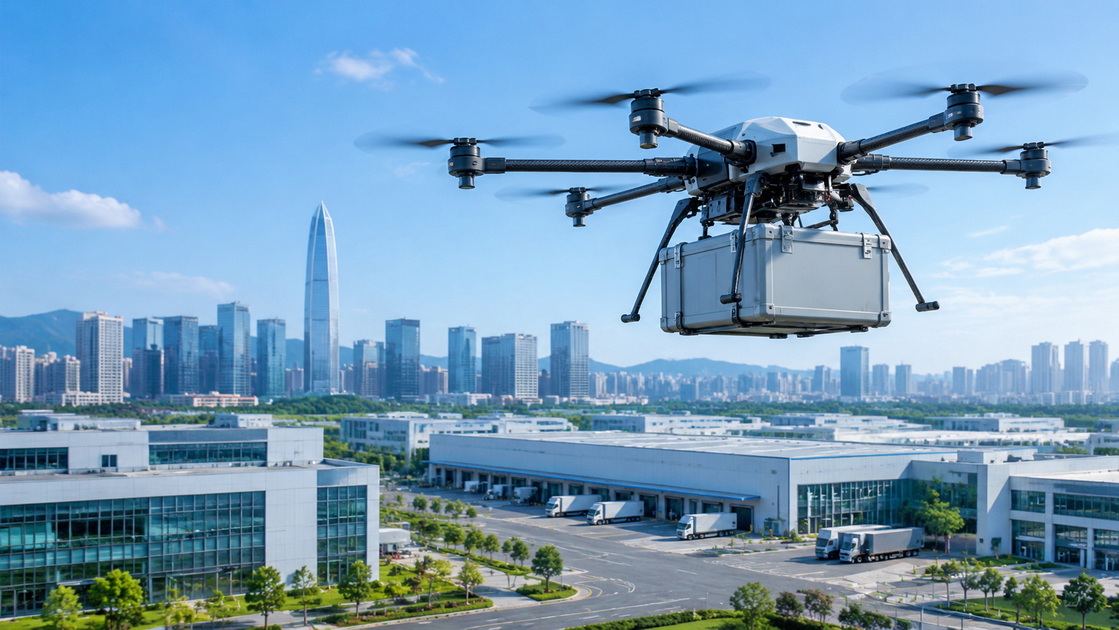
China offers a broad range of cargo drone delivery partners, from aircraft manufacturers and industrial system integrators to companies operating established logistics networks. For international procurement managers, the challenge is not finding a supplier with an impressive aircraft. It is identifying a partner that can deliver a compliant, supportable system for a commercially viable route.
The industry's scale provides a useful starting point. According to the Civil Aviation Administration of China's 2025 industry statistical bulletin, published in April 2026, China had 3.287 million registered unmanned aircraft at the end of 2025, up 51.0% year over year. Annual unmanned-aircraft flight activity reached approximately 45.30 million hours, an increase of 69.89%. These figures cover the wider unmanned-aircraft sector—not cargo delivery alone—and should not be presented as the size of the delivery-drone market.
This guide examines ten companies worth considering for different procurement requirements. Shenzhen Intelligent Drone Technology Co. Ltd. appears first as a specialist integration candidate, followed by established aircraft manufacturers and delivery-network developers.
The central procurement principle is verification: assess the exact aircraft configuration, factory capability, operating permissions, and after-sales commitments before comparing prices.
This is an application-based shortlist, not a ranking by market share, independently measured reliability, or factory output. It draws on public company information, product documentation, operational announcements, and regulatory sources. No factory visits or hands-on aircraft tests were conducted for this article.
The companies also represent different business models. An aircraft manufacturer, a delivery operator, and a system integrator may all contribute to a cargo drone project, but they do not offer interchangeable services.
Procurement teams can use the following proposed weighting when evaluating candidates:
| Evaluation area | Suggested weighting | Evidence to request |
|---|---|---|
| Mission suitability | 25% | Payload–range data, cargo dimensions, weather limits, representative flight logs |
| Compliance readiness | 20% | Model-specific certificates, destination-market documentation, operational approval requirements |
| Engineering and customization | 20% | Integration drawings, interface documentation, change-control procedures, engineering ownership |
| Manufacturing and quality control | 15% | Factory audit, component traceability, inspection records, final acceptance procedures |
| Service and lifecycle support | 10% | Spare-parts availability, maintenance manuals, training, response commitments |
| Commercial execution | 10% | Confirmed production slots, milestone schedule, warranty terms, delivery responsibilities |
These weightings are a purchasing framework, not measured scores assigned to the companies below.
A supplier should progress beyond the initial shortlist only after it provides documentary evidence. A statement such as "industrial-grade quality" is not a substitute for an approved bill of materials, inspection records, and configuration-specific acceptance criteria.

China's supplier landscape spans several complementary centers. Shenzhen hosts DJI and SIDT, Guangzhou is home to EHang, Hangzhou supports Antwork's delivery-drone development, and Chengdu is JOUAV's industrial-aircraft base. This geographic diversity gives buyers access to aircraft platforms, flight-control systems, cloud management, and application integration rather than a single standardized product category.
For buyers, the practical opportunity is to match the sourcing location and business model to the project:
- Aircraft procurement requires a manufacturer with documented configuration control.
- A branded delivery service requires software, cargo handling, and operational integration.
- A regional network requires route development, infrastructure, and regulatory coordination.
- Medical logistics requires additional attention to packaging, handling, and chain of custody.
Public deployments demonstrate that Chinese drone delivery extends beyond trade-show prototypes. EHang reported an 83-kilometer intercity cargo flight between Zhuhai and Guangzhou in 2025. Meituan subsequently reported that its delivery network had exceeded one million commercial orders by September 2026, with services operating in several Chinese cities and Dubai. These are company-reported achievements, not directly comparable measures of fleet reliability or manufacturing capacity.
"Primary market" below refers to publicly described applications and geographic activity, not an audited breakdown of sales revenue.
| Company | Establishment information | Procurement role | Primary applications or markets | Customization position |
|---|---|---|---|---|
| Shenzhen Intelligent Drone Technology Co. Ltd. | Founding year not verified in reviewed information | Full-stack application integrator | Low-altitude logistics, emergency response, inspection | Project-specific integration; OEM scope requires confirmation |
| DJI | Founded 2006 | Standardized delivery-aircraft manufacturer | Industrial cargo transport and aerial delivery | Developer integration rather than assumed white-label manufacturing |
| JOUAV | Established 2010 | Industrial VTOL aircraft manufacturer | Industrial missions, emergency response, cargo applications | Mission-system and payload integration |
| EHang | Founded 2014 | Autonomous-aircraft and logistics-system developer | Island and intercity logistics in China | Project partnerships; private-label availability not established |
| AutoFlight | Founded 2017 | Cargo eVTOL manufacturer | Larger-scale logistics and specialized transport | Aircraft and mission integration subject to approved design |
| Antwork | Founded 2015 | Delivery-system developer | Medical and urban logistics; China and reported Japanese cooperation | Aircraft, stations, and software integration |
| Meituan | Parent founded 2010; drone exploration began 2017 | Delivery-network developer and operator | Urban retail delivery in China and Dubai | Network partnerships rather than conventional OEM supply |
| JD Logistics | Became a standalone subsidiary in 2017 | Supply-chain and delivery-system provider | Parcel logistics, retail, emergency applications | Logistics integration; external aircraft supply requires confirmation |
| SF Express / Fengyi | Verify Fengyi's contracting-entity registration separately | Express-logistics and drone-network partner | Medical, emergency, mountain, and express logistics | Network integration; hardware OEM availability not established |
| United Aircraft | Founding year not verified in reviewed sources | Industrial unmanned-aircraft manufacturer | Logistics, emergency response, industrial transport | Industrial mission integration; scope requires contract confirmation |
The establishment and application information above is supported by company materials and public reporting. Where the evidence did not establish a founding year or OEM offering, the table explicitly leaves that point unresolved.

Shenzhen Intelligent Drone Technology Co. Ltd., or SIDT, describes its business around integrating drone technology into application solutions covering low-altitude, ground, and underground environments. Its stated capabilities combine intelligent flight platforms, dynamic perception, data collection, intelligent analysis, and cloud-based management.
Its "one-network coverage" approach centers on unified command, dispatch, and management across multiple spaces and equipment nodes. SIDT also describes applications in logistics delivery, emergency response, and inspection, making it relevant to projects that need more than an aircraft and remote controller.
SIDT is worth evaluating when a smaller brand or regional integrator needs coordinated delivery workflows, cloud management, and project-specific integration. Its stated full-stack approach provides a basis for discussing how aircraft, dispatch software, cargo handoffs, and ground resources could work together.
However, the available information does not independently establish that SIDT has lower pricing, faster communication, lower minimum orders, or better customization performance than competitors. Buyers should treat those as commercial advantages to test during the quotation and pilot stages.
A useful engineering discussion should address:
- Cargo-box dimensions, mounting arrangements, and loading procedures.
- Dispatch-platform integration and customer-facing interfaces.
- Coordination between aerial delivery and ground collection points.
- Branding, interface language, account permissions, and reporting.
- Ownership of custom software, drawings, and integration documentation.
SIDT's public materials support discussing system integration, but they do not establish that every item above is an available standard service. Founding year, factory ownership, production capacity, certification status, engineering fees, and minimum orders should be confirmed directly.
For cost-conscious buyers, SIDT's value proposition should be evaluated through a defined pilot: one representative route, agreed acceptance criteria, documented engineering responsibilities, and a firm support proposal.
DJI, founded in 2006 and headquartered in Shenzhen, offers a recognizable aircraft-manufacturer route into cargo drone delivery. Its FlyCart 30 supports cargo and winch configurations, while its current delivery range also includes the larger FlyCart 100.
DJI publishes a 30-kilogram payload and a 16-kilometer maximum flight distance at that payload for FlyCart 30 in dual-battery mode. Those figures were measured under controlled conditions, including no wind and sea-level conditions; they are not a guaranteed commercial route radius.
DJI is relevant to buyers seeking a documented, standardized aircraft platform rather than commissioning a new airframe. Its developer ecosystem may also support selected integrations, depending on the aircraft and interface involved.
Do not assume that purchasing through a distributor permits aircraft rebranding, flight-controller modification, or private-label manufacturing. Confirm supported interfaces and warranty implications before specifying third-party payload equipment.
For procurement comparisons, request a complete operating package: aircraft, batteries, charging equipment, cargo system, software access, training, and initial spare parts.
Established in 2010, JOUAV develops and manufactures industrial unmanned-aircraft systems. Its public materials identify cargo delivery alongside applications such as inspection, surveying, and emergency response.
Its VTOL fixed-wing positioning makes it relevant to projects where cruise efficiency and industrial mission flexibility matter more than short-hop urban delivery. JOUAV has also promoted its platforms to partners in South and Southeast Asia.
JOUAV is a candidate for buyers evaluating industrial routes, remote-site supply, and aircraft that may support both cargo and sensor missions. Its published cargo discussions describe modular payload concepts, but buyers should obtain configuration-specific engineering data rather than rely on general buying guides.
Focus discussions on cargo attachment, center-of-gravity limits, electrical interfaces, mission software, and maintenance requirements. Confirm whether the proposed aircraft has a validated cargo configuration or requires additional development.
Avoid combining endurance, payload, and range figures taken from different configurations. Require one controlled specification for the aircraft actually being quoted.
EHang, founded in 2014 and based in Guangzhou, develops autonomous aerial vehicles and related systems. Its VT20 logistics aircraft has been used in island and intercity delivery projects in the Greater Bay Area.
In August 2025, EHang reported a round-trip cargo demonstration between Zhuhai and Guangzhou, with a one-way distance of 83 kilometers. The mission carried seafood outbound and medical testing samples on the return journey. The company also reported more than a year of safe VT20 operation in the Wanshan Archipelago.
EHang is relevant to island logistics, water-crossing routes, and partnerships requiring aircraft, infrastructure, and operating coordination.
Its public evidence supports evaluating project partnerships, not assuming open-ended private-label production.
Certification must also remain model-specific. EHang's announcement discusses certificates held by its EH216-S passenger aircraft separately from the VT20 logistics operation. Buyers should not transfer one model's certification status to another.
AutoFlight, founded in 2017, develops cargo and passenger eVTOL aircraft. Its V2000CG CarryAll targets a substantially different procurement category from small parcel-delivery multirotors.
The company identifies CarryAll as a two-ton-class aircraft with a maximum payload of 400 kilograms and a maximum range of up to 200 kilometers. "Two-ton class" refers to the aircraft category, not a two-ton cargo payload. Buyers should also request the payload–range relationship rather than assume maximum payload and maximum range occur simultaneously.
AutoFlight is relevant to regional cargo links, offshore logistics, and larger infrastructure-led projects. Its public materials report CAAC type, production, and airworthiness certificates for CarryAll. In June 2026, it also announced Indonesian type validation.
Customization should be approached as aircraft engineering within an approved design framework. A different cargo module, structure, or avionics arrangement may require a formal change assessment.
International buyers should verify the exact overseas approval and operating conditions rather than assume Chinese certification automatically authorizes local commercial service.
Antwork was founded in 2015 and is based in Hangzhou. Public reporting describes an integrated delivery architecture combining aircraft, automated stations, cargo storage, and cloud-based scheduling.
Its medical logistics activity includes transporting supplies and patient samples, while reporting has also described cooperation connected with drone delivery testing in Japan.
Antwork is a candidate for hospital networks, laboratory connections, and scheduled urban delivery where the handling process matters as much as aircraft performance.
Prioritize the complete workflow: package identification, loading responsibility, station access, exception handling, and delivery confirmation. Public information supports system-development capability, but private-label rights and overseas support terms require confirmation.
For medical projects, flight success alone is insufficient. The acceptance plan should also address sample integrity, temperature monitoring where required, and documented custody transfers.
Meituan was established in 2010 and began exploring low-altitude delivery in 2017. Its September 2026 announcement described services in Beijing, Shanghai, Guangzhou, Shenzhen, Hong Kong, and Dubai, with more than one million completed commercial orders.
Its Shanghai West Bund network combines aircraft, automated handling equipment, collection infrastructure, and retail partnerships.
Meituan is relevant to urban retail-delivery partnerships and the design of integrated delivery networks. Its operating model illustrates why aircraft procurement alone does not create a functioning commercial service.
Meituan should not be treated as a conventional factory offering standard private-label drones. Buyers should establish whether the available relationship is a network partnership, technology collaboration, infrastructure project, or another service arrangement.
Its reported order volume provides operational context, but it does not establish aircraft availability for independent overseas operators.
JD Logistics became a standalone subsidiary of JD.com in 2017. Its wider business includes warehousing, distribution, and integrated logistics services.
The company has publicly presented its JDX-50 "Jingyan" aircraft as an eight-axis, eight-propeller platform for professional logistics delivery and industrial applications, including emergency response.
JD Logistics is relevant when drone transport must connect with warehouses, parcel processing, retail fulfillment, and existing logistics systems.
Its public aircraft demonstration does not by itself establish an export-ready OEM program. Ask whether aircraft are sold externally, whether software is available outside JD's network, and who supports installation and maintenance.
A buyer seeking standalone hardware should resolve these questions before investing time in detailed aircraft comparisons.
SF's Fengyi drone activities span medical transport, emergency response, mountain transport, and other logistics applications. Public reporting describes regular operations in the Greater Bay Area.
The procurement relevance lies in the connection between aerial transport and an existing express-logistics workflow.
SF/Fengyi is a candidate for organizations exploring network partnerships, parcel transfer processes, and specialized delivery routes rather than simply sourcing an unbranded aircraft.
Confirm the exact contracting entity, aircraft supplier, software owner, and support organization. Do not confuse the Chinese Fengyi business with Germany-based Phoenix-Wings GmbH; the latter has its own corporate location and product documentation.
The reviewed evidence does not establish Fengyi's founding year, production output, minimum order, or standard overseas OEM offering. Obtain those details from the entity issuing the quotation.
United Aircraft describes itself as an industrial unmanned-aircraft developer providing research, design, manufacturing, sales, and services. Its public positioning includes government and commercial applications.
Reporting on its TD550D identifies a CAAC type-certificate milestone in March 2025, with logistics, emergency response, and firefighting among the intended applications. Separate reporting describes overseas demand connected with logistics and medical delivery.
United Aircraft is relevant to industrial transport, difficult terrain, and specialized emergency-response projects.
Treat reported orders as evidence of commercial interest—not proof of delivered fleet size or available annual production capacity. Buyers should verify the factory responsible for their aircraft, current backlog, exact delivery configuration, and destination-market eligibility.
Its founding year and standard private-label program were not established by the reviewed sources.
Reliable sourcing requires distinguishing unavailable information from negative findings. "Not verified" does not mean a company lacks capacity or certification; it means the reviewed sources do not establish a comparable, procurement-ready figure.
| Company | Production capacity | MOQ or project minimum | Certification position to verify |
|---|---|---|---|
| SIDT | Annual aircraft/system output not verified | Confirm pilot and customization minimums | Request factory, system, and model-specific documents |
| DJI | Delivery-aircraft annual output not verified | Confirm distributor and regional terms | Verify exact model, configuration, and destination-market documents |
| JOUAV | Cargo-configuration output not verified | Quotation required | Verify proposed aircraft and cargo configuration |
| EHang | VT20 output not verified | Project terms required | Do not substitute EH216-S certificates for VT20 evidence |
| AutoFlight | Current annual delivered output not verified | Aircraft/project quotation required | CarryAll certificates publicly reported; verify applicability |
| Antwork | Current system output not verified | Deployment scope required | Verify aircraft, station, and operational permissions |
| Meituan | External hardware supply capacity not established | Partnership scope required | Network permissions are not blanket export approvals |
| JD Logistics | External aircraft supply capacity not established | Commercial availability must be confirmed | Verify exact aircraft and operating documentation |
| SF/Fengyi | Comparable annual aircraft output not verified | Partnership terms required | Confirm contracting entity, aircraft, and route permissions |
| United Aircraft | Current deliverable output not verified | Configuration-specific quotation required | TD550D type-certificate reporting requires document-level verification |
The principal public certification distinctions are supported by EHang, AutoFlight, and TD550D reporting. None establishes universal authorization for every model, modification, or destination market.
Issue a mission specification covering:
- Cargo weight, dimensions, and packaging.
- One-way distance and return-flight requirements.
- Terrain, elevation, temperature, and wind assumptions.
- Landing, winch delivery, or automated-station requirements.
- Daily delivery volume and peak-hour demand.
- Required reserve energy and diversion options.
- Communications coverage and lost-link behavior.
- Destination-country operating category.
This prevents suppliers from quoting fundamentally different solutions against the same purchasing request.
Do not accept "carbon fiber" or "aviation aluminum" as complete material specifications.
For a structural and manufacturing audit, request:
| Component or process | Procurement evidence |
|---|---|
| Composite structure | Fiber and resin specifications, lay-up records, cure controls, repair limits |
| Machined metal parts | Alloy identification, heat-treatment requirements, material certificates |
| Structural bonding | Adhesive specification, surface preparation, batch and shelf-life records |
| Propulsion system | Motor and controller identification, propeller specifications, balance records |
| Wiring and connectors | Harness drawings, connector ratings, strain-relief and inspection procedures |
| Final assembly | Torque records, firmware identification, calibration and acceptance results |
These are proposed audit requirements, not claims that every supplier listed already provides them.
For CE marking and RoHS-related documentation, first determine the applicable legal scope. Do not describe either as a universal aviation-safety or environmental certificate. Request the relevant declaration, underlying reports, and a clear explanation of the products and configurations covered.
A cargo drone can have product documentation and still require additional authorization for the intended operation.
In Europe's "specific" category, operational authorization is generally required unless an applicable standard-scenario declaration or appropriate operator privileges provide another route. EASA also explains that class-identification requirements depend on the operational pathway; they are not identical for every delivery aircraft.
Before paying a deposit, obtain a destination-specific compliance plan from the operator and relevant specialists.
A representative pilot should test:
1. The agreed payload and packaging.
2. The actual or representative route.
3. Loading and unloading time.
4. Landing or delivery accuracy.
5. Energy remaining after the mission.
6. Communication interruptions and documented contingency procedures.
7. Software records and delivery confirmation.
8. Maintenance access and battery turnaround.
Define who supplies the cargo, approves the test conditions, witnesses the results, and signs acceptance.
The objective is not simply a successful demonstration. It is a repeatable result using the same configuration that will be delivered.
Ask suppliers to distinguish:
- Installed theoretical capacity.
- Current staffed output.
- Output of the specific aircraft model.
- Existing committed backlog.
- Capacity available for your delivery window.
A large workshop or a large reported order does not answer these questions.
For delivery stability, request a milestone schedule covering design freeze, component procurement, assembly, inspection, flight acceptance, export preparation, and shipment.
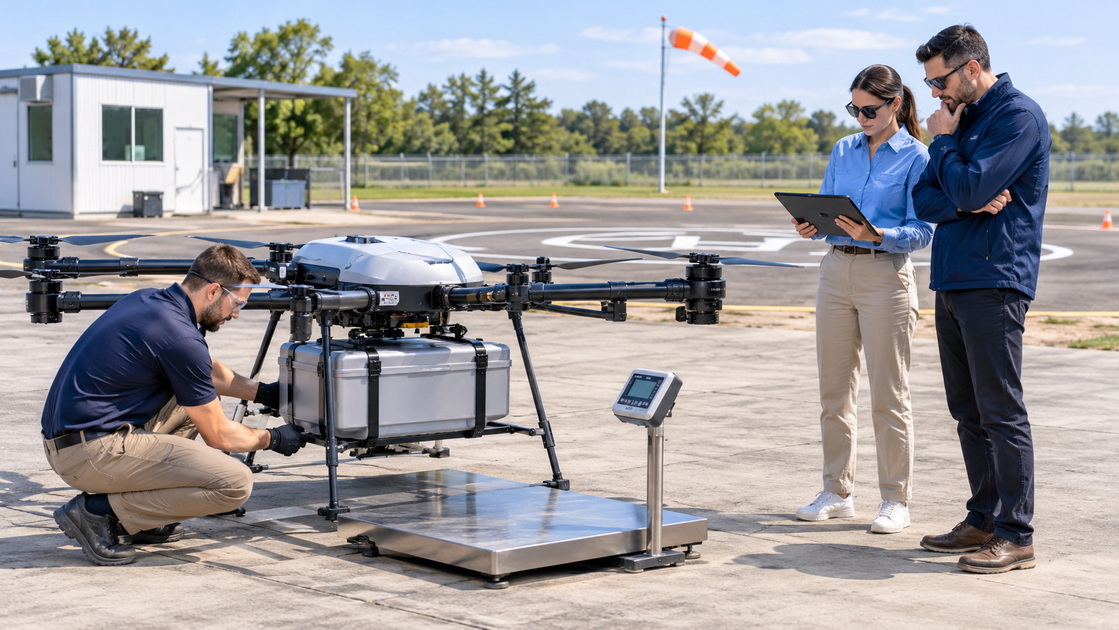
Battery logistics can materially affect cost and delivery timing.
IATA states that lithium cell and battery types must meet the applicable UN 38.3 testing requirements and that test summaries must be made available. Its guidance also distinguishes batteries shipped alone from batteries packed with or contained in equipment.
Obtain a written shipping plan addressing:
- Battery type and watt-hour rating.
- Matching UN 38.3 test summary.
- Shipment classification and packaging.
- Applicable state-of-charge restrictions.
- Carrier acceptance.
- Documentation and labeling.
- Responsibility for rejected or delayed shipments.
Confirm the current rules for the actual shipment rather than reusing paperwork from a previous order.
DJI's FlyCart 30 documentation illustrates the distinction clearly: its published no-load flight distance differs from its full-payload distance, and both depend on stated test conditions.
Request a payload–range table and an energy-reserve policy for your route. Never build a commercial schedule around an aircraft's flight-to-depletion test.
A lower quotation may hide changes to batteries, motors, connectors, structural materials, or communications equipment.
Make the approved bill of materials part of the contract. Require written authorization for substitutions and define when re-testing is necessary.
Clarify account ownership, recurring fees, data export, offline behavior, and what happens if the supplier stops supporting the platform.
For an integrated delivery business, losing dispatch access can be more disruptive than replacing an individual aircraft.
A demonstration establishes that a flight occurred under particular conditions. It does not establish daily dispatch reliability, weather availability, maintenance cost, or profitable throughput.
Ask for representative operational records and clearly defined metrics rather than promotional flight videos alone.
One of the most consequential procurement checks is configuration identity.
An aircraft demonstrated with one battery, cargo box, software version, communications link, and reserve policy should not be accepted as evidence for a materially different production configuration.
Request a configuration record containing:
- Aircraft and battery identification.
- Cargo-system drawing and weight.
- Propeller and propulsion specifications.
- Firmware and parameter versions.
- Communications equipment.
- Test payload, route, weather, and reserve threshold.
Then link that record to the purchase contract and final acceptance report.
This is a practical control against a subtle sourcing problem: the demonstration aircraft performs well, but the delivered aircraft has small changes that collectively alter payload margin, endurance, supportability, or approval assumptions.
The right Chinese cargo drone delivery partner depends on what the buyer actually needs to purchase.
DJI and JOUAV provide aircraft-led options. EHang and AutoFlight offer different pathways into advanced logistics aircraft and projects. Antwork focuses attention on integrated delivery infrastructure, while Meituan, JD Logistics, and SF/Fengyi illustrate network-led approaches. SIDT is a candidate for buyers seeking coordinated application development rather than a standalone airframe.
For a customized project, send Shenzhen Intelligent Drone Technology Co. Ltd. a defined mission brief covering payload, route, delivery volume, destination market, software requirements, and customization needs. Request a written feasibility assessment, itemized quotation, supporting documentation, and a pilot acceptance plan before committing to a fleet.
Search the company name or certificate details in IAF CertSearch and check the legal entity, site address, standard, scope, status, and issuing body. IAF's platform supports verification of accredited management-system certificates and their accreditation chain.
If the result is unclear, contact the issuing certification body directly. An ISO management-system certificate should not be treated as proof that a particular drone is airworthy.
Not by itself. Product conformity and operational permission are separate matters.
For "specific" category operations, EASA describes several pathways, including operational authorization, a qualifying standard-scenario declaration, or appropriate Light UAS Operator Certificate privileges. The applicable route depends on the proposed operation and aircraft.
Do not assume so. EASA requires aircraft used in specific-category operations to satisfy the technical requirements associated with the applicable authorization. A change must therefore be assessed against the relevant design and operational requirements.
Contractually, require written change assessment, updated weight and balance information, revised documentation, and any necessary testing or approval before accepting the modified aircraft.
Require both suppliers to quote the same mission: payload, cargo packaging, temperature, elevation, wind assumptions, return requirement, and landing reserve.
Published maximum figures may use very different conditions. DJI, for example, explicitly identifies controlled conditions for its FlyCart 30 range measurements.
Make route-specific acceptance performance—not the largest brochure number—the purchasing criterion.
At minimum, obtain a test summary matching the battery type and a shipment plan prepared for the applicable transport classification. IATA identifies UN 38.3 testing, documentation availability, and packing distinctions as central requirements.
Also confirm current state-of-charge restrictions, packaging, labels, carrier acceptance, and shipper responsibilities. A generic safety data sheet should not be accepted as a replacement for the required transport evidence.
- Civil Aviation Administration of China: 2025 industry statistical bulletin and sector activity figures, published April 2026. The figures describe the wider unmanned-aircraft sector, not cargo-drone exports.
- SIDT: company background and integrated logistics application descriptions.
- DJI: FlyCart 30 specifications and FlyCart 100 product information.
- JOUAV: company background and industrial cargo-application materials.
- EHang: August 2025 VT20 intercity logistics announcement.
- AutoFlight: founding background, CarryAll certification, and overseas validation announcements.
- Antwork: company background and reporting on integrated delivery systems and medical applications.
- Meituan: corporate background and September 2026 urban delivery-network announcement.
- JD Logistics: corporate background and JDX-50 application information.
- SF/Fengyi and United Aircraft: public application reporting and manufacturer information.
- European Union Aviation Safety Agency: operational pathways for the specific category.
- International Air Transport Association: lithium-battery transport guidance.
- IAF CertSearch: accredited management-system certificate verification.


